The Real Cost of Ultralight: When Grams Matter
On the Appalachian Trail, the difference between a 30-pound pack and a 15-pound pack can feel like the difference between walking with a boulder and floating on air. The ultralight movement promises freedom: faster miles, fewer breaks, and less strain on your knees. But as the grams drop, something else often disappears—durability, comfort, and sometimes even safety. The real cost of ultralight isn’t just measured in dollars; it’s measured in compromises that can turn a dream thru-hike into a miserable survival exercise. Let’s unpack when those grams matter, and when they become a dangerous obsession.
The Allure of the Ounce: Why We Chase Lightness
The logic is seductive. Every gram you remove from your pack is a gram your legs don’t have to lift 2,000 times a day. On a 2,190-mile Appalachian Trail thru-hike, shaving five pounds can save you the equivalent of lifting 10 tons less over the course of the journey. That translates to fewer rest stops, less fatigue, and more mental energy to enjoy the views. Early adopters of ultralight gear—pioneers like Ray Jardine—proved that a 10-pound base weight was not only possible but liberating. “Light is right,” the mantra goes, and for many, it unlocks a faster, more agile style of hiking.
But the allure goes beyond physics. There’s a certain pride in owning a pack that weighs less than a gallon of milk. Online forums celebrate “gram weenies” who debate the weight of a toothbrush handle versus the bristles. This culture of optimization can be addictive, and it often blinds hikers to the fact that weight is only one variable in a complex equation. The real joy of a thru-hike isn’t measured in ounces—it’s measured in experiences, comfort, and safety.
The Hidden Costs: Durability, Comfort, and Safety Trade-offs
Ultralight gear often sacrifices three key attributes: durability, comfort, and safety margin. Let’s break down the trade-offs with a practical table.
| Attribute | Standard Gear | Ultralight Alternative | Real Cost on AT |
|---|---|---|---|
| Sleeping Pad | 3/4″ foam pad (1 lb) | 1/4″ inflatable (0.4 lb) | Cold ground; puncture risk on rocky sites |
| Tent | Double-wall, 3-season (4 lb) | Single-wall, trekking-pole (1.5 lb) | Condensation; less storm protection in exposed areas |
| Rain Jacket | Heavy-duty Gore-Tex (1.5 lb) | 0.7 oz nylon (0.3 lb) | Wets out quickly; tears on branches |
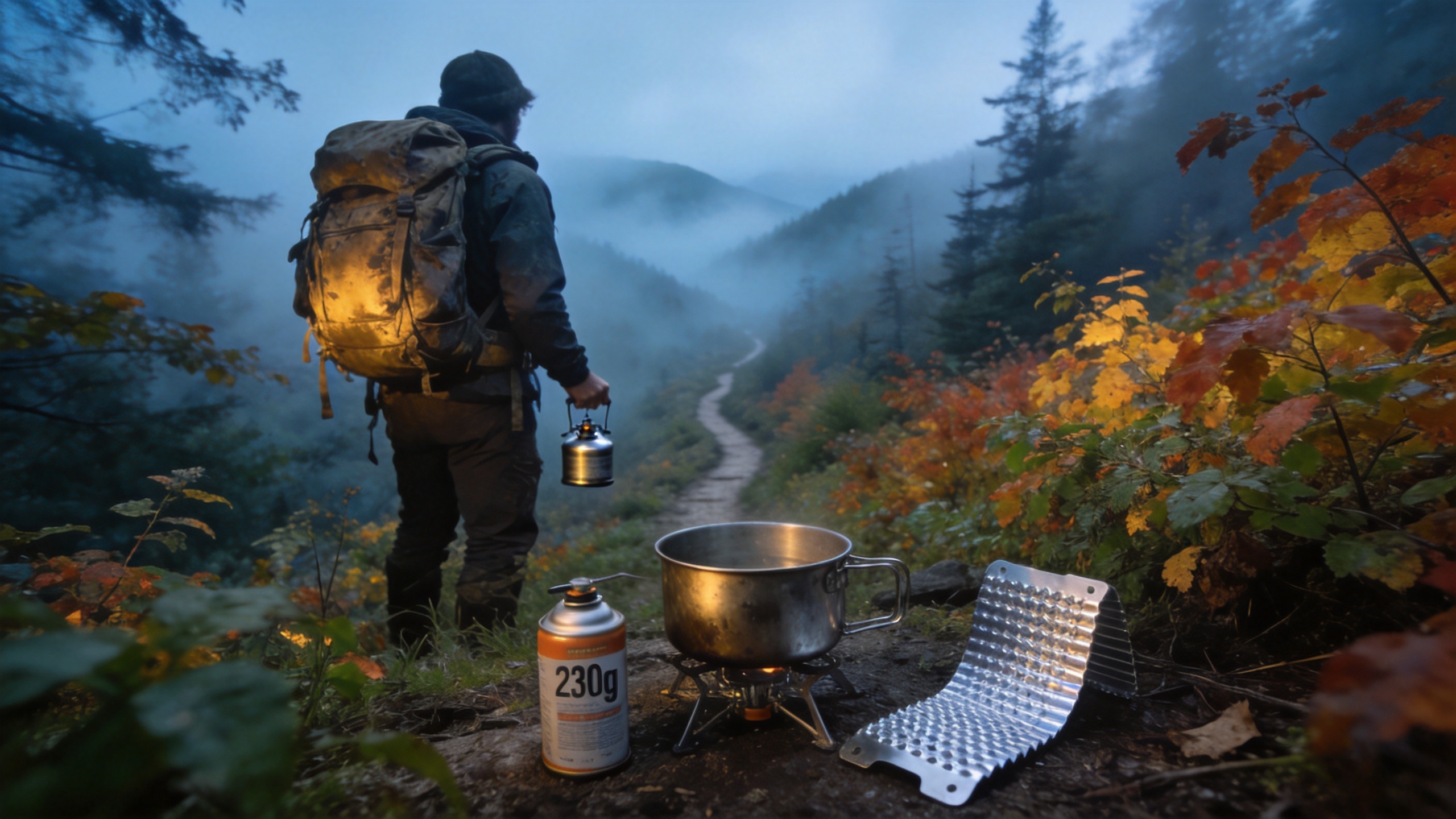
| Cook System | Canister stove & pot (1.2 lb) | Alcohol stove & titanium cup (0.5 lb) | Slow boil in wind; no simmer control; risky in fire bans |
The table shows a clear pattern: saving weight often means accepting lower performance in critical conditions. For example, a 0.4-pound sleeping pad might be fine for summer nights in Georgia, but when you’re on Mount Rogers in Virginia with temperatures dropping to 20°F, that thin layer of insulation can lead to a cold, sleepless night—and in extreme cases, hypothermia. Similarly, an ultralight single-wall tent can turn into a sauna of condensation during a week of rain in the Smokies, soaking your sleeping bag and gear.
When Weight Savings Become Impractical: Real-World AT Scenarios
The Appalachian Trail presents a unique set of challenges that expose the weaknesses of extreme ultralight setups. Consider these three common scenarios:
- Scenario 1: The 100-Mile Wilderness in Maine. You’re carrying six days of food (10+ pounds). Your ultralight pack has a maximum comfortable load of 15 pounds. With food and water, you’re already at 17 pounds, causing the frameless pack to sag and transfer pressure to your shoulders. Every mile becomes a chore, and your lower back screams. A 5-ounce heavier pack with a framesheet would have made that load feel manageable.
- Scenario 2: A surprise nor’easter on the White Mountains. Your 0.3-pound rain jacket wets out after 20 minutes. The windchill is 20°F. You have no dry layer because your ultralight “emergency” puffy is too thin for this. You have to push on to the next shelter, shivering, risking hypothermia. A heavier 1.5-pound rain shell and a 12-ounce heavier fleece would have kept you warm and dry.
- Scenario 3: A gear failure in a remote stretch. Your 0.8-ounce titanium spoon breaks, but that’s minor. Worse: your 50-gram inflatable pad develops a slow leak. You wake up on the ground every night for three nights before you reach a town with a patch kit. The cumulative sleep deprivation affects your mood, decision-making, and even increases your risk of injury.
“I started my AT thru-hike with a 9-pound base weight. By the time I reached Damascus, I had traded my ultralight pack for a standard one, added a thicker pad, and swapped my alcohol stove for a canister stove. I was still light, but I wasn’t suffering. The grams I saved weren’t worth the misery.”
— Mike “Trail Worn” Henderson, AT Class of 2023
The Sweet Spot: Strategic Weight Reduction That Actually Works
The solution isn’t to abandon ultralight thinking—it’s to apply it strategically, not obsessively. Experienced thru-hikers know that certain grams are worth carrying. Here are actionable principles for finding your own sweet spot:
- Prioritize the “Big Three” but don’t go extreme. Save weight on your pack, tent, and sleeping bag—but choose models that are still durable enough for 2,000+ miles. A 1.5-pound tent that stands up to wind is better than a 1-pound tent that collapses.
- Never skimp on sleep and insulation. A good night’s sleep is the foundation of a successful hike. A thicker pad and warmer bag pay dividends in energy and safety. Carry extra baselayers for cold sections; they weigh < 10 ounces but can save your life.
- Test your system before the trail. Take your ultralight gear on a shakedown hike in rain and cold. If you’re uncomfortable or unsafe, swap it out. The trail is not the place for experimentation.
- Use weight that serves multiple functions. A wind shirt that also blocks light rain (like a Paramo shell) or a pack that doubles as a rain cover (by using a dry bag liner) can save weight without sacrificing performance.
- Accept that some weight is necessary for resupply. Don’t try to outsmart food weight. Instead, learn to enjoy carrying 10 pounds of food for a 5-day stretch—it builds resilience.
The Philosophical Question: What Are We Missing?
Underneath the gram counting lies a deeper question: What is the purpose of a thru-hike? If it’s to cover miles as fast as possible, then ultralight makes sense. But for most hikers, the AT is about immersion—the slow rhythm of walking, the conversations at shelters, the joy of a hot meal cooked with a stove that actually works. When you obsess over weight, you risk turning the trail into a numbers game. You might rush through beautiful sections just to keep up a daily mileage goal. You might skip the extra camera lens that captures a perfect sunset because it weighs 6 ounces. You might avoid carrying a paperback book, choosing instead to stare at your phone screen.
There is a cost to that kind of efficiency. Thru-hiking is not a race against gravity; it’s a relationship with the land. “The grams you save are often the grams that connect you to the experience,” writes veteran trail guide author Jennifer Pharr Davis. In her book “Becoming Odyssa”, she advocates for carrying small luxuries—a journal, a small camp chair, a deck of cards—because they enrich the social and emotional aspects of the journey. These items add pounds, but they add meaning.
A Practical Guide to Finding Your Own Balance
Instead of aiming for a base weight of 10 pounds, aim for a functional weight that lets you hike safely, comfortably, and with joy. Ask yourself these three questions for every piece of gear:
- Does this item keep me safe in the conditions I expect?
- Does this item significantly improve my comfort or enjoyment?
- Is there a lighter alternative that satisfies conditions 1 and 2 equally?
If the answer to #3 is yes, swap it. If not, carry the extra grams. The AT is long enough that you’ll feel every unnecessary ounce, but it’s also unforgiving enough that you’ll regret every missing essential.
Conclusion: The Real Cost Is Perspective
Ultralight gear is a tool, not a religion. When grams matter—like on a long uphill or after a 20-mile day—they can make a real difference. But when they lead to hypothermia, sleep deprivation, or gear failure, the cost outweighs the benefit. The wisest hikers don’t worship the scale; they find a balance between lightness and resilience. In the end, the weight that matters most is the one you carry in your heart—and that one, you can never pack too lightly.