A Vegan Backpacking Food Plan for 5 Days With No Refrigeration 🌱🥾
Introduction
A five-day backpacking trip does not have to mean living on instant noodles, expensive freeze-dried meals, or energy bars. With a little planning, you can build a satisfying vegan menu from everyday grocery-store foods that are lightweight, shelf-stable, and easy to prepare at camp.
The key is choosing ingredients that deliver several benefits at once. Oats provide carbohydrates and fiber, peanut butter adds concentrated energy, legumes contribute protein, and whole grains help make meals more filling. Commercially packaged plant-based foods can add variety without requiring refrigeration before opening.
This guide provides a practical five-day vegan backpacking menu, estimated daily protein, food-packing advice, cost considerations, and important food-safety rules.
The goal is simple: carry enough food to support your hike while keeping preparation, cost, and pack weight manageable.
🎒 The Five-Day Vegan Backpacking Menu
The plan assumes one adult, three meals, and snacks each day. It uses dry ingredients and commercially packaged vegan foods that are shelf-stable when unopened and stored as directed.
Daily nutrition estimates are illustrative, not laboratory-tested totals. Actual values depend on the brands, package sizes, and portions you choose.
Day 1: Oats, Peanut Butter, and Couscous
Estimated protein: 75–85 g · Approximate dry food weight: 650–700 g
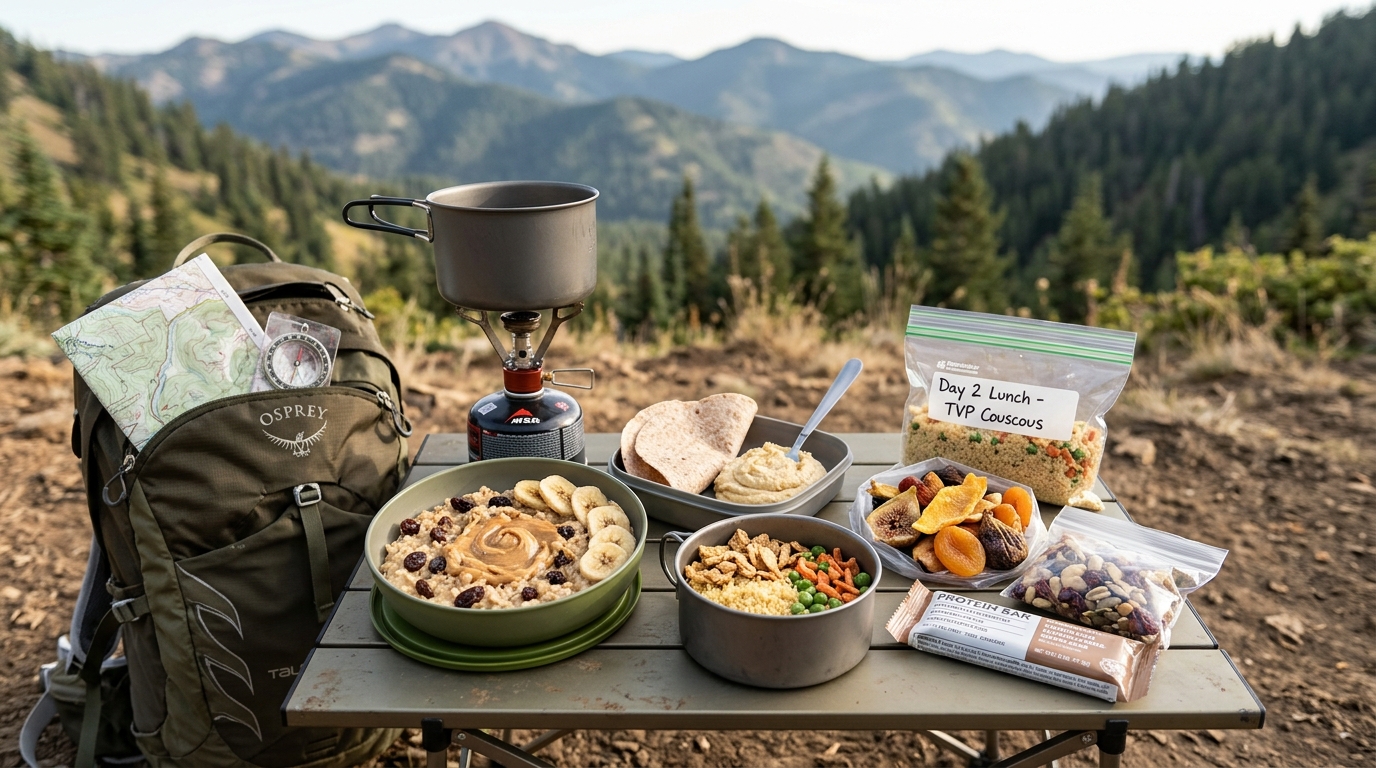
- Breakfast: Rolled oats, powdered soy milk, chia seeds, and raisins.
- Lunch: Tortillas with instant hummus mix, olive oil, and dried vegetables.
- Dinner: Couscous with textured vegetable protein (TVP), dried vegetables, and vegan seasoning.
- Snacks: Peanut butter, trail mix, and dried fruit.
Why it works: Oats and couscous supply carbohydrates, while soy milk, hummus, and TVP contribute protein. Peanut butter and trail mix help increase energy without adding much bulk.
Day 2: Beans, Rice, and Trail Mix
Estimated protein: 75–90 g · Approximate dry food weight: 650–750 g
- Breakfast: Granola with powdered soy milk, pumpkin seeds, and dried fruit.
- Lunch: Tortillas filled with instant refried beans, olive oil, and taco seasoning.
- Dinner: Instant rice with TVP, coconut milk powder, and dried vegetables.
- Snacks: Trail mix, peanut butter, and a vegan energy bar.
Why it works: Beans and TVP provide complementary plant-protein sources throughout the day. The rice and tortillas provide useful energy for sustained hiking.
Day 3: A Lentil-Focused Day
Estimated protein: 70–85 g · Approximate dry food weight: 650–750 g
- Breakfast: Oatmeal with powdered soy milk, ground flaxseed, and peanut butter.
- Lunch: Whole-wheat tortillas with instant lentil soup mix.
- Dinner: Quick-cooking couscous with dried lentils or a commercially packaged instant lentil meal, plus olive oil.
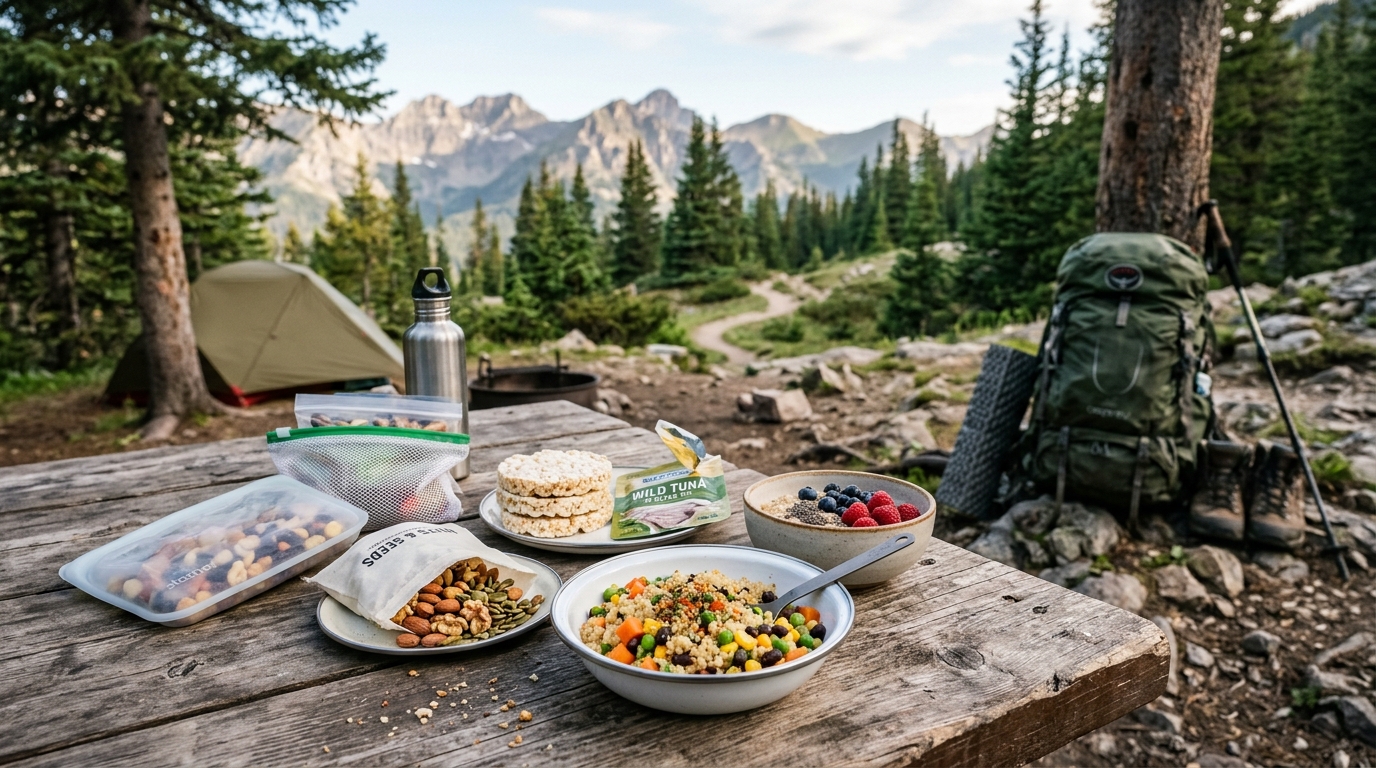
- Snacks: Roasted chickpeas, dried fruit, and nuts.
Why it works: Lentils and chickpeas add variety to a menu that might otherwise rely heavily on soy. Choose products with preparation times suitable for your stove and fuel supply.
Day 4: Easy Meals for a Long Hiking Day
Estimated protein: 75–90 g · Approximate dry food weight: 650–750 g
- Breakfast: Instant oatmeal with powdered soy milk, chia seeds, and raisins.
- Lunch: Tortillas with peanut butter and a side of roasted chickpeas.
- Dinner: Pasta with TVP and a dry tomato-based sauce mix labeled vegan.
- Snacks: Trail mix, a vegan energy bar, and dried mango or another preferred fruit.
Why it works: Lunch requires little or no cooking, which can be convenient on a day when you want to spend more time hiking. Dinner provides a warm, filling meal at camp.
Day 5: Use the Final Portions Wisely
Estimated protein: 70–85 g · Approximate dry food weight: 600–700 g
- Breakfast: Oats with powdered soy milk, peanut butter, and dried fruit.
- Lunch: Instant refried bean tortillas with seeds or roasted chickpeas.
- Dinner: Instant rice or couscous with TVP and the remaining dried vegetables and seasoning.
- Snacks: Nuts, trail mix, and any planned vegan bars remaining in your food allocation.
Why it works: Familiar ingredients make the last day simple, and using pre-portioned ingredients helps prevent accidental overuse early in the trip.
Do not plan to finish the trip with no food reserve if delays, difficult terrain, or unexpected weather are realistic possibilities. Pack a modest emergency snack allowance appropriate to your route.
📊 Five-Day Protein and Food-Weight Summary
| Day | Estimated protein | Approx. food weight |
|---|---|---|
| Day 1 | 75–85 g | 650–700 g |
| Day 2 | 75–90 g | 650–750 g |
| Day 3 | 70–85 g | 650–750 g |
| Day 4 | 75–90 g | 650–750 g |
| Day 5 | 70–85 g | 600–700 g |
Estimated total for five days
365–435 g
Protein across the trip
3.2–3.65 kg
Food before packaging
These are planning ranges, not verified nutrient calculations for one exact set of portions. They assume the meals include the protein-rich ingredients listed. To calculate your actual totals, use each product’s nutrition label and multiply its protein per serving by the number of servings packed.
Food weight is for the ingredients themselves. It excludes packaging, cookware, fuel, and water.
💪 How to Get Enough Protein on a Vegan Trail Menu
You do not need to depend on one special protein product. Spread several sources across the day.
- TVP: Lightweight, dry, and protein-rich; check the label because protein content varies.
- Soy milk powder: A convenient way to add protein to oatmeal and granola.
- Lentils and beans: Choose instant or quick-cooking versions to avoid excessive fuel use.
- Peanut butter and nuts: Add both protein and calorie-dense fats.
- Seeds: Chia, pumpkin, and flaxseed add useful nutrients and some protein.
- Whole grains: Oats, whole-wheat tortillas, pasta, and couscous contribute protein as well as carbohydrates.
Protein needs vary with body size, total food intake, activity, and individual circumstances. The estimates above may suit some hikers but will not automatically meet everyone’s needs. For a demanding trip, prioritize adequate total calories as well as protein.
💵 How Much Does Five Days of Vegan Backpacking Food Cost?
A budget-friendly menu can be built from supermarket staples rather than individually packaged camping meals. As a rough U.S. grocery-shopping estimate, plan around $8–$14 per person per day, or approximately $40–$70 for five days.
Actual costs depend on location, store, brand, package size, and how much you already have at home. This is a planning estimate, not a current store-price quote.
| Food category | Budget strategy |
|---|---|
| Oats and grains | Buy larger bags of oats, rice, pasta, and couscous |
| Beans and lentils | Compare dry instant products with ordinary canned or pouch options |
| Protein | Use TVP, soy milk powder, peanut butter, and legumes |
| Snacks | Portion bulk nuts, seeds, and dried fruit yourself |
| Flavorings | Carry small quantities of seasoning, oil, and sauce powder |
Money-saving tip: Calculate the cost of the amount you actually pack, not the entire package price. A large bag of oats might cost more upfront but provide many breakfasts. Conversely, a specialty camping meal can be convenient but expensive per serving.
🛡️ Food Safety Without Refrigeration
Shelf-stable does not mean every food is safe indefinitely after opening. Keep these precautions in mind.
- Check packaging: Use commercially packaged foods labeled shelf-stable, and follow the storage instructions and expiration or best-before guidance.
- Keep dry foods dry: Moisture can cause spoilage and make powders and grains difficult to use. Store them in sealed, waterproof bags.
- Choose appropriate portions: Small packets of oil, nut butter, or sauce can reduce the need to store opened products. For larger containers, follow the label’s instructions after opening.
- Handle rehydrated food carefully: Cook or rehydrate meals with safe water, eat them promptly, and discard leftovers that have been sitting at unsafe temperatures. Perishable cooked foods generally should not remain at room temperature for more than two hours, or one hour above 90°F (32°C).
- Protect food from wildlife: Store food according to local rules and your destination’s wildlife-storage requirements. A sealed food bag alone may not be adequate protection from animals.
- Check allergen warnings: Soy, peanuts, tree nuts, sesame, and other common allergens may appear in vegan products.
For commercial pouches or ready-to-eat plant-based foods, follow the manufacturer’s storage instructions. Do not assume a product is safe to carry unrefrigerated simply because it is vegan.
🎒 How to Pack Five Days of Food
A little organization can make the difference between an easy meal break and a frustrating search through your backpack.
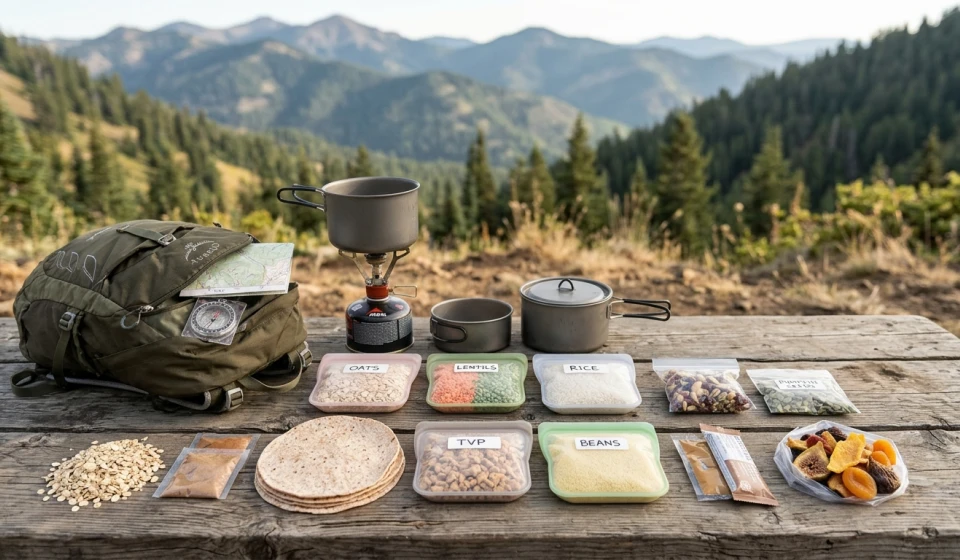
- Plan by day. Divide ingredients into five labeled daily bags. Separate breakfast, lunch, dinner, and snacks if that makes preparation easier.
- Write down water requirements. Add the amount of water each meal needs and whether it requires simmering or simply soaking.
- Keep cooking instructions. Record the required cooking time for instant rice, lentils, pasta, and packaged meals. Different products have different requirements.
- Pack seasonings in small quantities. A little curry powder, garlic, chili, or taco seasoning can make similar base ingredients taste different.
- Keep snacks accessible. Place a portion of trail mix or other convenient snacks where you can reach them safely during breaks.
- Weigh the completed food load. Include the packaging in your final backpack weight and check whether the menu fits your pack and storage system.
Before the trip, try one full day’s menu at home. You can check whether the portions are satisfying, how much water the meals require, and whether your stove can prepare them efficiently.
Final Thoughts 🌿
A five-day vegan backpacking menu can be affordable, varied, and practical without refrigeration. Oats, grains, legumes, nuts, seeds, TVP, and commercially packaged plant-based foods provide a flexible foundation for trail meals.
The most important part is not reaching a particular protein number at all costs. It is carrying enough food to meet your energy needs, choosing ingredients you enjoy, and making sure the meals are safe and practical to prepare.
Start with this menu, check the nutrition labels of the products you actually buy, and adjust portions to match your route and appetite. With a little preparation, you can spend less time worrying about food and more time enjoying the trail.