Best No-Cook Backpacking Foods for Water Scarcity
When you’re backpacking through a dry canyon or a high desert trail, every liter of water counts. Carrying a stove means packing extra fuel and more water for cleanup—two luxuries that vanish when water sources are scarce. Enter the no-cook, cold-soak approach: a backcountry strategy that eliminates the need to boil, simmer, or even rinse. This guide breaks down the best shelf-stable, ready-to-eat foods for water-scarce adventures, focusing on proteins, carbs, fats, and flavor boosters that keep you fueled without a single flame.
The Water-Smart Philosophy: Why Go No-Cook?
In traditional backpacking, cooking often requires a quart or more of water per meal—for rehydrating, boiling, and cleaning. In arid environments, that water is better saved for drinking. No-cook eating slashes your water budget by eliminating cleanup and reducing the liquid needed to rehydrate. It also shaves weight: no stove, no fuel canister, no titanium pot. The trade-off? You sacrifice hot food, but the gains in mobility, simplicity, and hydration security are massive. As long-time PCT thru-hiker Sarah DeLuca puts it:
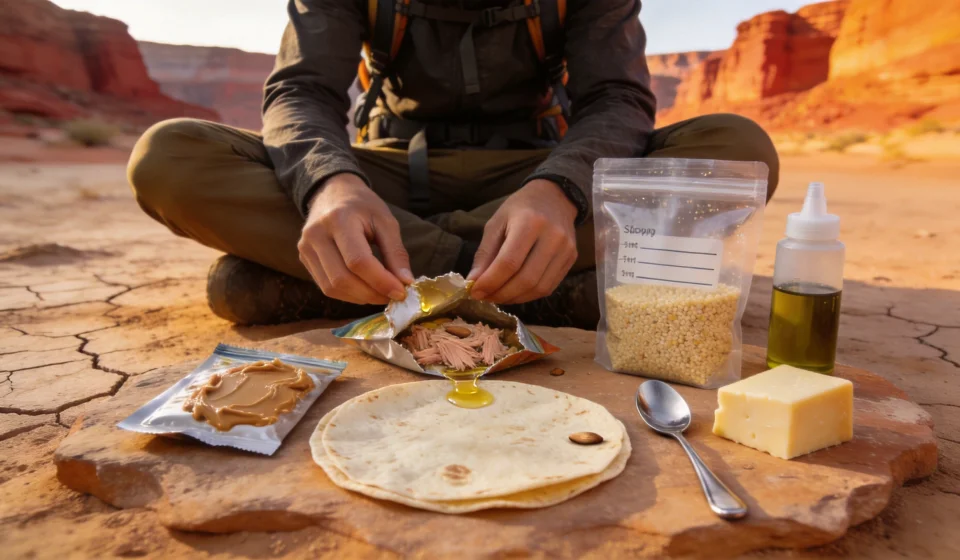
“On the Arizona Trail, I stopped bringing a stove after day three. Cold-soaked couscous and tuna on a tortilla became my favorite meal—it took zero water to clean, and I could eat it while walking.”
This philosophy applies to anyone facing water scarcity, from weekend warriors in the Utah desert to long-distance hikers in the Sierra Nevada. The key is choosing foods that are already moist, require minimal rehydration, or can be eaten straight from the package.
Building Your No-Cook Pantry: Proteins, Carbs, Fats, and Extras
A no-cook system still needs balance. Here’s a breakdown of the four pillars, with specific products that perform well under water constraints.
Shelf-Stable Proteins: Pouches, Chunks, and More
Proteins are the most critical macronutrient for recovery after a long day, but they’re also the most challenging to source without cooking. Focus on products packed in oil or water that come in lightweight, resealable pouches—no can opener needed.
- Tuna pouches (e.g., Starkist, Bumble Bee) – Skip the water-packed versions; go for oil-packed for extra calories. Each 2.6-ounce pouch provides ~15g protein and 80–100 calories from the oil. Drain the liquid onto your tortillas for flavor.
- Chicken chunks (e.g., Kirkland canned chicken, Swanson pouches) – Pre-cooked and shelf-stable for months. Chicken is leaner than tuna, so pair it with a fat source. A 3-ounce pouch delivers around 21g protein with almost no water waste.
- Brisket or pulled pork pouches (e.g., Epic Provisions, Campfire Gourmet) – These are premium meats often with a smoky sauce that doubles as flavor. Higher fat content means more staying power. Perfect for cold-soaking with couscous.
- Jerky and meat sticks (e.g., Jack Links, Vermont Smoke & Cure) – While dry, they require chewing and saliva, which uses body water. Save them for first-day meals when you can afford the hydration hit.
For plant-based hikers, consider sun-dried tofu strips (rehydrate in a bag with a splash of soy sauce) or instant hummus powder (just add cold water)—but note that these require more water than pouch meats.
Carbohydrates: Tortillas, Bagels, and Cold-Soak Stars
Carbs provide quick energy, and they’re naturally low-water foods if chosen wisely. Avoid anything that requires boiling (white rice, pasta). Instead, lean on these:
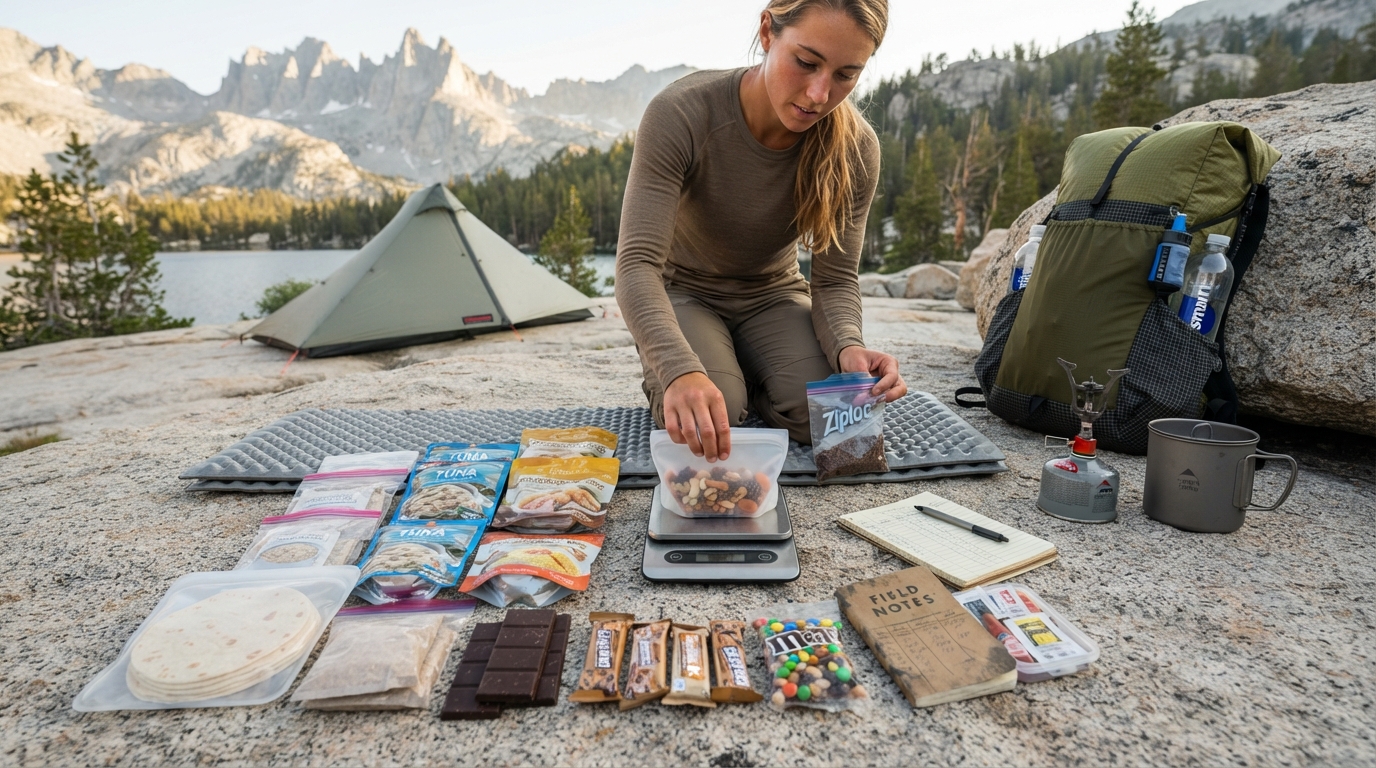
- Flour or corn tortillas – Ultra-durable, don’t crush, and double as wraps for meats and cheese. A 10-inch tortilla has ~150 calories and almost no water content. 12 of them fit in a ziplock bag for a week’s supply.
- Bagels – Dense, sturdy, and high in complex carbs. They resist mold better than bread. A single bagel packs ~300 calories. Spread with almond butter or dip into olive oil—no water needed.
- Couscous (Moroccan-style) – The gold standard for cold-soaking. Unlike instant rice or quinoa, couscous rehydrates in 10 minutes with just enough cold water to cover it. Pre-mix with dried vegetables and bouillon powder in a freezer bag; add water, seal, wait, and eat directly from the bag.
- Instant mashed potatoes – Another cold-soak champion. Use a tablespoon of olive oil and a pinch of salt. They turn into a dense patty that can be wrapped in a tortilla.
- Pita chips, pretzels, or crackers – Crunchy, dry carriers for dips. Watch out for sodium levels that increase thirst, but they’re great as a caloric filler.
Cold-Soaking Best Practices
The technique is simple: add enough water to cover dry ingredients in a sealable bag, let sit for 10–15 minutes, then eat. For water-scarce trips, measure your water carefully—use a safety-pin-marked bag to indicate a 4-ounce line. Remember that you can always drink the leftover soak water (it’s just flavored starch). Pro tip: cold-soak in a disposable freezer bag, then use that same bag as a trash container for the rest of the trip.
| Food | Dry Weight | Water Required | Soak Time (cold) |
|---|---|---|---|
| Couscous | 2 oz | 4 oz | 10 min |
| Instant mashed potatoes | 1 oz | 3 oz | 5 min |
| Instant hummus mix | 1.5 oz | 2.5 oz | 8 min |
| Ramen noodles (broken up) | 3 oz | 6 oz | 15 min (but less tasty cold) |
Fats and Flavor Boosters: The Secret Weapons
In a no-cook system, fats are your best friend—they add calories, improve texture, and suppress appetite. They also require zero water prep.
- Extra-virgin olive oil – A 100-milliliter squeeze bottle (repurposed from a travel-size shampoo bottle) delivers 800 calories. Drizzle over couscous, dip tortillas, or mix into instant potatoes. Flavor tip: infuse with garlic powder before the trip.
- Hard cheese – Parmesan, asiago, or aged cheddar. They stay fresh for weeks without refrigeration. Shredded parmesan fits in a small bag and melts slightly in the sun. A 1-ounce serving provides 110 calories and 7g fat.
- Almond butter or peanut butter – Single-serving squeeze packets eliminate mess. Perfect straight from the packet, spread on bagels, or mixed into cold-soak oatmeal. Avoid bulk jars; they’re heavy and hard to clean.
- Hot sauce – Tabasco, Cholula, or Tapatío. A few drops can revive any bland meal. Acid (vinegar) also helps preserve foods in hot weather. Package it in a 5 mL dropper bottle to save weight.
- Dried herbs and spices – Salt, pepper, garlic powder, thyme, cayenne. Pre-mix your own no-cook seasoning shaker. Avoid salt-heavy blends if water is extremely limited—but a little sodium is fine for electrolyte balance.
One overlooked item: coconut oil (solid below 76°F; liquid in warm weather). Use it as a butter substitute or mix into hot chocolate powder for an instant high-calorie drink.
Practical Meal Ideas and Combinations
Now that you have the building blocks, here are three zero-cook, near-zero-water meals that are trail-tested for water scarcity.
Cold-Soak Mexican Bowl (uses ~4 oz water)
In a freezer bag: 2 oz couscous + 1 tbsp instant refried bean powder + ½ tsp cumin + pinch salt. Add 4 oz cold water, seal, and let sit 10 min. Add 1 pouch of chicken chunks, 2 tbsp olive oil, and a squirt of hot sauce. Eat with tortilla chips or roll into tortillas. This delivers 500+ calories, 25g protein, and uses only the water from the couscous soak.
No-Water Wrap (0 added water)
Take one flour tortilla, spread half a packet of almond butter. Layer with 1 oz brisket from a pouch, a handful of crushed pretzels, and a sprinkle of parmesan. Roll tightly. This is purely hydration-neutral—you get moisture from the almond butter and meat pouch oil. Great for lunch when you’re low on water.
Dav’s Desert Breakfast (cold-soak, ~3 oz water)
Combine instant mashed potatoes (1 oz) with 2 tbsp olive oil, salt, and pepper in a bag. Add 3 oz cold water, mix, let sit 5 min. Eat as a savory porridge. Follow with a shot of olive oil and a piece of hard cheese. This yields ~400 calories and keeps you going until the afternoon water cache.
Hydration Hacks and Water Management
Even with no-cook foods, you still need water for drinking. Here’s how to stretch every drop:
- Pre-hydrate meals at home. For th first day only, you can cold-soak couscous or oats with water from a treated source before leaving the trailhead. This saves you from carrying soak water later.
- Use “spit and stir” for small portions. If you’re extremely water limited, you can chew dry couscous and then sip water to moisten—inelegant but effective in emergency.
- Collect condensation. On cold desert mornings, a bandana left out can absorb dew. Wring it into your water bottle (treat with a UV pen). This can provide an extra 2–4 oz for your breakfast soak.
- Target high-moisture foods. Include cucumbers or cherry tomatoes (if you can carry them for the first day) for a water source in food form. But for multiple days, stick with the shelf-stable list above.
Remember: no-cook doesn’t mean no-wash. Even without a stove, you should clean your eating utensils (if any) with a tiny bit of water and an alcohol hand wipe. The best solution? Eat everything from a single bag—use your spoon as a mixer and then lick it clean.
What to Avoid in a Water-Scarce Environment
Some popular backpacking staples are poor choices when water is tight. Instant oatmeal, for example, requires nearly as much water as cooking and leaves a pasty residue that demands cleanup. Dehydrated meals (like Mountain House) need a full cup of boiling water and a pot to clean—defeats the purpose. Rice cakes and granola are low-moisture but can be dry and need lots of chewing, which increases thirst. Save those for trips with reliable water sources. Also avoid anything in a can (heavy, requires a can opener, and the residual liquid is often brine you don’t want to drink).
Instead, embrace the mantra: “If it needs a pot, it stays in the parking lot.” Your stove-free, water-wise kit will be lighter, simpler, and far more flexible.
Conclusion
No-cook backpacking isn’t just an option for water scarcity—it’s a liberating shift in how we approach trail nutrition. By choosing tuna pouches, cold-soaked couscous, olive oil, and hard cheese, you cut water waste, drop pack weight, and eliminate the worry of running out of fuel. The next time you’re planning a trip through dry terrain, leave the stove at home and pack a bag of tortillas. Your water bottle will thank you.