How Much Caffeine Is Hiding in Your Trail Food Bag? Add Up Coffee, Gels, Drink Mixes and Chocolate
A backpacker can carefully calculate calories, protein, food weight, and water capacity while completely overlooking another number scattered throughout the food bag: total caffeine. ☕ Morning coffee may seem separate from a caffeinated gel, chocolate bar, cola at a resupply stop, or electrolyte mix, but your caffeine total does not care which pocket those products came from. Once several small sources are combined, the daily number can look very different from the caffeine amount printed on any single package.
That makes caffeine accounting a useful addition to trail menu planning, especially for hikers who regularly pack several caffeinated products without thinking of them as one category. The goal is not to prescribe an ideal caffeine dose or tell every hiker when caffeine should be consumed, because tolerance, sensitivity, medications, health conditions, and habitual intake differ substantially between people. 🎒 Instead, this worksheet asks a much simpler question: How many milligrams of caffeine are actually in the food and drinks you plan to consume?
Caffeine Can Enter Your Trail Menu From More Places Than You Think
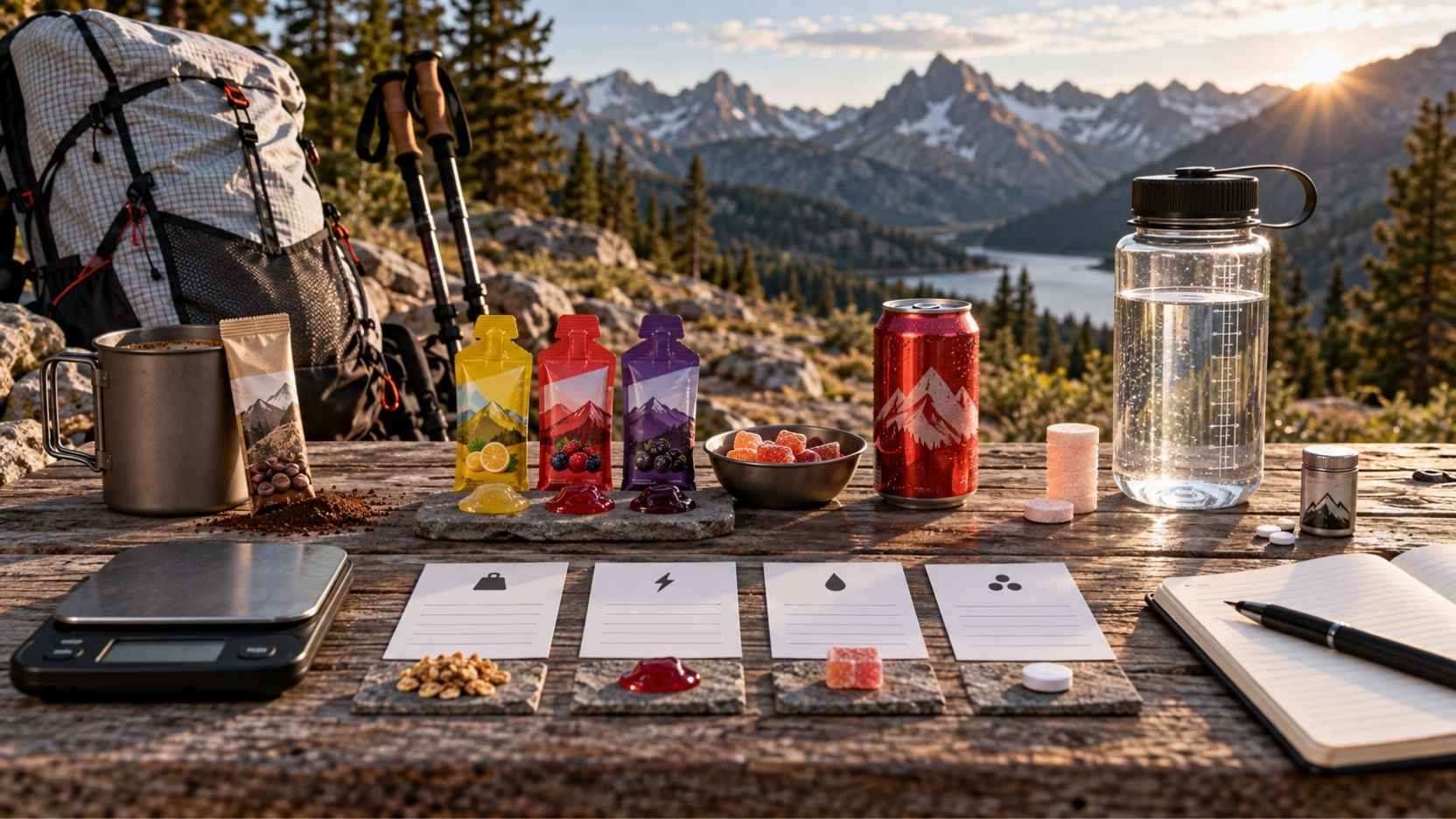
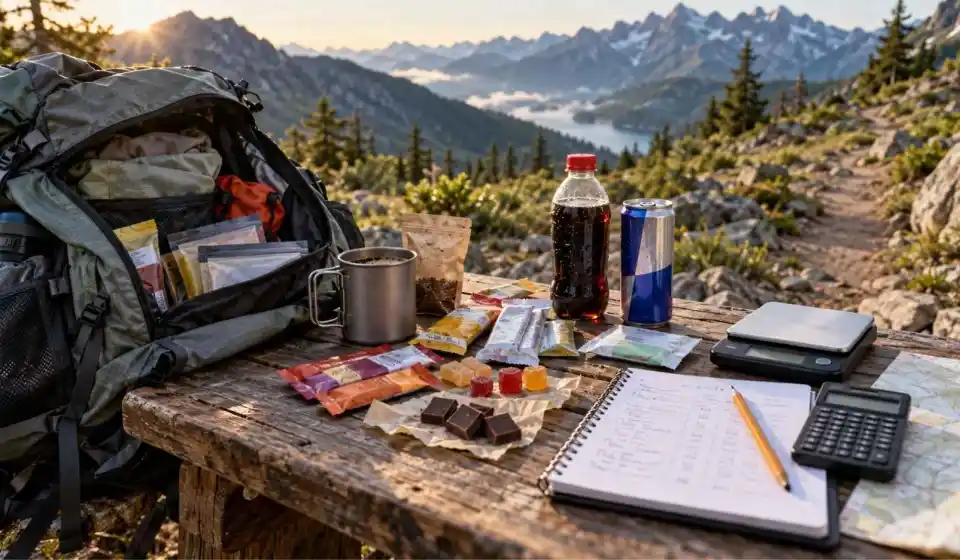
Coffee is the obvious starting point, but it is only one row in a realistic backpacking caffeine inventory. Caffeine may also appear in gels, chews, drink powders, energy bars, chocolate, tea, cola, energy drinks, coffee-flavored foods, and products purchased unexpectedly during a town stop. ⚡ Individually, some of those sources may look insignificant, which is exactly why hikers can underestimate the combined number.
Think about caffeine the same way you would think about calories when building a backpacking menu: every source belongs in the total. A gel does not stop counting because it was eaten while hiking, and a cola does not disappear mathematically because it was purchased instead of carried from the trailhead. Your basic equation is simply total planned caffeine = coffee + gels + chews + drink mixes + bars + chocolate + beverages + other caffeine-containing products.
Start With The Package, Serving Size And Milligrams
For packaged trail products, begin by looking for a stated caffeine amount and determine exactly what that number represents. A package might list caffeine per serving, per packet, per gel, per scoop, or per bottle, and those are not necessarily interchangeable quantities. 🔎 If a pouch contains two servings and you consume the entire pouch, calculating only one serving would cut your recorded caffeine in half.
Ingredient lists also deserve attention because some products contain naturally caffeinated ingredients such as cocoa, coffee, tea, or chocolate even when caffeine is not the product’s main selling point. Not every conventional food label provides an exact caffeine number, so avoid inventing a milligram figure when the manufacturer does not provide one. For your worksheet, mark uncertain items as “amount unknown” until you can verify the product information rather than pretending the total is more precise than the available data.
Coffee Is Usually The First Big Variable
Coffee deserves its own row because caffeine content can vary significantly with coffee type, serving size, brewing method, preparation, and product. ☕ An eight-ounce cup of brewed coffee is often used as a reference serving, but a large mug, concentrated instant coffee, espresso drink, or strong trail brew may not contain the same amount. This is why simply writing “one coffee” on a worksheet is less useful than recording the actual serving and the best available caffeine estimate.
If you use instant coffee packets while backpacking, the easiest method is to check the manufacturer’s information for that specific packet and multiply it by the number you plan to drink. A three-day menu containing one caffeinated coffee every morning should therefore have three coffee entries, not one generic coffee entry for the entire trip. 🏕️ That simple habit also makes it easier to separate total caffeine packed from the amount planned for each individual day.
Caffeinated Gels And Chews Can Accumulate Quickly
Sports gels and chews are particularly easy to overlook because caffeine may be only one feature among carbohydrates, flavors, electrolytes, and calories. One variety from a product line may contain caffeine while another flavor from the same brand may contain none, so assuming that every gel is identical can distort your calculation. 🏃 Always record the caffeine from the specific flavor and package you actually intend to carry.
Imagine your labels show 40 mg per caffeinated gel and you pack three for one hiking day; your planned gel contribution would be 120 mg. That does not mean 120 mg is an appropriate amount for every hiker—it simply demonstrates the accounting method using hypothetical label values. If you later add coffee or another caffeinated product, those milligrams go into the same daily column rather than starting a new calculation.
Drink Mixes And Electrolytes Need Their Own Check
“Electrolyte drink” does not automatically mean caffeinated, and “energy drink mix” does not automatically tell you how much caffeine is present. Some powdered products contain none, while others deliberately add caffeine, so hikers should check each formulation rather than judging by words such as energy, endurance, hydration, or performance. 💧 Even different versions from one product family can have completely different ingredient profiles.
Serving math becomes especially important when powder is mixed into large bottles or reservoirs. If one serving contains a hypothetical 50 mg of caffeine but you mix two servings into your bottle, the caffeine entry is 100 mg, regardless of how gradually you drink it. Record the amount of powder used rather than assuming that one bottle always equals one serving.
Chocolate And Caffeinated Foods Still Belong In The Total
Chocolate illustrates why caffeine accounting can never rely exclusively on products advertised as “caffeinated.” Cocoa naturally contains caffeine, so chocolate foods can contribute some caffeine even when stimulation is not their purpose, and the actual amount differs according to product composition and serving size. 🍫 Darker, cocoa-rich products can also differ considerably from milk chocolate, making generic assumptions unreliable.
For ordinary trail chocolate without a stated caffeine amount, you do not need to fabricate precision simply to complete the spreadsheet. Mark the food as a caffeine-containing source, use manufacturer information when available, and acknowledge when the exact amount is unknown. The broader lesson is valuable: a caffeine inventory can contain both precisely measured entries and clearly identified uncertainties.
Resupply Cola And Energy Drinks Count Too
Town food can quietly break an otherwise careful caffeine calculation because hikers often build spreadsheets only from what leaves the trailhead. A caffeinated cola, bottled coffee, energy drink, or coffee purchased at a resupply point still becomes part of that day’s total even though it never appeared in the original food bag. 🥤 If your route includes predictable stores or restaurants, adding a “possible resupply caffeine” row makes the plan more realistic.
Beverages also vary widely, so avoid treating every cola, coffee, or energy drink as equivalent. Serving size alone cannot tell you the caffeine amount because two beverages of equal volume may contain very different quantities. Your most defensible approach remains the same: read the stated caffeine information for the exact product whenever possible.
Build A Caffeine Inventory Before The Trip
Create a simple table with five columns: item, caffeine per serving, servings packed, total caffeine packed, and planned day of use. 📝 This separates two questions that hikers often accidentally mix together—how much caffeine is physically inside the food bag and how much is expected to be consumed on a particular day. A product with 100 mg per serving packed three times represents 300 mg packed, even if those servings are intended for three separate days.
Then calculate each line with the straightforward formula caffeine per serving × number of servings = caffeine from that item. Add every line to find the trip total, and group the entries by day to calculate planned daily totals. This is exactly the same spreadsheet logic used for calories, food weight, or cost, which makes caffeine accounting an easy addition to an existing trail-menu worksheet.
Example One-Day Caffeine Worksheet
Consider a hypothetical day where product labels show 90 mg from morning coffee, 40 mg from one gel, 50 mg from a drink mix, and 20 mg from another caffeinated food. ☕ The worksheet calculation becomes 90 + 40 + 50 + 20 = 200 mg of planned caffeine for the day. The purpose of the example is mathematical visibility, not a recommendation that hikers should consume 200 mg.
Now imagine someone remembers only the gel and says, “I barely packed caffeine because my gel has just 40 mg.” The accounting worksheet reveals why that conclusion is incomplete: the gel represents only one-fifth of the hypothetical 200 mg total. Small entries stop looking small once they share the same column.
A Three-Day Pack-Out Needs Two Different Totals
Suppose a three-day menu contains three coffees at a hypothetical 80 mg each, four gels at 30 mg each, and two drink-mix servings at 40 mg each. 🎒 Your entire pack contains 240 mg from coffee + 120 mg from gels + 80 mg from drink mix = 440 mg of caffeine across the trip. That 440 mg number describes inventory, however, not what will necessarily be consumed in a single day.
If those products are distributed unevenly, your daily totals might be very different despite having the same overall pack-out. This is why caffeine per trip and caffeine per day are separate metrics, just as three days of food calories should not be mistaken for one day’s calorie intake. Record both numbers if you want your spreadsheet to show what the pack contains and how the planned menu is distributed.
Habitual Intake Makes Universal Numbers Less Useful
Someone who drinks coffee every morning before backpacking does not approach caffeine from the same baseline as someone who rarely consumes it. Individual sensitivity also varies, and factors such as medications or medical conditions can make generic internet recommendations inappropriate. ⚠️ The FDA currently cites 400 mg per day for most adults as an amount not generally associated with negative effects, but that is a broad population reference—not a trail target or instruction to consume that amount.
Your worksheet therefore works best as an awareness tool, not as permission to chase a particular number. If your calculation surprises you, the useful discovery is that several products contributed more caffeine than you realized. Questions about what intake is personally appropriate, particularly with pregnancy, medications, medical conditions, unusual sensitivity, or other individual circumstances, should be discussed with a qualified healthcare professional.
Keep Caffeine, Calories And Hydration In Separate Columns
A caffeinated gel may simultaneously provide carbohydrate, calories, sodium, and caffeine, but those numbers answer different planning questions. 💡 Do not subtract caffeine from hydration, count caffeine milligrams as nutrition calories, or let one measurement replace another simply because the ingredients appear inside the same product. A strong backpacking worksheet maintains separate accounting systems and connects them only when comparing complete menu options.
That separation also creates a useful Camp Kitchen Lab workflow: calculate calories per day, evaluate calories per ounce, build the food inventory, and then add a caffeine column for every relevant product. What began as “two caffeinated gels” may turn into coffee, chocolate, drink powder, gels, and a resupply cola once the entire menu is inspected. The biggest benefit is not finding a perfect caffeine number—it is finally knowing what is actually hiding in your trail food bag. 🥾