How to Rotate Your Backpacking Food Stash Using a Simple FIFO System
Building a backpacking food stash can make trip planning easier, save money, and prevent last-minute grocery runs. But there is one problem that often appears after the initial excitement of buying trail food: food starts accumulating.
You buy several bags of trail mix for summer hikes. Then you order energy bars for a weekend trip. Later, you find a sale on freeze-dried meals and buy a case. A few months later, your pantry is full of backpacking food, but you are no longer sure which products should be eaten first.
This is where a simple FIFO system can help.
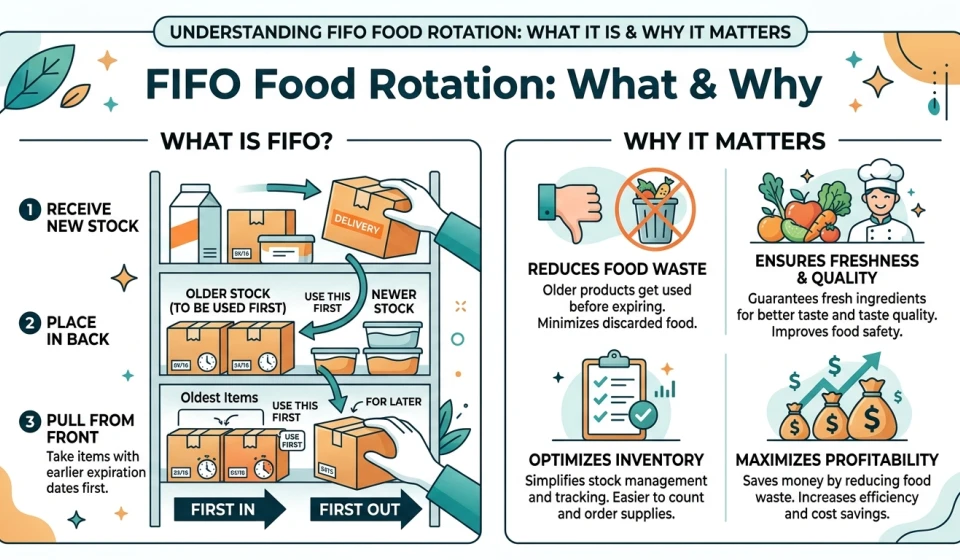
FIFO stands for First In, First Out. The basic idea is straightforward: the food you purchased or stored first should generally be the food you use first.
For backpackers, FIFO turns a random collection of snacks into an organized food inventory.
What Does FIFO Mean for Backpacking Food?
Imagine you have three boxes of freeze-dried meals.
Box A was purchased in January.
Box B was purchased in April.
Box C was purchased in August.
Under FIFO, Box A should be the first one you use.
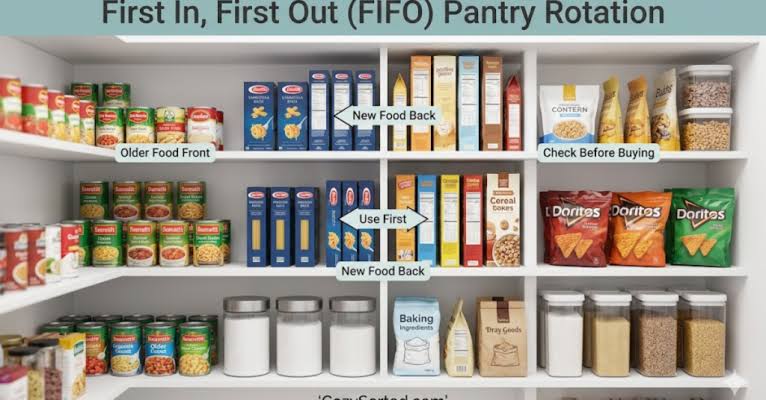
When new food arrives, it goes behind the older food rather than in front of it.
The system works particularly well for shelf-stable foods because many products have dates that indicate expected quality. USDA explains that dating on many shelf-stable foods is generally related to quality rather than being a federally mandated safety cutoff.
FIFO does not mean ignoring expiration or best-by information. Instead, it helps you use products in a logical order while still checking the manufacturer’s instructions and the condition of each package.
Why Backpackers Need a Rotation System
It is easy to forget about food that sits at the back of a pantry.
A single bag of trail mix might not seem important. But multiply that by several months and multiple trips, and forgotten food can become a significant source of waste.
FIFO provides three major benefits.
First, it reduces the chance that older food will be forgotten.
Second, it helps you identify what needs to be used soon.
Third, it makes trip planning faster.
Instead of opening every box before a trip, you already know which products are oldest.
Step 1: Create One Dedicated Food Storage Area
The first step is to give your backpacking food a home.
This does not necessarily require a large pantry.
A shelf, cabinet, plastic storage bin, or small closet section can work.
The important thing is organization.
Try to keep backpacking food separate from everyday snacks when possible. This makes inventory easier and reduces the chance that products disappear into different parts of the house.
For long-term shelf-stable storage, choose a location that is cool, dry, and protected from excessive temperature changes.
Avoid treating a garage, attic, or hot vehicle as ideal storage simply because the food does not require refrigeration.
Step 2: Record What You Have
You do not need complicated inventory software.
A simple spreadsheet can be enough.
Create columns for:
- Product
- Quantity
- Purchase date
- Best-by or expiration date
- Package size
- Storage location
- Intended trip
For example:
| Food | Quantity | Purchased | Date on Package |
|---|---|---|---|
| Freeze-dried meals | 8 | January | 2029 |
| Beef jerky | 6 | March | 2027 |
| Energy bars | 12 | May | 2027 |
| Trail mix | 4 | June | 2027 |
The exact dates vary by product, so use the information printed on your package.
Step 3: Put Older Food in Front
This is the physical heart of FIFO.
When you buy new food, do not simply place it in front of the existing supply.
Move the older products forward.
Put the newest products behind them.
This creates a natural queue.
When you need food for a trip, you automatically reach for the oldest appropriate package first.
This small habit can prevent food from sitting untouched for years.
Step 4: Use Purchase Dates and Package Dates Together
A common mistake is to organize everything only by purchase date.
That is useful, but it is not always enough.
Suppose you purchased two different energy bars in January and March.
The January package may actually have a later best-by date than the March package because the products came from different manufacturing batches.
Therefore, use both pieces of information.
FIFO should be your organizational system, while the product’s own labeling and storage instructions remain important for evaluating quality and suitability.
Step 5: Create a “Use Soon” Zone
Sometimes food doesn’t fit neatly into a simple FIFO line.
Maybe a package has been opened.
Maybe a product is approaching its quality date.
Maybe the packaging has been exposed to unusual conditions.
Create a small “use soon” section.
This can be a basket or box placed at the front of your storage area.
When you notice products that should be consumed earlier, move them there.
Then use those foods for day hikes, training walks, lunch at work, or ordinary snacks.
Step 6: Rotate Food Through Everyday Life
One of the best ways to prevent waste is to eat your backpacking food regularly.
You do not have to wait for a major expedition.
Energy bars can become work snacks.
Trail mix can become a hiking-day snack.
Freeze-dried meals can be useful when you want a quick meal at home.
Older shelf-stable products can be incorporated into shorter trips.
The goal is to make your backpacking stash an active inventory rather than a permanent emergency collection.
FIFO for Homemade Food
Homemade foods require extra attention.
Homemade jerky, dehydrated meals, baked snacks, and other DIY trail foods do not necessarily have the same shelf life as commercially packaged products.
Record the preparation date.
Label each package.
Store according to the appropriate food-safety guidance.
USDA provides specific guidance for homemade jerky, including preparation and storage considerations, and gives a much shorter storage reference for home-dried jerky than commercially packaged jerky.
For homemade products, preparation date can therefore be just as important as a printed best-by date.
FIFO Does Not Mean “Eat the Oldest Food No Matter What”
This is an important rule.
FIFO is an organization method, not a food-safety guarantee.
If the oldest package has been damaged, opened improperly, exposed to moisture, or shows signs of spoilage, do not eat it simply because it is first in line.
Check the food itself.
USDA recommends checking dry-food packaging for damage, holes, and other problems that could allow moisture or pests to enter.
The order of your inventory never overrides food-safety concerns.
Perform a Monthly Five-Minute Audit
You don’t need to spend an entire afternoon organizing your pantry.
Once a month, spend five minutes checking your stash.
Ask:
What is oldest?
What is approaching its date?
What has been opened?
What should be used on the next trip?
What needs to be replaced?
This tiny routine can prevent a surprisingly large amount of waste.
Match Food Rotation to Your Hiking Calendar
Your hiking schedule can make FIFO even more useful.
If you know you have a weekend backpacking trip coming up, check the oldest appropriate foods first.
If you have a summer trip planned, identify heat-sensitive foods before leaving them in a vehicle.
If you’re preparing for a longer expedition, use newer products with longer expected storage periods when appropriate and reserve older foods for near-term consumption.
Keep a Small Emergency Reserve
FIFO does not mean you have to consume everything.
If you want an emergency food reserve, create a separate section.
For example:
Everyday hiking food: actively rotated.
Long-term reserve: stored separately and inspected periodically.
This distinction makes it easier to maintain both a practical hiking pantry and an emergency supply.
Don’t Buy More Than You Can Rotate
Sales can be tempting.
Buying twenty energy bars because they are discounted may save money per bar, but not if half of them eventually become stale.
Before buying in bulk, ask yourself:
How quickly will I use this?
How many trips do I have planned?
How much storage space do I have?
Does the product have a long enough shelf life for my consumption rate?
The cheapest food is not necessarily the food with the lowest price per package. Food that gets used before quality declines provides much better value.
A Simple FIFO Routine
A practical routine can be summarized in six steps:
1. Inventory: Know what you own.
2. Label: Record purchase or preparation dates.
3. Arrange: Oldest appropriate products go in front.
4. Use: Take older products on upcoming trips.
5. Replace: Put new purchases behind existing stock.
6. Inspect: Remove damaged or questionable food.
Once this becomes a habit, managing backpacking food becomes almost automatic.
Final Thoughts
A backpacking food stash does not need to be complicated.
FIFO provides a simple framework for keeping older food moving while newer food enters the back of the line.
The most effective system combines physical organization with basic record keeping. Keep food in a cool, dry location, monitor package dates, label homemade products, and inspect packaging regularly.
Most importantly, remember that FIFO is not a substitute for food-safety judgment. If food is damaged or shows signs of spoilage, discard it regardless of where it sits in your rotation.
A well-managed food stash should work for you—not become another household inventory that you eventually have to clean out.
Use the oldest appropriate food first, replace what you consume, and your backpacking pantry can stay fresh, organized, and ready for the next adventure.