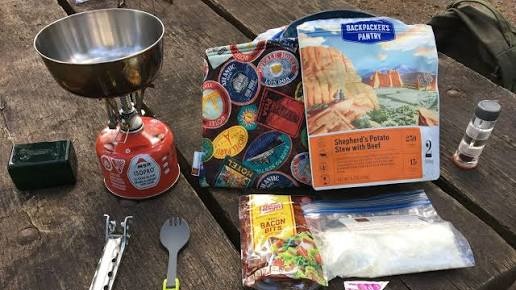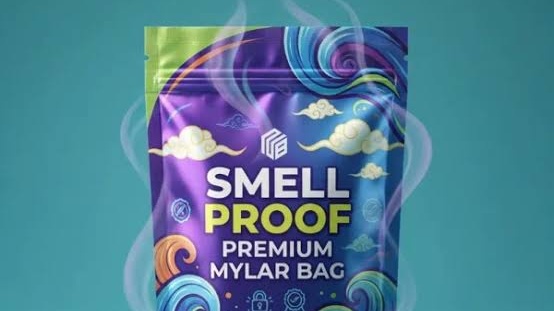
When you pack food for a backpacking trip, smell can be more than an annoyance.
Strong food aromas can attract insects, rodents, and other wildlife, while lingering odors inside your backpack can make your entire gear system smell like dinner. This is why many hikers turn to smell-proof bags. But do smell-proof bags actually work, or is “smell-proof” mostly a marketing term?
The short answer is that some bags can significantly reduce odor transmission, but no ordinary flexible bag should be assumed to make food completely odorless. Understanding the science behind odor molecules, barrier materials, seals, and packaging layers can help you choose and use these bags more effectively.
What Does “Smell-Proof” Actually Mean?
Odor is created when volatile molecules move from a material into the surrounding air. Your nose detects extremely small concentrations of certain molecules, which means a food does not need to release a large amount of vapor before you notice its smell.
A smell-proof bag is designed to slow down this movement.
The key word is slow.
A bag that reduces odor transmission is not necessarily creating a perfect molecular barrier. Instead, its material and closure system can make it much harder for volatile compounds to pass through the packaging.
This distinction matters for backpackers. A bag may greatly reduce the smell of coffee, jerky, cheese, spices, or dehydrated meals without eliminating every detectable molecule.
Why Ordinary Plastic Bags Are Not Always Enough
Standard polyethylene bags are useful for organizing food and protecting it from moisture, but they are not necessarily designed specifically for odor containment.
Some volatile organic compounds can migrate through plastic materials over time. The rate depends on the chemical properties of the odor compounds, the type and thickness of the plastic, temperature, concentration, and how long the food remains packaged.
For example, a strongly aromatic food may produce noticeable odors even when stored inside a conventional zipper bag.
This does not mean the bag is defective. It simply means that the material was not engineered to provide the highest possible odor barrier.
How Smell-Proof Bags Reduce Odor
Commercial odor-barrier bags often rely on multiple layers.
One layer may provide mechanical strength. Another may provide moisture or oxygen resistance. A specialized barrier layer can help slow the movement of volatile compounds.
Materials such as high-barrier films, metallized films, and aluminum-based barrier structures can provide much stronger resistance to gas and vapor transmission than ordinary thin plastic.
The exact construction varies from product to product, so “smell-proof” should not be treated as a universal technical specification.
Two bags carrying the same marketing description can perform differently.
The Importance of the Closure
Even a highly effective barrier material cannot compensate for a poor seal.
Imagine a bag made from an excellent odor-resistant film but closed with a zipper that leaves microscopic channels around the opening. Odor can escape through the closure even if it barely passes through the bag material itself.
This is why heat-sealed packaging can provide a stronger barrier than many resealable bags.
For reusable bags, compression seals, multi-layer zipper systems, and properly designed closures can improve odor containment.
The seal is often the weakest point in the entire system.
Temperature Changes the Equation
Heat can increase odor release.
When food becomes warmer, volatile compounds generally become more mobile, and some foods release aromas more readily. This is one reason a backpack sitting inside a hot vehicle can smell dramatically stronger than the same backpack stored in a cool room.
Temperature can therefore affect both the food and the packaging.
If you are trying to minimize odor during summer backpacking, keeping food reasonably cool can help reduce odor release. It also helps protect food quality.
However, smell-proof packaging should never be considered a substitute for appropriate food storage temperatures.
Strong-Smelling Foods Are More Difficult
Not every food produces the same odor challenge.
Coffee, powdered drink mixes, spices, peanut butter, cheese, jerky, smoked foods, garlic, onions, and certain freeze-dried meals can release noticeable aromas.
Foods containing aromatic oils can be particularly persistent.
If a food has a strong smell before packaging, a single thin plastic bag may not provide much odor control.
A better approach is often layered packaging.
For example, a backpacker might place individual meals in food-safe inner bags and then consolidate several meals inside a higher-barrier outer odor-resistant bag.
Each additional barrier can reduce the rate at which odor escapes.
Does Vacuum Sealing Make Food Smell-Proof?
Vacuum sealing can help, but it should not be confused with true odor-proof packaging.
Removing much of the air from a package can reduce the amount of volatile material immediately available in the headspace. A strong heat seal can also create a good closure.
However, vacuum sealing does not necessarily prevent volatile compounds from eventually migrating through the packaging material.
It is therefore more accurate to think of vacuum sealing as one component of an odor-control strategy.
It may work particularly well when combined with a high-barrier film.
What About Freeze-Dried Backpacking Meals?
Freeze-dried meals are generally lightweight and convenient, but some ingredients can have strong aromas.
A commercial freeze-dried meal may already have sophisticated packaging designed to protect it from oxygen and moisture. Repackaging it into a thin bag can change its protection against environmental factors.
If you repackage meals for backpacking convenience, choose packaging appropriate for the intended use and follow the manufacturer’s instructions when heat or hot water is involved.
For odor control, consider keeping strongly scented meals together inside a secondary barrier.
Smell-Proof Does Not Mean Wildlife-Proof
This is one of the most important distinctions for backpackers.
A smell-resistant bag should not automatically be considered an approved wildlife food-storage container.
Odor reduction and animal resistance are different engineering problems.
A thin flexible bag may reduce human-detectable odors but still be easily punctured or chewed by an animal.
Where regulations require an approved bear-resistant food container, use the required container. Do not substitute a smell-proof bag simply because the product description says it blocks odors.
How to Test a Smell-Proof Bag
You can perform a simple home comparison.
Place a strongly scented but safe food in one ordinary plastic bag and the same type of food in the odor-barrier bag. Seal both carefully.
After several hours, compare the outside of the packaging in a controlled environment.
For a more useful test, ask another person to handle the samples without knowing which is which. Human smell tests are subjective, but they can demonstrate a major difference in odor transmission.
Do not interpret a home test as a scientific certification. It simply helps you understand the practical performance of your packaging.
The Best Strategy Is Multiple Barriers
For backpacking food, odor control works best as a system.
Start with clean, dry food packaging. Use a suitable inner package, remove unnecessary headspace when appropriate, create a reliable seal, and place particularly aromatic foods inside a secondary odor-resistant layer.
Then follow the food-storage rules for your destination.
A smell-proof bag can be useful, but its performance depends on material, closure, temperature, food chemistry, and time.
The science is therefore less about creating an invisible magic wall around food and more about controlling the movement of volatile molecules.
Final Takeaway
Smell-proof bags can genuinely reduce odor transmission, especially when they use high-barrier materials and reliable closures. However, “smell-proof” does not necessarily mean that absolutely no odor can escape.
For backpackers, the most effective approach is to combine good packaging with proper food storage practices. Strong-smelling foods deserve extra attention, seals matter as much as the film itself, and temperature can influence odor release.
Most importantly, odor control should never be confused with wildlife protection. A bag that reduces smells may still provide little physical protection against animals.
Used correctly, an odor-barrier bag is a practical tool for organizing and containing trail food. It is not a guarantee that your backpack becomes completely undetectable to every nose—or every animal.