🎒 How to Pack a Full Day of Trail Food in One Easy-to-Access Food Bag
A full day of backpacking food can take up more space than expected.
Breakfast, snacks, lunch, dinner, drink mixes, and little extras can quickly turn into a collection of packets scattered throughout your backpack.
Then comes the frustrating part.
You’re hungry, but your snack is buried underneath your rain jacket. Your drink mix is somewhere inside the main food bag. Dinner is mixed in with tomorrow’s meals.
A simple solution is to create a daily food bag.
Instead of organizing your food only by category, organize one day’s worth of meals and snacks together. When you need food, you know exactly where to look.
The system is simple:
One day → one food bag → one predictable location. 🥾
🗓️ What Is a Daily Food Bag?
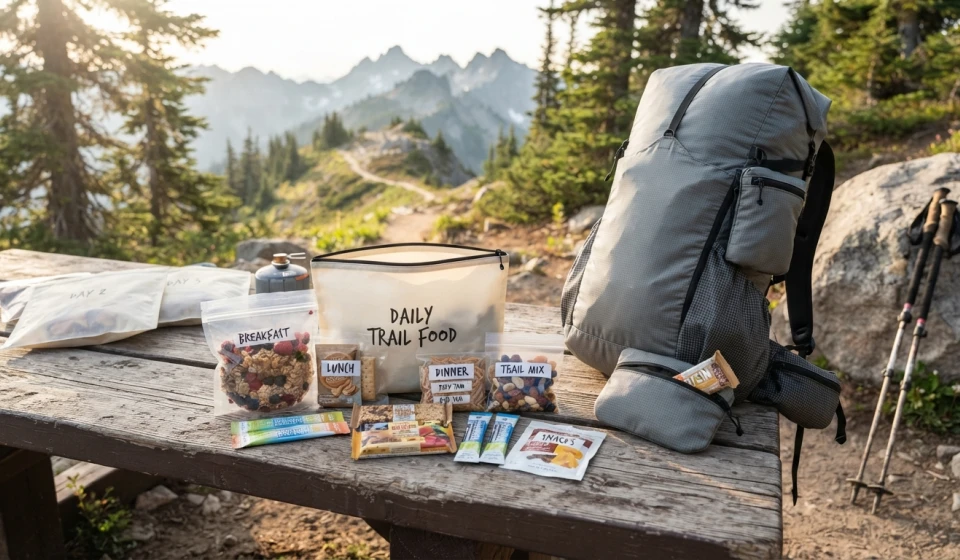
A daily food bag contains most or all of the food you expect to eat during one trail day.
For example:
🌅 Breakfast
- Oatmeal
- Coffee or tea
- Dried fruit
🥜 Morning snacks
- Nuts
- Trail mix
- Energy bar
🥪 Lunch
- Tortilla
- Tuna or another shelf-stable protein
- Crackers
🍫 Afternoon snacks
- Dried fruit
- Bar
- Chocolate
🍲 Dinner
- Dehydrated or other appropriate backpacking meal
- Seasoning
- Drink mix
You can adjust the contents according to your trip, calorie needs, dietary preferences, and cooking method.
The key is that everything for that day lives together.
🎒 Choose the Right Food Bag
The ideal bag depends on your food and packing system.
For a single day’s food, look for something that is:
- Lightweight
- Durable enough for trail use
- Easy to open
- Easy to identify
- Large enough to hold the day’s food without excessive empty space
A reusable lightweight sack or appropriately sized food-storage bag can work.
For foods that need additional protection from moisture, crushing, odors, or wildlife, use a suitable inner or outer storage system.
And if you’re hiking somewhere with specific food-storage regulations, follow those requirements rather than relying on a simple daily bag.
🏷️ Label Each Day
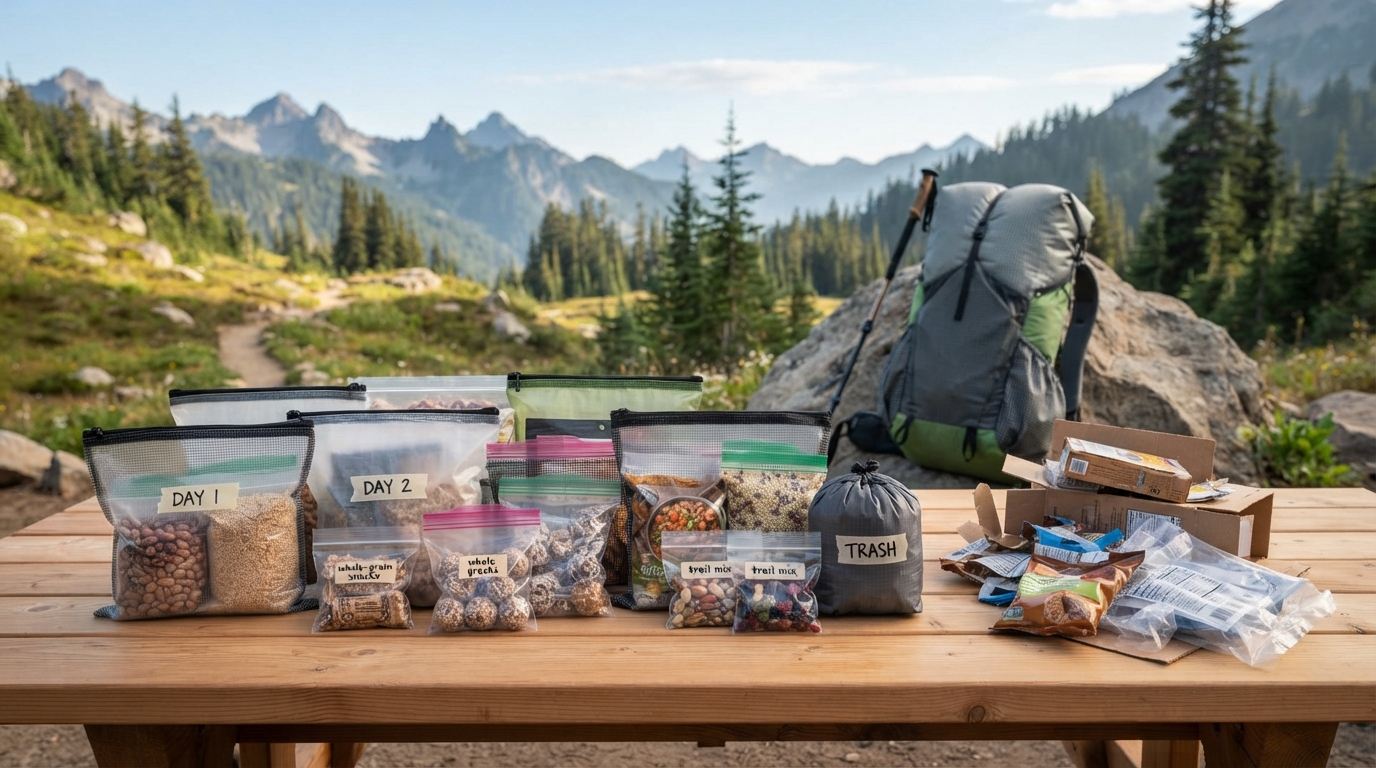
If you’re carrying several days of food, label the bags clearly.
For example:
DAY 1
DAY 2
DAY 3
You can also write the day’s calorie target or meal contents on a small card.
This makes resupply and daily organization much easier.
It also prevents one of the classic backpacking mistakes:
Accidentally eating tomorrow’s food today. 😅
🍽️ Build the Bag Around Your Eating Schedule
Don’t simply throw random food into the bag.
Arrange it according to when you are likely to use it.
For example:
Top: Morning snack + drink mix
Middle: Lunch
Bottom: Afternoon snack + dinner
This creates a rough progression through the day.
If you normally eat snacks frequently while hiking, place those items near the top.
If you prefer a substantial lunch break, keep lunch together.
The best arrangement is based on how you actually hike, not how a packing guide says you should hike.
🥜 Keep Frequently Used Snacks Accessible
Some foods should be even easier to reach.
If you eat snacks continuously while walking, you may not want to stop and unpack your entire daily food bag every hour.
Consider keeping your most frequently eaten snacks in an accessible hip-belt pocket, shoulder-strap pocket, or another secure location designed for quick access.
The daily food bag can then hold the day’s main supply.
This creates a useful two-level system:
Quick-access snacks → outside pocket
Rest of today’s food → daily food bag
That gives you convenience without scattering your entire food supply around your backpack.
💧 Give Drink Mixes Their Own Place
Drink mixes are easy to lose among food packets.
If you use them regularly, group them together inside the daily bag.
You might place:
- Electrolyte mix
- Coffee
- Tea
- Cocoa
- Other powdered drinks
in one small labeled pouch.
Keep in mind that hydration and electrolyte needs vary by person and conditions. Water should remain a separate priority from food organization.
🌾 Keep Ingredients for the Same Meal Together
If a meal requires several components, keep them together.
For example:
Dinner kit
- Main meal
- Seasoning
- Sauce packet
- Optional topping
You don’t want to discover at dinner that the ingredient you need is sitting in Day 4’s bag.
This is especially helpful with meals that have several separate components.
🧂 Control the Small Stuff
Tiny packets are responsible for a lot of food-bag chaos.
Salt, sugar, sauces, spices, and drink powders can disappear into the bottom of a bag.
Use small, clearly labeled pouches or combine compatible ingredients when appropriate.
For example, if several meals use the same spice blend, you may be able to portion it ahead of time.
Just make sure everything remains identifiable.
A mystery powder is not a meal plan. 😂
⚖️ Think About Calories, Not Just Volume
A day’s food bag should provide enough food for your planned day without becoming unnecessarily bulky.
Backpacking calorie needs vary considerably depending on body size, activity level, terrain, temperature, trip length, and individual needs.
Rather than assuming everyone needs the same number, plan your food based on your own requirements.
When planning, consider:
Total daily calories ÷ total food weight = calorie density
Foods with higher calorie density can provide more energy for less weight.
However, don’t choose foods based on calorie density alone.
You still want food you will actually enjoy eating.
A lightweight dinner that you cannot stand eating is not efficient if it comes home untouched.
🎒 Pack the Daily Bags in Order
If you’re carrying multiple daily bags, pack them according to your trip.
For example:
Top or most accessible: Day 1
Below it: Day 2
Below that: Day 3
Bottom: Later days
You can then work through them sequentially.
For longer trips, however, don’t compromise required food storage or weight distribution just to maintain this arrangement.
A food bag may need to be stored separately or secured differently depending on the environment.
🌧️ Protect Food From Weather
Rain can turn neatly organized trail food into a soggy mess.
Your food-storage system should account for the conditions you’re likely to encounter.
If your primary food bag is not waterproof, consider appropriate waterproof protection.
Be particularly careful with:
- Powdered drinks
- Oatmeal
- Dehydrated meals
- Crackers
- Dried ingredients
A little moisture can make food packaging messy and difficult to handle.
🗑️ Put Empty Packaging Back Into the Same System
One advantage of a daily food bag is that it can become your day’s waste-management system.
After eating a snack, put the empty wrapper back into the appropriate trash bag or dedicated waste container.
Do not simply toss wrappers into random backpack pockets.
By the end of the day, you’ll know exactly where your food waste is.
This also supports Leave No Trace practices by making it easier to pack out everything you brought in.
🔄 What to Do With Tomorrow’s Bag
At the end of the day, move the next day’s food into your accessible position.
This creates a simple evening routine:
Finish Day 1 → manage trash → check Day 2 → put Day 2 in position.
You can also use this opportunity to check your water, fuel, and other supplies.
It takes only a few minutes but makes the next morning much easier.
🧠 Don’t Over-Organize
There is a point where organization becomes more complicated than the problem.
You don’t need:
- Ten tiny bags
- Separate containers for every ingredient
- A complicated labeling system
- Multiple layers of packaging
Start simple.
Try:
One daily food bag + one quick-access snack pocket + one trash bag.
Then adjust after your first trip.
If you constantly struggle to find drink mixes, change the system.
If lunch is difficult to access, move it.
Your packing system should evolve based on real trail experience.
🌲 A Simple Example
Imagine you’re planning a three-day trip.
You could prepare:
Day 1 Bag
- Breakfast
- Morning snacks
- Lunch
- Afternoon snack
- Dinner
- Drink mixes
Day 2 Bag
- Same structure
Day 3 Bag
- Same structure
Then keep frequently eaten snacks accessible during the day.
At the end of each day, manage your trash and bring the next daily bag forward.
Suddenly, your entire food system becomes much easier to understand.
🌟 Final Thoughts
A daily food bag is a small organizational trick that can make a big difference on a multi-day backpacking trip.
Instead of searching through one giant collection of meals, you know exactly which food belongs to today.
Build each bag around your actual eating habits. Keep frequent snacks easy to reach. Group meal components together. Label everything. Protect food from moisture. Keep trash organized.
And remember that accessibility does not mean every food item has to be on the outside of your backpack.
It simply means you should be able to reach what you need without unpacking half your gear. 🎒
The best food system is predictable, simple, and easy to use when you’re tired.
One day. One bag. Less digging. More hiking. 🥾🌲