How to Build a Summer Backpacking Menu That Survives 90°F Heat 🥾☀️
Introduction
A summer backpacking trip can mean beautiful trails, long daylight hours, and incredible campsites. But when temperatures reach 90°F (32°C), your food plan needs more thought than simply packing enough calories.
Heat can soften chocolate, turn snack bars into sticky bricks, make food less appealing, and increase the risk of foodborne illness when perishable ingredients are stored improperly. Heavy meals can also feel less appealing during hot afternoons, just when you need enough energy and fluids to keep moving.
The solution is to build a menu around heat-tolerant ingredients, safe food storage, easy preparation, and foods you will actually want to eat.
Whether you’re planning a weekend trip or a longer summer trek, the right combination of lightweight meals, salty snacks, and convenient ingredients can make eating on the trail simpler and more enjoyable.
1. Choose Foods That Handle Heat Well
Not every backpacking food responds to summer temperatures in the same way. Your best options are shelf-stable products that tolerate warm conditions when stored according to their labels.
Good choices include:
- Instant oatmeal and dry cereal
- Dehydrated or freeze-dried backpacking meals
- Dry pasta, couscous, and instant rice
- Nuts, seeds, and trail mix
- Crackers, pretzels, and tortillas
- Dried fruit and fruit leather
- Single-serving nut butter packets
- Powdered drink mixes and electrolyte products
These foods are convenient because they generally require little refrigeration or none before opening, depending on the product.
However, shelf-stable does not mean heat-proof. High temperatures can affect flavor, texture, packaging, and product quality. Follow storage instructions, keep food shaded whenever possible, and protect packages from direct sunlight.
For items such as nut butter, chocolate, or energy bars, test how they behave in warm weather before relying on them for an entire trip.
2. Plan Meals Around When You’ll Eat Them
The hottest part of the day is not always the best time for a heavy meal. Build a menu that gives you quick access to snacks while saving your more substantial meals for cooler hours or longer breaks.
A practical summer menu can follow this pattern:
- Breakfast: Oatmeal with dried fruit, nuts, and powdered milk.
- Morning snacks: Pretzels, dried fruit, or a compact trail mix.
- Lunch: Tortillas with nut butter, shelf-stable fillings, or crackers with a suitable packaged protein.
- Afternoon snacks: Energy bars that tolerate warmth, salty crackers, or fruit leather.
- Dinner: A dehydrated meal with carbohydrates, protein, and vegetables.
- Evening treat: Hot cocoa, a warm drink, or a small snack that does not depend on refrigeration.
This is a flexible template, not a fixed calorie prescription. Your needs depend on your body size, hiking distance, elevation gain, pack weight, and conditions. Carry enough food for the demands of your trip, including a reasonable emergency reserve.
The National Park Service recommends eating regularly during strenuous summer hikes and including energy-rich foods and salty snacks. Appetite may decrease in the heat, so having small, convenient portions available can make it easier to keep eating.
3. Protect Chocolate, Bars, and Other Heat-Sensitive Snacks 🍫
Chocolate is delicious on the trail, but it can melt into a mess inside a warm backpack. Some bars also become soft, sticky, or difficult to handle in high temperatures.
Instead of relying on a single favorite snack, pack a mixture of options.
Choose a blend of nuts, seeds, and dried fruit. It provides a combination of energy sources and is easy to portion into small bags.
These can be more dependable in hot weather than chocolate-covered snacks. Pack them in crush-resistant bags or containers.
Test bars and nut butter packets before your trip. Check the label for storage requirements, and avoid products that become unpleasant or difficult to eat when warm.
Smart packing tip: Keep snacks inside your pack rather than exposed to direct sunlight, and use an insulated pouch if you want to protect a few heat-sensitive treats. Insulation can slow temperature changes, but it does not provide reliable refrigeration.
4. Choose Lunches That Don’t Depend on Refrigeration
Lunch is often the most challenging meal to plan because you may be far from camp, without a stove, and exposed to direct sunlight.
Shelf-stable ingredients are usually the simplest solution.
Try these combinations:
- Tortillas with a commercially shelf-stable nut butter packet.
- Crackers with unopened shelf-stable cheese or protein products, provided the packaging confirms they can be stored without refrigeration.
- Instant couscous prepared at camp with dried vegetables and seasonings.
- Shelf-stable tuna or chicken pouches, eaten according to the product’s storage instructions after opening.
- Trail mix and dried fruit alongside another substantial snack.
Avoid assuming that every packaged food is safe to carry unrefrigerated. Fresh meat, cooked rice, dairy products, cut fruit, and many opened foods require temperature control.
At 90°F or above, USDA guidance says perishable food should not remain unrefrigerated for more than one hour. A food’s appearance or smell cannot reliably establish that it is safe.
For multi-day trips, choosing genuinely shelf-stable ingredients is generally easier than trying to keep refrigerated foods cold inside a backpack.
5. Make Dinner Simple, Warm, and Satisfying 🍲
After a long, hot day, you may want a proper meal without spending an hour cooking.
Dehydrated and freeze-dried backpacking meals are convenient because they are lightweight and typically require only hot water. Other options include instant rice, couscous, quick-cooking noodles, and instant mashed potatoes paired with suitable protein and vegetable additions.
Choose a dehydrated meal or combine instant rice with dried vegetables and a shelf-stable protein. Add seasoning for extra flavor.
Couscous cooks quickly with hot water. Add dried vegetables, chickpeas in a suitable shelf-stable form, and your preferred seasoning.
Mix instant potatoes with dried peas, shelf-stable protein, and seasonings for a comforting meal that requires minimal preparation.
Check the preparation instructions before leaving home. Some meals need more water or fuel than expected, and certain ingredients take longer to rehydrate. Test unfamiliar meals before relying on them after a demanding day.
6. Build a Hydration and Electrolyte Plan 💧
At 90°F, food planning and hydration planning go together. Sweat losses increase during strenuous activity, especially in direct sun, and individual fluid needs vary considerably.
Before leaving, research water sources along your route and determine how much water you need to carry between reliable refill points. Never assume a map symbol guarantees that a source will be flowing or potable.
Keep these principles in mind:
- Drink regularly and pay attention to thirst, exertion, and conditions.
- Eat meals and snacks throughout the day rather than relying on one large dinner.
- Include some salty foods, especially during prolonged, sweaty activity.
- Consider an electrolyte drink when appropriate for the duration and intensity of your hike.
- Carry a suitable method to treat water from natural sources.
Do not force excessive amounts of plain water. Overhydration can cause dangerous low blood sodium, particularly during prolonged exercise. Electrolyte products also need to be used appropriately; they are not a substitute for a sound hydration plan. National Park Service guidance highlights the importance of balancing fluid intake, food, and electrolytes during strenuous summer hiking.
If conditions are dangerously hot, adjust your route or schedule, take appropriate rest breaks, and recognize that a menu cannot compensate for unsafe heat exposure.
7. Repackage Food to Reduce Weight and Mess
Original packaging can take up unnecessary space, especially when every meal has multiple components.
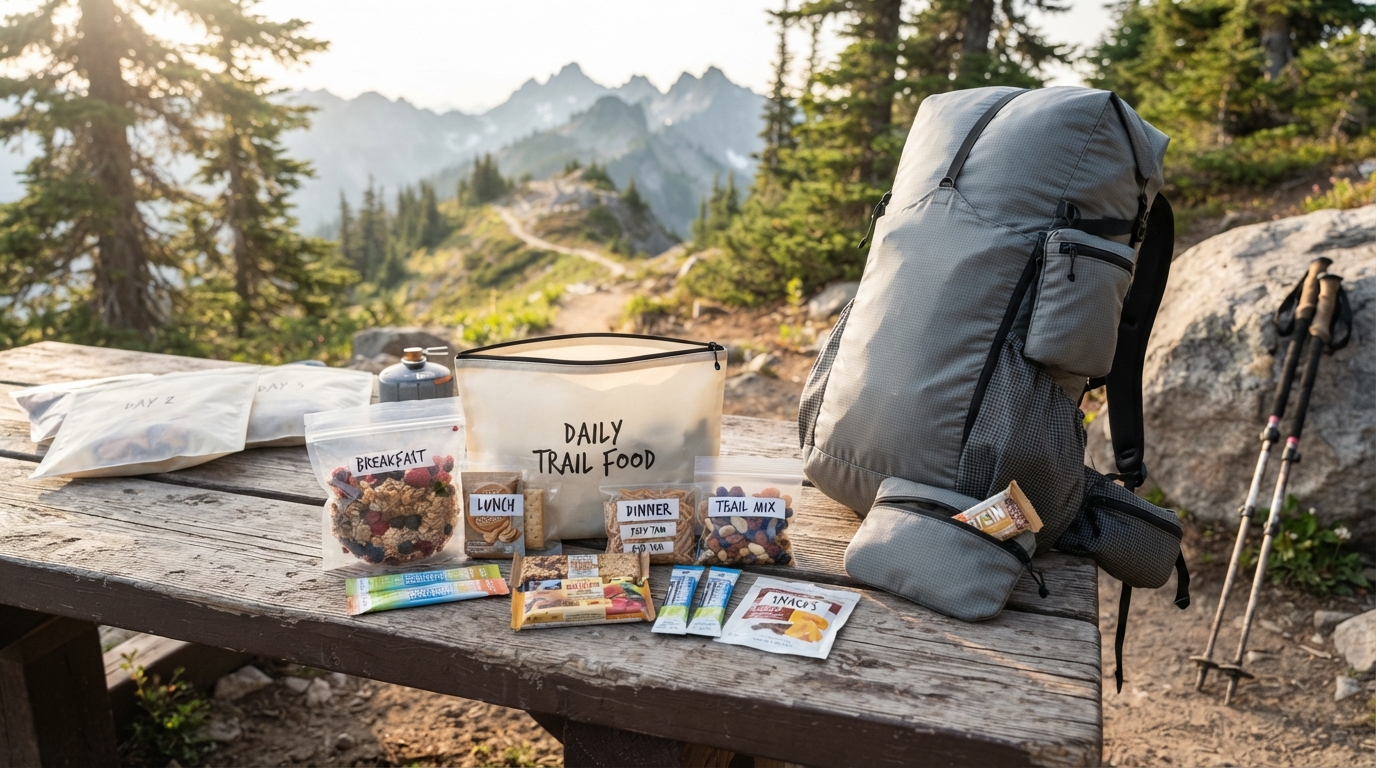
Before your trip, portion dry ingredients into labeled, food-safe bags or reusable containers. Write down the amount of water required and the cooking time for each meal.
A simple preparation system can include:
- One bag for each day’s snacks.
- One labeled package for each breakfast and dinner.
- A separate bag for drink mixes and seasonings.
- A small waste bag for used packaging.
Keep food protected from moisture, and retain the cooking instructions and ingredient information you may need. Avoid repackaging products in ways that compromise their safety or shelf stability.
If you’re hiking in bear country, follow the area’s food-storage rules. Food, trash, toiletries, and other scented items may need to be secured in an approved bear-resistant container or other designated storage system.
8. Sample One-Day Summer Backpacking Menu
Here’s a simple example for one person. Adjust portions and quantities to match your energy needs and the demands of your route.
| Time | Meal | Why it works |
|---|---|---|
| Breakfast | Instant oatmeal, dried fruit, nuts | Quick preparation and concentrated energy |
| Morning | Pretzels and trail mix | Portable snacks for short breaks |
| Lunch | Tortillas with shelf-stable nut butter | No cooking required |
| Afternoon | Dried fruit, crackers, energy bar | Convenient options when appetite is low |
| Dinner | Dehydrated rice or couscous meal | Lightweight and easy to prepare |
| Evening | A favorite shelf-stable treat | Adds variety and enjoyment |
This is a menu framework, not a complete nutritional prescription. Check the calorie content of your portions and add more food if your hike is long, steep, or particularly demanding. For trips lasting several days, also plan for dietary restrictions, food allergies, and the availability of resupply points.
Final Thoughts 🌄
A summer backpacking menu that works in 90°F heat should do three things well: provide enough energy, remain safe to eat, and be easy to enjoy when you’re tired and hot.
Prioritize shelf-stable ingredients, spread snacks throughout the day, keep heat-sensitive foods protected, and plan water and electrolytes as carefully as meals. Most importantly, test your food choices before your trip so you know what you enjoy and how much preparation each meal requires.
You don’t need an elaborate gourmet menu to eat well on the trail. A few reliable breakfasts, convenient lunches, satisfying dinners, and snacks you genuinely look forward to can make hot-weather backpacking much more manageable.
The best summer trail menu is lightweight in your pack, simple to prepare, safe to store, and appealing even after a long day outside.