10 Low-Water Backpacking Meals for Dry Trips
Water is the heaviest luxury you carry in the backcountry. On dry trips—whether you’re traversing Utah’s slickrock, the Arizona Trail, or the high desert of Oregon—every ounce of water you pack must be earned by weight on your back. Dehydrated meals that require a full two cups of boiling water quickly become a liability when water sources are miles apart and you’re already hauling a gallon for camp. That’s why discerning backpackers are shifting toward low-water meals: freeze-dried options that use minimal hydration, or no-cook alternatives that skip water entirely. This guide breaks down the best low-water freeze-dried brands, zero-cook hacks, and a quick-reference table to help you shave pounds—and conserve every precious drop.
Why Water Matters More Than Food Weight
Backpackers often obsess over grams of food, yet forget that the water to rehydrate that food can weigh four to eight times more than the meal itself. A typical Mountain House entrée needs 2 cups (16 fl oz) of water — that’s one full pound of water weight just for dinner. If you’re carrying a 3-liter capacity for the day, a single meal eats up nearly 20% of your haul. On routes where water is scarce or you must cache it, every drop counts. Low-water meals not only lighten your load but also reduce the number of trips you make to unreliable seeps and tanks. In essence: less water in your food = more water in your bottle for the trail.
Freeze-Dried Brand Comparison: How Much Water Do They Really Need?
The big three freeze-dried brands — Mountain House, Packit Gourmet, and Backpacker’s Pantry — all offer entrees with varying water requirements. But not all “one-cup” claims are equal. We tested the numbers (using manufacturer specs and real-world measurement) to find the true water footprint per serving.
Mountain House
Mountain House’s classic “Pro-Pak” pouches state “Add 2 cups (16 oz) boiling water.” That’s a hefty 473 ml per serving. Even their “Just Add Water” single-serve cups require 1.5 to 2 cups. The brand does offer a few Breakfast Skillet and Granola with Milk that use only ⅔ cup (5.3 oz) water — a huge improvement. But for dinner entrees, you’re looking at a full pound of water per meal.
Packit Gourmet
Packit Gourmet shines in the low-water category. Their Cold-Soakable Curries and Instant Soups require as little as 1 cup (8 oz) of water — and some can be cold-soaked with just 6 oz. The Texas Chili uses 1.25 cups (10 oz). They also sell “No-Cook” meal kits that explicitly state add 0 water (they come with pre-hydrated sauces and freeze-dried ingredients you eat dry). For water-conscious hikers, Packit Gourmet is the clear leader.
Backpacker’s Pantry
Backpacker’s Pantry ranges from 1.5 to 2 cups per entrée (12–16 oz). Their Pad Thai and Three Cheese Mac & Cheese require 1.5 cups (12 oz). However, they offer a Cold Soak line (e.g., Cold Soak Granola and Cold Soak Hummus & Crackers) that uses only 4 oz of water. Their Just Water series (like Fettuccine Alfredo) still demands 1.5 cups. Moral of the story: check the label’s fine print — “serving size” often means half the pouch, so you might be doubling water.
“On my 10-day Grand Canyon traverse, every ounce of water I could save from meals meant I could skip one sketchy spring. Switching to Packit Gourmet’s 1-cup entrees and adding tortillas saved me over 3 pounds of carried water.” — Sarah Miller, Arizona Trail Thru-Hiker
Zero-Cook & Low-Water Alternatives: The No-Hydration Powerhouses
If you truly want to eliminate water weight from meals, go no-cook. These options require zero hydration and zero fuel — a game-changer for dry trips.
Wraps, Tortillas, and Flatbreads
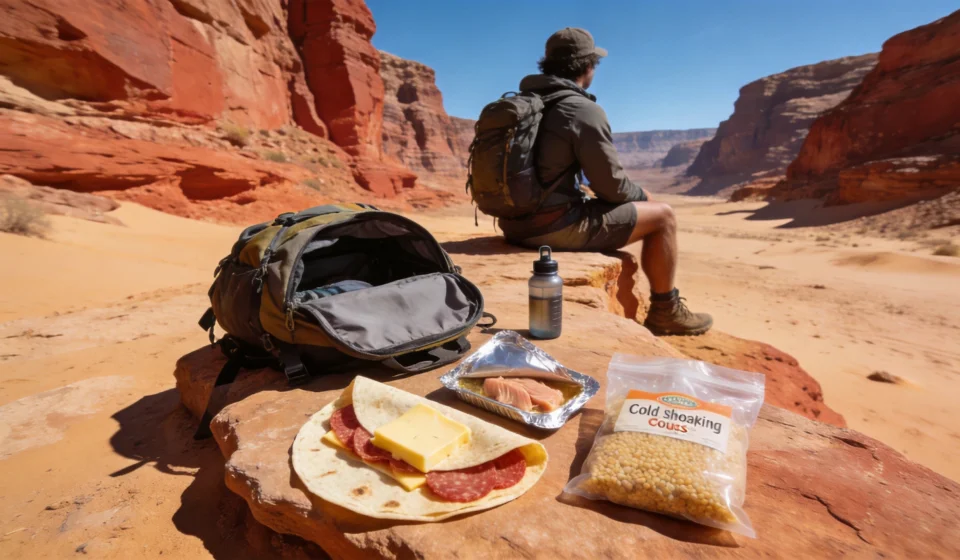
Tortillas are the backbone of a low-water backpack. They’re flexible, calorie-dense, and need no preparation. Pair them with foil-pouch meats (tuna, chicken, salmon — available in 2.5 oz pouches, no draining needed), hard cheese like aged cheddar or Parmigiano-Reggiano (which keeps for weeks without refrigeration), and squeeze packets of peanut butter, Nutella, or honey. A tortilla with pre-cooked bacon bits and cheddar yields 400+ calories using zero water.
Hard Cheese & Salami
Hard cheese (Parmesan, Gouda, aged cheddar) and dry salami or pepperoni are classic no-cook proteins. They’re shelf-stable for days in moderate temps. Combine with crackers or tortillas, and you have a complete meal. One ounce of cheddar has ~110 calories and needs no water. Salami sticks are similar.
Foil-Pouch Proteins & Nut Butters
Pre-cooked chicken, tuna, and salmon in retort pouches (like StarKist Creations or Wild Planet) are ready to eat. No water, no mess. Spread almond butter on tortillas, add dried cranberries and pumpkin seeds, and you’ve got a 500-calorie lunch that took 30 seconds to assemble. Single-serving peanut butter packets (Justin’s, etc.) are a staple.
Instant Mash & Couscous (Cold-Soak)
While not truly zero-water, instant mashed potatoes and fine-grain couscous can be rehydrated with cold water in a sealed bag for 20 minutes. Use only 4–6 oz of water (half of what hot water requires). Add a foil pouch of chicken and some dried vegetables (rehydrated in the same bag), and you have a low-water hot meal without fuel.
Quick-Reference Table: 10 Low-Water Meals & Their Water Needs
This table compares water volume per serving (in fluid ounces) for popular low-water options. Use it as a cheat sheet before your next dry trip.
| Meal / Product | Type | Water Needed (fl oz per serving) | Fuel Required? |
|---|---|---|---|
| Packit Gourmet Texas Chili (1-serving) | Freeze-dried entrée | 10 oz | Hot soak (or cold soak 15 min) |
| Mountain House Granola with Milk | Freeze-dried breakfast | 5.3 oz | Optional (can use cold water) |
| Backpacker’s Pantry Cold Soak Hummus & Crackers | Cold soak snack/meal | 4 oz | No (cold soak) |
| Instant Mashed Potatoes (1 serving, Idahoan) | Dehydrated side | 6 oz | Cold soak 20 min |
| Couscous (1/2 cup dry) + foil chicken | DIY no-cook | 4 oz | Cold soak 15 min |
| Tortilla + hard cheese + salami | No-cook wrap | 0 oz | None |
| Peanut butter + tortilla + dried fruit | No-cook wrap | 0 oz | None |
| Foil-pouch tuna + crackers + cheese | No-cook snack plate | 0 oz | None |
| Packit Gourmet Cold-Soak Curry (single) | Freeze-dried entrée | 6 oz | Cold soak 30 min |
| Overnight oats (1/2 cup dry oats + dried fruit + nuts) | No-cook breakfast | 5 oz | Cold soak overnight |
Practical Tips to Minimize Water Usage on Trail
Beyond choosing the right products, here are actionable strategies to stretch every drop:
- Cold soak everything. Many freeze-dried meals (especially full-sodium ones) rehydrate just fine in cold water if you wait 20–40 minutes. Use a dedicated Ziploc Freezer Bag or a Vargo Bot to avoid wasting fuel.
- Reuse cooking water. If you do boil, use the leftover hot water for a cup of tea or an instant soup. Multi-tasking water reduces waste.
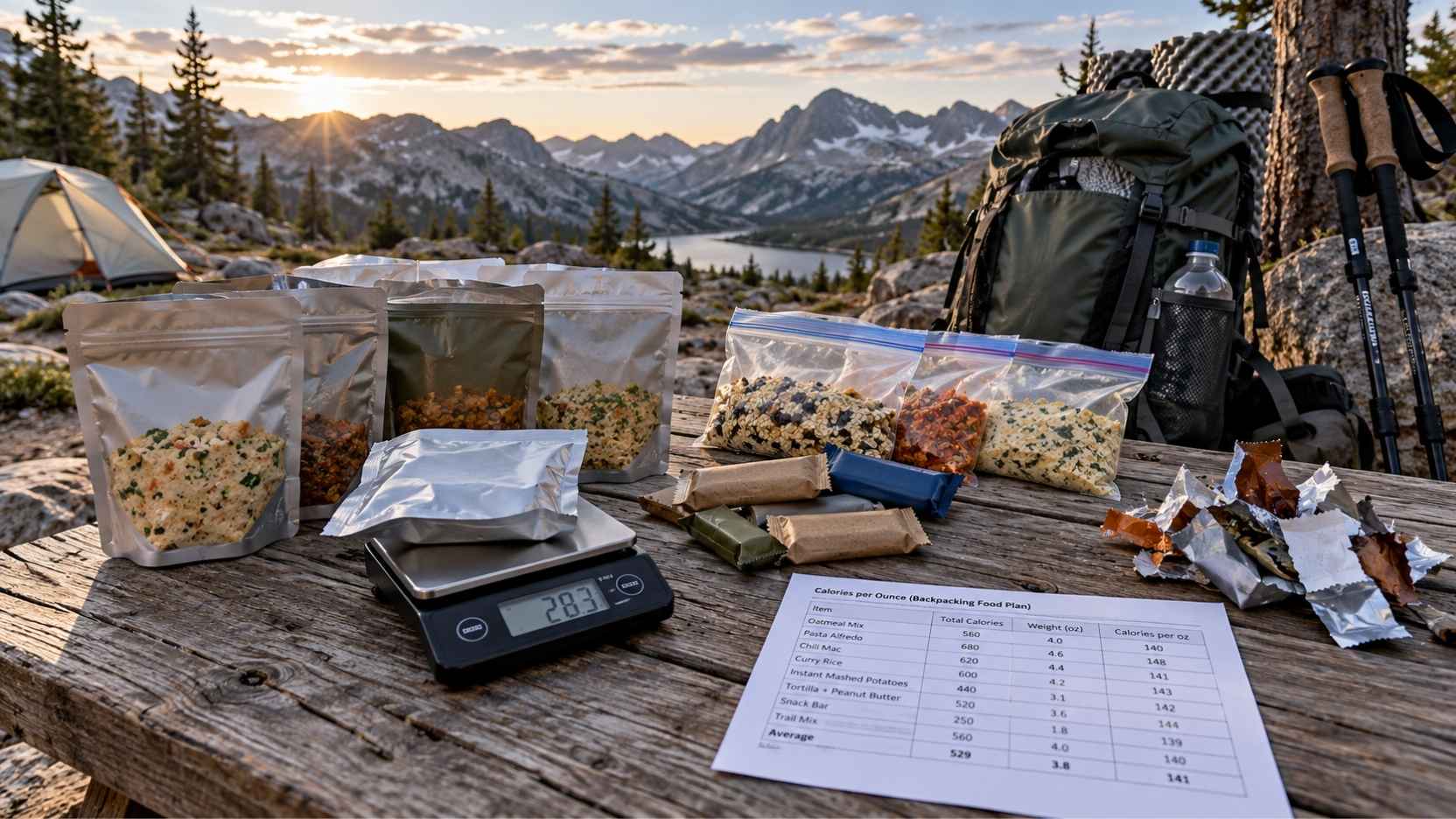
- Weigh your meals before the trip. A meal that claims “add 1 cup” might actually soak up 1.5 cups. Test at home with a kitchen scale.
- Double up tortillas. Instead of rehydrating a full entrée for lunch, pack a tortilla with cheese and meat. Save the water-heavy meal for dinner when you’re at camp and can filter more water.
- Use water purification tablets to treat stream water directly in your bottle rather than boiling, which consumes fuel and water (and time). Then use that treated water for cold-soaked meals.
- Cold Soak vs. Hot Soak
- Cold soaking saves fuel weight but adds time. For most freeze-dried dinners, 30–40 minutes cold soak matches a 10-minute hot soak. In hot climates, it’s a no-brainer.
- Pouch Meats: Drain or No Drain?
- Look for “no-drain” pouches (most chicken and tuna are pre-drained). Some salmon pouches have oil — use that as a bonus calorie source instead of discarding it.
- Dry Cheese: How Long Does It Last?
- Hard cheeses like Parmesan (grated) and aged Gouda last 3–5 days in a backpack without spoiling, especially if kept in a breathable cloth bag. Waxed cheddar wedges can go 7+ days in mild weather.
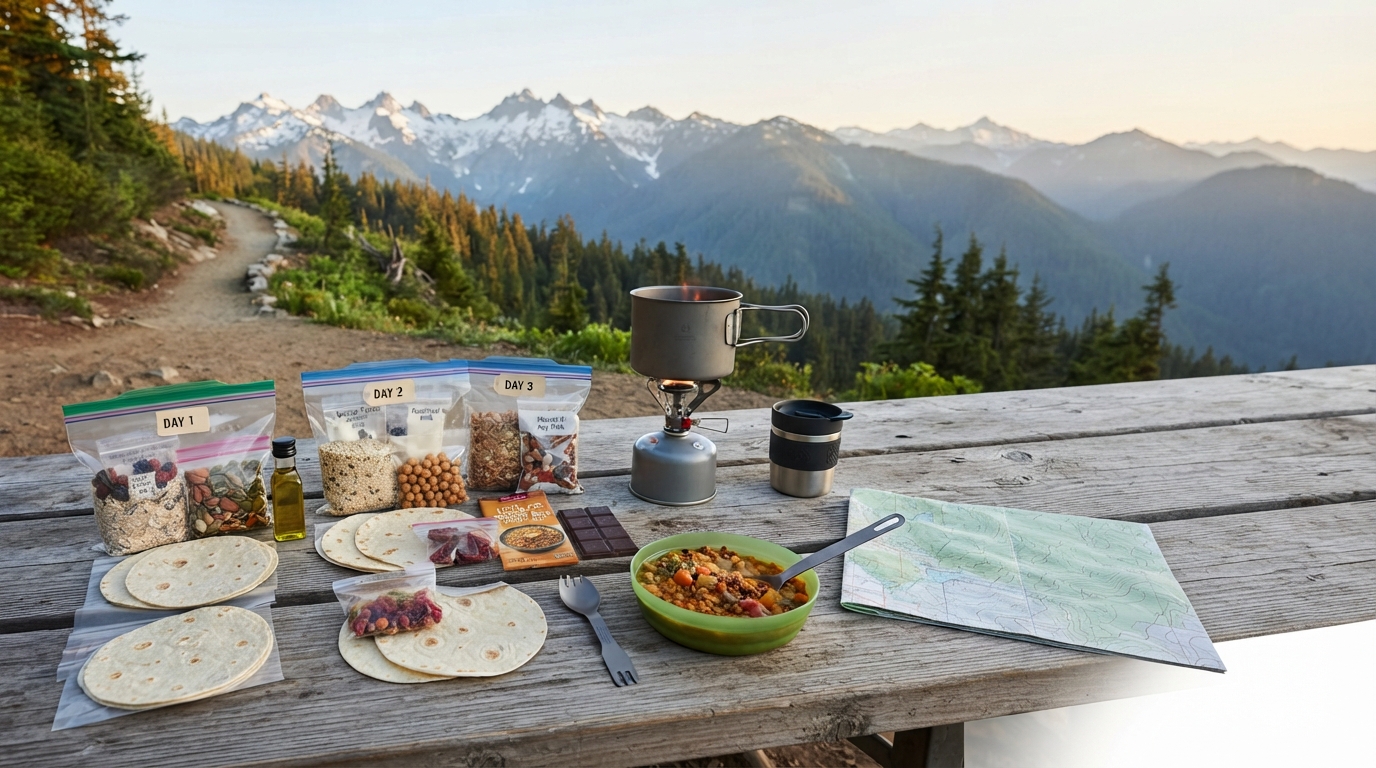
Putting It All Together: Sample 3-Day Low-Water Menu
To show you how practical these options are, here’s a real-world menu I used on a dry section of the Colorado Trail:
- Day 1: Breakfast – Mountain House Granola with Milk (5.3 oz water). Lunch – Tortilla + foil packet of chicken + cheddar slice + hot sauce (0 oz). Dinner – Packit Gourmet Texas Chili (10 oz cold soak).
- Day 2: Breakfast – Overnight oats with dried cherries and almonds (5 oz water). Lunch – Tuna salad wrap (tuna + mayo packet + tortilla) (0 oz). Dinner – Instant mashed potatoes + foil salmon + dried spinach (6 oz cold soak).
- Day 3: Breakfast – No-cook peanut butter tortilla with banana chips (0 oz). Lunch – Salami, hard cheese, and crackers (0 oz). Dinner – Backpacker’s Pantry Cold Soak Hummus & Crackers (4 oz water).
Total water for meals: 30.3 fl oz over three days (that’s about 2 pints). Compare that to a typical all-freeze-dried menu which would use 48–64 oz. You save a full day’s drinking water.
Conclusion: Every Drop Saved Is a Mile Earned
On dry trips, your most strategic decision isn’t how many calories you pack — it’s how much water your meals force you to carry. By choosing freeze-dried brands like Packit Gourmet and Backpacker’s Pantry’s cold-soak lines, and by leaning on zero-water staples like tortillas, hard cheese, and foil-pouch proteins, you can slash your water weight by 50% or more. That means fewer risky water filters, lighter packs, and more confidence when the trail stretches through the bone-dry desert. Next trip, try the low-water approach — your back (and your hydration bladder) will thank you.