How to Build a 3-Day Vegetarian Backpacking Menu With Enough Protein 🥾🌱
Introduction
Vegetarian backpacking food can be lightweight, filling, and surprisingly high in protein. The trick is not trying to turn every trail meal into a full kitchen-style vegetarian dinner.
Instead, build your menu around dehydrated or shelf-stable protein sources, calorie-dense foods, quick-cooking carbohydrates, and ingredients that pack efficiently.
For a three-day trip, you can keep things simple:
Protein at every meal + enough calories + foods that cook quickly + snacks you will actually want to eat.
This approach works especially well for hikers who don’t eat meat but still want meals that are practical on the trail. 🥾
1. Start With Your Protein Target
Before choosing meals, decide approximately how much protein you want each day.
Protein needs vary according to body size, activity level, age, and overall diet. Backpacking also increases energy demands, so your menu should not focus on protein at the expense of sufficient calories.
For planning purposes, many active adults can use a rough daily target around 60–90 grams of protein and then adjust it to their individual needs.
This is a planning range, not a universal medical requirement.
The easiest way to reach it is to spread protein throughout the day rather than trying to consume most of it at dinner.
For example:
Breakfast: 15–20 g
Lunch: 15–20 g
Dinner: 20–30 g
Snacks: 10–20 g
That gives you several opportunities to add protein without making any single meal enormous.
2. Choose Vegetarian Backpacking Protein Sources 🫘
Fresh vegetarian foods can be difficult to carry for several days because of weight, spoilage, and preparation requirements.
Instead, focus on shelf-stable ingredients that travel well.
Good options include:
- Powdered milk
- Soy milk powder
- Textured vegetable protein (TVP)
- Dehydrated lentils
- Dehydrated beans
- Roasted chickpeas
- Peanut butter or other nut butter
- Nuts and seeds
- Protein-rich granola
- Shelf-stable tofu
- Protein powder
- Soy curls or similar dried soy products
Not every ingredient needs to provide a huge amount of protein.
The goal is to combine several moderate sources throughout the day.
3. Build the Menu Around Quick-Cooking Foods
Backpacking meals should not require a complicated kitchen.
Choose foods that can be prepared with:
- Boiling water
- Short simmering
- Soaking
- Minimal cookware
Instant rice, couscous, quick-cooking oats, instant mashed potatoes, ramen-style noodles, dehydrated vegetables, and dried legumes designed for quick preparation can all be useful.
If an ingredient normally takes 45 minutes to cook at home, it may not be the best choice for a lightweight backpacking dinner unless you’ve already cooked and dehydrated it.
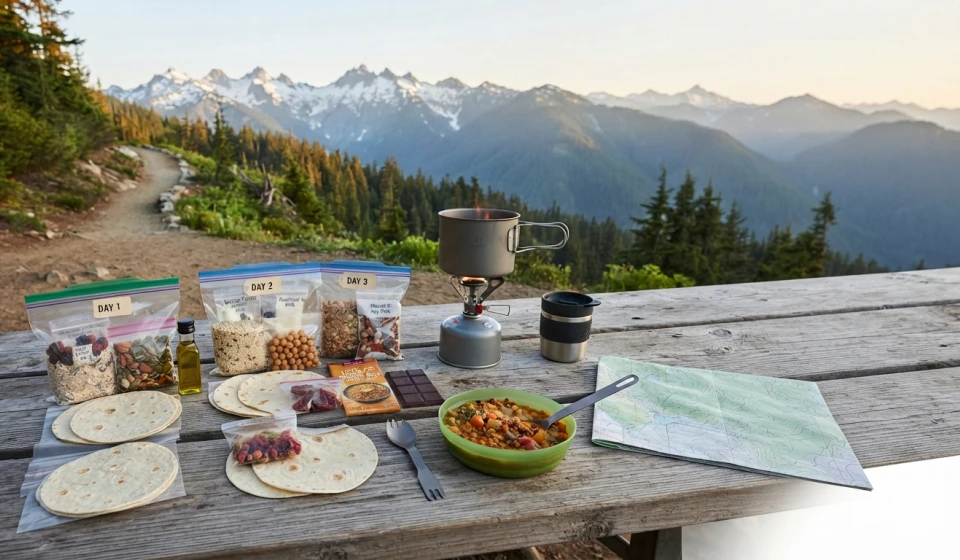
4. Your 3-Day Vegetarian Backpacking Menu 🥾
Here’s a practical example using shelf-stable ingredients.
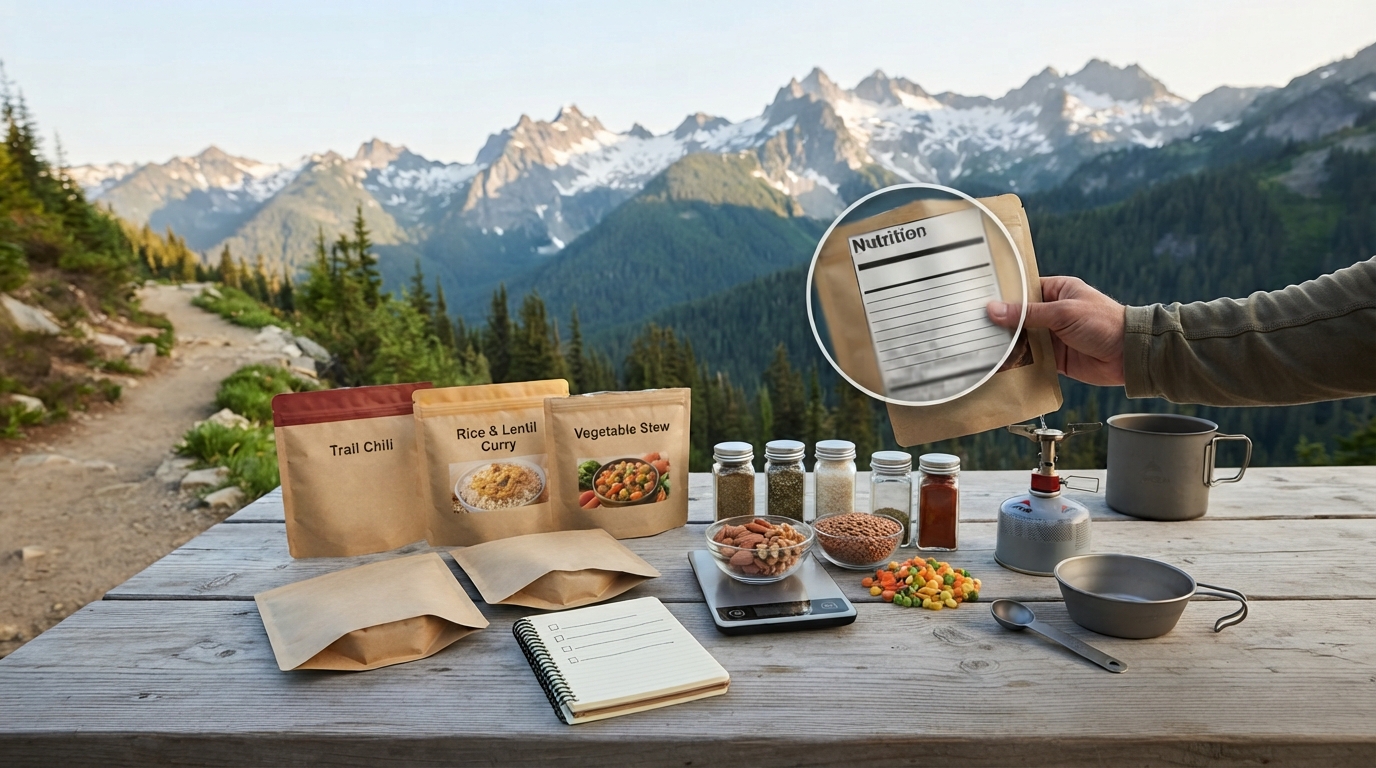
The exact protein and calorie totals will depend on the brands and quantities you purchase, so check individual nutrition labels when assembling your final food bag.
Day 1 🌄
Breakfast: Peanut Butter Banana Oatmeal
Pack:
- Instant oats
- Powdered milk
- Peanut butter powder or peanut butter
- Dried banana
- Chia or ground flaxseed
- Cinnamon
Mix the dry ingredients in advance.
At camp, add hot water and allow the oats to soften.
Protein strategy: oats + powdered milk + peanut product + seeds.
Trail Snack
Trail mix
Combine:
- Peanuts
- Pumpkin seeds
- Raisins
- Dried fruit
- A small amount of dark chocolate
Nuts and seeds contribute protein while also providing energy-dense fats.
Lunch: Hummus Couscous Wrap
Pack:
- Instant couscous
- Dehydrated hummus powder
- Whole-grain tortillas
- Dried vegetables
- Seasoning
Prepare the couscous and hummus with hot water, then spread the mixture into a tortilla.
Protein strategy: hummus + whole grain + optional seeds.
Tortillas can also be easier to pack than bread because they don’t crush as easily.
Afternoon Snack
Protein drink
Mix protein powder with water.
Choose a product that you already tolerate well rather than testing a new supplement for the first time on a multi-day trip.
Dinner: TVP Chili Rice 🌶️
Combine:
- Instant rice
- TVP
- Dehydrated beans
- Dehydrated tomatoes or tomato powder
- Dehydrated corn
- Chili powder
- Cumin
- Salt
Add boiling water and let the mixture rehydrate.
This is an excellent backpacking combination because rice provides carbohydrates while TVP and beans provide substantial plant protein.
Protein strategy: TVP + beans + rice.
Day 2 🌲
Breakfast: Apple-Cinnamon Protein Oats
Pack:
- Instant oats
- Soy or milk powder
- Protein powder
- Dried apple
- Chia seeds
- Cinnamon
Add hot water and stir thoroughly.
If using protein powder, allow the oatmeal to cool slightly before mixing if the product’s instructions recommend avoiding very hot liquids.
Trail Snack
Peanut Butter Tortilla
Spread peanut butter or use a single-serving nut-butter packet on a tortilla.
Add dried banana if desired.
It’s simple, calorie-dense, and doesn’t require cooking.
Lunch: Lentil Couscous Bowl
Combine:
- Instant couscous
- Quick-cooking dehydrated lentils
- Dehydrated vegetables
- Olive oil
- Seasonings
Add hot water and allow everything to rehydrate.
Add olive oil after cooking for additional calories without adding much weight.
Protein strategy: lentils + couscous.
Afternoon Snack
Roasted Chickpeas + Dried Fruit
Roasted chickpeas provide plant protein and carbohydrates, while dried fruit adds easily packed energy.
Pack the combination into small portions so you can eat it while hiking.
Dinner: Peanut Noodle Bowl 🍜
Use:
- Quick-cooking noodles
- TVP
- Peanut butter
- Dehydrated vegetables
- Soy sauce packet or powdered seasoning
- Chili flakes
Prepare the noodles and TVP, then stir in the peanut butter and seasoning.
Protein strategy: TVP + peanut butter + noodles.
This meal also demonstrates why a little fat can be useful in backpacking food: nut butter adds both flavor and concentrated energy.
Day 3 🏕️
Breakfast: Peanut Butter Granola Bowl
Combine:
- High-protein granola
- Powdered milk
- Peanut butter powder
- Dried berries
- Pumpkin seeds
Add water and eat it cold, or prepare it with warm water.
This can be one of the fastest breakfasts of the trip because it requires almost no cooking.
Trail Snack
Nuts + Protein Bar
Choose a vegetarian protein bar that you already enjoy.
Check the ingredient list and nutrition label before your trip rather than assuming every protein bar is nutritionally similar.
Lunch: Bean and Cheese Tortilla
If you’re carrying a shelf-stable vegetarian cheese option or another appropriate shelf-stable filling, combine it with:
- Whole-grain tortilla
- Dehydrated refried beans
- Dried vegetables
- Hot sauce
Rehydrate the beans with hot water, spread them over the tortilla, and add your other ingredients.
Protein strategy: beans + tortilla + optional cheese or seed topping.
Dinner: Lentil Potato Curry 🍛
For the final dinner, pack:
- Instant mashed potatoes
- Dehydrated lentils
- Dehydrated vegetables
- Coconut milk powder
- Curry powder
- Garlic powder
- Salt
Add hot water and stir until thick and creamy.
Protein strategy: lentils + powdered milk alternative if included + other ingredients.
The potatoes provide carbohydrates while lentils make the meal substantially more protein-rich than plain instant mashed potatoes.
5. Don’t Forget Protein During the Day
One common mistake is making dinner the only protein-heavy meal.
Instead, distribute protein across the entire day.
A simple pattern is:
| Meal | Protein Source |
|---|---|
| Breakfast | Oats + milk powder + seeds |
| Snack | Nuts or protein bar |
| Lunch | Lentils, beans, or hummus |
| Snack | Protein drink or roasted chickpeas |
| Dinner | TVP, beans, or lentils |
This approach gives you multiple opportunities to reach your daily target.
6. Protein Isn’t the Only Thing You Need 🔥
Backpacking requires energy.
Don’t make the mistake of filling your food bag with low-calorie protein foods while neglecting carbohydrates and fats.
Useful backpacking calorie sources include:
- Nut butter
- Nuts
- Seeds
- Olive oil
- Tortillas
- Rice
- Couscous
- Oats
- Dried fruit
- Chocolate
- Granola
A practical trail meal usually works better when it combines:
Protein + carbohydrate + fat.
That combination can make meals more satisfying and help you build a more energy-dense food bag.
7. Calculate Your Actual Food Before Leaving
Don’t rely on generic nutrition estimates when you’re packing for a real trip.
Check the labels of your specific products.
For every ingredient, record:
Serving size → calories → protein → weight
Then multiply by the number of servings you are taking.
For example:
| Ingredient | Servings | Protein per serving | Total protein |
|---|---|---|---|
| Oats | 3 | Label value | Calculate |
| TVP | 3 | Label value | Calculate |
| Lentils | 2 | Label value | Calculate |
| Nuts | 6 | Label value | Calculate |
| Protein powder | 3 | Label value | Calculate |
Add the totals together.
This gives you a much more reliable estimate than using a generic online recipe calculation.
8. Make the Food Easy to Pack 🎒
Before your trip, divide meals into individual bags.
Label them:
DAY 1 – BREAKFAST
DAY 1 – LUNCH
DAY 1 – DINNER
Continue through Day 3.
Put snacks into separate daily bags as well.
This makes camp cooking much easier because you don’t have to search through your entire food bag for ingredients.
For foods that require cooking, write the approximate water amount and preparation instructions directly on the bag.
9. Test Your Meals at Home
A backpacking trip is not the ideal place to discover that you dislike your dinner.
Make at least one trial meal at home.
Check:
- Taste
- Texture
- Portion size
- Water requirement
- Cooking time
- Packaging
- How filling it feels
- Whether the food agrees with you
This is especially important when using unfamiliar protein powders, dehydrated legumes, or high-fiber ingredients.
A Simple Formula You Can Reuse 🧩
For future vegetarian backpacking trips, use this formula:
Breakfast
Grain + protein powder/milk powder + nuts or seeds + dried fruit
Lunch
Tortilla or grain + beans/lentils/hummus + vegetables + fat
Dinner
Rice/noodles/potatoes + TVP/beans/lentils + vegetables + sauce
Snacks
Nuts + seeds + dried fruit + protein bar or protein drink
Once you understand the formula, you can change flavors without rebuilding your entire menu.
Final Thoughts 🌿🥾
A three-day vegetarian backpacking menu doesn’t need to be complicated.
Build each day around several protein sources rather than searching for one perfect vegetarian food. Combine beans, lentils, TVP, nuts, seeds, milk or soy powder, and other shelf-stable foods with calorie-rich carbohydrates and fats.
Then check the nutrition labels of the exact products you’re taking, calculate your actual totals, and test the meals before your trip.
Most importantly, remember that a backpacking menu has to work in the real world.
It should be light enough to carry, easy enough to prepare, filling enough to enjoy, and familiar enough that you actually want to eat it after a long day on the trail. 🎒🌄