15 Minutes vs 60 Minutes: Does Trail Fuel Timing Matter If You Eat the Same Amount?
The Overlooked Difference Between Amount And Frequency
When hikers ask whether they should eat every 15 minutes or once every hour, two questions often get mixed together: how much fuel is eaten and how often it is eaten. Imagine a hiker who has already chosen an illustrative allowance of 200 calories per hour; eating 200 calories once per hour and eating four 50-calorie portions delivers the same total energy. ⏱️ The schedule changes, but the arithmetic does not.
Timing can still matter because portion size, stomach comfort, terrain, appetite, and convenience can make one pattern easier to follow than another. Sports-nutrition guidance generally treats during-exercise fueling as dependent on duration, intensity, prior food intake, personal tolerance, and the logistics of the activity rather than one universal schedule. The practical hiking question is therefore: Which interval lets you consume your planned amount consistently and comfortably?
Plan A: One Larger Snack Every Hour
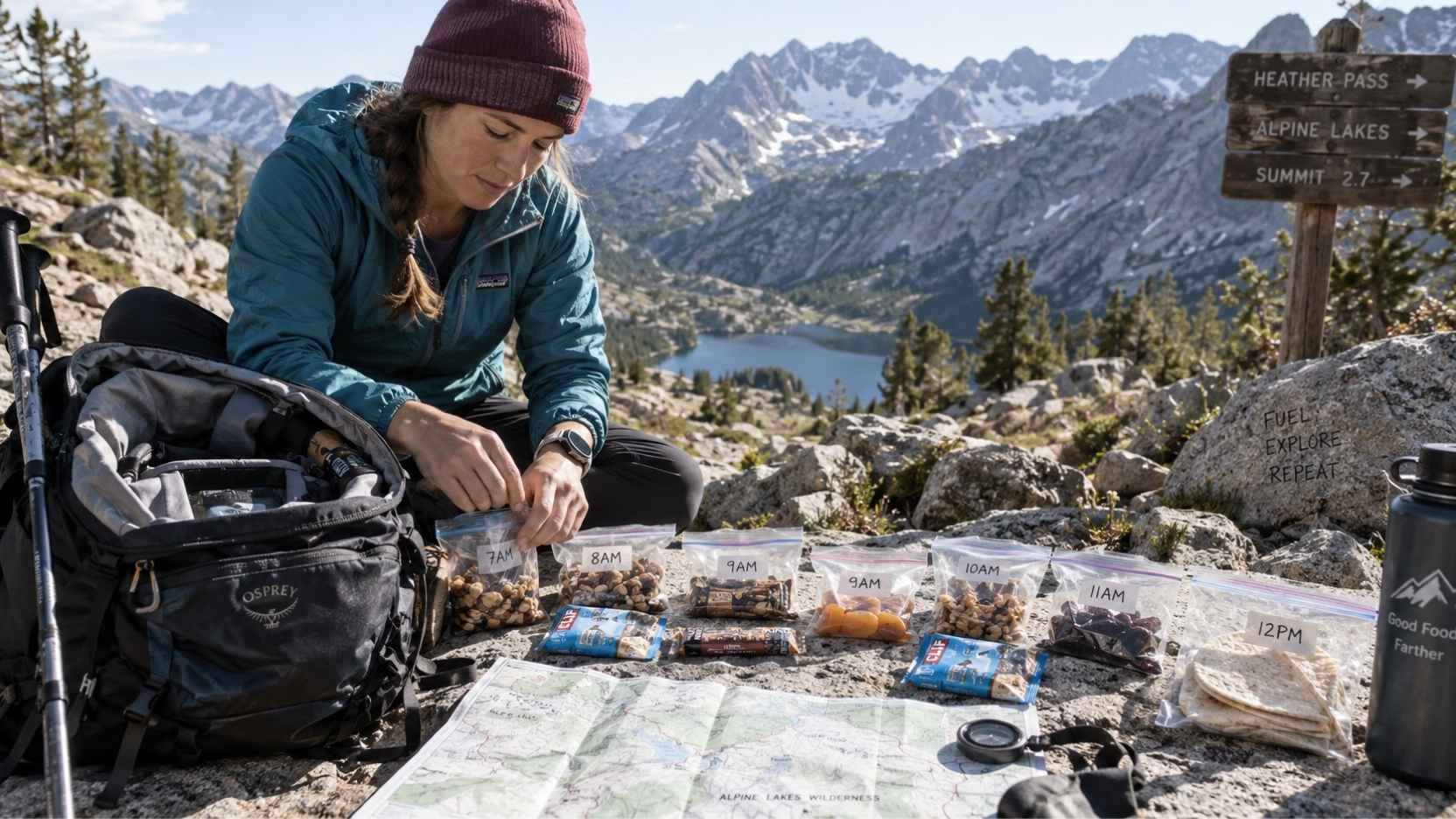
The simplest approach is one larger snack at a predictable hourly checkpoint, such as 9:00, 10:00, 11:00, and noon. Using the 200-calorie example, the hiker would eat about 200 calories each time, making portions easy to count before leaving home. A bar, sandwich portion, dried fruit mix, or another familiar trail food can fill that role.
The advantage is convenience: fewer pack openings, fewer wrappers, and fewer interruptions while walking. The tradeoff is that a larger serving may feel heavier for some people, especially during a steep climb or when the food itself is dense, high in fat, or high in fiber. 🥾 If hourly eating feels comfortable and the hiker reliably follows it, splitting the same amount into tiny servings is not automatically better.
Plan B: Half Portions Every 30 Minutes
A 30-minute schedule simply divides the same hourly allowance into two pieces, so the hypothetical 200 calories becomes 100 calories every half hour. Over four hours, that still totals 800 calories, only distributed across eight eating events instead of four. 🧮 Nothing has been added; only the portion size and frequency have changed.
This middle-ground pattern can suit hikers who dislike large snacks but do not want to think about food every 15 minutes. It can also fit naturally with water breaks, viewpoints, trail junctions, or the end of a sustained climb. In endurance cycling research, changing carbohydrate distribution between 15- and 30-minute intervals did not meaningfully change overall carbohydrate oxidation or gastrointestinal comfort in the tested conditions.
Plan C: Small Portions Every 15 To 20 Minutes
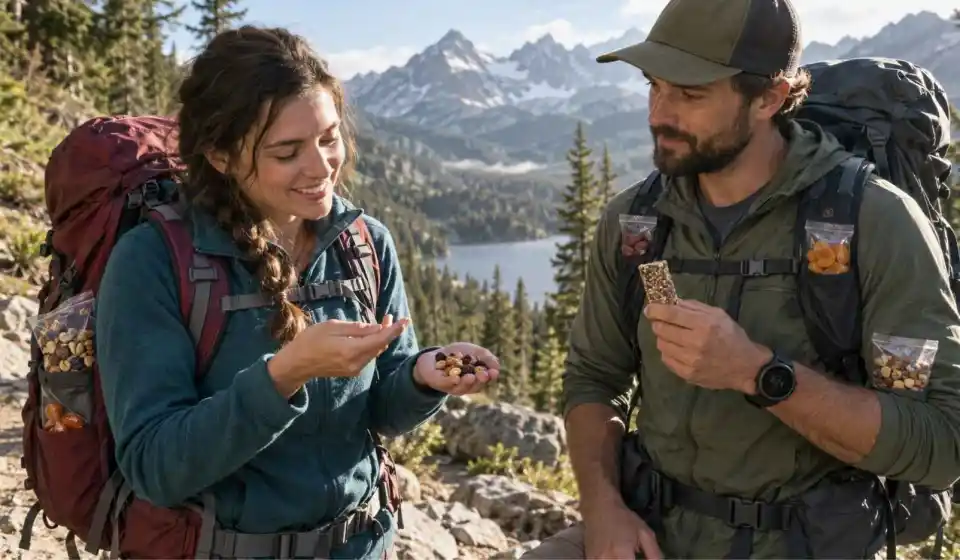
The “little and often” approach breaks the planned amount into smaller bites, which is common in endurance sports because repeated small servings can be easy to combine with drinking. With a 200-calorie hourly example, four equal 15-minute portions would be 50 calories each, while a 20-minute pattern would divide the hour into roughly three 67-calorie servings. 🍌 The total remains about 200 calories per hour either way.
Research suggests distribution can affect some physiological or comfort measures, but it does not establish a universal 15-minute hiking rule. One running study found an advantage when carbohydrate was consumed frequently from the start rather than delayed into one late bolus, while a cross-country skiing study found more gastrointestinal discomfort with lower-frequency intake even though performance did not significantly differ. Those findings support avoiding overly delayed or oversized feedings for some athletes, not forcing every hiker onto a stopwatch.
What Hiking Changes Compared With Cycling
Hiking creates different food logistics than cycling, and that changes how useful frequent feeding may be. A hiker can usually use both hands during a pause and can carry solid foods such as sandwiches, tortillas, dried fruit, trail mix, bars, or chews without needing to eat continuously while moving. 🚶 That gives hikers more flexibility in both food format and timing.
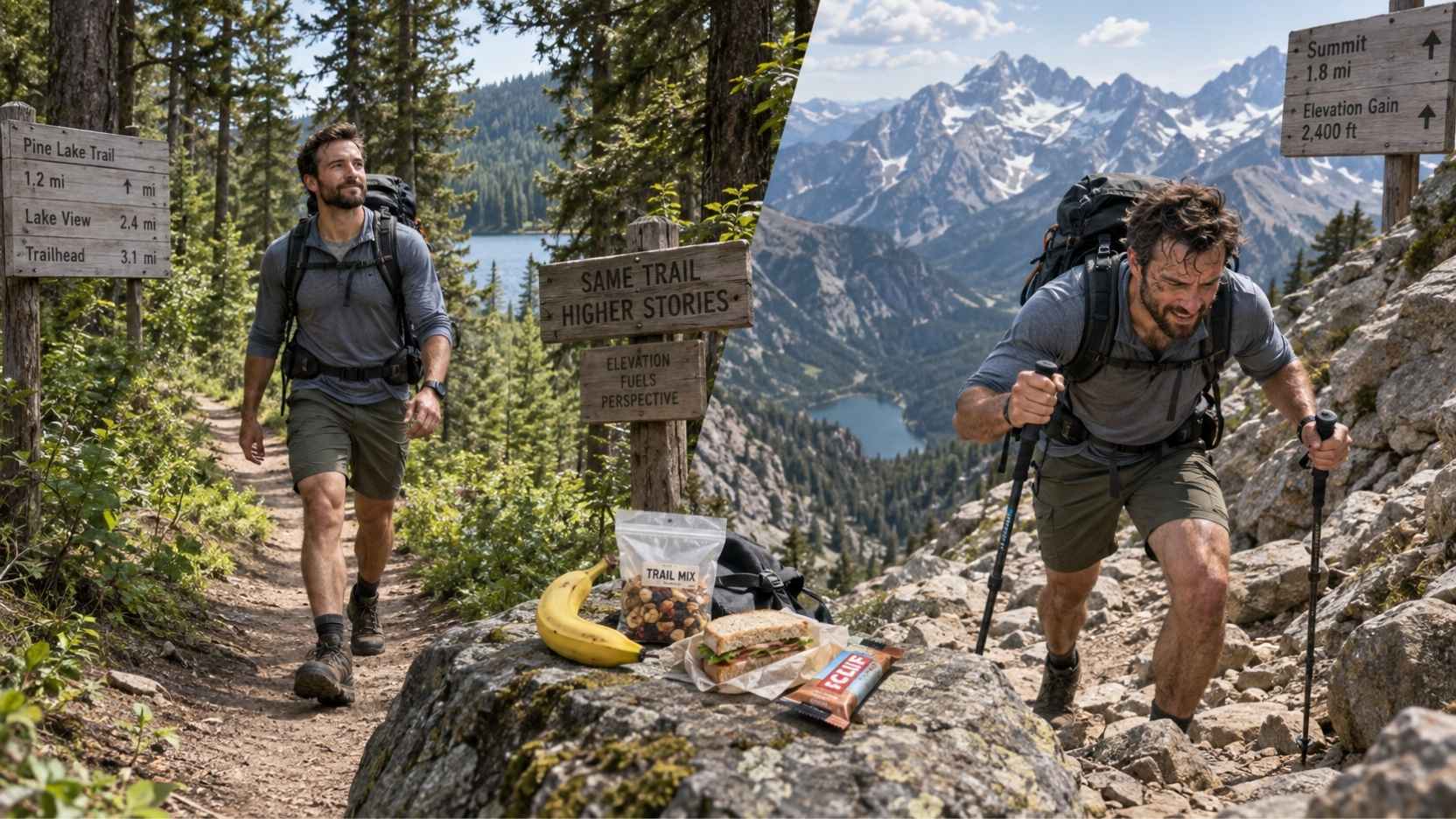
Terrain also makes rigid schedules less practical because a 15-minute alarm may ring during scrambling, a steep ascent, a stream crossing, or another awkward section. Natural pauses already happen at viewpoints, water breaks, map checks, layer changes, and junctions, so eating can often be attached to those moments while still keeping the overall plan on track. The most precise schedule is not useful if the terrain repeatedly causes the hiker to ignore it.
Build Your Own Trail Fuel Schedule
Start with an illustrative hourly amount chosen for the outing, then divide it by the number of times you want to eat each hour. The table below uses 200 calories per hour only to demonstrate the math; it is not a recommendation for every hiker or every trip. 📋 Duration, intensity, body size, pre-hike meals, weather, appetite, and personal goals can all affect actual food needs.
| Eating Frequency | Example Portion | Servings Per Hour | Four-Hour Total |
|---|---|---|---|
| Every 60 minutes | 200 calories | 1 | 800 calories |
| Every 30 minutes | 100 calories | 2 | 800 calories |
| Every 20 minutes | ~67 calories | 3 | ~800 calories |
| Every 15 minutes | 50 calories | 4 | 800 calories |
The key is that frequency changes portion size, not the planned total, provided every scheduled portion is actually eaten. If a frequent schedule leads to skipped servings, or an hourly plan keeps getting postponed because the next climb looks inconvenient, actual intake can drift away from the plan. That makes adherence and trail practicality just as important as clean calorie arithmetic.
A Four-Hour Worked Example
Suppose two hikers each intend to eat 800 calories over four hours purely for comparison. Hiker A carries four 200-calorie portions and eats one per hour, while Hiker B divides the same food into sixteen 50-calorie portions and eats one every 15 minutes. 🎒 If both follow their schedules, the four-hour total is identical.
The difference is the experience: Hiker A has four larger eating events, while Hiker B has sixteen opportunities to remember, unwrap, chew, and repack food. A third hiker could choose eight 100-calorie portions every 30 minutes and reach the same total with fewer interruptions than the 15-minute plan. This is why fuel timing is partly a logistics decision, not simply a question of which clock interval looks most scientific.
Does 15 Minutes Beat 60 Minutes?
There is no strong basis for declaring one fixed interval superior for every hiker, and endurance studies do not consistently show performance differences between reasonable distribution patterns. A recent cycling study testing different carbohydrate distributions across prolonged exercise found no meaningful performance advantage from changing the pattern while keeping the hourly intake equivalent. That supports treating 15, 20, 30, or 60 minutes as practical scheduling options rather than universal rules.
Choose a pattern that makes your planned food easy to carry, easy to remember, and comfortable to eat while matching the terrain and pace. ⚡ For longer or harder outings, or when unusually high intake targets or health concerns are involved, individualized guidance from a qualified sports dietitian or healthcare professional may be appropriate. For ordinary trail planning, the useful test is simple: Can you follow the schedule consistently without making the hike revolve around the timer?
Related Trail Nutrition Guides
Next, use 20-Mile-Day Eating Schedule for a full-day timing example, Trail Food Macro Cheat Sheet for comparing the carbohydrate, fat, and protein content of common foods, and Food Weight Per Day for connecting energy intake with pack weight. 🥜 These answer three separate planning questions: when to eat, what the food contains, and how much it weighs. Keeping those decisions separate makes a trail menu easier to design, test, and adjust.
A good fueling plan is not automatically the one with the most frequent bites or the most precise stopwatch. It is the plan whose total food, serving sizes, and timing remain manageable when hills, weather, appetite, and real trail stops enter the picture. Test the schedule on normal hikes, use familiar foods, and keep the method simple enough that you will actually follow it.