Easy Trail vs Steep Climb: Should Your Fueling Plan Change With Hiking Intensity?
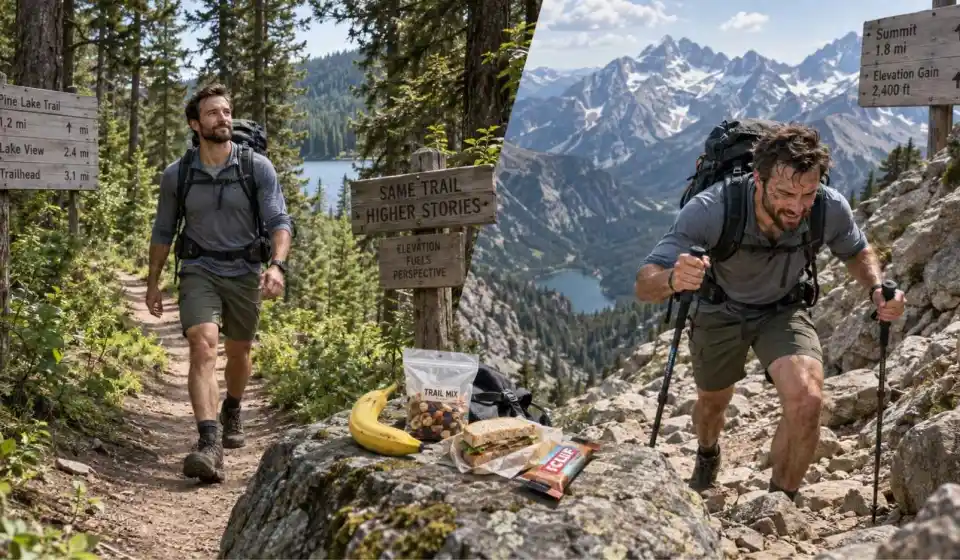
Two hikes can cover exactly five miles and still place dramatically different demands on your body, which is why distance alone is a poor way to plan trail food. Five easy miles on rolling terrain might feel conversational and steady, while five miles containing a long, steep ascent can turn into hours of sustained muscular work. 🥾 If the workload changes, your fueling strategy may need to change with it.
This does not mean hikers need laboratory equipment, heart-rate zones, or complicated metabolic calculations before packing lunch. The useful approach is simpler: combine duration, climbing, terrain, pace, pack weight, and perceived effort instead of asking only how many miles you will hike. That gives you a much better starting point for deciding whether you need an occasional snack or a deliberate carbohydrate schedule.
Why Five Miles Is Not Always Five Miles
Imagine one five-mile hike following a smooth valley trail with only gentle elevation changes and another gaining 2,500 feet through repeated switchbacks. Even if both hikes show the same mileage on your GPS, the climbing route requires considerably more work because you are repeatedly raising your body and pack against gravity. Research measuring uphill walking consistently shows that metabolic demand rises substantially with positive grade.
That difference matters because your food plan should support the work you are actually performing, not simply the horizontal distance appearing on a map. An easy five miles completed comfortably after breakfast might require little trail food beyond an emergency snack, while several hours of climbing may benefit from planned carbohydrate intake. ⛰️ This is why grams of food per mile can become misleading once terrain changes significantly.
Easy Flat Walking vs Sustained Climbing
During relatively easy hiking, your body can draw on a mixture of stored carbohydrate and fat while you maintain a manageable workload. Fat provides a large energy reserve, and at lower exercise intensities your body can rely more heavily on fat oxidation while still using carbohydrate. You therefore do not need to continuously replace every calorie being burned with food while walking.
Increase the workload with a sustained climb, however, and carbohydrate becomes progressively more important as an exercise fuel because it can support higher rates of energy production. Current endurance-sport evidence continues to support maintaining carbohydrate availability when performance demands become greater, particularly during prolonged or higher-intensity exercise.
Elevation Gain Changes The Energy Equation
The 2024 Compendium of Physical Activities illustrates how large the difference can become, although its MET values should be treated as population-level estimates rather than personal calorie measurements. It lists normal hiking through fields and hillsides at about 5.3 METs, climbing a 6–10% grade at a moderate-to-brisk pace around 7 METs, and climbing an 11–20% grade at slower-to-moderate speeds around 8.8 METs.
Those values demonstrate why estimating calories burned hiking uphill cannot be reduced to mileage alone. A steep trail can demand much more energy per minute even when your GPS pace becomes slower, meaning a hiker moving at two miles per hour uphill could be working substantially harder than someone walking three miles per hour on easier terrain. 🔥 Slower therefore does not automatically mean easier.
Speed Alone Gives An Incomplete Picture
Trail pace is tempting because it is easy to measure, but it can hide what is actually happening under your boots. A three-mile-per-hour pace on smooth ground, two-mile-per-hour pace through loose rocks, and one-and-a-half-mile-per-hour pace up steep switchbacks represent completely different workloads. Looking only at speed could incorrectly make the hardest section appear to be the easiest.
A practical alternative is the talk test combined with terrain awareness: notice whether you can comfortably speak in full sentences, whether climbing is continuous, and whether your legs feel like they are repeatedly working hard. This is not a laboratory measurement of metabolism, but it gives ordinary hikers useful context when deciding how aggressively to fuel. 🗣️ Think in categories such as easy, moderate, and strenuous rather than pretending your watch can calculate your exact energy expenditure.
Do Not Forget Pack Weight
Your body is not always the only mass you are moving uphill because water, food, shelter, camera equipment, and overnight gear can add substantial weight. Controlled walking studies have found that carrying loads and walking uphill can increase oxygen consumption and overall energy demand, although the exact effect varies with gradient, load size, walking speed, and load distribution.
That means the same trail may deserve two different food plans depending on whether you are carrying a tiny daypack or a loaded backpack. 🎒 A lightweight two-hour walk after breakfast might need very little planned fueling, whereas a longer climb under a heavier pack could justify bringing easily eaten carbohydrate sources in addition to normal meals. Pack weight belongs beside elevation and duration when estimating workload.
A Hypothetical Flat-Hike Calculation
Consider a 75-kilogram hiker walking for two hours at an activity level represented by approximately 5.3 METs, the Compendium value for normal hiking through fields and hillsides. Using the standard MET calorie approximation produces roughly 835 gross calories over two hours, but that number should be considered an estimate rather than a promise about what one specific person will burn.
Most importantly, burning roughly 835 calories does not mean the hiker must eat 835 calories while walking. The body begins the hike with stored glycogen and body fat available, while breakfast and meals before and after the hike also contribute to the day’s energy intake. 🍌 For a comfortable two-hour outing, many hikers may simply carry a modest snack and eat according to duration, appetite, and workload.
A Hypothetical Steep-Climbing Calculation
Now imagine the same 75-kilogram hiker spending two hours at an estimated 8.8 MET workload, roughly corresponding in the Compendium to climbing an 11–20% hill at a slow-to-moderate pace. The same simplified MET equation gives approximately 1,386 gross calories, showing how changing the workload can dramatically alter an estimate even though body weight and exercise time stay identical.
Real trails will not remain at one perfectly controlled grade for two hours, so you should never treat 1,386 calories as an exact prediction. Instead, the comparison demonstrates the principle behind asking how many calories do you burn hiking: body size, duration, incline, terrain, speed, and carried load all matter. 📈 Calorie calculators are therefore planning tools, not metabolic measuring devices.
How Carbohydrate Targets Change With Intensity
Sports-nutrition research commonly uses 30–60 grams of carbohydrate per hour as a reference range during prolonged moderate-to-high-intensity endurance exercise lasting roughly one to two-and-a-half hours. Longer strenuous events can sometimes use higher carbohydrate intakes, but those recommendations come largely from endurance-sport settings and should not automatically be imposed on every recreational hike.
For an easy hike, there may be little reason to force-feed yourself simply because the clock has passed 60 minutes, particularly if you started well fed and the outing remains comfortable. During sustained climbing or a long strenuous hike, however, gradually eating carbohydrate can become more useful because the workload places greater demands on carbohydrate availability. 🍞 Think of the guideline as a reference range to scale, not a mandatory hiking prescription.
Turning Total Calories Into An Eating Schedule
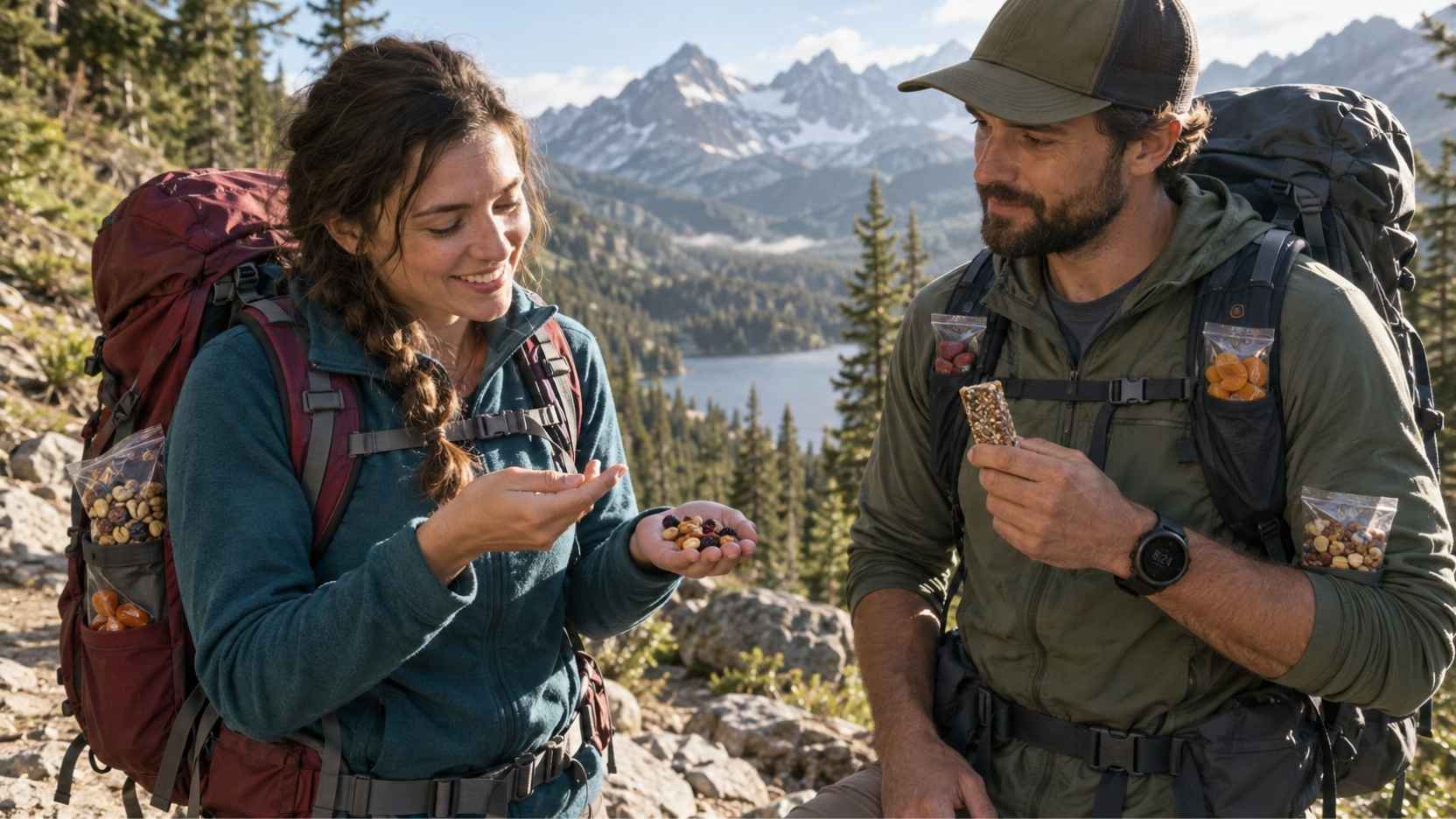
Rather than trying to replace every calorie burned, build your trail schedule around when maintaining energy becomes useful. On a harder multi-hour outing, eating a small carbohydrate-containing snack every 30–60 minutes can be easier to tolerate and remember than waiting until several hours have passed and then consuming a large meal. Examples include dried fruit, bananas, tortillas, pretzels, cereal bars, sandwiches, or other foods you already tolerate while moving.
Protein and fat still belong in an overall hiking diet, especially during long days and meals, but they serve different purposes than rapidly available carbohydrate during demanding movement. Foods containing some fat can increase calorie density, while protein helps make meals more complete, yet carbohydrate usually deserves greater emphasis when the immediate challenge is repeated climbing. ⚡ This distinction is explored further when comparing carbs vs fat on the trail.
Why Grams Per Mile Usually Falls Short
A rule such as “eat 20 grams of carbohydrate every three miles” sounds convenient until three miles takes one hour on one trail and two-and-a-half hours on another. Mileage does not capture steepness, altitude, technical terrain, heat, pack weight, rest stops, or how hard you are actually working. Duration plus workload therefore gives you more useful information than distance alone.
This becomes especially important when fueling a 20-mile day, because the same mileage could describe a fast rolling trail or an exhausting mountain route lasting from sunrise until evening. ⏱️ Estimate how many hours you expect to move, identify the hardest portions, and then distribute food across those hours rather than dividing your entire food bag mechanically by mileage. Add some reserve food in case the outing lasts longer than planned.
Build An Easy-Day And Hard-Day Menu Template
For an easy-day template, start with a normal pre-hike meal, carry water appropriate for conditions, and pack a small amount of familiar carbohydrate-containing food plus reasonable backup calories. Your goal is convenience rather than maximizing carbohydrate intake: perhaps one sandwich, fruit, trail mix, or another snack you enjoy if the outing extends longer than expected. 🌿 Shorter low-intensity hikes generally do not need to resemble endurance races.
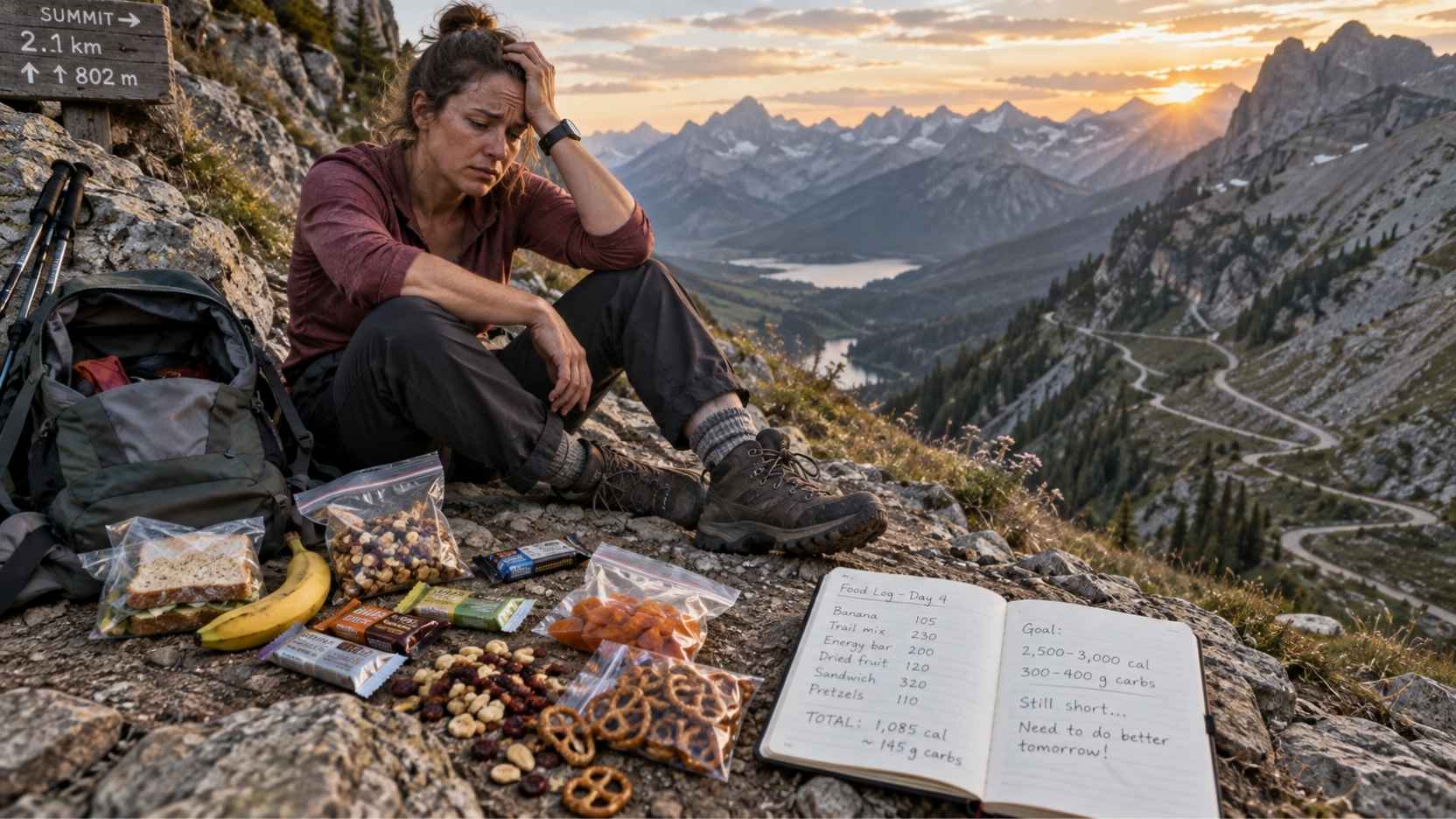
For a hard-day template, increase the amount of easily eaten carbohydrate and distribute it through the hours when sustained climbing or continuous movement is expected. Pack foods in portions you can reach without unpacking your entire bag, combine faster carbohydrates with more substantial foods on long outings, and test your plan on training hikes before relying on it for an important trip. If medical conditions or individualized nutrition requirements affect exercise fueling, consult a qualified healthcare professional.
The Practical Rule: Fuel The Workload, Not Just The Mileage
The biggest lesson is simple: your fueling plan should become more deliberate as duration and workload rise. Distance matters, but elevation gain, pack weight, terrain, pace, and sustained climbing determine whether those miles feel like relaxed walking or several hours of demanding endurance exercise. 🏔️ Two hikes with identical mileage can therefore deserve very different amounts and types of trail food.
Start by estimating duration, then judge how much of the route involves sustained hard work, and finally choose a food schedule you can comfortably follow. From there, learning about Carbs vs Fat on the Trail, Calories Burned Hiking Uphill, How Many Calories Do You Burn Hiking?, and Fueling a 20-Mile Day creates a logical progression toward more precise menu planning. The goal is not perfect metabolic mathematics—it is arriving with enough appropriate food for the hike you are actually doing.