Should You Eat Before the Climb? Fuel Timing for Long Uphill Hiking Sections
A long uphill section creates a surprisingly practical food problem: your body may be ready for a snack at the exact moment you least want to stop eating. 🥾 When you are climbing steadily, breathing becomes more demanding, your pace settles into a rhythm, and reaching into your pack can feel far more disruptive than it does on rolling terrain. That raises an important trail question—should you move your planned snack forward and eat before the climb instead?
The answer is less about finding one perfect fueling minute and more about arranging an existing food plan around the terrain ahead. Eating before, during, or after an ascent can all fit into a hiking strategy depending on climb length, food type, personal tolerance, pace, and the next realistic opportunity to stop. Rather than promising that one timing strategy prevents fatigue, it is more useful to think of fuel timing as trail logistics.
The Terrain Problem With Hourly Fueling
Many hikers organize food around time because it is simple: eat breakfast, hike for a while, have a snack, continue hiking, and repeat throughout the day. ⏱️ The problem is that mountains do not cooperate with your watch, and your planned 10:30 snack break might arrive halfway through the hardest 45-minute climb of the morning. Following the clock too rigidly can therefore create an inconvenient eating schedule even when the overall food plan is reasonable.
Imagine you normally eat something every 60 minutes and reach a sustained ascent at minute 50. Waiting for the exact 60-minute mark means stopping only 10 minutes into the climb, while eating slightly early allows you to start climbing without immediately thinking about food again. The total amount of food does not have to change simply because its timing shifts.
A 30-Minute Climb Can Disrupt An Otherwise Regular Schedule
Consider a hiker who starts walking at 8:00 and normally plans snacks around 9:00, 10:00, and 11:00. At 9:50, the trail begins a continuous uphill section expected to take approximately 35 minutes, putting the normal 10:00 snack directly inside the climb. ⛰️ This is where terrain-based scheduling can become more practical than treating every snack time as fixed.
One option is to eat the planned food at 9:45 before starting uphill and then resume the normal schedule later. Another is to carry something that can be eaten quickly during a safe pause, while a third option is to finish the ascent and eat around 10:25. None requires automatically adding more calories; they simply place the same planned snack at different points around the climb.
Before, During Or After: Three Scheduling Models
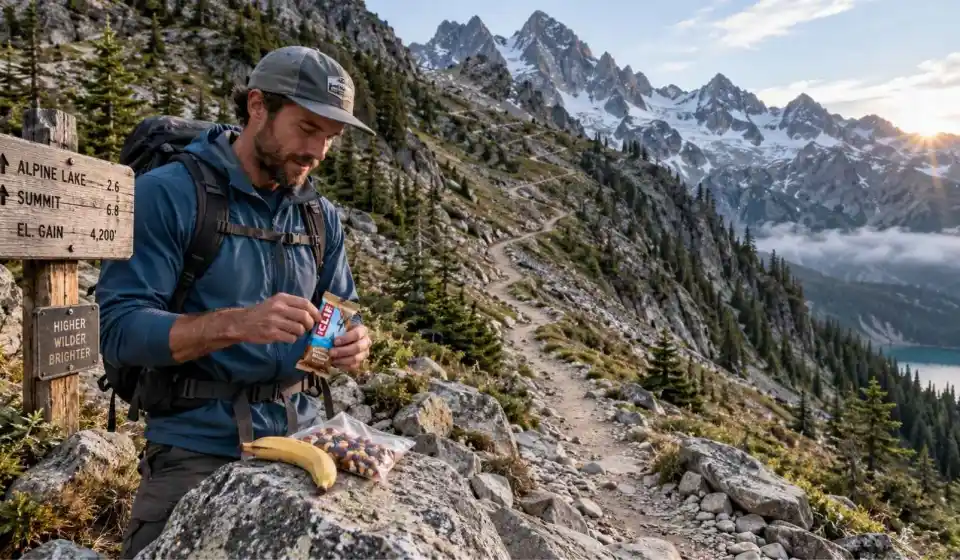
The before-the-climb model works well when a hiker knows a sustained ascent is approaching and prefers not to eat while breathing heavily. 🍌 A normal snack can be moved 10 to 20 minutes earlier, eaten while walking slowly or during a brief route check, and followed by the climb. This can be particularly convenient when the trail profile clearly shows that the next comfortable stopping point is far above.
The during-climb model keeps the original timing but usually favors foods that are quick and easy to handle, while the after-climb model postpones the snack until the terrain becomes easier. The important distinction is that postponing a snack by several minutes is different from repeatedly skipping planned food because every climb feels inconvenient. Think about the entire day rather than judging one snack in isolation.
What Changes When The Climb Lasts 10 Vs 30 Vs 60 Minutes?
A 10-minute hill usually creates very little scheduling difficulty because the normal snack can often be eaten shortly before or immediately afterward. The climb may simply become part of the natural delay that already happens when hikers stop for photos, adjust layers, refill water, or wait for another person. 🌲 There is rarely much reason to redesign an entire eating schedule around such a short interruption.
A 30- to 60-minute continuous ascent deserves more planning because it can occupy a large portion of the interval between planned snacks. If the climb begins near your usual eating time, moving food slightly earlier can be more comfortable than carrying a complicated meal up the hill or waiting much longer than originally intended. The longer the uninterrupted terrain feature, the more useful it becomes to look ahead rather than relying only on the clock.
Quick Carbohydrates Vs Slower Trail Meals
Food format matters because eating while hiking uphill is partly a mechanical problem. Foods such as dried fruit, bananas, simple bars, chews, crackers, or other carbohydrate-rich snacks are usually easier to eat quickly than a large sandwich, dense meal, or food requiring utensils and preparation. 🍇 Carbohydrate is also commonly emphasized during prolonged endurance activity because working muscles can use it as an accessible energy source.
That does not mean every trail meal should consist of sugar or that fat and protein are unimportant. Foods containing carbohydrate, fat, protein, and fiber can be useful across a long hiking day, especially during longer breaks when digestion and eating comfort are less constrained by steep climbing. A useful strategy is therefore to match the food format to the terrain: quick foods around movement-heavy sections and larger mixed meals during natural stops.
Use The “Next Terrain” Rule
Instead of asking only, “When did I last eat?” add a second question: “What terrain comes next?” 🗺️ A look at the map, elevation profile, trail signs, or visible route can tell you whether the next 30 to 60 minutes contain rolling terrain, a sustained climb, an exposed ridge, a technical section, or a convenient viewpoint. That information can help determine whether now is a better eating opportunity than later.
For example, suppose you reach a shaded junction at 10:40 and your normal snack would be around 11:00, but the next section is a 40-minute ascent. Eating slightly early may be more practical than carrying the same snack untouched until 11:20. The “next terrain” rule turns food timing into route management rather than stopwatch management.
Example Mountain-Day Fueling Schedule
Imagine a hiking day beginning with breakfast at 7:00 followed by trail time at 8:00. 🥣 The first hour includes rolling terrain, so a small snack around 9:00 fits naturally, followed by easier hiking until a major climb begins shortly before 10:00. Instead of waiting until halfway through the ascent, the hiker could take the next planned snack shortly before the climb begins.
After reaching the summit or a comfortable high point, another break might include water and a more substantial snack before continuing toward lunch. The afternoon could follow the same principle: rolling terrain allows flexible eating, while a known hour-long ascent encourages the hiker to consider the next convenient food opportunity before committing to the climb. This creates a schedule built around both time and terrain rather than either one alone.
Do Not Let The Clock Override Comfort And Safety
There is no requirement to eat exactly when a timer sounds, especially if stopping would place you on a narrow, exposed, unstable, or inconvenient section of trail. ⚠️ Moving a snack earlier or later by a modest amount is often simply part of adapting a general plan to real outdoor conditions. Safe footing, weather, route finding, and personal comfort still matter.
Individual digestion also differs, and some hikers dislike climbing immediately after eating a substantial meal while others tolerate it easily. Testing food types and timing during familiar training hikes can reveal which combinations feel comfortable without turning an important mountain day into an experiment. The goal is not perfect nutritional precision—it is a repeatable system that works while you are actually hiking.
Build Fueling Around The Mountain, Not Against It
A practical hiking food strategy combines a rough schedule with enough flexibility to respond to the trail. 🏔️ If you know a major ascent is coming, eating the next planned snack a little early can make sense; if the climb is short, waiting until afterward may be simpler; and if the ascent is extremely long, portable foods can keep the schedule flexible. Terrain duration becomes another planning variable alongside hiking time, pace, appetite, weather, and food availability.
The bigger lesson is that you do not need to choose between rigid hourly fueling and completely unstructured eating. Plan your food, then let the terrain help decide the most convenient moment to use it. For related planning, continue with Carbs vs Fat on the Trail, Fueling a 20-Mile Day, and Hiking Uphill Calories.