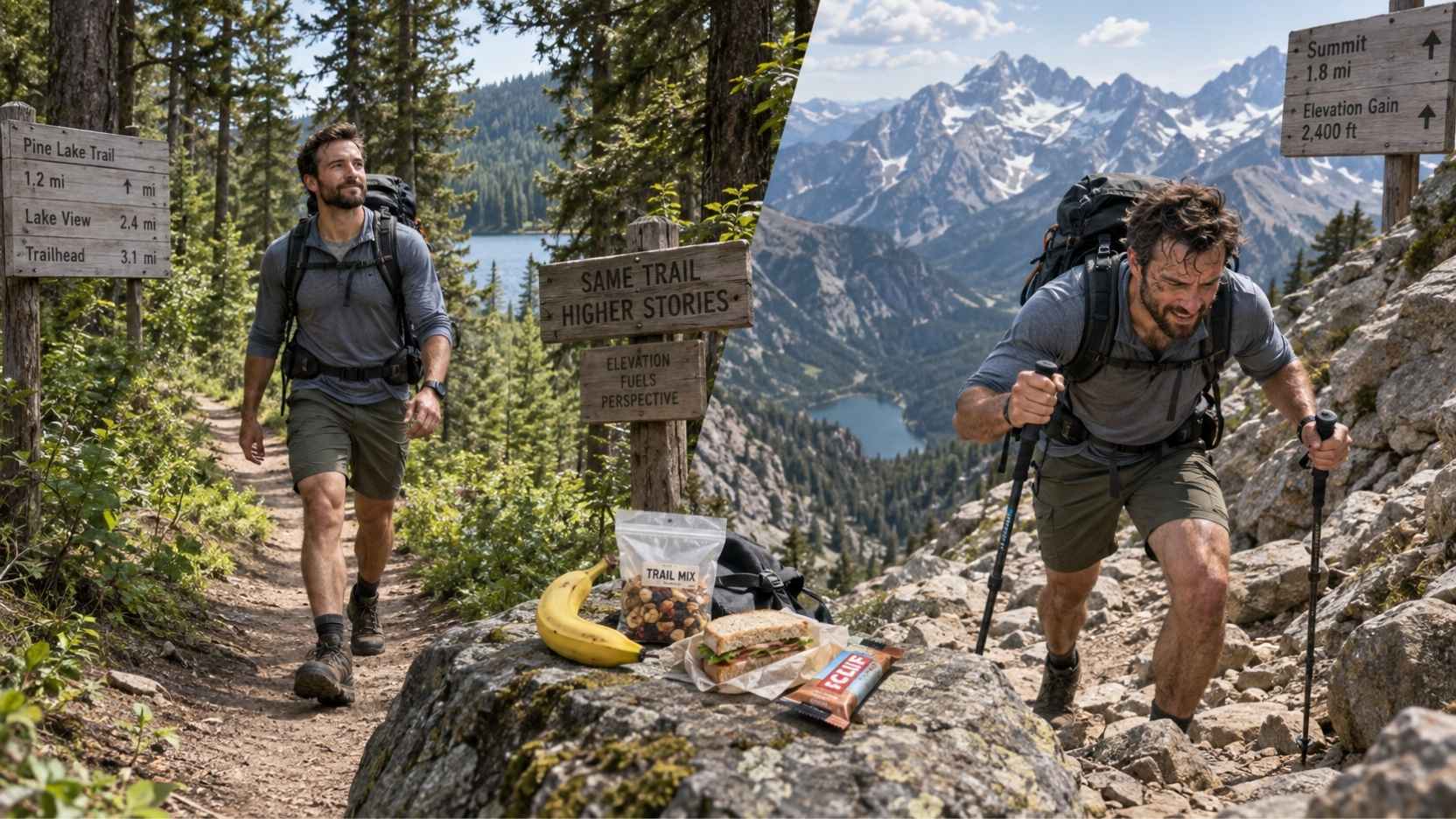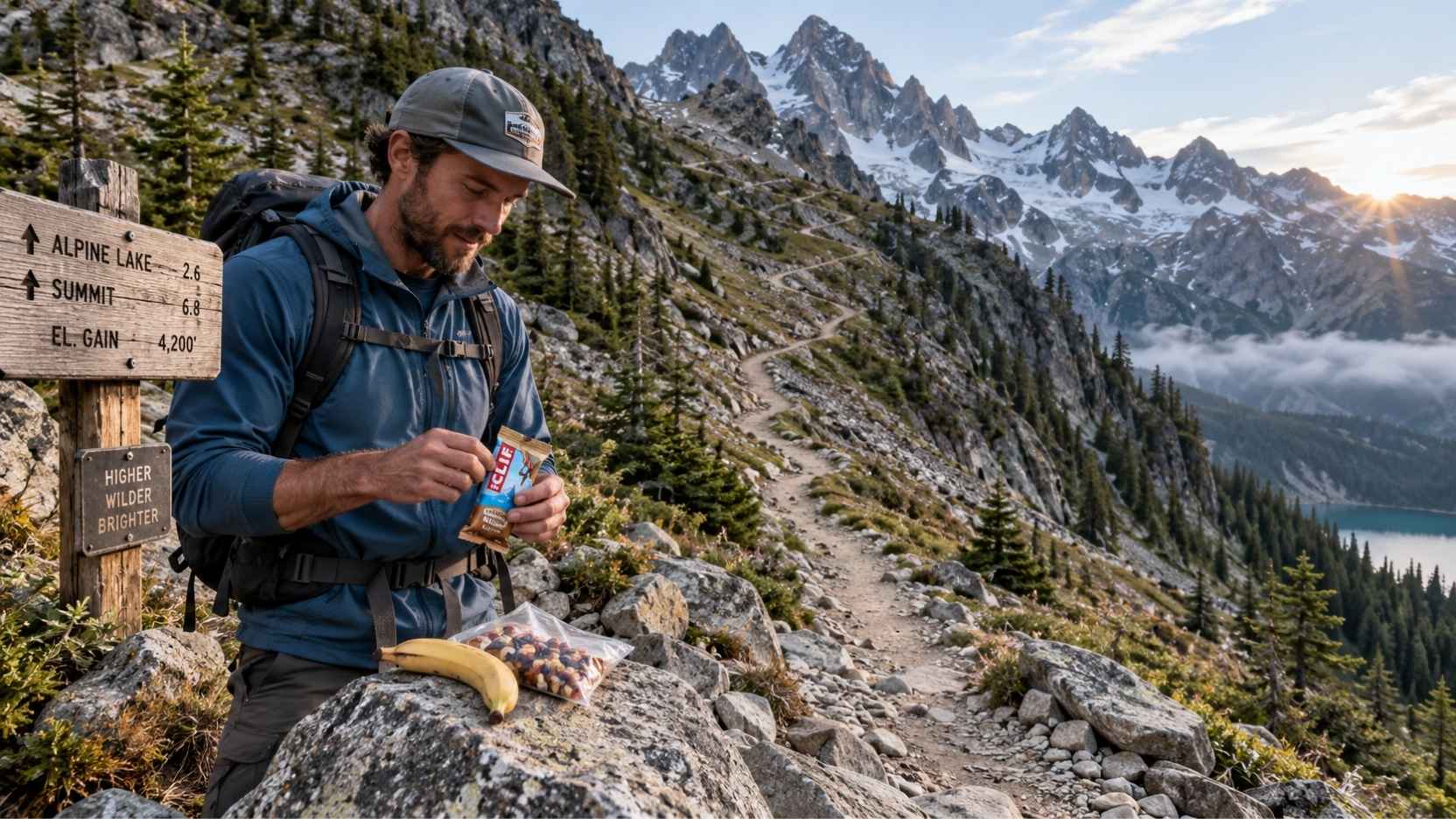
You Ate All Day—So Why Did You Still Run Out of Energy? The Math Behind Random Trail Snacking
Why “I Ate Plenty” Tells You Almost Nothing 🥾
A hiker can snack from sunrise to afternoon and still finish feeling flat, slow, or mentally drained. The problem is that “I ate all day” describes frequency, not quantity, and says nothing about how many calories or grams of carbohydrate you actually consumed. A few bites every hour can feel constant while adding up to less fuel than expected.
Memory is also unreliable when the trail is steep, hot, technical, or distracting. You may remember opening trail mix, eating a banana, splitting a bar, and taking bites of a sandwich, yet the total can still be surprisingly small once you do the math. 🔢 The better question is not “Did I eat?” but “What did I eat, how much, and over how many hours?”
Random Snacking Vs Planned Intake 🍌
Random snacking is not automatically bad, especially on short or easy hikes where appetite works well as a guide. On long days, hunger can lag behind effort, food may be hard to reach, and climbing can make you postpone eating. By the time hunger becomes obvious, several hours of light intake may already be behind you.
A planned intake does not mean forcing a rigid number every hour. It means deciding what food is available, roughly when you will eat it, and what those foods contribute in calories and carbohydrate. That structure makes it easier to notice whether “steady snacking” is one meaningful snack every hour or only a few bites.
Example: An 8-Hour Hiking Day ⏱️
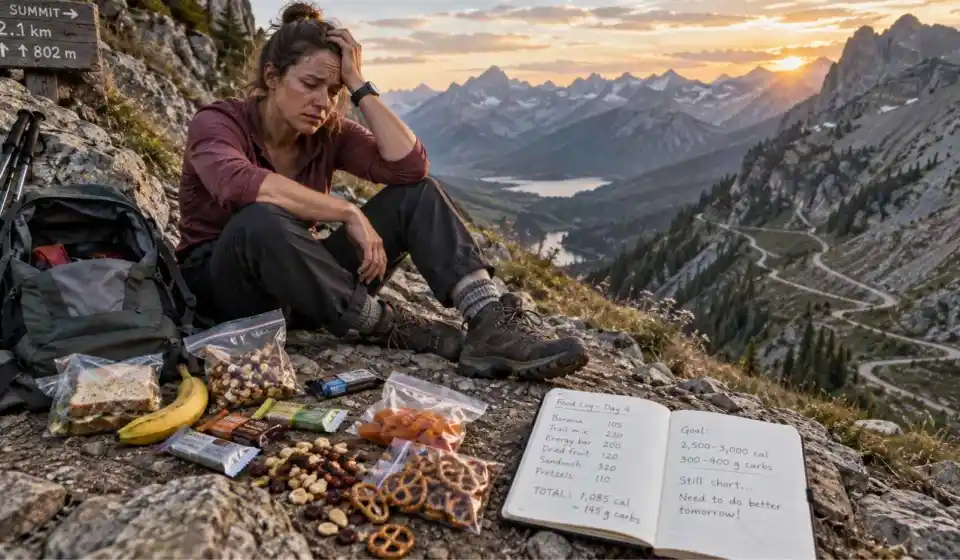
Imagine an eight-hour hike where someone eats a banana, one energy bar, a handful of trail mix, half a peanut-butter sandwich, dried fruit, and some pretzels. Depending on portions and brands, that might provide roughly 1,000 to 1,200 calories and 180 to 220 grams of carbohydrate. Spread across eight hours, that averages only about 125 to 150 calories and 23 to 28 grams of carbohydrate per hour.
Those numbers are not automatically too low because hiking needs vary with body size, terrain, pack weight, temperature, altitude, pace, and fitness. The example shows why six eating events can still be less food than assumed. On a hard mountain day, the mismatch can become more noticeable because energy expenditure continues every minute while food intake arrives in small, irregular bursts.
Turn Snacks Into Real Numbers 📊
Start by checking labels or estimating realistic portions instead of treating every snack as one generic unit. A large bar can contain far more energy than a small fruit pouch, while trail-mix portions vary with ingredients. Carbohydrate matters too because it is an important readily available fuel source during sustained exercise, especially as intensity rises.
Sports-nutrition guidance often discusses carbohydrate per hour during prolonged endurance activity, but those ranges are not a universal hiking prescription. Common endurance guidance often begins around 30 to 60 grams of carbohydrate per hour, with higher intakes used by trained athletes during very long, demanding efforts when tolerated. 🚶 Recreational hikers need not chase a number blindly; comparing intake with energy levels is more useful than guessing.
How Missed Snacks Compound 🧮
The biggest problem with random eating is often not one poor food choice but repeated delays. Skip 150 calories during a steep climb, miss another snack during a navigation stop, and eat only half your planned lunch because you want to keep moving, and the gap quietly grows. Four small misses of 150 calories equal 600 calories that never arrived, even though you may still remember eating several times.
Carbohydrate gaps can accumulate in the same way. If you intended to eat 40 grams during one period but managed only 15, then later skipped another 25-gram snack, the total difference becomes larger than any single missed bite suggests. This simply explains why late-day fatigue can reflect several hours of under-eating rather than one dramatic mistake.
Why Climbing And Pace Change The Calculation ⛰️
A gentle trail at a conversational pace is not metabolically identical to steep switchbacks with a loaded pack. As exercise intensity rises, the body generally relies more heavily on carbohydrate, while easier efforts can use a larger share of fat for energy. The same snack pattern may therefore feel adequate on a relaxed walk but disappointing on a sustained climb.
Pace also changes how easy it is to eat. On technical terrain you may avoid chewing while moving, and on steep climbs you may wait until your breathing settles, creating longer gaps than expected. 🌄 Keeping easier-to-eat foods in a hip-belt or shoulder-strap pocket can reduce those accidental delays.
A Simple Trail-Food Tracking Table 📝
You do not need a spreadsheet on the mountain, but a quick phone note or paper card can reveal patterns fast. Record the time, food, approximate calories, carbohydrate, and how you felt before the next eating point, then review the total after the hike. The goal is not perfect tracking; it is enough information to replace vague memory with something useful.
| Time | Food | Approx. Calories | Approx. Carbs | Later Feeling |
|---|---|---|---|---|
| 8:00 | Banana | 100 | 27 g | Good |
| 9:30 | Energy bar | 220 | 38 g | Steady |
| 11:15 | Trail mix | 250 | 25 g | Hungry |
| 1:00 | Half sandwich | 180 | 22 g | Energy dipping |
| 3:00 | Dried fruit | 160 | 40 g | Better |
| 4:30 | Pretzels | 180 | 36 g | Tired but stable |
The useful pattern may be a long gap, a small lunch, or most of your carbohydrate arriving late in the day. After a few hikes, you may see that your strongest days share a repeatable rhythm even when the foods themselves change. That information is much more actionable than simply remembering that you brought plenty of snacks.
Build Tomorrow’s Pack From Today’s Numbers 🎒
After the hike, total what you actually ate instead of what you packed because uneaten food did not contribute to your energy intake. Then note when you felt strong, when your pace faded, whether hunger arrived suddenly, and whether certain foods were difficult to eat during climbs. This turns one hiking day into useful data rather than a vague memory of feeling “good” or “wrecked.”
For the next outing, change one or two things instead of rebuilding the entire menu. You might add an easy-to-eat snack before the hardest climb, split lunch into two smaller eating periods, or keep carbohydrate-rich food where it can be reached without removing your pack. Small changes are easier to evaluate because you can see whether they improve energy, comfort, and consistency.
Stop Counting Snacks And Start Counting What They Add Up To ✅
Two hikers can each say they ate six times, yet one may have consumed nearly twice as much energy or carbohydrate as the other. One person may also spread food across the day while another eats most of it after fatigue has already started. Snack count alone therefore tells you very little about whether a fueling plan matched the hike.
For your next long outing, think in totals and intervals rather than impressions. Pack intentionally, note what you actually consume, and compare those numbers with terrain, pace, duration, and how you felt during the final hours. The goal is not a perfect universal formula—it is learning your own trail math well enough that “I ate all day” finally means something measurable.