The Food Safety Danger Zone on the Trail: Understanding Bacteria Growth Temperatures
When you are hiking, backpacking, or camping, food safety can be easy to overlook. You may be focused on mileage, weather, water, navigation, or simply enjoying the scenery. But food that is perfectly safe at home can become a problem on the trail when it is exposed to warm temperatures for too long.
One of the most important concepts for outdoor food safety is the temperature danger zone. Understanding how temperature affects bacterial growth can help backpackers make better decisions about meals, snacks, leftovers, and food storage.
What Is the Food Safety Danger Zone?
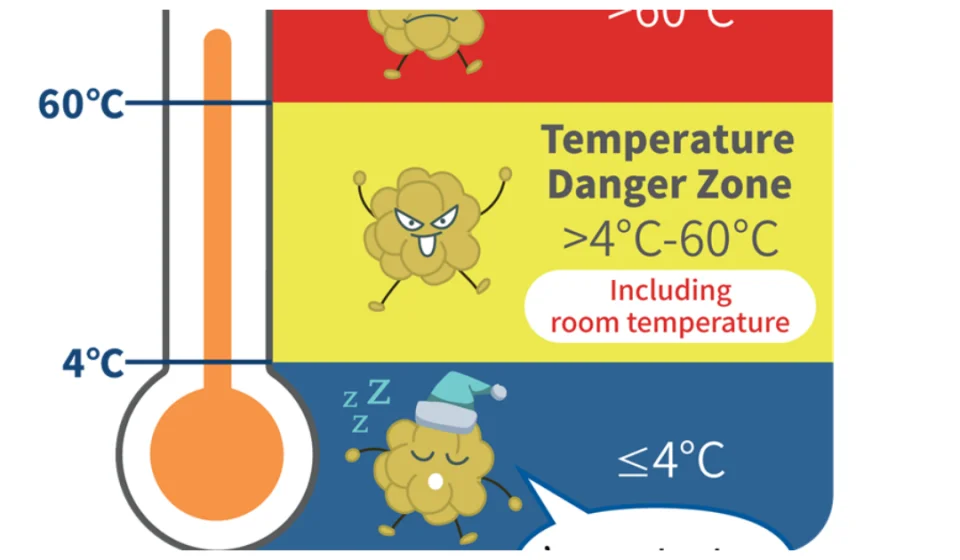
The term “danger zone” refers to a temperature range in which many harmful bacteria can multiply rapidly. In the United States, food-safety guidance commonly identifies this range as 40°F to 140°F (4°C to 60°C).
That does not mean food instantly becomes unsafe when it enters this temperature range. Instead, the risk increases as potentially hazardous food spends more time in temperatures that allow bacteria to grow.
For backpackers, this concept is particularly important because maintaining reliable refrigeration can be difficult. A cooler may warm throughout the day, an insulated food bag may sit in a hot backpack, or a meal may remain at camp for several hours before being eaten.
Why Temperature Matters for Bacteria
Bacteria require suitable conditions to reproduce. Temperature is one of those conditions.
Some bacteria can survive at relatively cold temperatures, but refrigeration generally slows their growth. When food becomes warmer, bacterial reproduction can accelerate. In favorable conditions, populations can increase significantly over time.
This is why a sandwich containing meat and cheese should not be treated the same way as a sealed package of crackers. The sandwich contains ingredients that can support bacterial growth, while many dry foods are much less hospitable to microorganisms.
Moisture, nutrients, acidity, oxygen, and temperature all influence microbial growth. Temperature is only one part of the equation, but it is especially important during outdoor trips.
Why the Danger Zone Is Different on the Trail
At home, keeping food cold is relatively straightforward. You have a refrigerator, freezer, kitchen thermometer, and stable indoor temperatures.
Backpacking is different.
Your food may spend hours inside a backpack exposed to summer heat. A cooler can gradually warm after the ice melts. A campsite may have no refrigeration at all. Even nighttime temperatures may not be low enough to provide reliable food preservation.
Sun exposure can make the situation worse. A food container left on a rock in direct sunlight may become much warmer than the surrounding air.
For this reason, backpackers should think about food temperature from the moment they leave home until the meal is consumed.
High-Risk Foods Require More Attention
Not every trail food deserves the same level of caution.
Foods that generally require more temperature control include cooked meat, poultry, seafood, eggs, dairy products, soft cheeses, cut fruits and vegetables, and prepared leftovers.
For example, a backpacker carrying a refrigerated chicken wrap needs to consider how long that wrap has remained warm. By contrast, an unopened package of crackers or a dry energy bar generally does not require the same type of temperature control.
The key question is not simply, “Is this food fresh?” It is also, “Has this food been kept under appropriate conditions?”
Time and Temperature Work Together
Temperature alone does not tell the whole story.
Imagine two hikers carrying the same cooked meal. One keeps it properly chilled for most of the day and eats it soon after it warms. The other leaves the meal in a warm backpack for many hours.
The foods may look and smell identical, but their safety profiles can be different.
This is why the concept of time-temperature control is so important. Food safety depends on both how warm the food becomes and how long it remains warm.
Outdoor adventurers should avoid relying on appearance, smell, or taste to determine whether food is safe. Some harmful microorganisms or toxins cannot be detected through normal sensory inspection.
What About Freeze-Dried Meals?
Freeze-dried meals are popular with backpackers because they are lightweight, compact, and shelf-stable when properly packaged.
An unopened commercial freeze-dried meal does not usually need refrigeration simply because it is being carried on a trail. The important distinction is that the product is designed to be stored without refrigeration while sealed.
Once you add water and prepare the meal, the situation changes.
Rehydrated food contains moisture, and moisture can support microbial growth. If you prepare a freeze-dried meal and then leave the leftovers sitting in warm conditions for several hours, it should not automatically be considered safe simply because the original product was shelf-stable.
Managing Food Temperature in a Backpack
One of the simplest strategies is to choose foods that naturally require less temperature control.
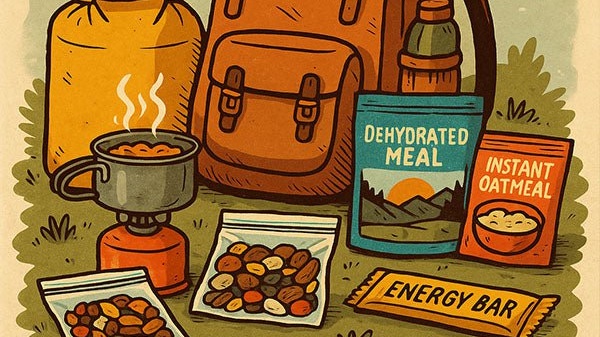
For warm-weather trips, consider shelf-stable ingredients such as:
- Freeze-dried meals
- Dehydrated foods
- Instant oatmeal
- Dried fruit
- Nuts and seeds
- Crackers
- Shelf-stable tortillas
- Peanut or other nut butters
- Commercially packaged energy bars
For foods that require refrigeration, use an insulated cooler or food container with an adequate cold source. Keep perishable food away from direct sunlight and minimize unnecessary opening of the cooler.
If you are uncertain whether a perishable food has remained at a safe temperature, taking the conservative approach is generally wiser than gambling with foodborne illness far from medical care.
Be Careful With Leftovers
Backpackers sometimes prepare too much food and plan to eat the leftovers later.
This can create a food-safety problem.
A cooked meal that sits around camp while people talk, clean equipment, or prepare for bed may spend considerable time at temperatures favorable to bacterial growth.
Instead of assuming leftovers will be fine the next morning, plan portions carefully. If a meal requires refrigeration and you do not have reliable cold storage, preparing only the amount you expect to eat can reduce unnecessary risk.
Don’t Forget Water and Utensils
Food temperature is only one part of trail hygiene.
Dirty hands, contaminated water, cutting boards, knives, utensils, and food containers can introduce microorganisms into otherwise safe food.
Wash your hands or use an appropriate hand-cleaning method before handling food. Use treated or otherwise safe drinking water for meal preparation. Keep clean utensils separate from dirty equipment.
Cross-contamination can happen quickly in a small campsite kitchen.
A Simple Trail Food Safety Checklist
Before heading out, ask yourself several questions:
Does this food require refrigeration?
If yes, determine how you will keep it cold.
How long will it be outside temperature control?
Consider the entire journey, not just meal preparation.
Will the weather be hot?
Warm ambient temperatures can make food storage more challenging.
Can I avoid carrying unnecessary perishables?
Shelf-stable foods are often easier for long trips.
What will happen to leftovers?
Have a plan before cooking.
The Bottom Line
Understanding the temperature danger zone is one of the most useful food-safety skills for backpackers. The basic principle is straightforward: many bacteria grow more readily when perishable foods are held at temperatures between approximately 40°F and 140°F.
The longer food remains in favorable conditions, the greater the potential risk.
Good trail food planning therefore involves more than counting calories and ounces. Think about temperature, time, moisture, packaging, preparation, and leftovers. Choosing shelf-stable foods when practical, keeping perishables properly chilled, protecting food from heat, and avoiding questionable leftovers can make outdoor meals both convenient and safer.
A beautiful trail is the last place you want to discover that your lunch has become a food-safety problem. A little temperature awareness before and during your trip can help keep the focus where it belongs: on the hike, the scenery, and the adventure.