The Backpacking Food Rotation Method: How FIFO Prevents Waste and Forgotten Trail Meals
A well-stocked backpacking pantry sounds like a great idea until you realize that you have no idea what is hiding in the back.
Maybe there are freeze-dried meals from two years ago, several boxes of energy bars, an unopened bag of trail mix, and homemade dehydrated snacks from your last hiking season.
The problem isn’t having too much food.
The problem is not knowing what to use first.
That’s where the FIFO method becomes useful.
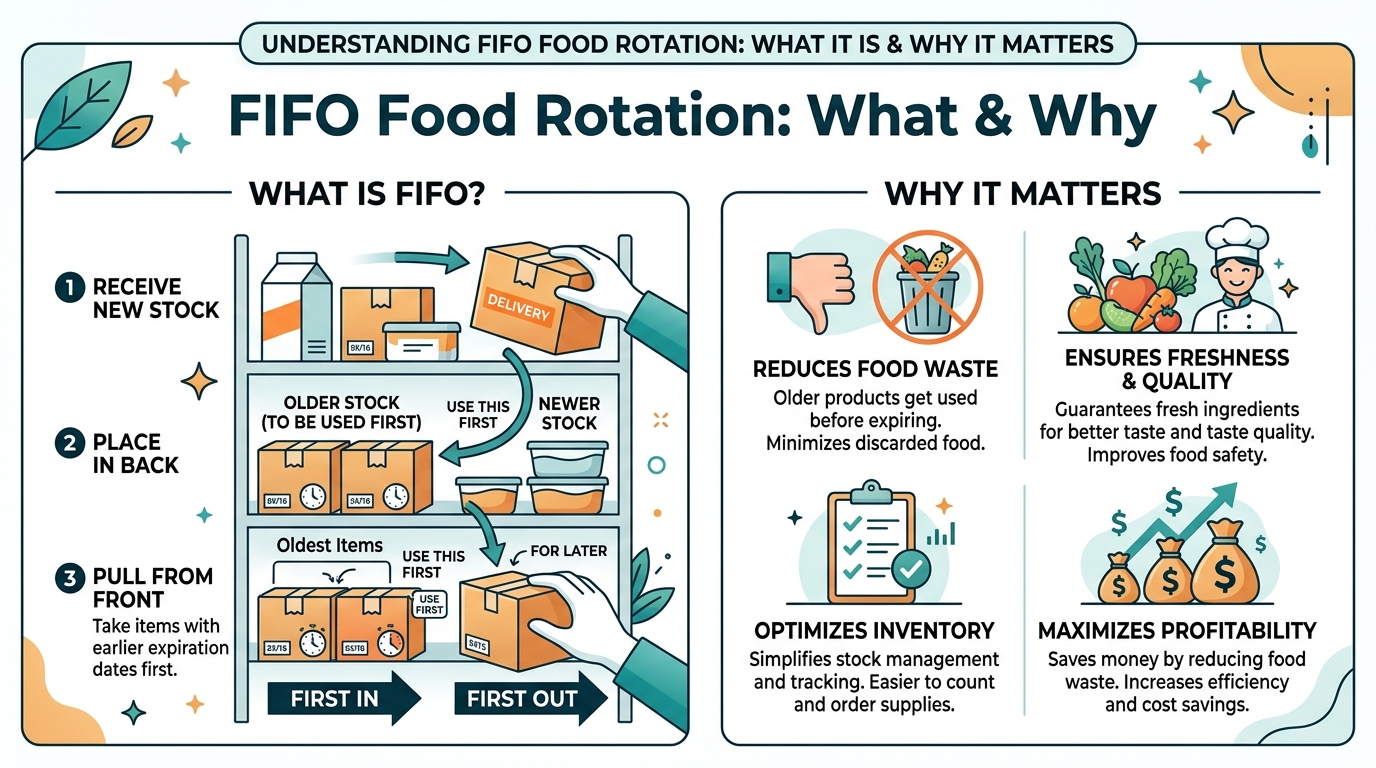
FIFO means First In, First Out. In simple terms, the food that entered your storage system first should generally leave first.
For backpackers, this creates an easy rotation system that can reduce waste, improve trip planning, and make it easier to monitor the condition and dates of stored food.
Why Food Gets Forgotten
Backpacking food tends to accumulate gradually.
One month you buy freeze-dried meals.
The next month you order protein bars.
Then you find a discount on trail mix.
Before long, the pantry contains more food than you can remember purchasing.
New products often get placed in the most convenient location: directly in front of the old ones.
This creates a problem.
Every time you buy something new, the older food gets pushed farther into storage.
Eventually, you discover it only after the product’s quality has declined.
FIFO reverses this pattern.
Instead of putting new food in front, you deliberately place it behind older inventory.
Build a “First In” Line
The simplest FIFO system doesn’t require technology.
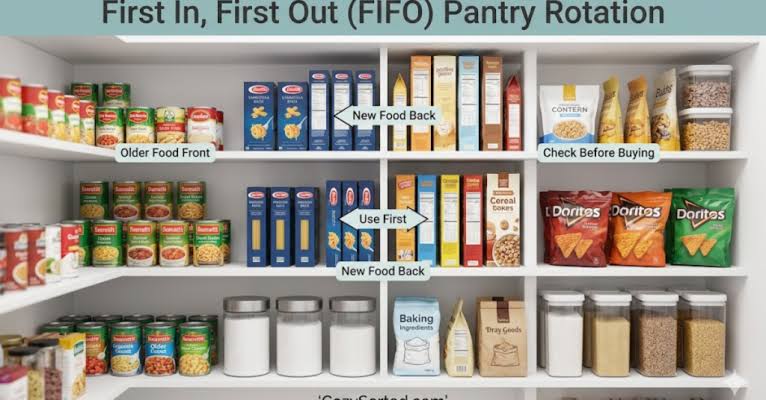
Imagine your pantry shelf as a line.
Old products are at the front.
New products are at the back.
When you need a meal, take from the front.
When you purchase something, place it at the back.
That’s it.
This physical arrangement creates a natural rotation without requiring you to remember every purchase.
Add a Date Label
For better control, write the purchase month and year on the package or storage container when appropriate.
For homemade food, record the preparation date.
For commercial products, also pay attention to the date printed by the manufacturer.
This is especially useful when several products look identical.
A permanent marker and a simple label can save you from guessing later.
Use a Three-Level System
For larger food stashes, consider dividing inventory into three groups.
Eat Now
These are foods that should be used soon because they are older, opened, or approaching their quality date.
Regular Rotation
These products are in normal use and can be selected for upcoming trips.
Long-Term Reserve
These are unopened products intended for future trips or emergency use.
The system allows you to see the status of your food at a glance.
Your “Eat Now” Box Is Extremely Useful
A small box labeled “Eat Now” can solve one of the biggest problems with food storage.
Whenever you discover an older package, move it into the box.
Then look there first when preparing lunch, a day hike, or a weekend backpacking trip.
This prevents older products from being mixed with newer inventory.
It also makes the decision-making process much faster.
Use Short Trips to Rotate Older Food
You don’t have to use older food on your most demanding expedition.
In fact, a day hike can be a useful opportunity to rotate inventory.
Suppose you have an older energy bar that is still within its intended quality period and has been stored correctly.
Take it on a local hike.
If you have older trail mix that remains in suitable condition, use it during a training walk.
This approach saves your newest products for future trips while keeping older inventory moving.
Freeze-Dried Meals Need a Different Strategy
Freeze-dried meals are often purchased specifically for long-term storage.
That means they may not need to be consumed quickly.
However, they still benefit from inventory management.
Record when you purchased them.
Keep them in a cool, dry storage area.
Protect their original packaging.
Periodically inspect packages for damage.
If a meal has been sitting in a less-than-ideal environment, don’t assume that its printed shelf-life claim automatically guarantees its original quality.
FIFO can help you identify older products so you can make informed decisions before a trip.
Trail Mix Requires Regular Rotation
Trail mix can be more perishable in terms of quality than many backpackers realize.
Nuts and seeds contain fats that can oxidize over time.
Heat and oxygen can accelerate quality deterioration.
That makes trail mix an excellent candidate for active rotation.
Rather than buying a huge supply and forgetting about it, purchase amounts that match your actual hiking schedule.
Keep older bags at the front.
Use them first.
Replace them when necessary.
Energy Bars Have Their Own Problems
Energy bars vary considerably.
Some contain nuts and seeds.
Some contain chocolate.
Some contain nut butter.
Others are primarily grain-based.
Heat can affect many of these products, especially bars containing chocolate or high-fat ingredients.
FIFO helps because it prevents the same bars from sitting in storage indefinitely.
But rotation cannot compensate for improper storage.
Always follow the manufacturer’s storage instructions.
Commercial and Homemade Jerky Should Not Be Treated the Same
Commercial jerky and homemade jerky have different storage considerations.
USDA lists approximately 12 months for commercially packaged jerky under shelf-storage conditions, while home-dried jerky has a much shorter reference period of approximately 1–2 months.
That means homemade jerky should move through your FIFO system much faster.
Label homemade jerky with the preparation date.
Don’t assume that vacuum sealing automatically gives it the same storage life as commercially produced jerky.
Don’t Ignore Temperature
FIFO answers the question “Which food should I use first?”
It does not answer “Was this food stored properly?”
Storage conditions remain important.
A package stored in a cool, dry pantry may age differently from one stored in a hot garage or vehicle.
Heat can accelerate quality deterioration, particularly in foods containing fats.
Therefore, combine FIFO with sensible storage practices.
Keep long-term food in a cool, dry, stable environment.
A Spreadsheet Can Make Large Stashes Easier
If you have dozens of meals and snacks, a spreadsheet is worthwhile.
Useful columns include:
Food name
Quantity
Purchase date
Best-by date
Opened or unopened
Storage location
Planned use
You can then sort the spreadsheet by date.
The oldest inventory appears first.
This is essentially a digital version of FIFO.
What About Best-By Dates?
A date printed on a package needs context.
USDA explains that most shelf-stable food dating is generally intended to communicate quality rather than serving as a universal federally required safety cutoff.
That doesn’t mean dates should be ignored.
They should be considered alongside storage conditions, package integrity, the specific product, and manufacturer guidance.
FIFO helps you manage the dates, but it does not turn a questionable product into a safe one.
Inspect Before Every Trip
Before packing your food, conduct a quick inspection.
Check:
- Package integrity
- Date information
- Moisture
- Mold
- Unusual odors
- Signs of pests
- Leaking or damaged containers
If a product looks questionable, don’t pack it simply because your inventory spreadsheet says it is next in line.
Food safety always takes priority over inventory efficiency.
The “One In, One Out” Rule
For people who struggle with food accumulation, combine FIFO with another simple rule:
When you buy new backpacking food, plan to use some existing food first.
You don’t necessarily need to literally consume one package for every package purchased.
The principle is to maintain a stable inventory rather than constantly expanding it.
This is especially useful for expensive freeze-dried meals and specialty energy foods.
Seasonal Inventory Checks
Perform a larger review at least a few times each year.
Spring is a good time to prepare for summer hiking.
Fall is a good time to review what remains after the main hiking season.
During each review, ask:
Which products did I actually use?
Which foods did I avoid?
Which products are approaching their quality dates?
Which snacks should I stop buying?
This turns your inventory into useful information about your actual eating habits.
FIFO Can Save Money
Food waste is essentially lost money.
Buying a product at a discount does not save money if it eventually gets discarded.
FIFO improves the odds that the food you purchase will actually be eaten.
It can also reduce unnecessary duplicate purchases.
Once you know you already have ten freeze-dried dinners in storage, you are less likely to buy another ten simply because they are on sale.
Make Your System Visible
The best food-rotation system is one you can actually see.
A simple shelf label might say:
FRONT = USE FIRST
BACK = NEWEST
Another shelf could be:
OPENED
USE SOON
LONG-TERM
Visual systems work because they reduce the amount of memory required.
You don’t have to remember where everything belongs.
The storage area tells you.
Final Takeaway
FIFO is one of the simplest ways to manage a growing backpacking food stash.
Put older appropriate food in front.
Place new purchases behind it.
Label homemade foods.
Track important dates.
Keep a small “use soon” area.
Inspect packages before every trip.
And remember that FIFO is an organizational tool—not a replacement for proper food storage or food-safety judgment.
The goal isn’t to keep your pantry perfectly organized for its own sake.
The goal is to make sure that the food you buy actually gets eaten while it is still in suitable condition.
Once FIFO becomes part of your normal routine, preparing for a backpacking trip becomes much easier. Instead of wondering what is hiding at the back of the pantry, you already know exactly what should go into your pack next.