Three Weeks Of Trail Mix And Dehydrated Meals: What Does Your Diet Actually Provide?
Three weeks into a backpacking trip, your food bag might contain little more than trail mix, energy bars, tortillas, and dehydrated dinners, but that familiar menu raises an interesting question about backpacking nutrition. 🥾 These foods are convenient, relatively lightweight, and easy to portion, making them practical choices when every ounce matters. However, knowing that your food contains enough calories does not automatically tell you what vitamins, minerals, or macronutrients you are consuming.
A repetitive backpacking menu does not necessarily cause a nutritional deficiency, even when fresh foods are unavailable for extended periods. The more useful question is whether your actual food selection provides sufficient energy, nutritional variety, and appropriate quantities of essential nutrients for your circumstances. By examining real nutrition labels and completing a three-day food audit, you can identify what your backpacking diet provides without relying on assumptions.
Why Trail Mix And Dehydrated Meals Dominate Backpacking Menus
Trail mix is popular because nuts, dried fruit, and chocolate can provide substantial calories without requiring cooking equipment or refrigeration. 🥜 Meanwhile, dehydrated backpacking meals remove much of the water weight found in conventional meals, allowing hikers to carry compact dinners that usually need only hot water. Both options simplify meal preparation, although their nutritional composition varies considerably depending on the ingredients and serving sizes.
The difficulty begins when convenience becomes the only consideration behind your food choices, especially during longer trips with limited opportunities for resupply. A menu built around the same handful of products may provide substantial fat and carbohydrates while offering less variety in certain vitamins and minerals. This does not establish that your diet is inadequate, but it makes reviewing the actual nutritional information more important.
What A Typical Three-Day Backpacking Food Bag Contains
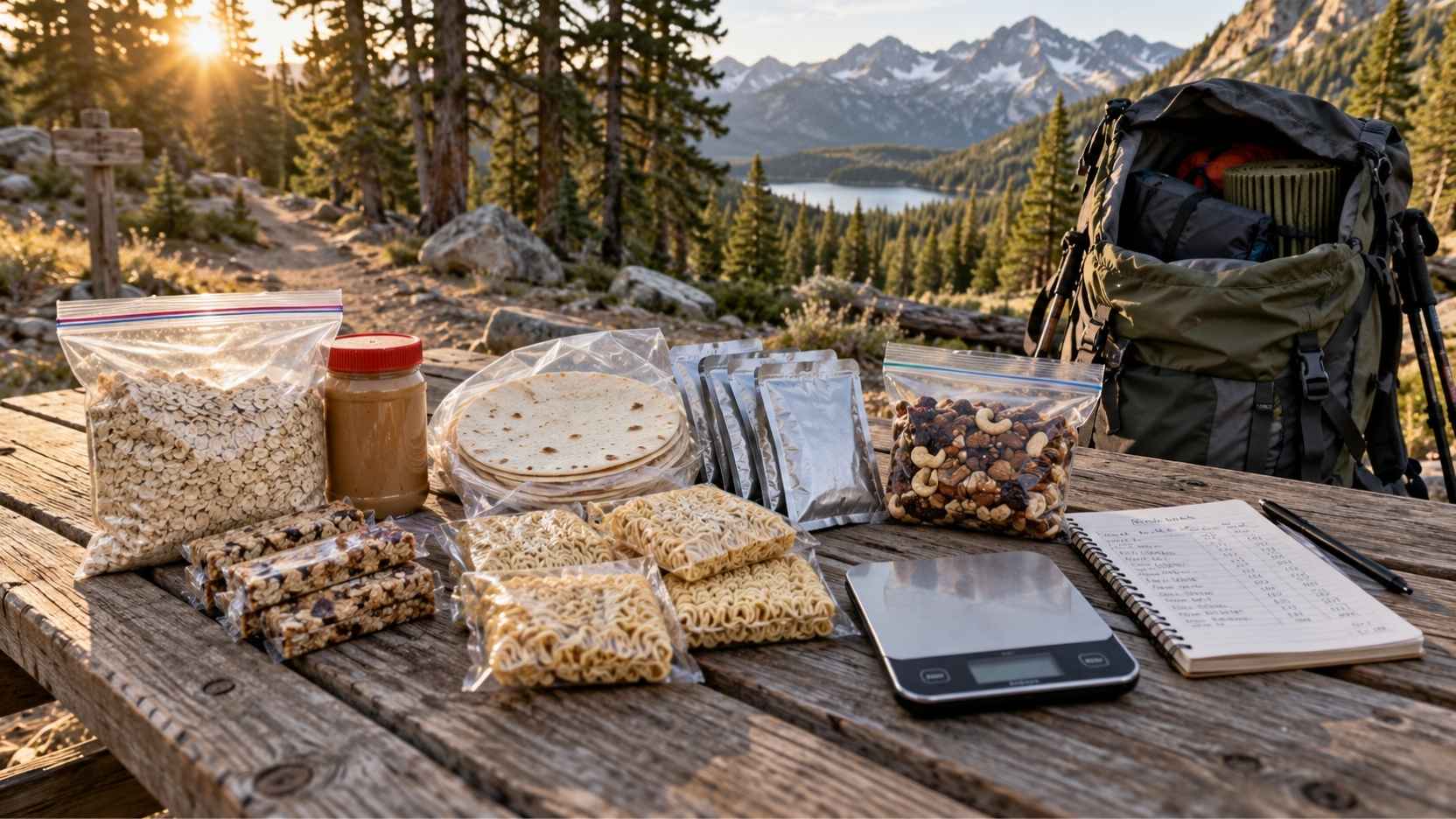
Consider a hypothetical backpacker carrying rolled oats for breakfast, flour tortillas for lunch, trail mix and protein bars for snacks, and a freeze-dried chicken-and-rice dinner. The following example uses specific product-label serving sizes rather than treating every oatmeal, tortilla, or trail mix product as nutritionally identical. For consistency, the calculations count the dry weight of food, excluding packaging, cooking water, and beverages.
Our starting daily menu contains two 49-gram portions of oats, three 48-gram portions of trail mix, two 52-gram protein bars, two 49-gram tortillas, and one 132-gram dinner pouch. On the second day, the backpacker replaces one trail mix portion with an additional tortilla, while the third day replaces that same trail mix portion with 40 grams of dried figs. These modest adjustments demonstrate how different food combinations affect calories, macronutrients, and selected micronutrients without requiring an entirely new menu.
Three-Day Backpacking Food Audit
| Day | Dry Food Weight | Calories | Protein | Carbs | Fat | Iron | Potassium |
|---|---|---|---|---|---|---|---|
| Day 1 | 576 g | 2,410 | 94 g | 306 g | 97 g | 19.6 mg | 2,780 mg |
| Day 2 | 577 g | 2,300 | 90 g | 311 g | 83 g | 20.1 mg | 2,550 mg |
| Day 3 | 568 g | 2,260 | 87 g | 312 g | 80 g | 19.0 mg | 2,770 mg |
| Three-day total | 1,721 g | 6,970 | 271 g | 929 g | 260 g | 58.7 mg | 8,100 mg |
Calculations use published product-label values, including a specific flour tortilla listing and a whole dinner pouch, rather than general food-category averages.
The example supplies approximately 2,323 calories per day while keeping average dry food weight below 575 grams, although actual energy requirements depend on the individual and hiking conditions. Its total food weight is approximately 3.8 pounds for three days, before packaging and other supplies are included. Because nutrition labels contain rounded values and product formulations can change, these figures are useful planning estimates rather than laboratory measurements.
How Much Protein, Carbohydrate And Fat Does The Menu Provide?
The three-day audit provides 271 grams of protein, 929 grams of carbohydrates, and 260 grams of fat, showing how much nutrition can come from a relatively small selection of foods. Carbohydrates appear in the oats, tortillas, bars, and rice-based dinner, while nuts contribute a substantial share of the menu’s fat. Protein comes from several sources, including the bars, oats, nuts, tortillas, and chicken-containing dinner, rather than from a single dedicated protein supplement.
The differences between days illustrate why backpacking meal nutrition should be calculated from individual foods instead of a supposedly universal macronutrient ratio. Replacing one 48-gram trail mix serving with a 49-gram tortilla reduces the day’s listed calories by 110 and its fat by 14 grams while adding five grams of carbohydrates. Neither food is automatically the better choice because the appropriate selection depends on the backpacker’s energy needs, food preferences, and remaining menu.
Which Vitamins And Minerals Appear In The Food Data?
Nutrition labels provide a useful starting point for evaluating vitamins for backpacking, but they do not always report every nutrient present in a food. The audited oats contribute labeled iron, the trail mix provides vitamin E and several minerals, and the chicken-and-rice dinner lists vitamin D, calcium, iron, and potassium. These values establish documented nutrient contributions without proving that the overall diet meets every individual nutritional requirement.
The example dinner also contains 1,560 milligrams of sodium per pouch, making it a substantial contributor to the day’s recorded sodium intake. Across the three days, the audited menu supplies approximately 9,180 milligrams of labeled sodium, although hydration needs and electrolyte losses vary with activity and environmental conditions. 💧 This figure is useful for understanding the menu’s composition, not for prescribing a particular sodium or fluid intake.
Vitamin C illustrates an important limitation because the available product labels do not establish a complete intake total for this nutrient. An omitted nutrient value does not necessarily mean the food contains none, and estimating an unlisted amount requires appropriate food-composition information. Similarly, a three-day nutritional estimate cannot diagnose a deficiency or establish an individual’s nutritional status, which requires a different assessment.
How To Add Nutritional Variety Without Significantly Increasing Pack Weight
Improving a repetitive backpacking menu does not require replacing every convenient food with heavier alternatives or carrying fresh vegetables for three weeks. Lightweight additions such as dried fruit, dehydrated vegetables, different nuts, and fortified foods can introduce new ingredients while maintaining practical food storage. The important distinction is that nutritional variety and nutritional adequacy are not identical, so each addition should serve a clear purpose within the overall menu.
For example, replacing one 48-gram serving of the audited trail mix with 40 grams of dried figs reduces food weight by eight grams and listed calories by 150. That substitution also changes the menu’s potassium contribution from 280 to 270 milligrams for the replaced food, while increasing its fiber contribution from three to four grams. The dried fruit therefore provides a different nutritional profile rather than an automatic improvement across every nutrient.
Dehydrated vegetables can add ingredient variety to rice, noodles, or soup without the water weight of fresh produce, although their vitamin content depends on the vegetables and processing methods. Fortified foods and powdered ingredients can also be useful when their labels document nutrients that receive limited attention elsewhere in your menu. Before purchasing additions for a longer trip, compare their dry weight, preparation requirements, calories, and verified nutrition information instead of assuming that a product advertised as nutritious meets every need.
How To Audit Your Own Backpacking Nutrition Before A Three-Week Trip
The most practical way to evaluate your food bag is to record each product’s serving size, the number of servings you intend to eat, and its listed calories and nutrients. Multiply the label values by the planned servings, then add the results to calculate daily totals and identify which foods contribute most of your energy and selected micronutrients. If an important nutrient is missing from the packaging, mark it as unknown rather than recording zero or inventing an estimate.
For longer routes, review several representative hiking days instead of assuming that one menu will remain appropriate throughout the trip. Your calorie needs, appetite, food availability, and daily workload may change, making resupply points useful opportunities to adjust your selections. Effective backpacking nutrition is about understanding what your food provides, then choosing practical meals that fit your trip rather than relying on the same convenient products without examining their contents. 🏕️