Do You Need Multivitamins On A Thru-Hike? Start With Your Food Bag
A thru-hiker can finish a long day with enough calories, a reasonable protein total, and a food bag that still offers very little variety. That is why multivitamins for thru-hiking become a recurring question when the next stretch means five days of noodles, tortillas, and bars. 🥾 Before deciding what belongs in a supplement bottle, however, it makes sense to examine what already belongs in the food bag.
A nutrition audit cannot diagnose a deficiency or determine vitamin absorption. It can show which foods contribute energy and nutrients, where the menu relies on fortification, and which questions deserve a closer look. This example follows a hypothetical hiker, not a prescription for every backpacker.
Why Backpackers Consider Multivitamins
Backpacking meals are shaped by pack weight, shelf life, water availability, cost, appetite, and what a small trail-town store actually stocks. A hiker may choose calorie-dense peanut butter over heavier fresh food, carry tuna only occasionally, and repeat the same dinner because it cooks quickly. Convenience, however, can narrow food variety over several resupply cycles.
That repetition explains why some hikers pack thru-hiking vitamins as nutritional insurance while others would rather change their grocery list. A general supplement study cannot establish the needs of someone hiking for months on a particular menu. Personal reports from other hikers are useful for generating questions, not for deciding whether your own diet requires supplementation.
What a Typical Thru-Hiking Food Bag Contains
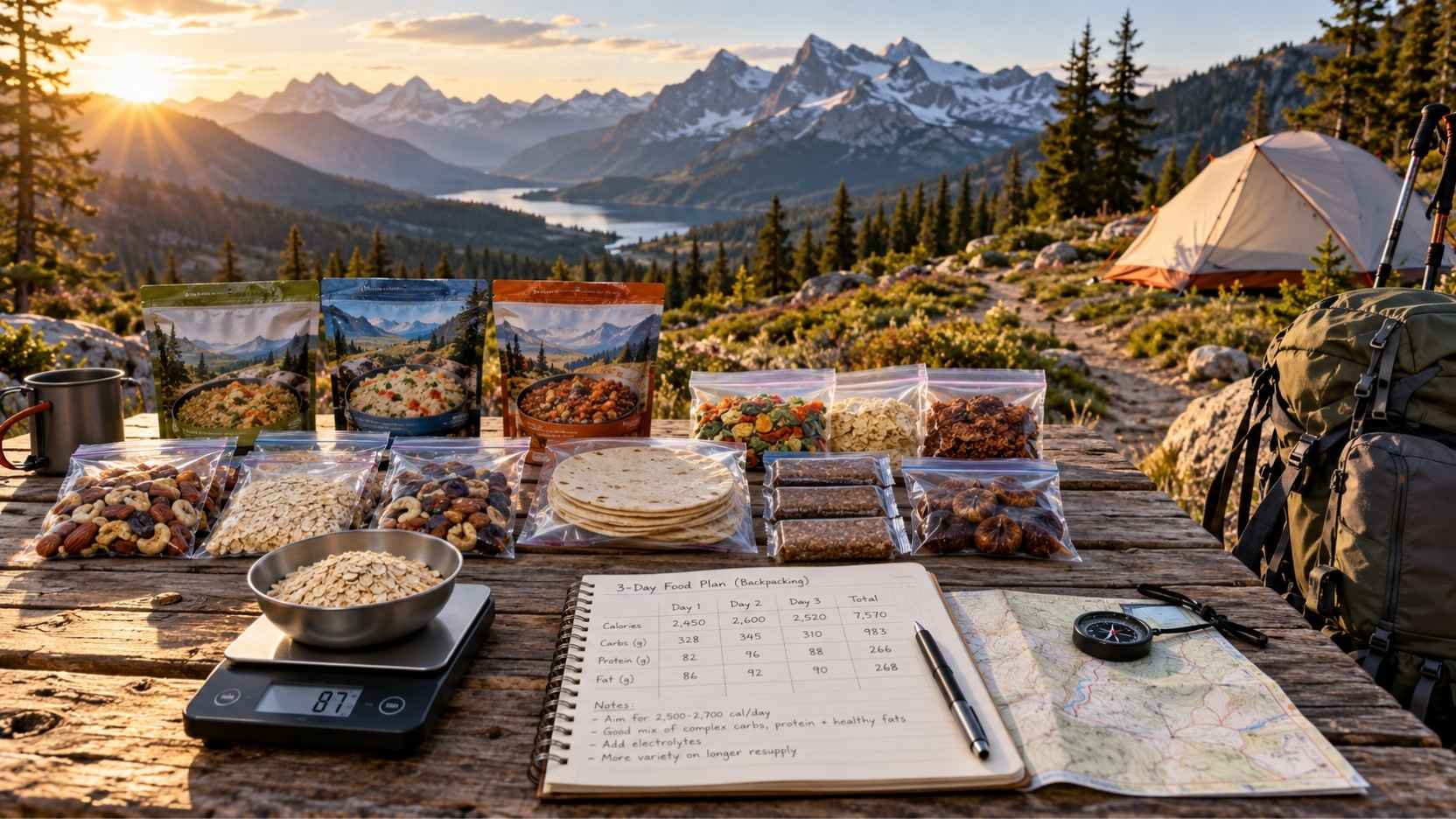
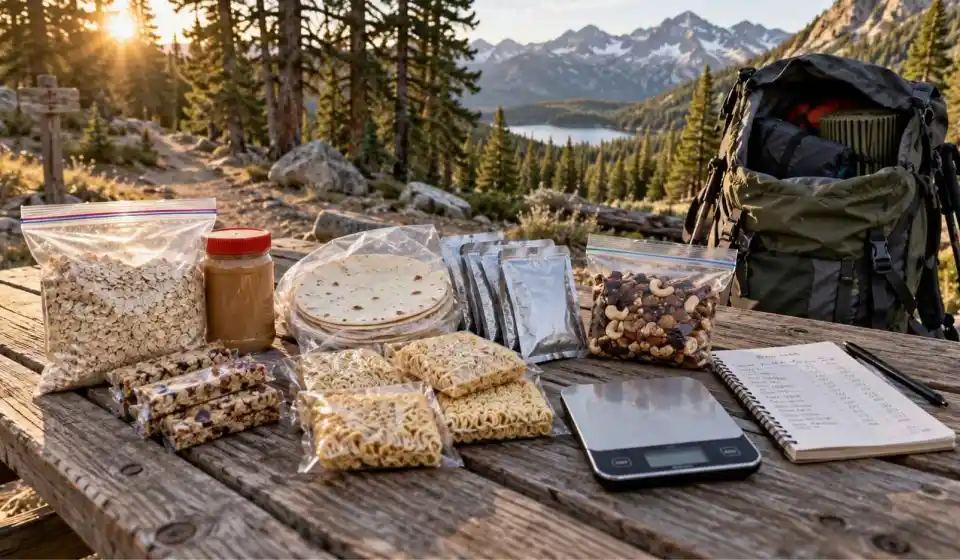
Imagine a five-day carry with 100 grams of dry oats, 64 grams of peanut butter, 180 grams of flour tortillas, 120 grams of regular trail mix, one 50-gram plain granola bar, and 85 grams of dry instant ramen each day. On days one, three, and five, the hiker adds a 74-gram portion of water-packed tuna; on days two and four, the tuna is replaced with another 50 grams of trail mix. These amounts describe food actually eaten, not the weight of wrappers, water used for cooking, or supplies that return home uneaten.
For this illustration, the calculations use standard food-composition entries of the kind available through USDA FoodData Central, including an unfortified plain granola bar rather than a vitamin-fortified energy bar. Actual tortillas, tuna pouches, bars, and ramen seasonings can differ substantially, so their package labels should replace generic entries in a personal audit. Record the actual product and serving size rather than trusting hypothetical precision.
Calories and Protein Don’t Tell the Whole Story
This bag supplies roughly 2,550 calories on tuna days and 2,720 on extra-trail-mix days, averaging about 2,620 calories across the five-day carry. The daily range is approximately 83–91 grams of protein, 307–329 grams of carbohydrate, and 115–129 grams of fat, with nuts and peanut butter providing much of the energy density. Their adequacy depends on body size, distance, ascent, pack weight, pace, and conditions.
Macronutrients answer how much energy and building material a menu provides, but trail food nutrients also include vitamins and minerals that do not appear in a protein tally. Oats and nuts contribute magnesium and iron, tuna contributes vitamin B12, and enriched tortillas or noodles may supply additional iron and certain B vitamins. A menu can therefore look substantial in calories while still offering very little vitamin C or calcium, which is why backpacking nutrition needs more than one column.
A Five-Day Backpacking Menu Nutrition Audit
The table below applies the stated portions to standard food profiles and rounds the results so small database differences do not look like meaningful precision. It highlights vitamin C, calcium, iron, and potassium alongside the four macronutrient measures; these are selected audit markers, not a complete vitamin-and-mineral assessment. Tuna days share one estimate; extra-trail-mix days share another.
| Day | Calories | Protein | Carbs | Fat | Vitamin C | Calcium | Iron | Potassium |
|---|---|---|---|---|---|---|---|---|
| 1: Tuna | 2,550 kcal | 91 g | 307 g | 115 g | 2.4 mg | 503 mg | 22.2 mg | 2,287 mg |
| 2: Extra mix | 2,720 kcal | 83 g | 329 g | 129 g | 3.1 mg | 529 mg | 22.5 mg | 2,497 mg |
| 3: Tuna | 2,550 kcal | 91 g | 307 g | 115 g | 2.4 mg | 503 mg | 22.2 mg | 2,287 mg |
| 4: Extra mix | 2,720 kcal | 83 g | 329 g | 129 g | 3.1 mg | 529 mg | 22.5 mg | 2,497 mg |
| 5: Tuna | 2,550 kcal | 91 g | 307 g | 115 g | 2.4 mg | 503 mg | 22.2 mg | 2,287 mg |
| FDA label Daily Value | — | 50 g | 275 g | 78 g | 90 mg | 1,300 mg | 18 mg | 4,700 mg |
These FDA Daily Values are standardized label-comparison benchmarks for adults and children aged four or older, not individualized requirements or hiking-specific targets. The iron estimate can exceed the label benchmark while calcium, potassium, and vitamin C remain well below it, illustrating why a high number in one column does not cancel a low number elsewhere. Needs and absorption vary, including differences between plant-based and animal-derived iron.
What the Food Bag Audit Reveals
The most striking finding is not that trail mix is nutritionally empty; it supplies minerals, energy, and useful fats in a lightweight package. The problem is asking the same seven foods to cover every nutrient for weeks, particularly when the chosen versions add almost no vitamin C and little calcium. A multivitamin might add some labeled nutrients, but it cannot supply the calories, fiber, food variety, or substantial quantities of every mineral missing from a repetitive menu.
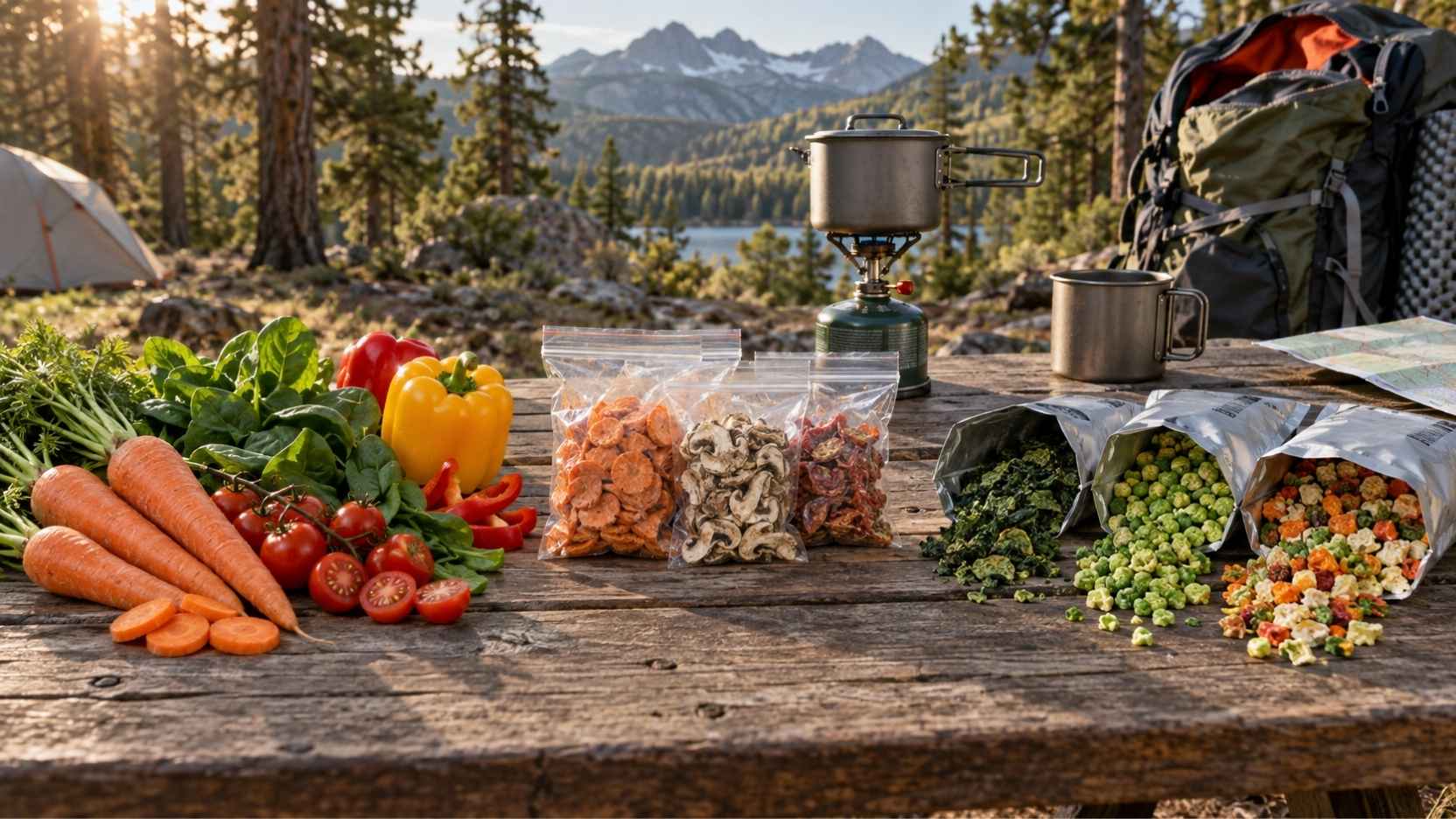
A practical backpacking meal planning audit starts with three questions: which nutrients do these exact foods supply, which foods could diversify the menu, and what can be obtained at the next resupply? Depending on availability and pack constraints, options to investigate include shelf-stable fruit, suitable dried vegetables, beans, milk powder, and differently composed meals rather than another copy of the same bar. Check labels rather than assuming dried fruit retains fresh fruit’s vitamin C.
What Multivitamin Labels Can and Cannot Tell You
A Supplement Facts panel reports nutrients per stated serving, which might be one tablet, two gummies, or several capsules, and its percentage Daily Value uses the same standardized comparison system. A label showing 100% DV for vitamin C tells you the amount in that serving relative to the label benchmark, not whether your current menu is inadequate or whether the product fits your needs. Formulas also differ, and many contain relatively little calcium, magnesium, or potassium even when the front of the bottle advertises broad coverage.
Look at the entire ingredient list and the foods you already eat, especially fortified bars, drink mixes, or breakfast products that may add the same nutrients. More is not automatically better because combining several fortified products and supplements can push certain vitamin or mineral intakes above established upper limits. Research on generally healthy adults cannot settle a particular hiker’s needs.
When to Consult a Qualified Healthcare Professional
Consider a qualified healthcare professional or registered dietitian before the hike if you have dietary restrictions, use medications, have a relevant health condition, are pregnant, or plan an extended trip with very limited food choices. Bring a realistic five-day menu, the labels of any supplements or fortified products, and your likely resupply options so the conversation can focus on actual intake rather than guesses. A food-bag calculation is a planning tool, not a diagnosis or a reason to start high-dose supplementation.
For a printable audit, make five columns labeled day one through day five and rows for food, grams eaten, calories, protein, carbohydrate, fat, vitamin C, calcium, iron, and potassium. Copy amounts from product labels or a reliable food-composition database, record unknown values as unknown rather than zero, and compare the five-day pattern with reference values appropriate to you. The useful question is not simply whether multivitamins for thru-hiking belong in your pack, but what your actual food bag can—and cannot—tell you.