Do smell-proof bags actually stop those odors?
If you have ever packed jerky, cheese, coffee, tuna, spices, or a strongly seasoned freeze-dried meal for a backpacking trip, you already know how quickly food odors can spread. That raises an important question: Do smell-proof bags actually stop those odors?
The answer depends on what “stop” means.
A good odor-barrier bag can dramatically reduce the amount of scent escaping from food, but complete odor elimination is much more difficult. The result depends on the packaging material, the quality of the seal, the food itself, temperature, storage time, and even how much air is trapped inside the package.
Understanding these factors makes it easier to choose the right packaging for trail food.
How Odor Travels
Food smells are caused by volatile compounds.
These molecules can leave the surface of food and enter the surrounding air. Once airborne, they can move through the environment and eventually reach your nose.
The same basic process creates a challenge for packaging.
If volatile molecules can move through or around a package, some odor may become detectable outside it.
An odor-barrier bag is designed to slow this movement.
The effectiveness of the bag therefore depends on how easily particular molecules interact with and move through the packaging material.
Not All Plastic Films Perform the Same Way
“Plastic bag” is a broad category.
Different polymers have different barrier properties. Some are excellent for moisture resistance, while others provide better resistance to gases or volatile organic compounds.
Packaging manufacturers can also combine multiple films into a laminate.
A multilayer structure can give a package several useful properties at once. One layer might provide toughness, another flexibility, and another improved barrier performance.
This is why a purpose-built odor-barrier bag can outperform a basic food-storage bag.
Thickness also matters, although thicker does not automatically mean better. The chemistry and structure of the material are important.
Why Aluminum and Metallized Layers Can Help
High-barrier packaging sometimes incorporates aluminum foil or metallized film.
These structures can provide extremely strong barriers against gases, moisture, light, and many volatile compounds.
For long-term food packaging, this can be particularly valuable because oxygen and moisture can affect food quality as well as odor.
However, barrier performance still depends on the complete package.
A highly protective film with a poorly sealed opening can perform badly in real-world use.
This is why packaging engineers evaluate the entire package rather than only the film.
The Seal May Be More Important Than You Think
Consider a bag with excellent barrier material.
If its zipper does not close completely, odor molecules can escape through the opening.
This is similar to trying to keep water inside a bottle with a hole in the cap. The bottle material does not matter much if the closure is compromised.
For odor control, seams, zippers, folds, punctures, and damaged areas can all become weak points.
Heat sealing can provide a very effective permanent closure when the packaging material is designed for it.
For reusable backpacking bags, carefully closing the zipper or compression system is essential.
Why Headspace Matters
The empty air inside a package is called headspace.
If a strongly aromatic food is placed inside a large bag with lots of trapped air, volatile compounds can accumulate in that headspace.
When the bag is opened, the concentrated odor can suddenly become obvious.
Reducing unnecessary headspace can therefore make practical sense for odor management.
However, packaging should not be compressed in ways that damage food or compromise the package.
For freeze-dried meals, crackers, chips, or delicate foods, crushing the contents simply to reduce air may create other problems.
Food Chemistry Matters
The smell coming from a food depends heavily on its chemistry.
A bag that works well for dry oatmeal may not perform identically with smoked meat or garlic-heavy food.
Fat-containing foods can also carry aromatic compounds that remain noticeable for a long time.
Coffee is another classic example. Even when packaged carefully, its aroma can be surprisingly persistent.
This is why backpackers should evaluate packaging based on the actual foods they carry rather than assuming one bag performs equally well for everything.
Does Double-Bagging Really Help?
In practical terms, adding a second barrier can reduce odor transmission.
If a first package allows a small amount of volatile material to escape, a second package creates another barrier between the food and the outside environment.
This does not make the food mathematically “zero odor,” but it can substantially reduce the concentration reaching the surrounding environment.
Double-bagging is particularly useful for strong-smelling foods.
A backpacker could individually package meals and then place the strongest-smelling items together inside a larger odor-resistant outer bag.
The approach also provides redundancy if the inner package develops a leak.
What Vacuum Sealing Actually Does
Vacuum sealing is often associated with odor control because it removes much of the air surrounding the food.
This can reduce the initial amount of odor-containing air inside the package.
A properly heat-sealed vacuum package can also have a very secure closure.
But vacuum sealing does not magically prevent molecules from migrating through the packaging material.
The quality of the film still matters.
For maximum odor resistance, a high-barrier vacuum-compatible film can provide a more sophisticated solution than simply vacuum-sealing food in any available plastic.
Temperature Can Increase Odor Problems
Temperature is another major variable.
Warm food and warm packaging environments can increase the release and movement of volatile compounds.
This explains why a backpack containing food may smell much stronger after sitting in a hot car.
Summer storage therefore presents two challenges: maintaining food quality and controlling odors.
Keeping food out of excessive heat when practical can reduce both problems.
However, perishable food should always be managed according to appropriate food-safety requirements. Odor control is not a substitute for temperature control.
Are Smell-Proof Bags Useful for Backpacking?
Yes, particularly as part of a broader food-storage system.
They can help contain strong food aromas, organize meals, protect packaging, and reduce the amount of scent escaping into a backpack.
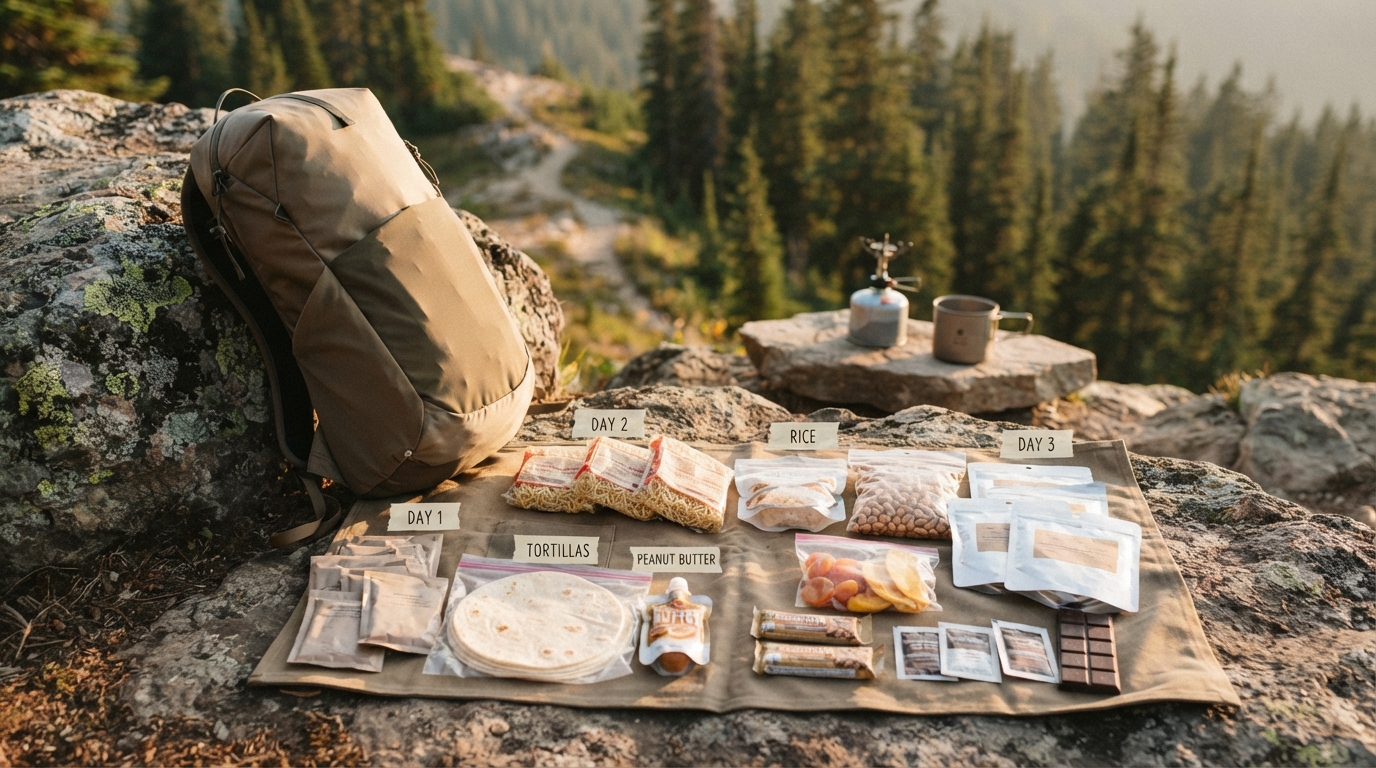
They are especially useful for hikers carrying aromatic foods such as:
- Jerky
- Cheese
- Coffee
- Peanut butter
- Tuna
- Dehydrated meals
- Garlic-heavy foods
- Spices
- Smoked foods
- Strong drink mixes
But their role should be clearly understood.
They are an odor-control tool, not automatically a wildlife-control device.
Smell Reduction Is Not Bear Protection
This distinction is essential in bear country.
A bear may detect odors at concentrations far below what humans notice. More importantly, a flexible smell-resistant bag does not necessarily prevent an animal from reaching the food.
Therefore, hikers should follow the food-storage requirements established by the land manager.
If a destination requires a certified or approved bear-resistant canister, locker, or other storage method, use that system.
An odor-resistant bag can sometimes be used inside the required container for organization or secondary containment, but it should not replace the mandated system.
How to Get Better Results
If your goal is to minimize food odors while backpacking, start with the packaging itself.
Use food-safe packaging appropriate for the food and intended temperature. Remove unnecessary outer packaging, create reliable seals, minimize excess headspace when practical, and use a second barrier for especially aromatic foods.
Keep your food clean and prevent residue from getting onto the outside of the bags.
This last point is easy to overlook.
A perfectly odor-resistant bag can still smell if sauce, oil, cheese, or seasoning gets onto its exterior.
Wipe the outside of food packages before placing them into your backpack.
The Bottom Line
Smell-proof bags are based on real packaging science, but the phrase should not be interpreted literally.
Their purpose is generally to reduce the movement of odor molecules, not to create a perfect invisible barrier that makes food completely undetectable.
Material selection, multilayer construction, closure design, temperature, headspace, food chemistry, and storage duration all influence performance.
For backpackers, the most reliable approach is to combine odor-resistant packaging with careful sealing and appropriate wildlife food-storage practices.
Think of a smell-proof bag as one layer in a system.
It can make a noticeable difference, especially with strong-smelling trail foods, but no flexible package should be treated as a guaranteed solution for wildlife encounters or as a replacement for required bear-resistant storage.
The science is straightforward: the better the barrier and the better the seal, the harder it is for volatile odor molecules to escape.