How to Plan a Winter Backpacking Menu for Cold-Weather Calories and Hot Meals ❄️🥾
Introduction
Winter backpacking offers quiet trails, snowy landscapes, and unforgettable nights under the stars. But cold-weather adventures require a different approach to food. Your body needs enough energy to support hiking and staying warm, while your meals must remain easy to prepare when temperatures drop and your fingers get cold.
A summer menu built around cold snacks and quick lunches may not feel as appealing when you’re hiking through freezing conditions. Food can become difficult to chew, water may freeze, cooking can take longer, and your stove may use more fuel than expected.
The solution is to plan a winter backpacking menu that combines energy-dense foods, satisfying hot meals, reliable hydration, and practical cold-weather food storage.
With a little preparation, you can carry meals that are lightweight, simple to cook, and enjoyable after a long day on the trail.
1. Plan for the Extra Energy Winter Hiking Can Require 🔥
Winter backpacking can be physically demanding. Walking through snow, carrying winter equipment, climbing steep terrain, and managing difficult conditions may increase your energy needs.
However, there is no single calorie target that works for every winter hiker. Your needs depend on body size, activity level, trip length, terrain, pack weight, weather, and individual physiology.
Instead of relying on a fixed number, consider your typical food intake on strenuous hikes and adjust for the conditions you expect.
Prioritize foods that provide substantial energy without adding unnecessary weight.
Good options include:
- Nuts and seeds
- Nut butter packets
- Olive oil added to suitable meals
- Granola and oatmeal
- Tortillas and crackers
- Dried fruit
- Cheese or other suitable shelf-stable foods
- Dehydrated meals containing carbohydrates, protein, and fats
Fat provides more than twice as much energy per gram as carbohydrates or protein, making it a useful way to increase the energy density of a meal. Carbohydrates also provide an important fuel source during sustained physical activity, while protein supports normal muscle maintenance and recovery.
Practical tip: Add a little olive oil or nut butter to a meal you already enjoy rather than carrying several extra heavy snacks just to increase calories.
2. Choose Breakfasts That Are Warm and Easy to Prepare ☕
Cold mornings can make it harder to feel motivated to eat. A warm breakfast provides an opportunity to take in energy and fluids before starting the day’s hike.
Winter breakfast ideas
- Oatmeal with nuts and dried fruit: Combine instant oats, powdered milk, nuts, and dried fruit. Add hot water and allow the mixture to soften.
- Breakfast couscous: Use quick-cooking couscous with powdered milk, cinnamon, and dried fruit for a different texture.
- Granola with powdered milk: Mix the ingredients with water to make a quick breakfast without lengthy cooking.
- Savory instant potatoes: Add seasonings and a suitable protein source for a warm alternative to sweet breakfasts.
Choose meals that require minimal preparation, especially if you will be cooking in cold or windy conditions.
Test your breakfast recipes before the trip. Some powdered milk products dissolve better in warm water, while certain grains need more water or resting time than their packaging suggests.
3. Build Lunches Around Convenient, Energy-Dense Foods
Lunch should be easy to eat without requiring a long stop in exposed conditions.
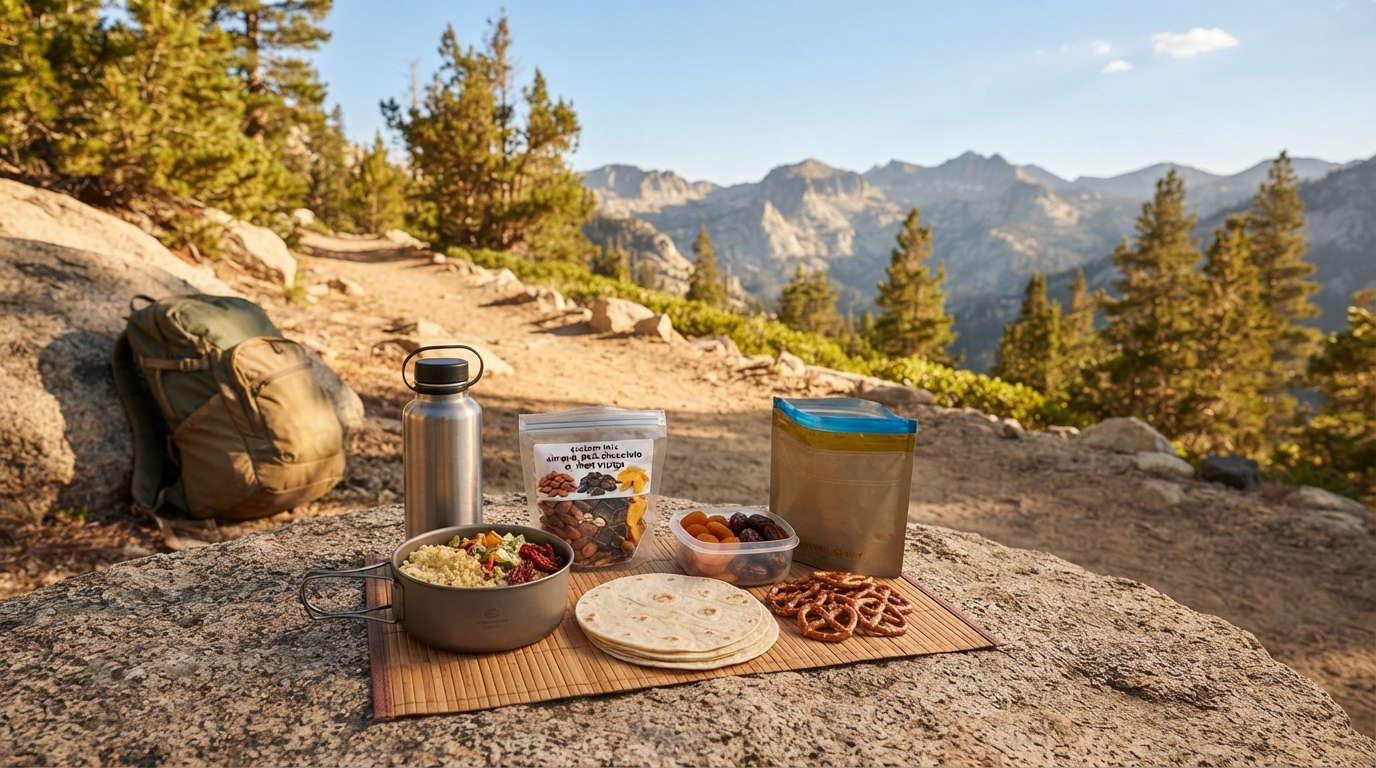
Tortillas, crackers, nuts, dried fruit, and suitable packaged proteins are practical choices because many can be eaten without cooking.
Try these combinations:
| Lunch | Why it works |
|---|---|
| Tortillas with nut butter | Compact and energy-dense |
| Crackers with suitable shelf-stable cheese | Provides carbohydrates, fat, and protein |
| Trail mix with dried fruit | Easy to portion and eat while taking breaks |
| Tortillas with a shelf-stable protein pouch | Convenient when you want a savory lunch |
| Instant soup with crackers | Offers a warm option when you can safely stop and prepare it |
Not every food is safe to store unrefrigerated. Check packaging instructions, particularly for cheese, meat, and opened products.
In freezing weather, food may become hard enough to make eating uncomfortable. Keep snacks accessible inside your pack or a pocket when practical, and protect them from moisture. Avoid placing food directly against your skin where melting and refreezing could create problems.
4. Make Dinner the Highlight of Your Winter Menu 🍲
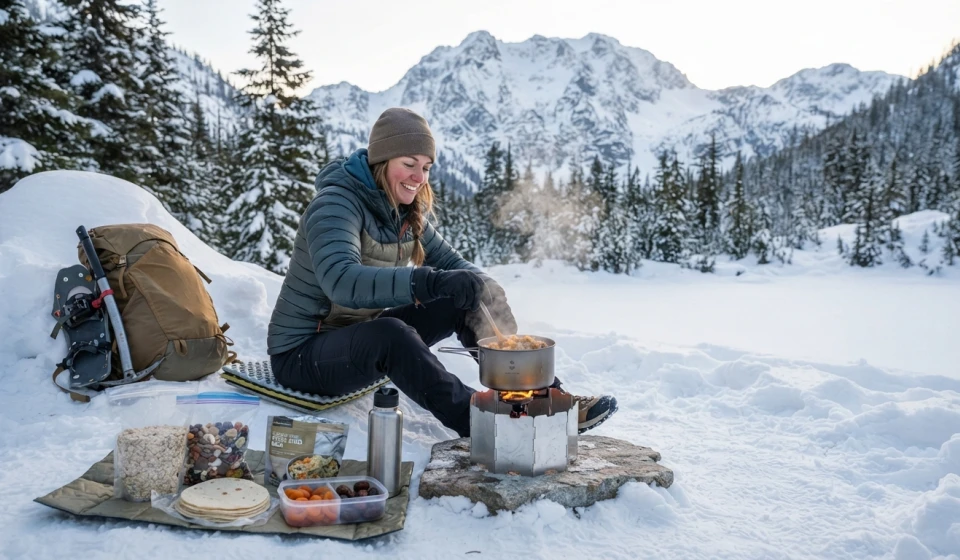
After a cold day outdoors, a hot dinner can be one of the most enjoyable parts of camp life.
Freeze-dried and dehydrated meals are popular because they are lightweight and usually require only hot water. Homemade meals can also work well when prepared and dehydrated safely.
Consider these options:
  Choose a packaged backpacking meal or combine instant rice with a suitable dehydrated protein and vegetables. Follow the package instructions for water quantity and resting time.
</box>
  Use a suitable dehydrated lentil meal and instant rice for a warming dinner with carbohydrates, plant protein, and fiber.
</box>
  Instant potatoes are lightweight and quick to prepare. Add dried vegetables, seasonings, and an appropriate protein source.
</box>
Make meals more satisfying
A basic meal can often be improved with a small addition:
- Olive oil for extra energy
- Powdered cheese for savory flavor
- Dried vegetables for variety
- Seasoning blends to prevent menu fatigue
- Suitable dehydrated protein for additional protein
Cold conditions can make food less appealing, so bring meals you genuinely like. If possible, test them at home before relying on them in the backcountry.
5. Calculate Your Stove Fuel and Cooking Water Carefully 🫖
Winter meal planning is not just about food weight. You also need enough fuel and water to prepare meals safely.
Cold temperatures, wind, snow melting, and longer cooking times can increase fuel consumption. The exact amount depends on your stove, cookware, shelter from wind, water temperature, altitude, and meal preparation method.
Before leaving:
- Test your stove and cookware in conditions similar to those expected.
- Follow the stove manufacturer’s instructions and cold-weather limitations.
- Estimate the water needed for each meal and hot drink.
- Carry an appropriate fuel reserve based on your planned use and the consequences of running short.
- Have a reliable water-treatment plan for your route.
Melting snow requires substantial energy and produces less water than its apparent volume suggests. Whenever possible, start with liquid water if available and safe to use.
Never assume that snow is safe to eat directly. It can contain contaminants, and eating it can cool your body. Melt it and treat the resulting water using an appropriate method.
Use stoves only in locations and conditions permitted by the manufacturer and local rules. Never operate a fuel-burning stove inside a tent or enclosed shelter because of carbon monoxide and fire risks.
6. Prevent Food and Water From Freezing
Food that freezes solid can be difficult to eat, and frozen water bottles may leave you without enough drinkable water.
A few simple measures can help:
- Keep frequently used snacks in an accessible pocket or insulated pouch.
- Store water bottles upside down when appropriate, because ice often forms near the exposed top first. Ensure the cap and drinking opening stay clean.
- Use an insulated bottle sleeve if it suits your setup.
- Keep a bottle inside your pack or clothing layers when practical.
- Check bottles and water containers regularly rather than waiting until you are thirsty.
These methods can slow freezing but cannot guarantee that water will remain liquid in severe cold.
Avoid storing water where a leak could soak insulation, sleeping equipment, or spare clothing. Protect your most important gear from spills and condensation.
7. Include Hot Drinks and Plan Hydration ☕
Cold weather can reduce the sensation of thirst, but your body still loses water through breathing, sweating, and normal bodily functions. Winter clothing can also trap heat, causing you to sweat during strenuous hiking.
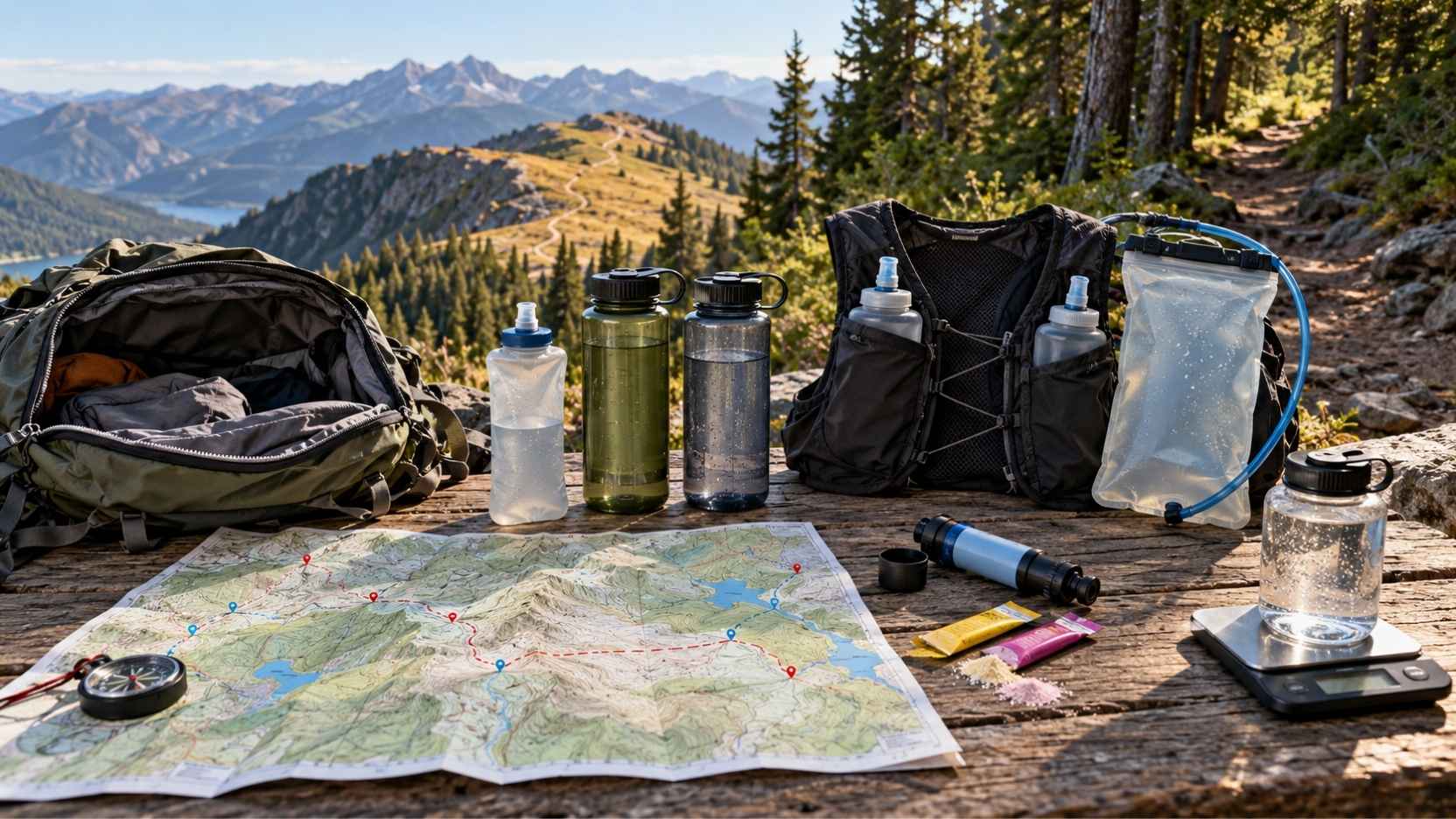
Bring enough water for the route, conditions, and opportunities to refill. Do not assume you need less simply because it is cold.
Hot drinks can make hydration more appealing:
- Hot chocolate
- Tea
- Instant coffee
- Warm broth
- Powdered electrolyte drinks prepared according to their instructions
A warm drink can be comforting, but it should not replace your overall hydration plan. Caffeinated drinks can contribute to fluid intake for many habitual consumers, but relying on them exclusively is not ideal for a demanding winter trip.
If you sweat heavily, an electrolyte product or salty foods may be useful, depending on the duration and intensity of the activity. Avoid forcing excessive amounts of fluid, and adjust intake to your needs and conditions.
8. Pack a Balanced Menu for a Two-Day Winter Trip
Here is a simple example for one person. Adjust the portions to match your appetite, activity, and expected conditions.
| Time | Day 1 | Day 2 |
|---|---|---|
| Breakfast | Oatmeal with nuts and dried fruit | Granola with powdered milk |
| Morning snack | Trail mix | Nut butter and crackers |
| Lunch | Tortillas with suitable shelf-stable protein | Crackers, nuts, and dried fruit |
| Afternoon snack | Energy bar and dried fruit | Trail mix and a savory snack |
| Dinner | Dehydrated rice and chicken meal | Lentil curry with instant rice |
| Hot drink | Tea or cocoa | Broth or hot chocolate |
Carry additional food appropriate to the trip’s length and risks. Weather delays, navigation errors, or an unexpected overnight stay can extend a trip, so plan an emergency reserve based on the route and conditions.
For longer trips, vary flavors and textures to avoid relying on the same meal repeatedly. Consider dietary restrictions, food allergies, and the availability of resupply points.
9. Make Your Menu Lighter Without Sacrificing Fuel or Nutrition
A winter pack can become heavy quickly because of extra clothing, sleeping equipment, and safety gear. Food planning can help control weight, but cutting too much food can leave you underfueled.
To reduce unnecessary weight:
- Repackage dry ingredients into labeled food-safe bags.
- Choose meals with a favorable balance of energy and weight.
- Measure meal portions at home.
- Avoid carrying excessive packaging when safe to repackage.
- Select foods that require manageable amounts of fuel and water.
- Keep an emergency reserve rather than trimming every spare snack.
When preparing homemade dehydrated meals, use reliable food-safety methods and make sure the food is thoroughly dried and stored appropriately. Do not assume that any homemade dried meal is shelf-stable simply because it looks dry.
10. Practice Your Winter Menu Before the Trip
The trail is not the best place to discover that your dinner needs twice as much water as expected or that your favorite snack becomes rock-hard in freezing temperatures.
Before leaving, prepare a test meal and check:
- How long it takes to heat and rehydrate
- How much water it requires
- Whether the portion is satisfying
- Whether the food remains manageable in cold conditions
- How much fuel the preparation uses
- Whether the packaging is easy to open with cold hands
If you have not used your stove in cold conditions before, test your setup safely and learn its limitations. Keep meals simple enough to prepare when tired, and make sure your plan still works if the weather changes.
Final Thoughts ❤️
A successful winter backpacking menu combines enough energy, convenient preparation, reliable hydration, and meals that remain enjoyable in cold conditions.
Prioritize energy-dense foods, plan warm breakfasts and dinners, choose practical lunches, and account for the extra fuel and water needed in winter. Keep frequently used snacks accessible, protect your water from freezing, and test your menu before heading out.
Most importantly, do not treat food as optional weight. Adequate nutrition supports the demanding work of winter hiking, while a reliable meal plan can make camp more comfortable after a long day outdoors.
The best winter backpacking menu is one that fuels your adventure, fits your pack, and gives you something warm and satisfying to look forward to when the temperature drops.