The Cheapest Backpacking Foods by Calories per Dollar: A Grocery Store Comparison 🥾💵
Introduction
Backpacking food can become surprisingly expensive when every meal comes from a specialty outdoor brand. But you don’t need a pantry full of freeze-dried dinners to fuel a weekend on the trail.
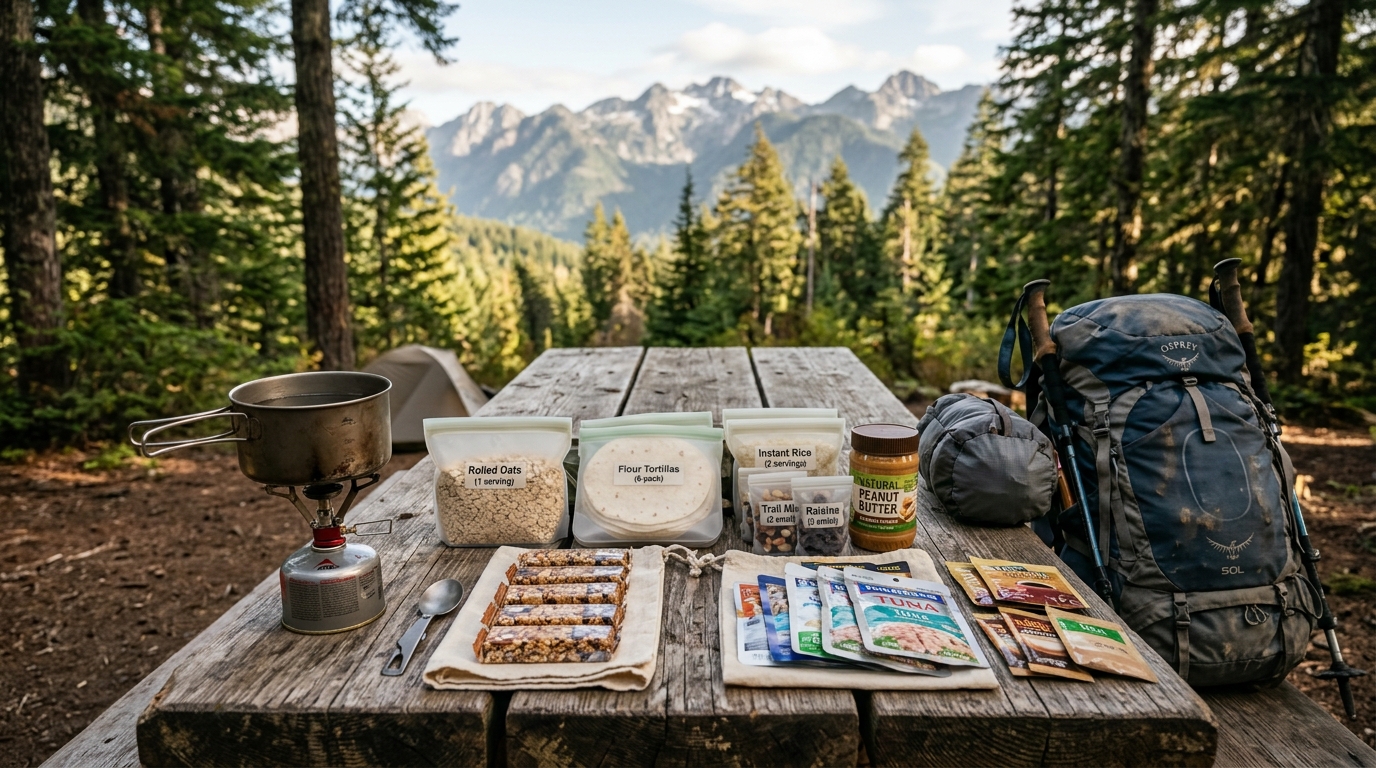
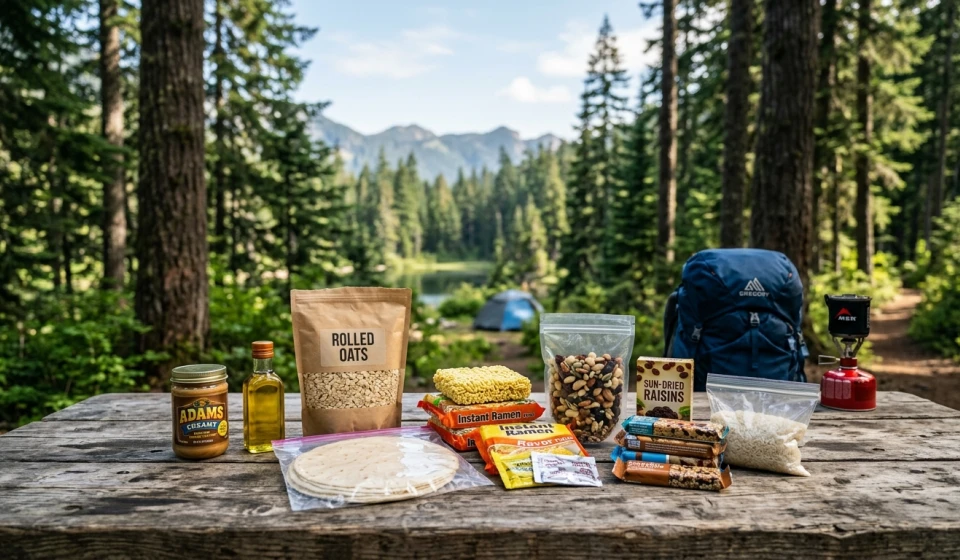
Ordinary grocery stores sell plenty of calorie-dense foods that are easy to pack, including peanut butter, instant oats, tortillas, trail mix, ramen, and olive oil. The trick is knowing which foods offer the best value, how much they weigh, and whether they are practical to carry and prepare outdoors.
This guide compares common backpacking foods by calories per dollar, calories per ounce, preparation needs, and shelf stability. It also explains the difference between paying for an entire package and calculating the cost of the portion you actually eat.
Price note: The price examples below are illustrative U.S. grocery estimates dated October 21, 2026. They are not verified live store prices. Actual prices vary by location, brand, package size, and promotions, so use product labels and current shelf prices to calculate your own results.
What Makes a Backpacking Food a Good Value?
The cheapest food isn’t always the best choice for a hiking trip. Four factors matter:
- Calories per dollar: How much energy you get for your money.
- Calories per ounce: How much energy you carry for the weight.
- Preparation: Whether the food can be eaten directly or needs hot water and cooking fuel.
- Shelf stability: Whether it can be carried safely without refrigeration when unopened or properly packaged.
For example, peanut butter is calorie-dense and requires no cooking, while dry rice may be inexpensive but needs water and cooking. Fresh foods can be nutritious but may be heavier and less convenient on longer trips.
The best menu balances cost, weight, taste, and your body’s energy needs.
Grocery Store Comparison: Common Trail Foods
The following estimates use typical product calorie values and hypothetical package prices to demonstrate the comparison method. They are not current price quotations from named retailers.
| Food | Example package price | Approx. calories per package | Calories per dollar |
|---|---|---|---|
| Peanut butter, 16 oz | $2.50 | 2,670 | 1,068 |
| Olive oil, 16.9 fl oz | $4.00 | 4,000 | 1,000 |
| Rolled oats, 18 oz | $3.50 | 1,750 | 500 |
| Ramen, 3 oz pack | $0.50 | 380 | 760 |
| Flour tortillas, 10-count pack | $2.50 | 1,500 | 600 |
| Trail mix, 16 oz | $4.00 | 2,400 | 600 |
| Raisins, 12 oz | $2.00 | 1,020 | 510 |
| Granola bars, 6-count box | $3.00 | 900 | 300 |
| Instant rice, 14 oz | $3.00 | 1,500 | 500 |
Calories and package prices are rounded planning examples. Actual values depend on the product and label. Package calorie totals are illustrative rather than verified specifications for a particular brand.
Based on these example numbers, peanut butter and olive oil provide high calorie value for their price. Ramen can also be inexpensive, while granola bars may cost more per calorie but offer convenience and portion control.
However, calories per dollar alone do not determine the best backpacking food. Olive oil is energy-dense but is not a complete meal by itself. Oats offer carbohydrates and some fiber, while peanut butter contributes fat and protein. Variety still matters.
Calories per Ounce: What Is Worth Carrying?
Calories per ounce help you compare foods when pack weight matters. The estimates below use typical calorie values and approximate food weights.
| Food | Approx. calories per ounce | Preparation | Shelf stability |
|---|---|---|---|
| Olive oil | 240–250 | Add to meals | Excellent when sealed |
| Peanut butter | 165–170 | Ready to eat | Generally good unopened |
| Trail mix | 140–160 | Ready to eat | Generally good when dry |
| Ramen | 120–130 | Usually hot water | Good when dry |
| Instant rice | 100–110 | Depends on product | Good when dry |
| Rolled oats | 95–110 | Hot water or cooking | Good when dry |
| Flour tortillas | 90–110 | Ready to eat | Check package instructions |
| Granola bars | 90–130 | Ready to eat | Check package instructions |
| Raisins | 80–90 | Ready to eat | Good when dry |
These ranges are approximate, not universal product specifications. Check the nutrition label and net weight for the exact item you plan to buy.
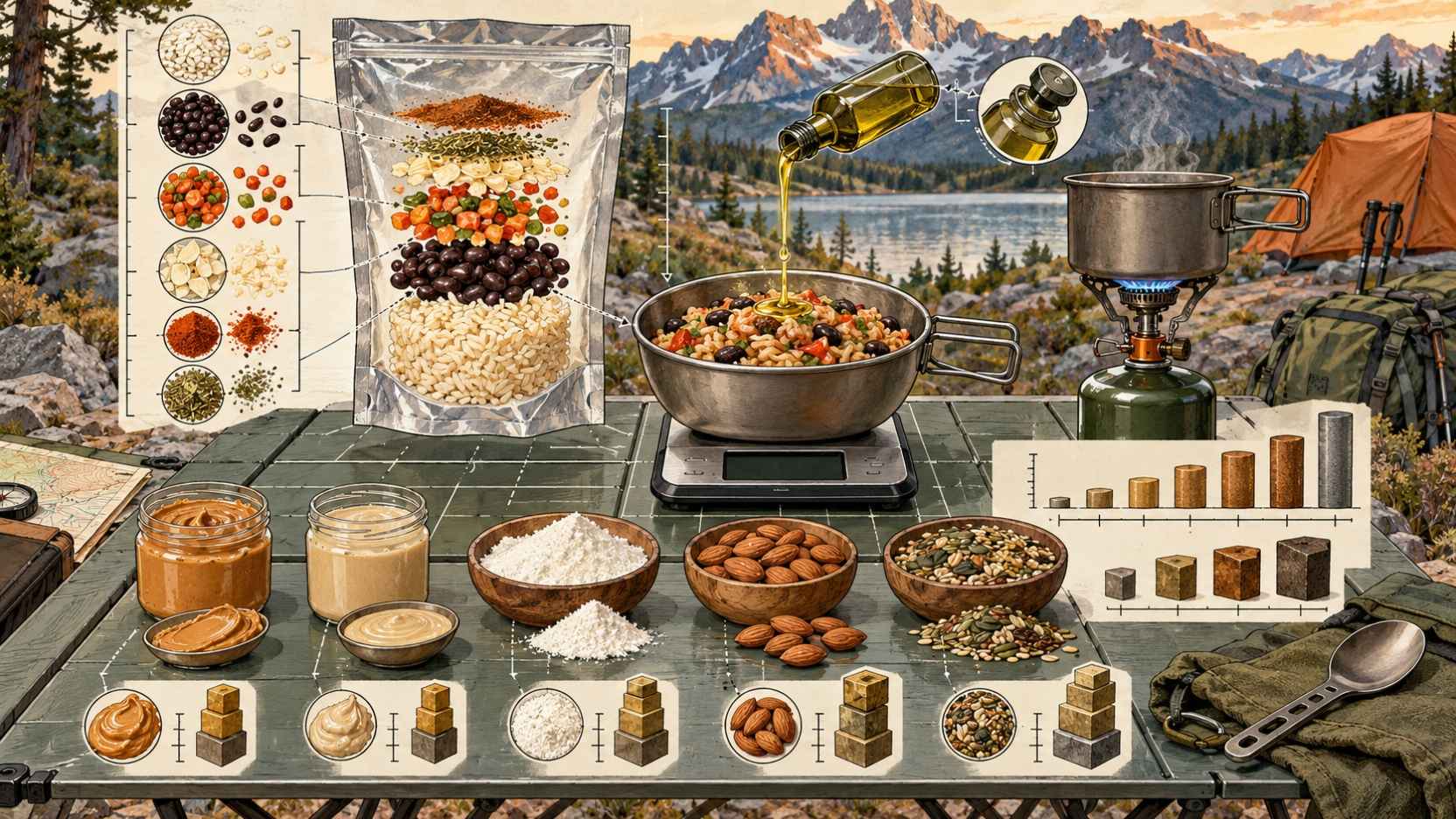
Olive oil is exceptionally calorie-dense, but it works best as an addition to meals rather than as the foundation of your menu. Peanut butter and trail mix are more convenient standalone snacks. Oats, rice, and ramen provide meal-building carbohydrates.
Package Price vs. Portion Cost
One of the easiest ways to miscalculate a backpacking budget is to confuse the checkout price with the cost of the food you consume.
Consider a hypothetical 16-ounce jar of peanut butter priced at $2.50.
- Package price: $2.50
- Portion used: 2 tablespoons, approximately 32 g or 1.13 oz
- Estimated portion cost: $2.50 × (1.13 ÷ 16) = about $0.18
- Estimated calories in the portion: About 190, depending on the product
You pay $2.50 at checkout, but the peanut butter in that one meal costs approximately 18 cents. The remaining peanut butter is available for later meals.
Use the same calculation for other foods:
Portion cost = package price × (portion weight ÷ package net weight)
For liquids such as olive oil, convert the portion and package quantities to the same unit before calculating. A tablespoon of oil is roughly 120 calories, but its cost depends on the bottle’s price and volume.
Which Grocery Foods Are Best for Different Needs?
<text strong>Best for low cost per calorie</text>
Peanut butter, cooking oil, and some inexpensive instant noodles can deliver substantial calories for the money. Compare package labels and prices rather than assuming every brand offers the same value.
<text strong>Best for lightweight packing</text>
Peanut butter, trail mix, and olive oil offer high energy per unit of weight. Oil must be carried in a leakproof container, while nut butters and trail mix should be packed to avoid mess and moisture.
<text strong>Best for quick meals</text>
Tortillas, granola bars, peanut butter, and trail mix can be eaten without cooking. These foods are especially useful for lunch breaks or days when you want to save stove fuel.
<text strong>Best for hot meals</text>
Oats, instant rice, and ramen can form the base of simple breakfasts and dinners. Check preparation instructions: some rice products require more cooking than others, which can affect fuel use and meal timing.
<text strong>Best for a more balanced menu</text>
Combine calorie-dense foods with sources of carbohydrates, protein, and fiber. For example, oatmeal with peanut butter and raisins provides more variety than relying on oil or candy alone. Add suitable protein sources and foods you enjoy, while considering allergies and dietary requirements.
How to Compare Prices at Your Grocery Store
You can create a more accurate comparison in a few minutes:
- Record the date and store. Prices change, so write down when and where you checked.
- Use the actual package price. Include discounts only if you can genuinely purchase the item at that price.
- Read the nutrition label. Multiply calories per serving by the number of servings in the package.
- Calculate calories per dollar. Divide total package calories by package price.
- Check net weight. Divide package calories by net weight to estimate calories per ounce.
- Calculate the portion cost. Work out how much of the package your planned meal uses.
- Consider preparation and storage. A low-cost item may require extra water, cooking time, or fuel.
Keep the comparison consistent by using the same currency, weight units, and pricing date throughout.
Final Thoughts 🌄
Affordable backpacking food is less about finding one perfect ingredient and more about building a practical menu from everyday grocery staples. Peanut butter, olive oil, trail mix, oats, tortillas, and instant meals can all play useful roles, depending on your budget, route, and cooking setup.
Remember that the numbers in this guide are illustrative estimates dated October 21, 2026, not verified live retailer prices. Check actual shelf prices and nutrition labels before making purchasing decisions.
The smartest backpacking food is affordable, calorie-efficient, easy to prepare, safe to carry, and satisfying enough to eat after a long day on the trail.