A Complete 3-Day Backpacking Food Plan for Under $30 🥾🍜
Introduction
Backpacking food needs to do three things well: provide enough energy, fit your pack, and stay within your budget. But building a menu that checks all three boxes can be tricky, especially when you’re trying to avoid expensive freeze-dried meals.
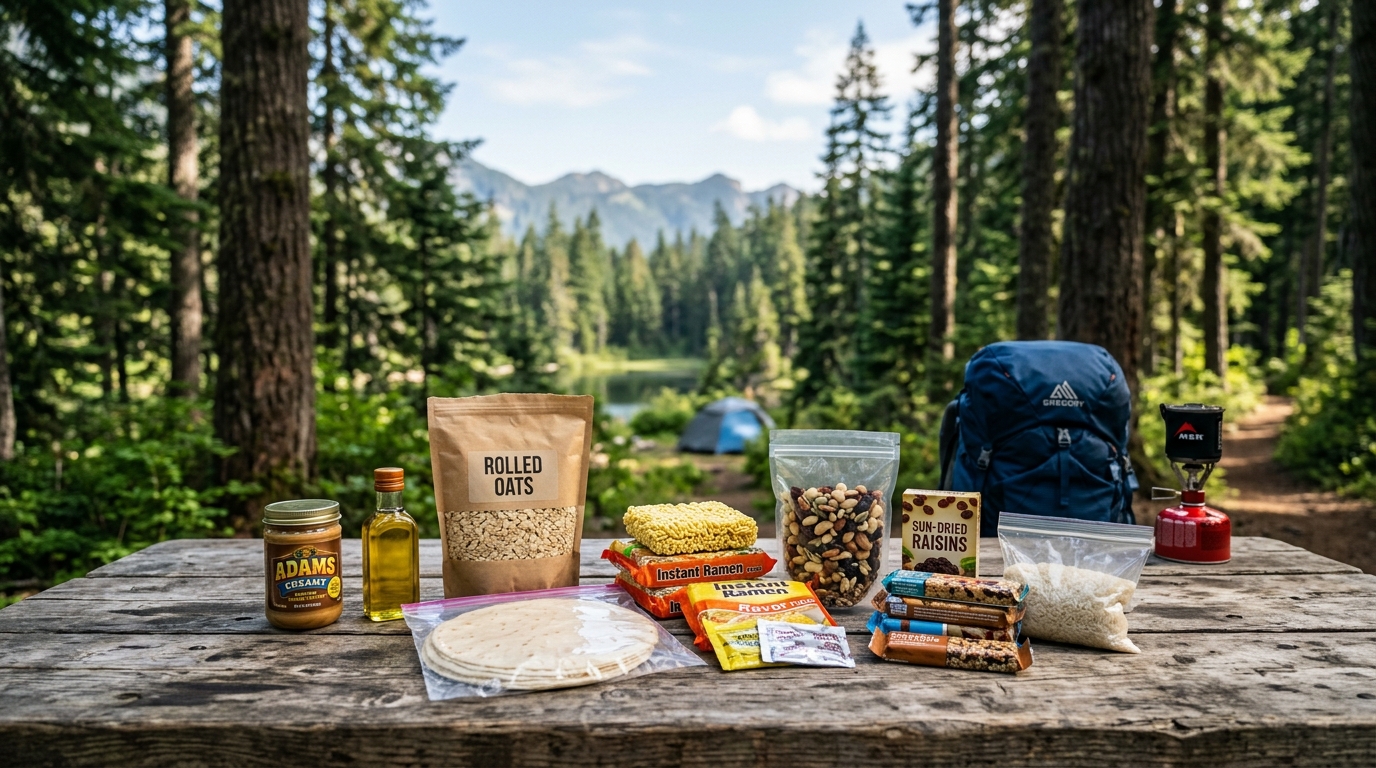
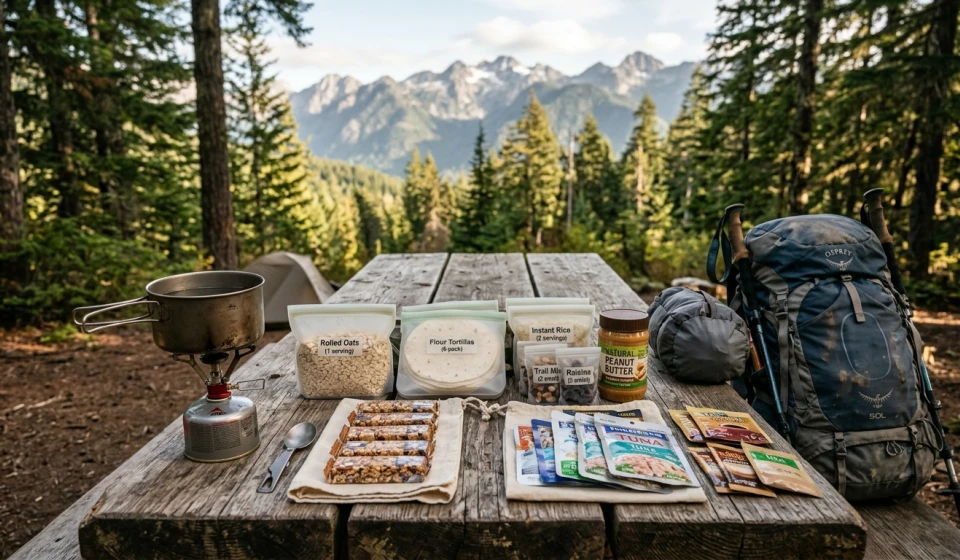
The good news? A practical three-day backpacking menu can be built around supermarket staples such as oatmeal, peanut butter, tortillas, instant rice, ramen, trail mix, and dried fruit.
This plan uses a target budget of under $30 per person for three days, with breakfast, lunch, dinner, and snacks each day. It separates the cost of buying full packages from the value of the quantities actually eaten, so you can see both your checkout cost and your food cost.
Important: Prices vary by store and location. The prices below are illustrative U.S. supermarket estimates, not verified live prices. Treat the $30 limit as a planning target and check local prices before shopping.
The Planning Assumptions
This menu is designed for one adult on a typical three-day backpacking trip.
- Duration: 3 days, 2 nights
- Meals: Breakfast, lunch, dinner, and snacks daily
- Daily energy target: Approximately 2,500–3,000 calories, depending on portions
- Shopping method: Ordinary U.S. supermarket or discount grocery store
- Cooking: One-pot meals using a backpacking stove and water
- Food storage: Shelf-stable foods, with no refrigeration required before opening
- Budget: Under $30 is the goal, but actual checkout totals depend on package sizes and local prices
Your energy needs may be higher or lower depending on body size, pace, elevation gain, weather, and appetite. This menu is a starting point, not a universal calorie prescription.
The $30 Supermarket Shopping List
The following prices are example estimates for a U.S. discount supermarket. Package sizes, brands, and local prices will differ.
| Item to buy | Package size | Estimated price |
|---|---|---|
| Rolled oats | 18 oz | $3.50 |
| Peanut butter | 16 oz | $2.50 |
| Raisins | 12 oz | $2.00 |
| Flour tortillas | 10-count pack | $2.50 |
| Instant rice | 14 oz | $3.00 |
| Tuna pouches | 3 single-serve pouches | $3.75 |
| Olive oil | Small bottle | $4.00 |
| Trail mix | 16 oz | $4.00 |
| Granola bars | 6-count pack | $3.00 |
| Estimated checkout total | $28.25 |
This leaves about $1.75 below the $30 target. However, that margin is small, so compare prices and choose store brands where possible. If the actual checkout total exceeds $30, the easiest adjustments are to choose a cheaper trail mix, skip the olive oil, or substitute another affordable calorie source.
Package cost versus food cost
You won’t eat every item you buy. Some oats, peanut butter, raisins, tortillas, rice, and granola bars will remain at home.
The checkout total is the amount you pay to purchase the listed packages. The consumed food cost is the estimated value of only the quantities packed and eaten during the trip. These are different numbers, and the checkout total is the one that matters if you need to stay under $30 at the store.
Your 3-Day Backpacking Menu
The portions below are planning estimates. Calories and weights vary by brand, tortilla size, and product formulation. Weights refer to food carried before adding cooking water, not packaging.
Day 1: Familiar Favorites
Breakfast
- Rolled oats, 80 g
- Peanut butter, 32 g
- Raisins, 20 g
Lunch
- Two medium flour tortillas
- Peanut butter, 32 g
- Raisins, 20 g
Dinner
- Instant rice, 100 g dry
- One tuna pouch
- Olive oil, 14 g
Snacks
- Trail mix, 120 g
- One granola bar
Day 2: Simple and Filling
Breakfast
- Rolled oats, 80 g
- Peanut butter, 32 g
- Raisins, 20 g
Lunch
- Two medium flour tortillas
- Peanut butter, 32 g
- Trail mix, 60 g
Dinner
- Instant rice, 100 g dry
- One tuna pouch
- Olive oil, 14 g
Snacks
- Trail mix, 60 g
- One granola bar
- Raisins, 20 g
Day 3: Easy Finish
Breakfast
- Rolled oats, 80 g
- Peanut butter, 32 g
- Raisins, 20 g
Lunch
- Two medium flour tortillas
- Peanut butter, 32 g
- Raisins, 20 g
Dinner
- Instant rice, 100 g dry
- One tuna pouch
- Olive oil, 14 g
Snacks
- Trail mix, 120 g
- One granola bar
This menu deliberately reuses ingredients. Fewer unique foods usually make shopping, portioning, and packing easier. If you want more variety, swap one rice dinner for instant noodles, but recalculate the calories, weight, and cost before making the change.
Daily Calories and Food Weight
Using typical package nutrition values, the menu provides approximately the following amounts. These are estimates, not exact nutrition-label calculations.
| Day | Estimated calories | Food weight |
|---|---|---|
| Day 1 | 2,450 kcal | 630 g / 1.39 lb |
| Day 2 | 2,450 kcal | 630 g / 1.39 lb |
| Day 3 | 2,450 kcal | 630 g / 1.39 lb |
| Trip total | 7,350 kcal | 1.89 kg / 4.17 lb |
The weight includes the dry food but excludes wrappers, bags, and cooking water. Actual calories can vary, especially with trail mix, tortillas, and granola bars.
At roughly 2,450 calories per day, this plan may be insufficient for some strenuous trips. If you’re hiking long distances, climbing steep terrain, or carrying a heavy pack, consider increasing portions or adding more calorie-dense snacks.
What Does the Food You Actually Eat Cost?
Using the example package prices above, the approximate value of the quantities consumed is:
| Food | Quantity for 3 days | Estimated consumed cost |
|---|---|---|
| Oats | 240 g | $1.65 |
| Peanut butter | 192 g | $1.06 |
| Raisins | 120 g | $0.71 |
| Tortillas | 6 | $1.50 |
| Instant rice | 300 g | $2.27 |
| Tuna pouches | 3 | $3.75 |
| Olive oil | 42 g | $0.67 |
| Trail mix | 360 g | $3.17 |
| Granola bars | 3 | $1.50 |
| Total consumed food value | About $16.28 |
This estimate assumes the package prices listed earlier and allocates costs proportionally to the amounts used. It does not include packaging, fuel, or equipment. The remaining food stays available for future meals, so the consumed food value is lower than the initial checkout total.
How to Pack the Food Efficiently 🎒
- Pre-portion meals: Put oats, raisins, and other dry ingredients into labeled bags before leaving.
- Keep food dry: Use waterproof bags or a dry sack to protect food from rain.
- Pack tuna safely: Keep unopened pouches sealed and follow the manufacturer’s storage instructions.
- Measure oil carefully: A small leakproof bottle prevents spills and helps you carry only what you need.
- Plan water separately: Instant rice may require additional cooking water, so check the product instructions and account for water availability on your route.
- Carry out all waste: Pack out wrappers, food scraps, and used packaging according to local trail rules.
Remember that backpacking food weight is only one part of your total pack weight. Water, fuel, cookware, shelter, clothing, and safety equipment also matter.
Final Thoughts 🌄
A three-day backpacking menu doesn’t have to depend on expensive specialty meals. With supermarket staples, a little portion planning, and repeated ingredients, you can put together a practical menu that is easy to pack and simple to cook.
This example targets a checkout cost of $28.25, with an estimated consumed food value of $16.28 and roughly 2,450 calories per day. Those numbers are planning estimates, so check actual prices and product labels before relying on them.
The most useful backpacking food plan is one that fits your budget, meets your energy needs, works with your cooking setup, and includes foods you genuinely enjoy eating on the trail.