Is That Trail Food Actually Vegan? The Backpacker’s Ingredient-Label Survival Guide
Why A Vegan Backpacking Food List Needs More Than Brand Names
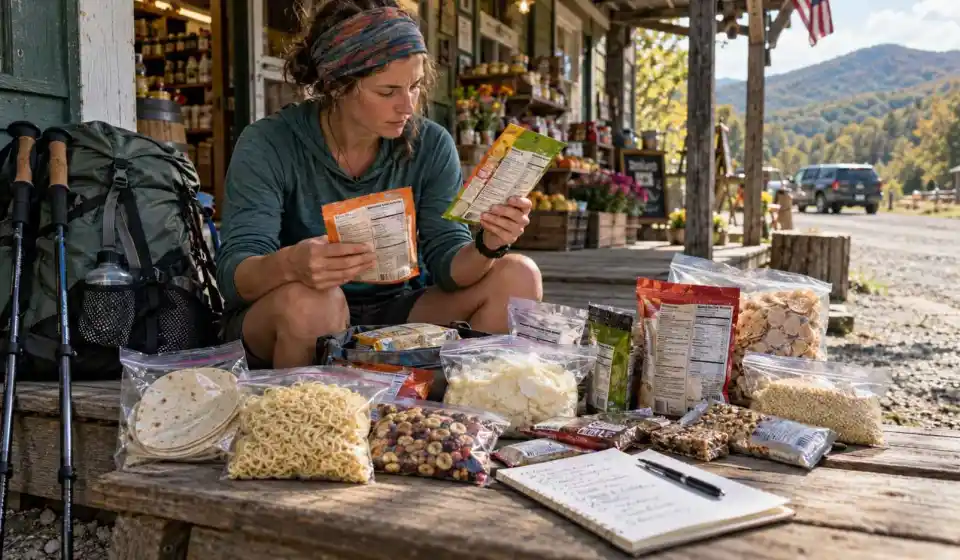
A vegan backpacking food list can look reassuring at home, but the real test often happens inside a small grocery store far from your usual supermarket. 🥾 Trail staples such as ramen, instant potatoes, tortillas, snack bars, cookies, candy, cereal, and soup mixes are not automatically plant-based just because the basic food sounds vegan. The more useful long-term skill is learning how to inspect an unfamiliar package quickly instead of depending on a brand list that could be outdated by your next resupply.
Ingredient formulas can change, regional versions can differ, and a product available in one town may be absent in the next. A company can even keep the same product name while changing a seasoning blend, fat source, or vitamin source, so hikers should check the package they are actually buying. 🎒 Treat a product recommendation as a shortcut rather than a guarantee, and let the current ingredient label make the final decision.
Use The 30-Second Resupply Label Check
Start with the ingredient list, which on U.S. packaged foods generally presents ingredients in descending order by weight, and then scan the allergen information for ingredients such as milk, egg, fish, or shellfish. This catches many obvious non-vegan ingredients quickly, including whey, casein, butter, egg, and certain seafood-derived components. ⏱️ However, an allergen statement cannot prove that something is vegan because ingredients such as honey, gelatin, carmine, and confectioner’s glaze are not all captured by that shortcut.
Next, look for ingredients that may require a second decision rather than an automatic yes or no, including natural flavors, mono- and diglycerides, and some vitamin D3 sources. If your vegan standard requires certainty about ambiguous ingredients or processing aids, decide that before your trip so you are not debating your rules while hungry in a convenience store. The objective is not memorizing hundreds of chemical names; it is separating clearly animal-derived, clearly plant-based, and uncertain ingredients.
Know The Ingredients That Commonly Cause Confusion
Some animal-derived ingredients are easy to overlook because their names do not immediately sound like meat or dairy. Gelatin comes from animal collagen, whey and casein are milk proteins, lard is animal fat, carmine or cochineal is insect-derived, and confectioner’s glaze is made using shellac derived from insects. 🍬 Honey is another ingredient many vegans avoid, even when it appears in granola, cereal, energy snacks, or other foods that otherwise seem plant-based.
Other terms can be source-dependent, meaning the ingredient name alone may not tell you everything you want to know. Mono- and diglycerides can be produced from different fat sources, vitamin D3 can come from different sources, and the broad term “natural flavors” may not identify every underlying source directly on the front of the package. 🌱 A practical system therefore needs two categories: ingredients you know do not fit your diet and ingredients you personally prefer to skip unless clearer information is available.
Check Ramen, Potatoes, And Tortillas Differently
Ramen demonstrates perfectly why food-category names are insufficient, because noodles may be plant-based while the included seasoning contains chicken, beef, fish, milk, or other animal-derived ingredients. 🍜 Some noodles can also contain egg, meaning checking only the flavor name or package front can miss an important detail. When suitable ramen is unavailable, the smarter backpacking question becomes, “What other fast-cooking carbohydrate can perform the same job?”
Instant potatoes create a similar problem because potatoes themselves are plant-based while flavored products may contain milk, butter, cheese, or other dairy-derived ingredients. Tortillas can also contain ingredients such as lard, whey, or source-dependent emulsifiers, making a quick label check worthwhile instead of assuming every package is suitable. 🥔 Fortunately, these foods are replaceable: ramen can become couscous or rice, potato flakes can become another starch, and tortillas can become bread, crackers, or another portable carbohydrate.
Treat Bars, Cookies, Candy, And Cereal As High-Variation Foods
Packaged snacks vary so widely that appearance tells you surprisingly little about whether they belong among your vegan trail snacks. Granola and energy bars may contain honey, milk chocolate, whey, yogurt coatings, or gelatin; cookies may contain milk, butter, whey, or egg; and candy can contain gelatin, dairy ingredients, carmine, or confectioner’s glaze. 🍪 Two products that look almost identical on the shelf can therefore have very different ingredient lists.
Breakfast cereals deserve similar attention because some varieties include honey, dairy ingredients, or vitamin D3 whose source may matter to stricter vegans. Dried fruit, plain nuts, pretzels, popcorn, and simpler cereals can make useful fallback categories because they often have shorter ingredient lists, although they should still be checked. 🥜 On a long hike, simple foods can be valuable because fewer ingredients usually mean fewer things you need to investigate.
Do Not Forget Seasoning Packets, Soup, And Bouillon
Sometimes the smallest packet in your food bag is what changes an otherwise plant-based meal. Bouillon, soup bases, gravy powders, noodle seasoning, and flavored rice mixes can contain meat extracts, animal fats, fish ingredients, milk solids, cheese powders, or other animal-derived flavor components. 🧂 This is particularly easy to overlook when the main ingredient is something obviously plant-based such as rice, noodles, lentils, beans, or potatoes.
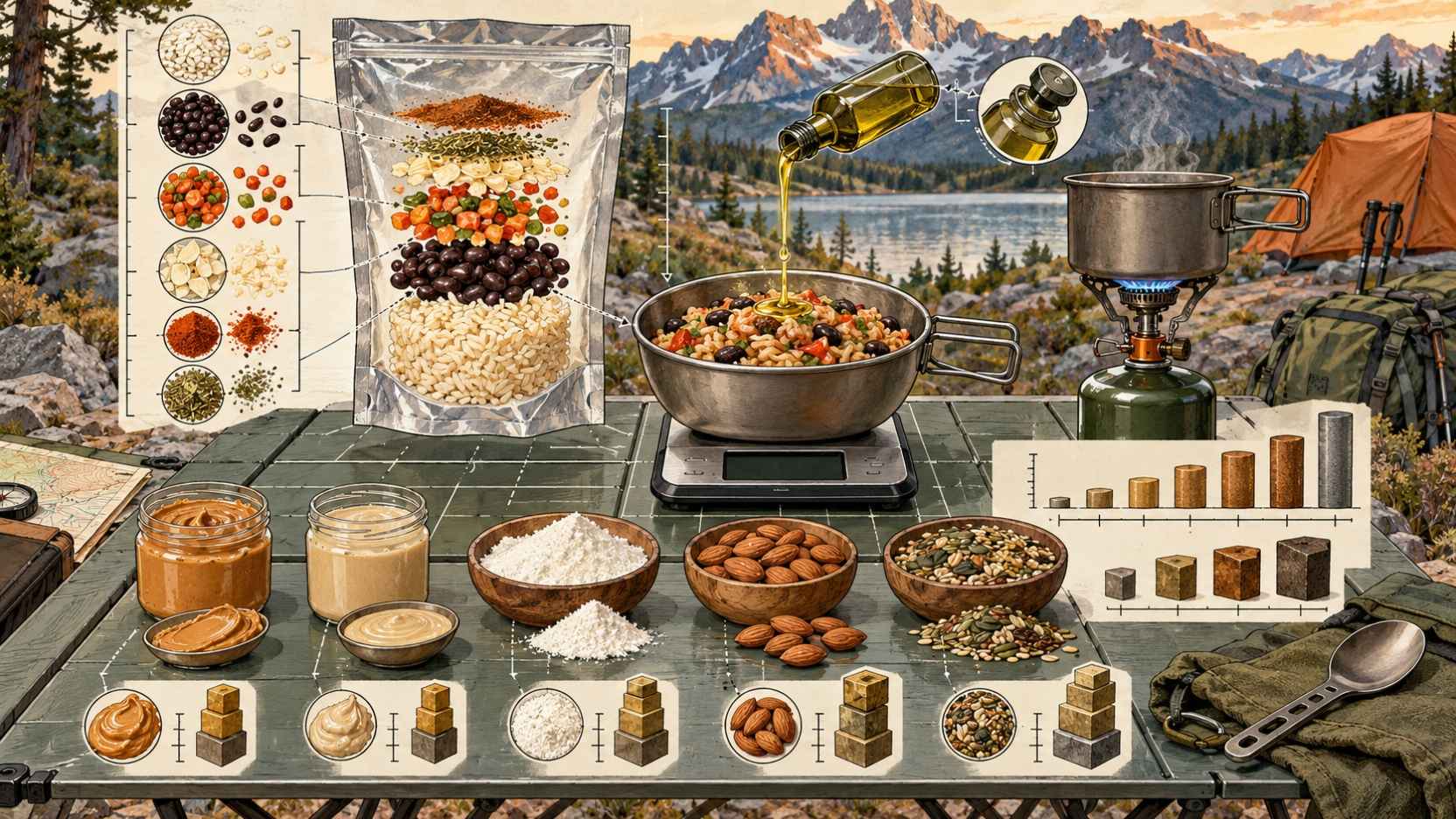
A useful resupply habit is to split every meal into four functions: carbohydrate base, flavoring, calorie-dense fat, and protein component. If the seasoning fails your label check, keep the starch and replace only the flavoring with salt, spices, hot sauce, nutritional yeast, or another shelf-stable option that meets your standards. Thinking in components prevents one unsuitable seasoning packet from eliminating an otherwise workable trail dinner.
Use A Category Substitution System Instead Of Chasing Products
The strongest vegan thru-hike food strategy is to shop by function instead of requiring one exact product. If suitable ramen is unavailable, choose couscous, rice, noodles, or instant potatoes and add seasoning; if suitable bars are missing, combine nuts, dried fruit, cereal, pretzels, or another compact snack. 🔄 If you cannot find an acceptable instant meal, rebuild one yourself using a carbohydrate base, calorie-dense fat, protein-containing component, and flavoring.
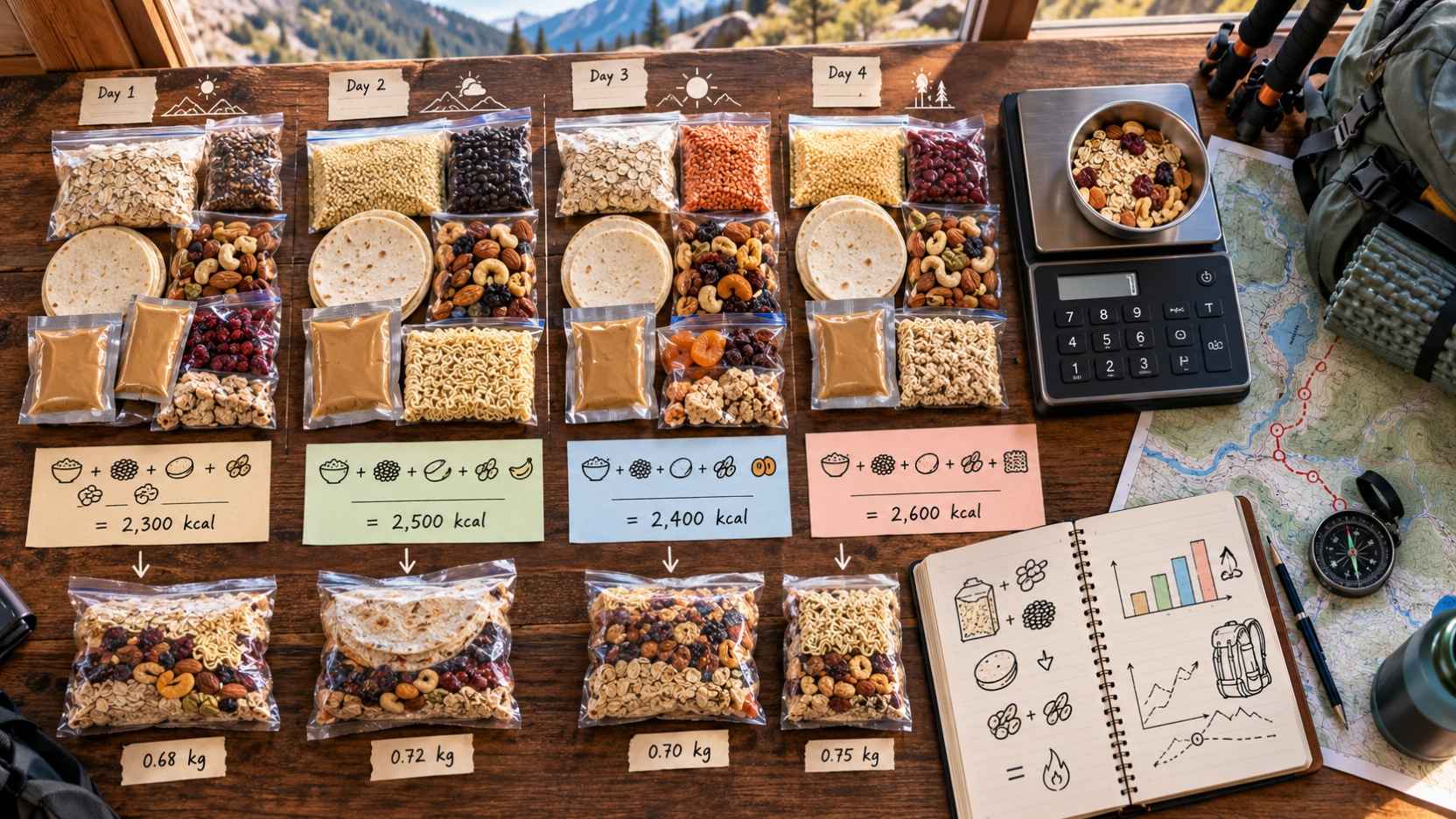
This approach also protects your calorie plan because the replacement should perform the same nutritional and practical job instead of merely looking similar. A tortilla may function as your portable carbohydrate, peanut butter as a calorie-dense fat, and nuts or roasted beans as a protein-containing component, so losing one product does not require rebuilding your whole day of food. Understanding what each item contributes to the menu makes you far less dependent on one brand appearing at every resupply.
Follow The Two-Alternatives Rule
Before leaving home, give every important staple at least two realistic replacements that might appear in an ordinary grocery store. 🎒 Your ramen backups could be couscous and instant rice, your preferred bar backups could be trail mix and cereal, and your tortilla backups could be bagels and crackers. The two-alternatives rule reduces the chance that one formula change, empty shelf, or limited store selection creates a serious hole in your menu.
A large supermarket provides more choices, while a small-town market, gas station, or convenience store may force you toward basic foods and creative combinations. For grocery store vegan backpacking food, prioritize shelf-stable ingredients, scan labels quickly, and assemble meals from categories rather than spending valuable time hunting for a perfect replacement. 🏪 Successful resupply is about adaptability, not finding a miniature version of your kitchen pantry in every trail town.
Use Different Strategies For Small Stores And Full Grocery Stores
At a full grocery store, take advantage of the larger selection by looking for calorie-dense foods, easy-preparation carbohydrates, nuts and nut butters, dried fruit, beans, shelf-stable snacks, and seasonings that fit your preferences. You can also compare several versions of the same category and select the one that offers the best combination of ingredients, calories, pack weight, preparation time, and taste. 🛒 More choice means you can optimize rather than merely survive the resupply.
At a tiny trail-town store, reverse that strategy and begin with what is actually available instead of searching for a predetermined shopping list. Find one workable carbohydrate, one calorie-dense addition, one or more protein-containing foods, several snacks, and enough total food to reach the next reliable resupply point. 🌲 A successful small-store pack-out may look completely different from your original menu while still performing the same jobs.
Carry A Printable Vegan Resupply Checklist
Keep the checklist simple enough to use while standing in an aisle: check ingredients → check allergen information → identify obvious animal-derived ingredients → flag uncertain ingredients → check seasoning packets separately → determine the food’s role in your menu. ✅ Then confirm that the complete food bag still gives you sufficient total food, carbohydrate-rich foods, calorie-dense options, protein-containing foods, snacks, and practical meals for the distance ahead. Vegan status matters, but a vegan food can still be a poor backpacking choice when it is excessively heavy, bulky, difficult to prepare, or unlikely to be eaten.
The most durable vegan backpacking food list is therefore not really a fixed list at all—it is a repeatable decision system that travels with you. Learn the common label traps, establish your personal rules for ambiguous ingredients, and prepare at least two alternatives for every important staple before a long trip. 🌿 Once you can rebuild a meal from interchangeable components, an unfamiliar resupply store stops being a scavenger hunt and becomes a menu problem you already know how to solve.