Why Some Dehydrated Vegan Backpacking Meals Stay Crunchy: A Rehydration Test
Why “Just Add Boiling Water” Isn’t Always The Full Story
A dehydrated vegan backpacking meal can look perfect in the bag and still produce an annoying surprise at dinner: chewy mushrooms, stiff potato pieces, crunchy carrots, or grains that seem soft outside but firm in the center. 🥣 The problem is not always a bad recipe, because different ingredients absorb water at different speeds and respond differently to particle size, temperature, and standing time. That makes an at-home rehydration test one of the simplest ways to make trail meals more predictable.
“Add boiling water and wait” sounds precise, but a mixed meal may contain several different rehydration clocks. Quick-softening TVP, thin vegetable flakes, grains, and thick mushroom slices can all be sitting in the same pouch while reaching acceptable texture at different times. The Camp Kitchen Lab goal is therefore to find the water amount and soak time that work for the whole meal, not merely for its fastest ingredient.
What Dehydration Changes In Food
Dehydration removes much of the water that gives cooked foods their original weight, volume, and softness, which is why dried ingredients are useful for backpacking. When water returns, the food absorbs moisture and expands, but reconstitution is not instant and does not always recreate the exact original texture. 🧪 Dried vegetables can require very different soaking times depending on the food, thickness of the pieces, and temperature of the water.
Surface area helps explain why two ingredients dried in the same machine can behave differently later. A thin onion flake exposes much more of itself to water than a thick mushroom slice or dense potato cube, so moisture has a shorter distance to travel before the piece softens. Preparation before drying, piece size, and storage can also influence the result, which is why testing the actual batch you plan to carry is useful.
Water Quantity Vs Soak Time
Adding more water and waiting longer solve different problems, so they should not automatically be treated as the same fix. If a meal has absorbed nearly all available liquid but still contains dry centers, it may need more water; if liquid remains while pieces are firm, the food may instead need more time, smaller pieces, or better heat retention. 💧 Recognizing that difference prevents a slightly underhydrated dinner from becoming a disappointing soup.
Change only one variable at a time when testing. Start with the planned water quantity and soak time, record the result, then repeat with either a little more water or several extra minutes instead of changing both immediately. This matters because published food-preservation guidance shows that dried vegetables do not share one universal water ratio or soaking time, with requirements varying considerably between foods.
Test Mushrooms, Potatoes And TVP Separately
Mushrooms make a useful stress test because type and thickness can change how quickly they soften. 🍄 Thin slices usually have an advantage over whole caps or thick pieces, and a mushroom can feel wet on the surface while remaining chewy deeper inside. General dried-mushroom preparation guidance commonly gives sliced mushrooms roughly 20 to 30 minutes to soften, although actual requirements vary with the mushroom and cut.
Potatoes show how strongly ingredient form matters. 🥔 Fine dehydrated potato flakes absorb water very differently from home-dried slices, shreds, or cubes, so the word “potato” alone tells you little about the final water requirement. If a potato piece becomes soft outside but stays chalky or firm in the middle, try a longer rest or smaller pieces before assuming the whole recipe needs substantially more liquid.
TVP can provide a useful contrast because many small-granule products soften comparatively quickly in hot liquid. 🌱 One widely sold TVP product, for example, specifies approximately 5 to 10 minutes after adding boiling liquid, showing how quickly some forms can reconstitute compared with tougher vegetables or mushrooms. Judge the finished meal by the ingredient that is hardest to rehydrate, and use package directions for individual products as a starting point rather than assuming every component will finish simultaneously.
Why Too Much Water Can Also Ruin A Meal
More water sounds like the safest response to crunchiness, but excessive liquid can dilute seasoning, turn sauces into broth, and make starch-heavy dinners unpleasantly thin. It also changes trail logistics because every additional ounce of water must either be collected near camp or carried to where you plan to eat. 💦 The target is therefore not maximum water but enough water to hydrate the meal while preserving the texture you actually want.
Measure your adjustments instead of pouring extra water by instinct. A test batch might receive only a few additional tablespoons, allowing you to see whether texture improves without changing the character of the meal. Once additional water stops helping, you know to investigate time, temperature, insulation, or ingredient size instead of continuing to increase the ratio.
Run The At-Home Backpacking Meal Test
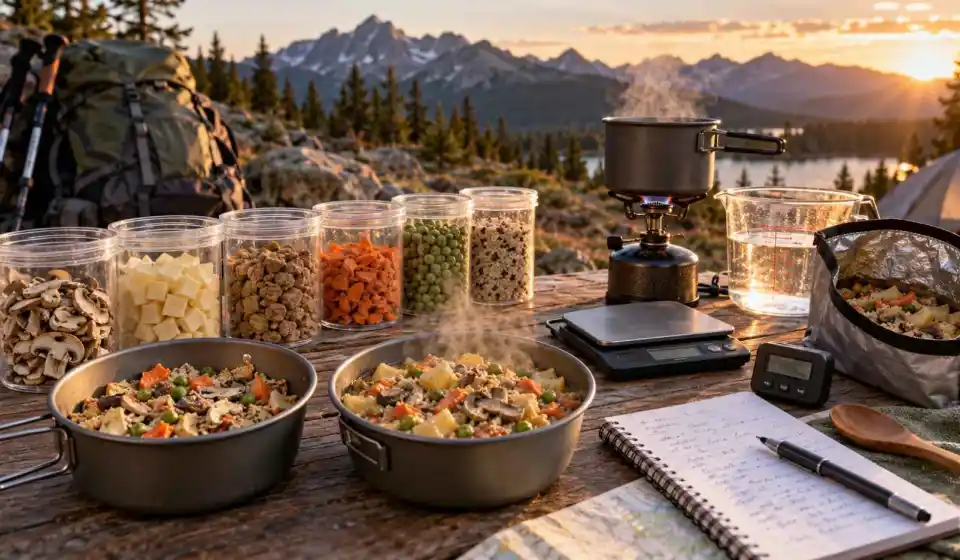
Recreate trail conditions as closely as practical by using the same dry portion, container, water quantity, insulation method, and standing time you intend to use outdoors. ⏱️ Add the measured hot water, seal the container, and avoid opening it repeatedly because releasing heat changes the experiment. When the timer ends, check for free liquid, crunchy centers, uneven texture, and whether the final consistency is too thick or too thin.
Then make one controlled change and repeat. One batch might receive slightly more water, another might keep the original ratio but sit ten minutes longer, and a third might contain smaller mushroom or vegetable pieces. This small experiment converts “I think it needs more water” into a repeatable preparation method you can confidently write on the meal bag.
Build A Rehydration Log For Future Trips
A simple log turns one successful dinner into a reusable backpacking system. 📓 Record the meal name, dry portion weight, water added, soak time, container, insulation method, final texture, and any ingredient that remained crunchy. If the recipe changes, create a new entry instead of assuming the old ratio will remain accurate.
Patterns become useful after only a few tests. You may discover that mushroom-heavy recipes need longer resting, potato-flake meals need less water than expected, or one grain works better than another with your no-simmer method. The log also prevents you from repeating the same failed experiment months later because you forgot whether a particular ratio was excellent or merely edible.
Let Preparation Requirements Shape The Menu
Rehydration performance affects more than texture; it changes whether a meal suits the trip. A dinner that needs a long insulated soak may be fine at a relaxed campsite but inconvenient after a cold, wet hiking day, while a recipe requiring repeated simmering consumes more fuel. 🏕️ A dry campsite can also make a water-hungry meal less attractive even when the dehydrated ingredients themselves are impressively lightweight.
This is where food preservation science connects directly with trail nutrition planning. Calorie density tells you how much energy you carry for the weight, while rehydration tells you how much water, time, heat, fuel, and equipment are needed to turn that lightweight food back into dinner. The best vegan backpacking meal is therefore not simply the one that dries well—it is the one that rehydrates predictably under the conditions of the trip. 🥾