Freeze-Dried Backpacking Meals vs. DIY Trail Meals: A Full Cost Breakdown 🎒💰
Planning backpacking meals is a balancing act. You want enough calories to fuel long hiking days, but you also want to keep food affordable, lightweight, and easy to prepare after a tiring day on the trail.
Commercial freeze-dried meals promise convenience. Add hot water, wait, and eat. DIY trail meals offer more control over ingredients and portion sizes, often at a lower recurring food cost.
But which option actually gives you the best value?
The answer depends on your menu, the prices you pay, your equipment, and how much time you want to spend preparing food. Let’s compare both approaches using servings, calories, dry weight, fuel, water, preparation time, and total trip cost.
1. What Is the Difference?
Commercial freeze-dried meals
These meals are prepared commercially, freeze-dried, and packaged for storage and outdoor use. Many can be rehydrated directly in their original pouches.
Advantages
- Convenient and quick to prepare
- No need to measure individual ingredients at home
- Clearly labeled serving sizes and nutrition information
- Often designed for long shelf life when stored according to the manufacturer’s instructions
- Less washing up when you rehydrate and eat directly from the pouch
Disadvantages
- Usually more expensive per meal than basic homemade alternatives
- You have less control over ingredients and portion sizes
- Packaging creates waste
- Calories and serving sizes vary considerably by product
Commercial meals are especially useful when convenience matters more than minimizing food costs.
DIY trail meals
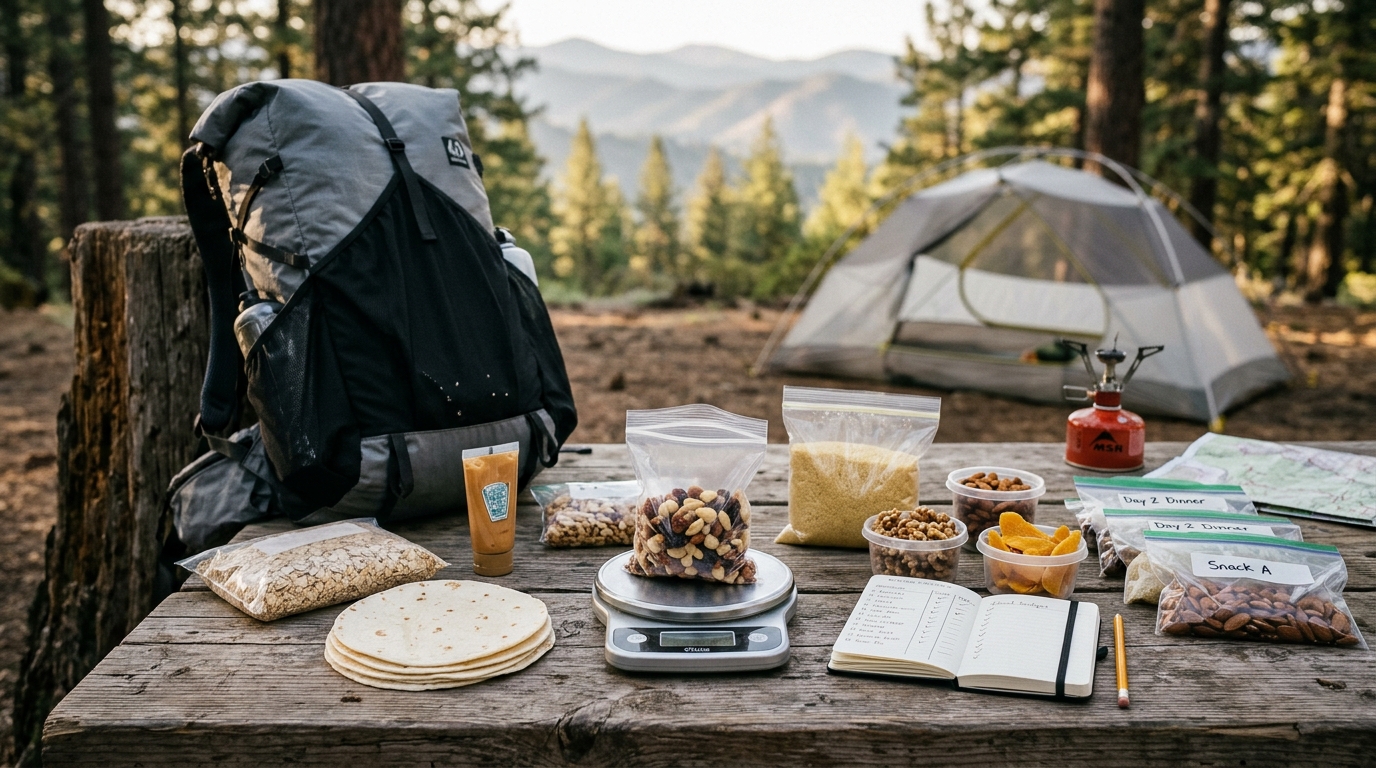
DIY meals use ingredients such as instant rice, couscous, oats, instant potatoes, dehydrated vegetables, textured vegetable protein, seasonings, and cooking oil.
You measure and combine the ingredients at home, then pack each meal for the trip.
Advantages
- Often lower recurring food costs
- Flexible portions and calorie targets
- More control over ingredients, flavors, and dietary requirements
- Ingredients can be reused across several meals
Disadvantages
- Requires planning and portioning
- Some recipes need more cooking or cleanup
- Homemade mixtures may have shorter storage lives, depending on ingredients and preparation
- Inconsistent measurements can make nutrition estimates less accurate
DIY meals work particularly well for hikers who backpack regularly and enjoy preparing their menus in advance.
2. Compare Calories, Weight, and Price
A useful starting point is to compare meals that provide a similar amount of energy.
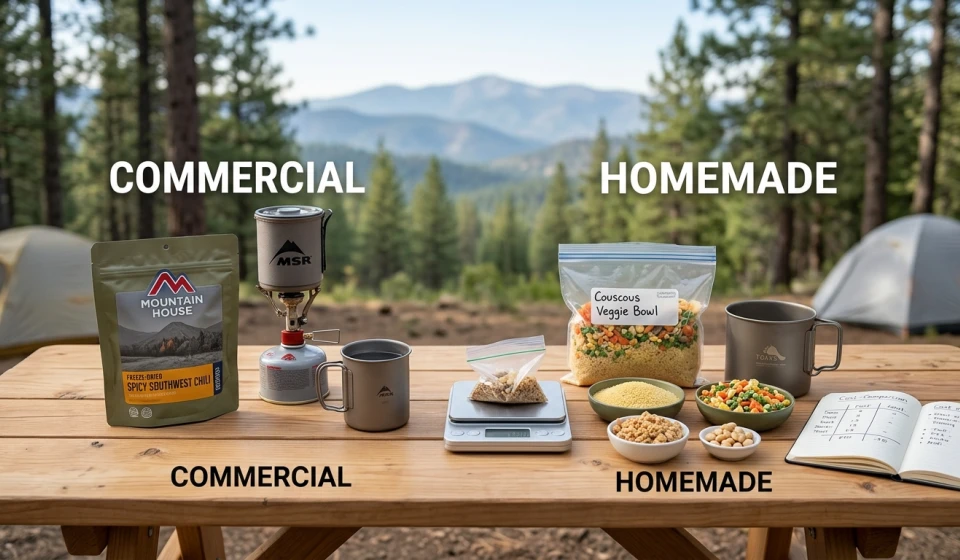
For a real commercial example, Sublime Pantry’s September 2026 comparison listed Peak Refuel Sweet Pork & Rice at $13.99 per pouch, 800 calories, and 6.07 ounces of dry food. Prices can change, so check the current product listing before purchasing.
Now compare that with an illustrative homemade couscous meal.
| Measurement | Commercial meal | DIY meal |
|---|---|---|
| Calories | 800 | Approximately 800 |
| Dry food weight | 6.07 oz | Approximately 6.7 oz |
| Food cost per meal | $13.99 | Estimated $2.25 |
| Water needed | Follow pouch instructions | Approximately 1–1½ cups |
| Preparation | Add hot water and wait | Boil water, combine, and rehydrate |
| Packaging | Commercial pouch | Lightweight food bag or reusable container |
Important: The DIY figures are illustrative planning estimates, not laboratory-tested recipe data or a verified retail-price survey. The homemade portion uses a combination of couscous, textured vegetable protein, olive oil, dried vegetables, peanuts, and seasonings. Calculate its actual calories, weight, and cost from your chosen ingredients and their nutrition labels.
What does this comparison tell us?
The DIY meal is cheaper in this example, but it is not lighter. It weighs approximately 0.63 ounces more than the commercial pouch.
That difference is small for one dinner, but it can accumulate over a long trip. If low pack weight is your highest priority, compare calories per ounce as well as cost per meal.
The lesson is simple: DIY is not automatically lighter, and commercial food is not automatically more calorie-dense. Compare the actual products and recipes.
3. Calculate the Cost of a Three-Day Trip
Suppose you plan to eat one of these dinners each evening for three days.
Commercial meals
- Cost per meal: $13.99
- Number of meals: 3
- Total: $13.99 × 3 = $41.97
DIY meals
- Estimated cost per meal: $2.25
- Number of meals: 3
- Total: $2.25 × 3 = $6.75
Illustrative difference
$41.97 − $6.75 = $35.22 saved over three dinners
<text color=”secondary” size=”sm”>This is an example based on the stated assumptions, not a guaranteed saving. Actual DIY costs depend on ingredient prices, portion sizes, packaging, and how much of each bulk ingredient you use.</text>
This comparison covers dinner only. Breakfast, lunch, snacks, drinks, and any other meals must be added to calculate your full trip budget.
It also assumes you already own the equipment needed to prepare the food. Equipment costs are considered separately below.
4. Don’t Forget Fuel and Water Costs
Food prices tell only part of the story. Both commercial and homemade meals may require water and fuel, and those needs affect your overall cooking system.
Water requirements
Commercial meals provide preparation instructions on the package. Some need around 1½ cups of water, while others require more or less. Check the actual pouch rather than assuming all meals are identical.
DIY meals vary by recipe. Couscous and instant potatoes may rehydrate quickly, while other ingredients need longer soaking or simmering.
Remember that water added during preparation is not included in the dry food weight. If water sources are scarce, the amount needed for cooking can influence how much water you must carry.
Fuel requirements
A meal that only needs boiling water may use less fuel than one that requires several minutes of simmering. However, actual consumption depends on your stove, pot, wind protection, temperature, altitude, and water quantity.
To compare fairly:
- Use the same stove and pot where practical.
- Start with the same water temperature and quantity.
- Record the fuel used to prepare each meal.
- Follow the manufacturer’s cooking instructions.
- Repeat the test if you want a more reliable estimate.
Commercial meals can save cleanup and cooking time, but they do not necessarily use less fuel than every DIY alternative.
For trips where fuel weight matters, a simple home test can be more useful than assuming one method is always more efficient.
5. Compare Preparation Time and Cleanup
Time is another cost, especially when you reach camp late, encounter bad weather, or need to get moving early.
| Task | Commercial freeze-dried meal | DIY trail meal |
|---|---|---|
| Preparation at home | Usually minimal | Measure and portion ingredients |
| Camp preparation | Add the specified water | Follow the recipe’s instructions |
| Waiting time | Depends on product | Depends on ingredients |
| Cleanup | Often minimal if eaten from pouch | May require washing a pot or container |
| Customization | Limited to the product and additions | Easy to adjust before departure |
Commercial meals are often the easier option when you want a predictable routine with minimal cleanup.
DIY meals can be nearly as convenient if you use quick-rehydrating ingredients and portion them carefully before the trip. You can also prepare some meals as cold-soak options, but only when the ingredients are suitable for that preparation method and you allow enough time for them to hydrate.
Do not assume that every homemade recipe is suitable for cold soaking or that every commercial meal rehydrates equally well with cold water.
6. Separate Equipment Costs From Food Costs
One of the biggest mistakes in comparing meal systems is mixing up the cost of equipment with the cost of food.
Initial equipment costs
If you already own a backpacking stove, pot, and suitable eating container, switching to DIY meals may require little or no additional equipment.
If you need to purchase gear, your initial expenses might include:
- A backpacking stove
- A compatible pot
- A lighter or ignition system
- A reusable container or measuring tools
A home dehydrator is optional. You can make many economical trail meals using shelf-stable ingredients without dehydrating food yourself.
Recurring food costs
These are the expenses you incur each time you prepare for a trip:
- Commercial freeze-dried pouches
- Bulk grains and instant starches
- Protein ingredients
- Oils, nuts, dried vegetables, and seasonings
- Packaging that needs replacing
For a fair comparison, keep these categories separate.
If you buy a stove for $50, for example, that is an initial equipment expense, not a cost that should be added in full to every meal. You may use the stove across dozens of trips.
Likewise, buying a bulk bag of couscous does not mean you must charge the entire bag to one trip. Calculate the cost of the portion actually used, while considering whether the remaining ingredients will be used later.
7. Which Meal System Is Better for Your Backpacking Style?
Choose commercial freeze-dried meals if:
- You prioritize convenience and minimal cleanup.
- You have limited time to prepare for a trip.
- You want a meal with labeled nutrition information.
- You are willing to pay more for convenience.
Choose DIY trail meals if:
- You backpack regularly and want to reduce recurring food costs.
- You enjoy planning meals and portioning ingredients.
- You want to customize calories, flavors, and dietary needs.
- You can use bulk ingredients across several meals.
Choose a hybrid system if you want both.
For example, prepare your own oatmeal, trail mix, and couscous dinners, then bring one or two commercial meals for difficult weather, late arrivals, or evenings when you want minimal cleanup.
This approach allows you to save money on routine meals without giving up the convenience of packaged food entirely.
8. A Simple Checklist Before Your Next Trip
Before finalizing your menu, ask:
- Have I compared meals with similar calorie totals?
- Have I weighed the dry food and packaging separately?
- Have I calculated the cost of the actual portion used?
- Have I checked the water needed for each meal?
- Have I considered fuel use and cooking time?
- Have I separated initial gear purchases from recurring food costs?
- Does my full menu provide enough energy for the trip?
- Can I safely store and prepare every ingredient under the expected conditions?
A small spreadsheet with columns for price, calories, dry weight, water, fuel, and preparation time can make future trip planning much easier.
Final Thoughts 🌲
Commercial freeze-dried meals and DIY trail meals both have a place in backpacking. Commercial pouches offer convenience, simple preparation, and predictable packaging. Homemade meals offer flexibility and can substantially reduce recurring food expenses.
The best choice depends on what you value most: convenience, budget, weight, preparation time, or a combination of all four.
Compare actual meals rather than relying on general assumptions. Calculate cost per calorie, weigh your portions, account for water and fuel, and keep equipment purchases separate from recurring food costs.
With a little planning, you can build a trail menu that fits your budget and your backpack without sacrificing the energy you need for the adventure ahead. 🎒