Can’t Open Your Energy Bar With Gloves? The Summit Snack Mistake Climbers Overlook
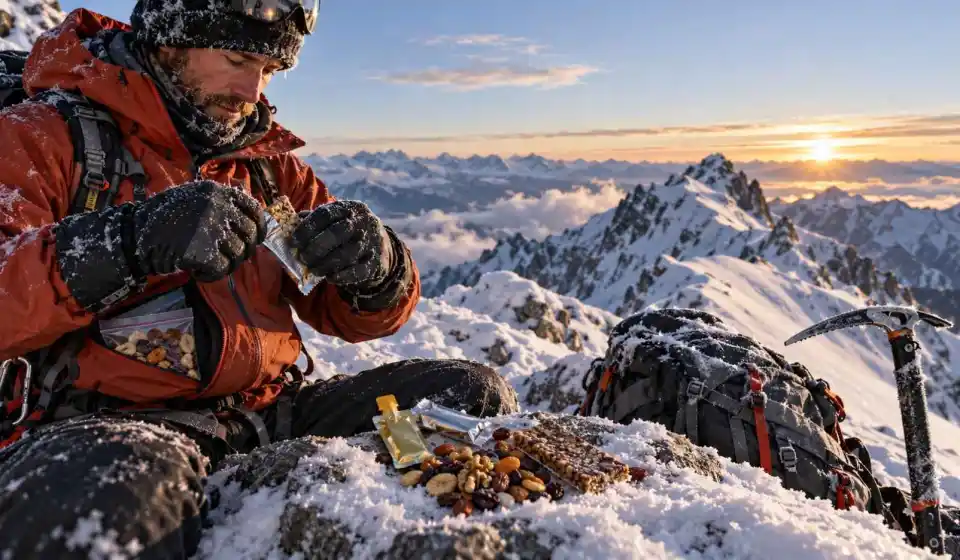
You can pack an energy bar with excellent carbohydrates, plenty of calories, and a convenient serving size, but none of those advantages matter much if you cannot open the wrapper while wearing thick gloves. 🧤 Cold-weather climbing changes the meaning of a “good snack” because food must be accessible when your fingers have less dexterity, your pack is difficult to reach, and stopping for a long meal may be inconvenient. Choosing mountaineering snacks for cold weather therefore requires looking beyond nutrition labels and asking a surprisingly practical question: can you actually eat this food under the conditions where you plan to use it?
Cold can create another problem because some foods that are pleasantly chewy at room temperature become considerably firmer when temperatures fall. Cold-weather hiking guidance specifically recommends keeping snacks accessible and experimenting with foods to determine which remain edible in low temperatures, because some energy bars can become unpleasantly hard. 🏔️ The best summit snack is consequently not necessarily the food with the highest calorie count—it is food that combines useful nutrition with realistic cold-weather usability.
Why Regular Hiking Snacks Can Be Difficult To Eat While Climbing
Ordinary hiking snacks are usually selected in a warm kitchen or grocery store, where opening a narrow wrapper requires almost no thought. On a cold mountain, however, the climber may be wearing insulated gloves or mittens specifically because exposing the hands is uncomfortable or unsafe, and heavier hand protection naturally reduces dexterity. Mountaineering clothing guidance recognizes this tradeoff: lighter gloves provide more dexterity, while heavily insulated mittens sacrifice some hand control for greater warmth.
That means a tiny tear notch, tightly sealed plastic wrapper, slippery gel packet, or individually wrapped candy may become far more annoying than expected. ❄️ Removing a glove every time you need food also defeats part of the reason you are wearing insulated hand protection in the first place, especially during windy pauses or exposed sections. Glove-friendly hiking snacks should therefore be evaluated as a complete system involving the food, packaging, storage location, and conditions rather than simply comparing grams of carbohydrates.
Cold Temperatures Can Change The Food Too
Packaging is only half the problem because temperature can alter texture enough to turn an otherwise convenient snack into something difficult to chew. Certain dense bars, chocolate-containing foods, chewy candies, and similar products may become substantially firmer in cold conditions, while nuts and some other foods can remain relatively easy to bite. 🍫 Keeping selected snacks in an inside pocket or another location closer to body warmth can help some foods remain more manageable.
This is one reason testing your intended winter climbing snacks before the trip is more useful than automatically buying whatever worked during summer hiking. Put the actual snack in cold conditions, wear the gloves you intend to climb with, and see whether you can retrieve, open, hold, chew, and repack it comfortably. A product that looks perfect on a nutrition spreadsheet may fail this simple field-use test, while an ordinary bag of nuts and raisins may perform remarkably well.
Trail Mix, Energy Bars, Gels And Dried Fruit Compared
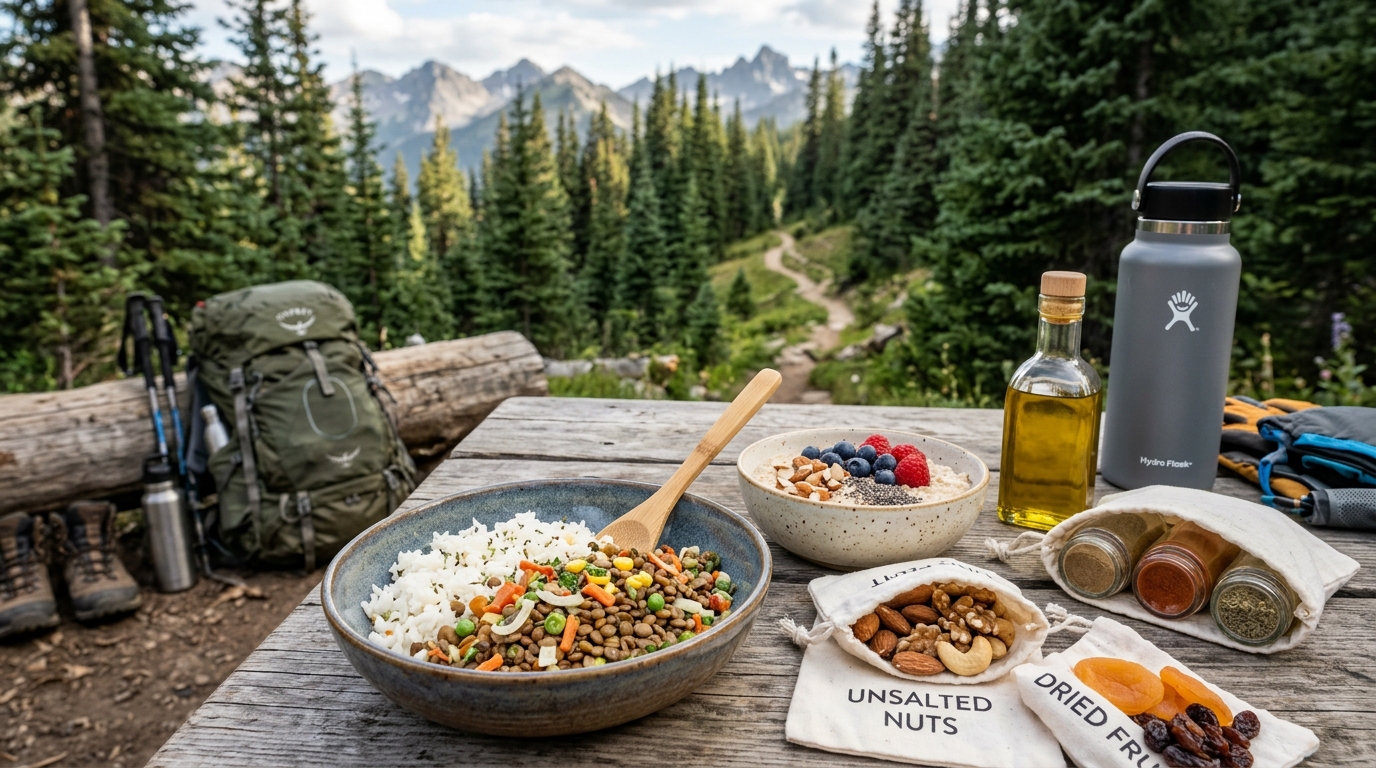
Each popular snack format solves a different problem, so there is no universal winner for a summit push. Trail mix can provide high calorie density and easy handful-sized portions, dried fruit supplies concentrated carbohydrate, energy bars package substantial calories into compact servings, and gels provide carbohydrate without requiring much chewing. 🥜 Their weaknesses are equally different: loose foods can spill, bars can harden, gels can be awkward to open with gloves, and sticky packaging can become inconvenient after eating.
Approximate nutrition varies substantially according to ingredients and brands, so the following numbers are better treated as planning ranges rather than guaranteed values. A nut-heavy trail mix may contain more fat and calories but fewer carbohydrates than fruit-heavy versions, while bars and gels are formulated very differently between manufacturers. The important comparison is therefore nutrition plus accessibility, not simply identifying whichever column contains the biggest number.
| Snack Type | Typical Serving | Approx. Calories | Approx. Carbohydrate | Common Packaging | Cold-Weather Access |
|---|---|---|---|---|---|
| Trail mix | 1 oz | 130–180 | 10–20 g | Resealable pouch | Usually simple if opening is large |
| Energy bar | 1 bar | 180–250 | 20–45 g | Individual wrapper | Wrapper and hardness can be problems |
| Energy gel | 1 packet | 90–110 | 20–27 g | Tear-open packet | Easy to swallow, but opening may be fiddly |
| Raisins/dried fruit | 1 oz | 80–100 | 20–25 g | Pouch or small container | Generally easy when pre-portioned |
| Nuts | 1 oz | 160–200 | 4–8 g | Pouch or container | High calorie density and simple handling |
What Makes A Snack Glove-Friendly?
The first feature is a large, obvious opening mechanism that does not require careful fingernail work. A resealable pouch with enough material to grip, a wide-mouth soft container, or food that has already been partially unwrapped before leaving camp can reduce unnecessary frustration. 🧤 Climbers should still keep food protected from contamination, moisture, and accidental spills, so “easy to open” does not mean leaving snacks completely exposed inside a pocket.
Portion size matters as well because repeatedly opening the same container may be less convenient than carrying several intentional eating portions. Foods that can be picked up as larger pieces are generally easier to manipulate than tiny loose ingredients when wearing bulky gloves, although a wide pouch can make trail mix workable without handling individual pieces carefully. Low-mess foods also deserve preference because sticky fingers, crumbs inside gloves, and leaking packets create problems that have nothing to do with nutrition.
How To Organize Summit Snacks Before Leaving Camp
Your summit push food should not be buried underneath spare clothing, technical equipment, or everything else inside the main pack compartment. 🎒 A few planned snacks can instead be placed in accessible jacket pockets, hip-belt pockets, or another secure location compatible with your climbing system so you do not need to unload equipment whenever you want to eat. Mountaineering checklists commonly include energy foods such as bars, gels, chews, trail mix, and drink mixes, reinforcing that portable food belongs among the practical essentials of a climb.
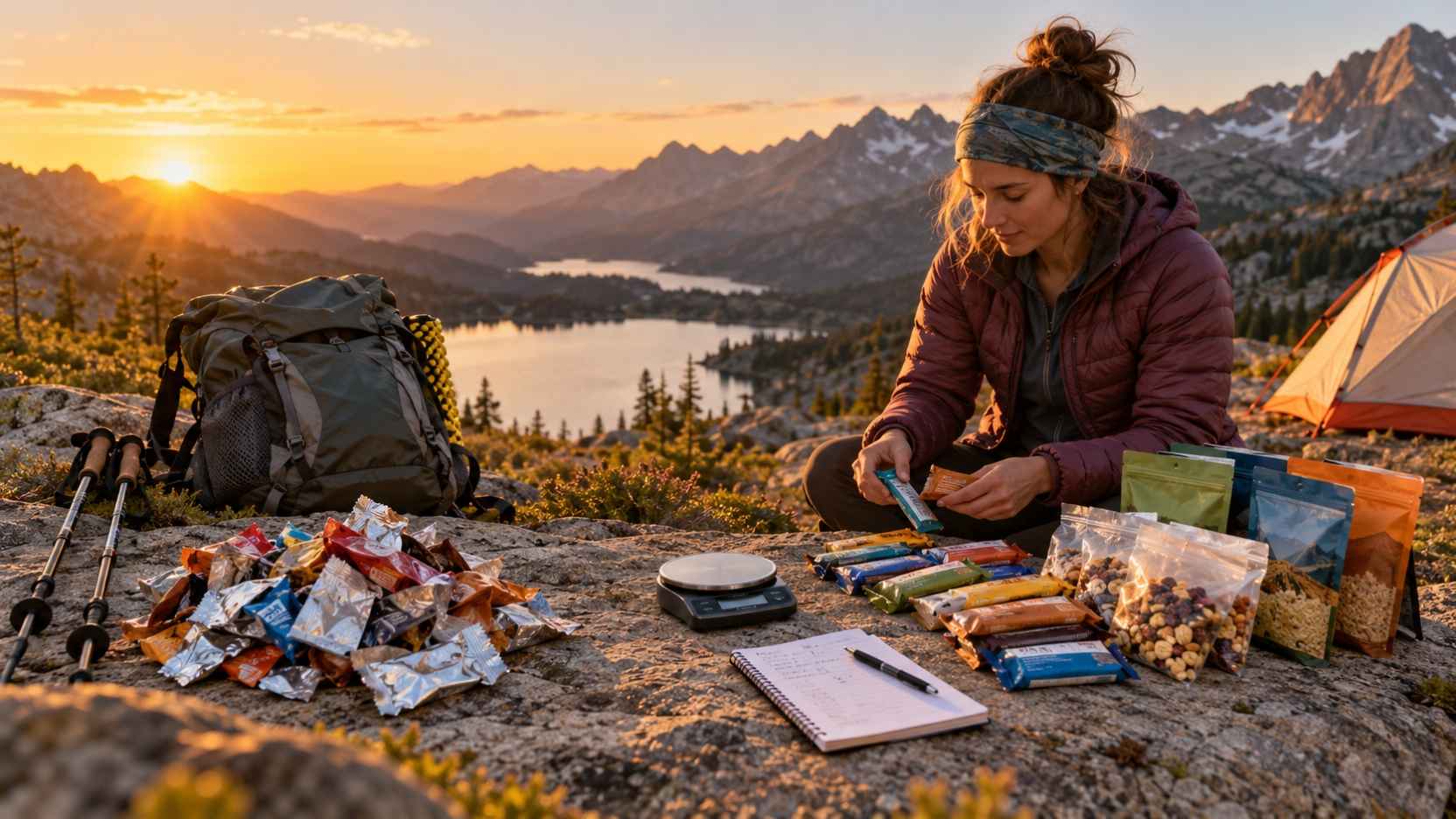
A simple strategy is to divide food into approach food, climbing food, summit food, and reserve food before leaving camp. The most accessible locations should contain the items you expect to eat while moving or during short stops, while larger meals and backup supplies can remain deeper in the pack. This approach also reduces the temptation to consume all your convenient snacks early and discover later that your remaining food requires lengthy unpacking or preparation.
Don’t Sacrifice Equipment Security For Snack Convenience
Accessibility matters, but food organization should never interfere with ropes, avalanche equipment, ice tools, first-aid supplies, navigation equipment, or other safety-critical gear. ⚠️ Stuffing snacks randomly into equipment loops or unsecured outer pockets can create another problem if packaging falls out, catches on equipment, or makes important gear harder to access. Food should be convenient without compromising the organization of the climbing system.
Consider creating one predictable location for active snacks so you always know where to reach rather than searching several pockets with insulated hands. On a technical section where eating would be unsafe or impractical, wait until an appropriate stopping point rather than treating snack accessibility as permission to multitask during climbing maneuvers. Fueling strategy should support the climb, not distract from safe movement and equipment handling.
The Cold-Weather Snack Test
Before your trip, place several candidate snacks in a refrigerator, freezer-adjacent cold environment, or safely outdoors when conditions are suitably cold, then test them wearing the exact gloves you expect to use. ❄️ Start a timer only if you want to compare options, but the more important questions are straightforward: Can you find the package, open it, eat the food, close or store the waste, and complete the process without removing your gloves? Also check whether the food becomes painfully hard, excessively sticky, crumbly, or otherwise unpleasant.
Repeat the test with thicker mittens if those are part of your backup cold-weather system because a snack that works beautifully with liner gloves may become almost impossible with expedition-style hand protection. Testing also reveals small problems that nutrition labels never show, such as tear strips that separate incorrectly, resealable pouches that require two precise fingers, or wrappers that produce tiny pieces of trash. 🏔️ Those seemingly trivial details can become surprisingly important during a cold, windy summit day.
Build A Two-Level Snack System
One practical solution is to carry primary snacks that are exceptionally easy to access plus secondary snacks that provide additional calories when you have time for a proper break. Primary options might include a prepared trail-mix pouch, larger dried-fruit pieces, bite-size foods that remain edible in the cold, or another personally tested format. Secondary foods can include wrapped bars, sandwiches, or items that require more deliberate handling but offer variety and additional nutrition.
This removes the pressure for every food item to satisfy every requirement simultaneously. 🥜 Your easiest snack does not have to be your most calorie-dense food, and your highest-calorie food does not have to be something you can eat while wearing the bulkiest mittens. Instead, the total food system can balance carbohydrates, calories per ounce, accessibility, flavor, texture, packaging, and the expected opportunities to stop.
The Summit Snack Mistake Is Testing Nutrition But Not Usability
Most climbers would never take unfamiliar boots, crampons, or gloves onto an important climb without checking whether they function properly, yet food often receives far less practical testing. A carefully calculated energy bar can provide exactly the calories you wanted and still be practically useless when the wrapper refuses to tear and the frozen bar feels like a brick. 🧤 That is why selecting mountaineering snacks for cold weather should include an accessibility test alongside ordinary nutritional planning.
The lesson is not that energy bars, gels, or chocolate are bad climbing foods, because all of them can work extremely well under appropriate conditions. The lesson is that food accessibility and food quality are separate variables, and a strong summit-food strategy evaluates both before leaving camp. When your next cold-weather climb arrives, ask one more question after checking the calories and carbohydrates: Can I actually eat this while wearing my gloves?