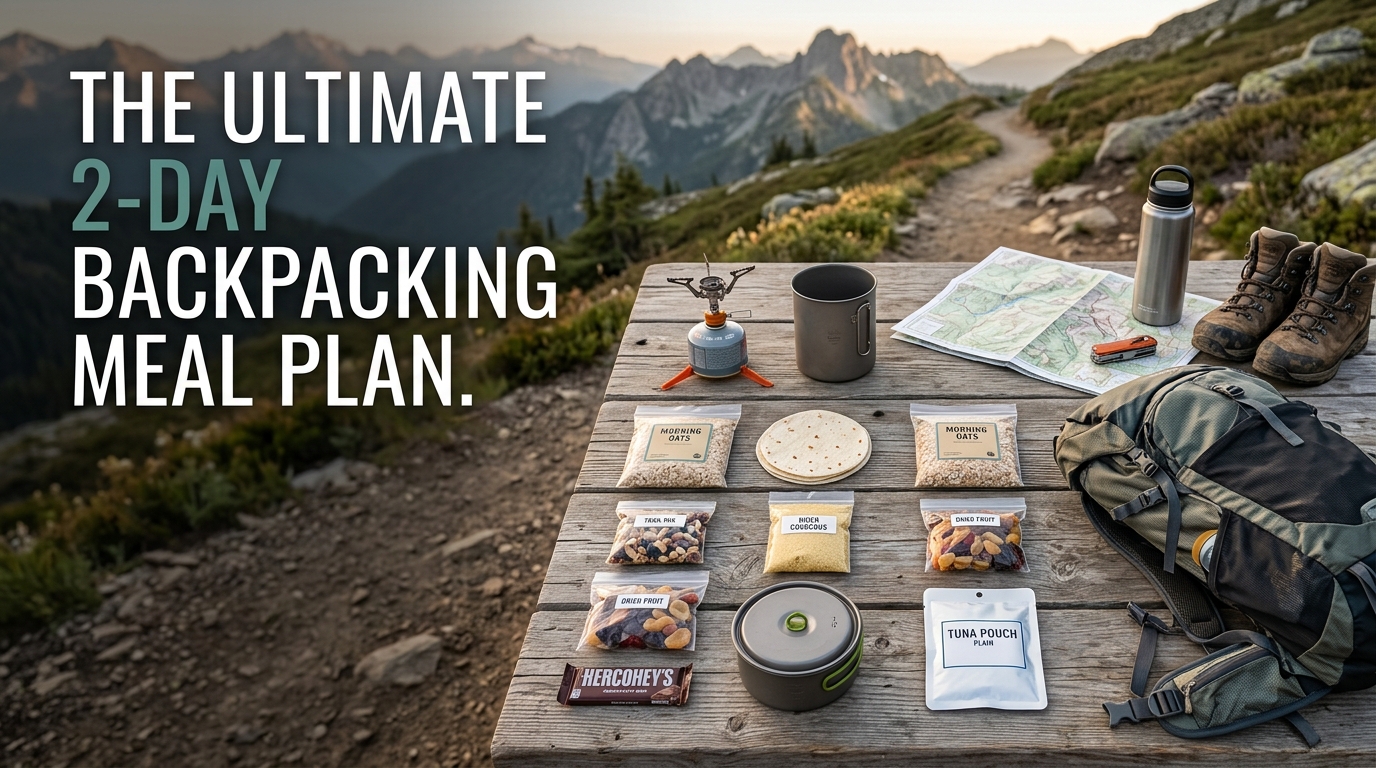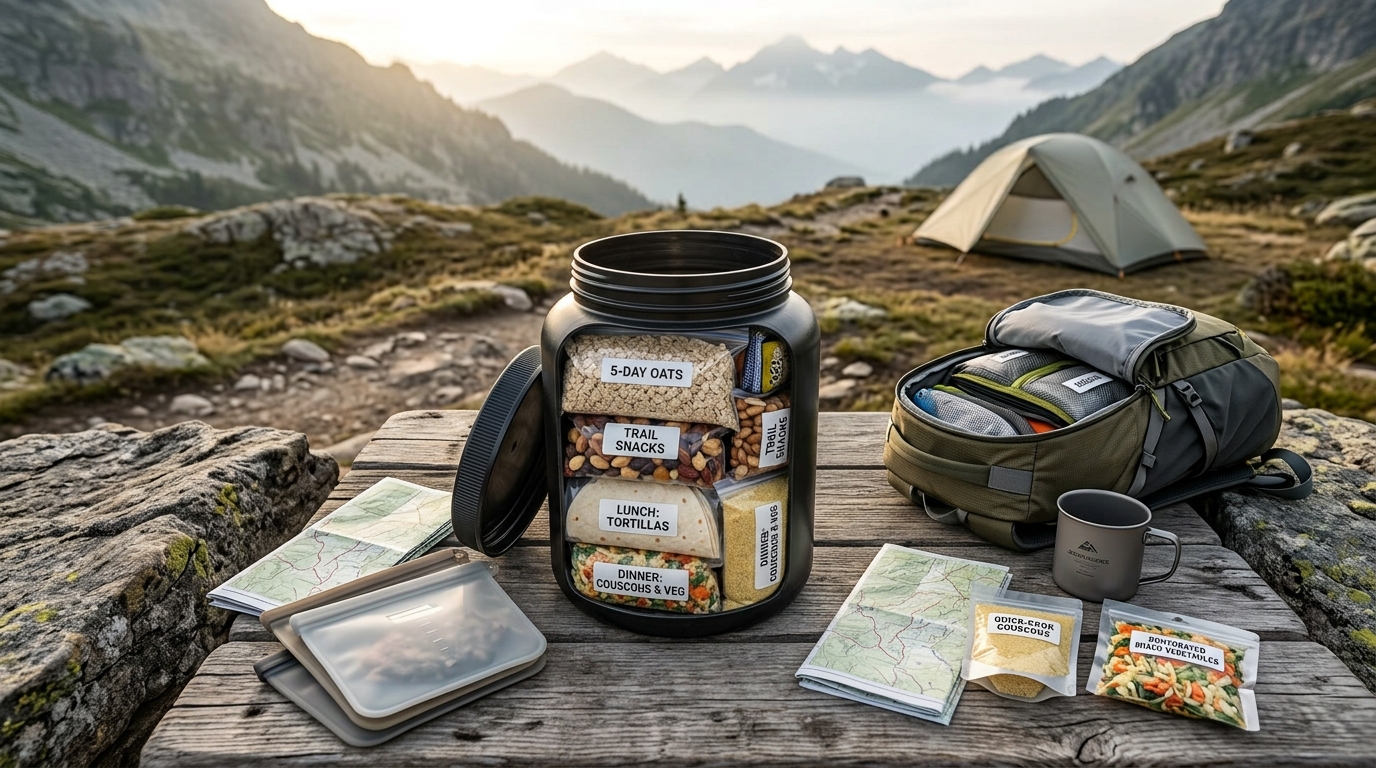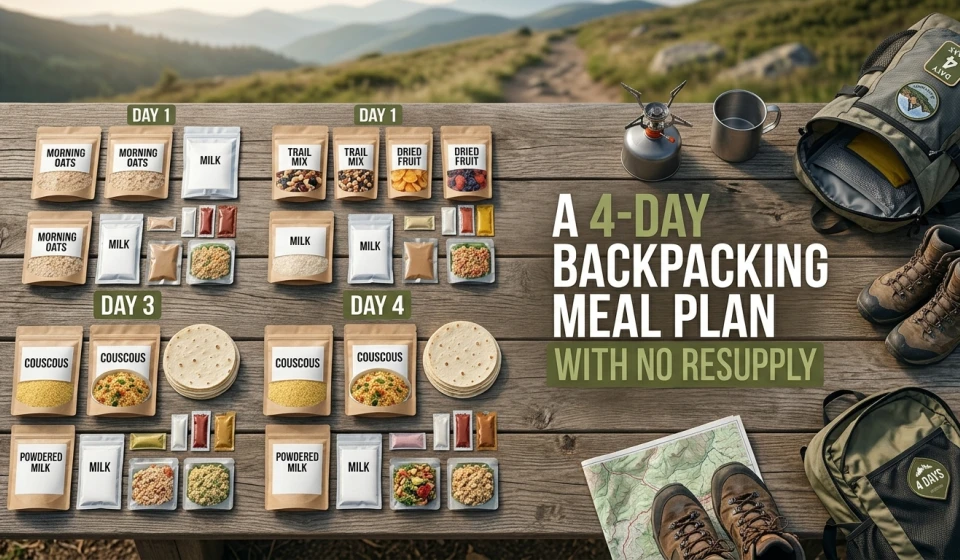
A 4-Day Backpacking Meal Plan With No Resupply and Minimal Food Waste 🥾🌿
Introduction
A four-day backpacking trip without resupply requires more than packing enough food. You need meals that provide energy, fit into your pack, stay safe during the trip, and use ingredients efficiently so you aren’t carrying unnecessary packaging or leftovers.
The key is to plan overlapping ingredients, portion every meal before leaving, and choose foods that are lightweight, shelf-stable, and easy to prepare. Instead of packing four completely different menus, this plan reuses staples such as oats, tortillas, peanut butter, couscous, dried fruit, and trail mix in different combinations.
This guide includes a four-day menu, estimated calories, food weights, a shopping list, and a simple daily packing system for a one-person trip.
🏕️ Planning Assumptions
This plan is designed for:
- Trip length: Four days and three nights, with no resupply.
- Hiker: One adult.
- Activity: Moderate hiking, with food needs depending on body size, elevation gain, pace, weather, and pack weight.
- Cooking: A small backpacking stove and pot for hot meals, with safe water available and treated as necessary.
- Food storage: Mostly shelf-stable foods stored in sealed, moisture-resistant bags and protected from animals.
- Waste goal: Minimal packaging and leftovers, while still packing enough food for the planned activity.
The calorie, weight, and cost figures are estimates. They should be recalculated using the actual brands and portions you buy.
🍽️ The 4-Day Menu
The menu targets approximately 2,400–2,600 calories per day as a planning example. This may be too little or more than enough for a particular hiker, especially on strenuous routes. Adjust portions to your needs rather than treating the numbers as a universal target.
Day 1: Easy Start
| Meal | Menu | Estimated calories |
|---|---|---|
| Breakfast | Oatmeal, powdered milk, raisins, peanut butter | 600 |
| Lunch | Tortillas with peanut butter and honey | 600 |
| Snack | Trail mix | 350 |
| Dinner | Couscous, olive oil, dried vegetables, tuna pouch | 700 |
| Evening snack | Dark chocolate | 150 |
| Daily total | 2,400 kcal |
Day 2: Familiar Favorites
| Meal | Menu | Estimated calories |
|---|---|---|
| Breakfast | Oatmeal, powdered milk, peanut butter | 600 |
| Lunch | Tortillas with peanut butter and dried fruit | 600 |
| Snack | Trail mix and chocolate | 400 |
| Dinner | Couscous, dried vegetables, olive oil, tuna pouch | 750 |
| Evening snack | Dried fruit | 150 |
| Daily total | 2,500 kcal |
Day 3: Mid-Trip Fuel
| Meal | Menu | Estimated calories |
|---|---|---|
| Breakfast | Oatmeal, powdered milk, raisins, peanut butter | 600 |
| Lunch | Tortillas with hard cheese and suitable shelf-stable protein | 650 |
| Snack | Trail mix | 350 |
| Dinner | Couscous, olive oil, dried vegetables, tuna pouch | 750 |
| Evening snack | Dark chocolate | 150 |
| Daily total | 2,500 kcal |
Day 4: Finish Strong
| Meal | Menu | Estimated calories |
|---|---|---|
| Breakfast | Oatmeal, powdered milk, peanut butter | 600 |
| Lunch | Tortillas with peanut butter and honey | 600 |
| Snack | Trail mix and dried fruit | 400 |
| Early dinner or substantial trail meal | Remaining couscous meal with olive oil and dried vegetables | 750 |
| Evening snack | Dark chocolate | 150 |
| Daily total | 2,500 kcal |
Important: The menus are planning examples, not laboratory-verified nutrition totals. Actual calories depend on portion sizes and product labels. If you expect a full fourth day of hiking, keep the Day 4 dinner or equivalent food available until you are confident you will not need it. Do not assume you can finish early.
⚖️ How Much Food Should You Pack?
A four-day menu with roughly 2,400–2,500 calories per day often requires more than a kilogram of food per day, depending on food choices. Very energy-dense foods can reduce weight, but a menu that looks light on paper may not provide enough calories.
Use the table below as an initial planning estimate, then weigh and calculate your own portions.
| Food category | Approximate quantity for 4 days | Estimated packed weight |
|---|---|---|
| Oats | 4 breakfast portions | 240 g |
| Powdered milk | 4 portions | 80 g |
| Peanut butter | Breakfasts and lunches | 300 g |
| Tortillas | About 8–10, depending on size | 400 g |
| Couscous, dry | 4 dinner portions | 320 g |
| Dried vegetables | 4 portions | 80 g |
| Olive oil | 4 small portions | 80 g |
| Tuna or other suitable protein pouches | 3–4 portions | 300 g |
| Trail mix | 4 snack portions | 320 g |
| Raisins or other dried fruit | Multiple portions | 160 g |
| Honey | Small portions | 80 g |
| Dark chocolate | 4 portions | 100 g |
| Estimated total | 2.46 kg |
This is a rough ingredient inventory, not a verified match to the menu’s daily calorie totals. Tortilla size, protein packaging, and portion choices can change the total substantially. The menu and inventory should be reconciled using actual product labels before the trip.
At approximately 2.46 kg over four days, this example works out to about 615 g of food per day. That is relatively compact, so verify that your actual portions supply enough energy. Add food if needed, and keep a sensible contingency for delays or unexpected exertion.
🛒 Shopping List
For one person, start with these ingredients and adjust quantities based on your portion calculations.
- Oats
- Powdered milk
- Peanut butter
- Tortillas
- Couscous
- Dried vegetables
- Olive oil
- Tuna pouches or another suitable protein
- Trail mix
- Raisins or other dried fruit
- Honey
- Dark chocolate
- Hard cheese or a suitable shelf-stable alternative, if included in your final menu
- Small resealable food bags or reusable food containers
- Labels or a permanent marker
💰 Estimate the Cost Before You Shop
Food costs depend on your location, brands, package sizes, and how many pantry items you already own. Rather than relying on a universal price, add the prices of the packages you will buy and divide shared ingredients by the portions used.
A simple cost worksheet can include:
| Item | Package price | Amount used | Estimated trip cost |
|---|---|---|---|
| Oats | Your local price | Portion used | Calculate |
| Peanut butter | Your local price | Portion used | Calculate |
| Tortillas | Your local price | Portion used | Calculate |
| Couscous | Your local price | Portion used | Calculate |
| Snacks and protein | Your local price | Portion used | Calculate |
This approach separates the checkout cost from the value of the food actually consumed. It also helps you identify ingredients you can use again at home instead of buying specialty meals for every trip.
♻️ How to Reuse Ingredients Without Getting Bored
Ingredient overlap makes a no-resupply menu easier to pack and manage.
- Oats: Use them as the base for every breakfast, then change the flavor with raisins, powdered milk, or peanut butter.
- Tortillas: Rotate between sweet fillings such as peanut butter and honey and savory fillings that are safe to store.
- Couscous: Pair it with dried vegetables, olive oil, and protein for a quick hot dinner.
- Trail mix: Portion it into daily snack bags instead of carrying one large bag that can be difficult to manage.
- Chocolate and dried fruit: Use them as compact snacks or small additions to breakfast.
Reuse ingredients, not unsafe leftovers. Avoid packing foods that require refrigeration unless you can keep them at a safe temperature throughout the trip. In warm weather, hard cheese and some cured meats may not be suitable for prolonged unrefrigerated storage; choose alternatives based on the product’s storage instructions.
🎒 How to Separate Food Into Daily Portions
The easiest way to control food weight and reduce waste is to pack each day separately.
- Calculate each serving at home. Use the nutrition label to record calories and weigh the actual food portion.
- Pack by meal. Put breakfast ingredients together, lunch ingredients together, and dinner ingredients in their own bags.
- Label every bag. Mark it with the day and meal, such as “Day 2 — Breakfast.”
- Keep snacks accessible. Store that day’s trail mix and energy snacks where you can reach them without unpacking your entire bag.
- Separate cooking ingredients. Measure olive oil into leakproof containers and keep dry ingredients away from moisture.
- Keep emergency food separate. Carry a reasonable reserve for delays, route changes, or extra exertion rather than counting every last snack as part of your planned menu.
Final Thoughts 🌲
A four-day backpacking trip without resupply becomes much easier when you plan around a small group of versatile ingredients, calculate portions before leaving home, and organize food by day. You can reduce packaging and avoid unnecessary leftovers without sacrificing variety or energy.
Before setting out, verify the calories and weights using your actual products, check food-storage requirements for your route, and make sure your water supply and treatment plan are adequate. Pack for the hike you are actually doing, not simply for the lightest possible food bag.