Knorr Sides vs. Instant Potatoes vs. Couscous: Best Trail Meal Base? 🏕️
Introduction
When planning backpacking meals, choosing the right base can make a real difference. You want food that is affordable, lightweight, easy to prepare, and satisfying after a long day on the trail.
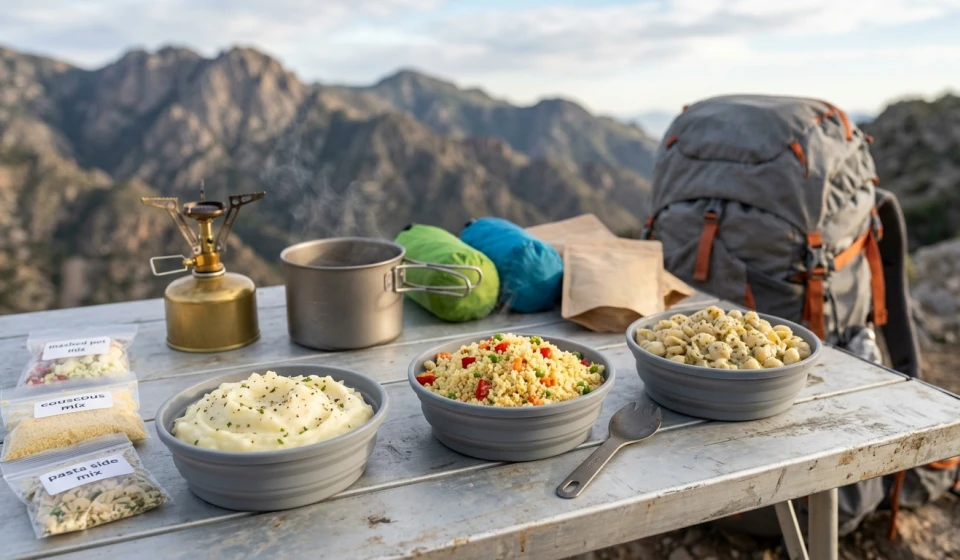
Three popular options are boxed flavored rice or pasta sides, instant mashed potatoes, and couscous. Each has advantages: instant potatoes are quick to rehydrate, couscous needs little cooking, and packaged sides offer convenient seasoning in one product.
But which is best for backpacking?
The answer depends on more than the grocery-store price. You also need to consider calories per ounce, package weight, preparation requirements, serving size, fuel use, and how much extra food you need to add to make a satisfying meal.
The key takeaway: instant potatoes often win for speed, couscous is a flexible option for low-fuel meals, and boxed sides can be appealing when flavor and convenience matter most.
1. The Three Trail Meal Bases
🥔 Instant Mashed Potatoes
Instant potatoes are made from cooked potatoes that have been processed and dried. They rehydrate quickly with hot water and can create a filling base for a trail meal.
Why they work on the trail:
- Usually very quick to prepare.
- Easy to combine with cheese, powdered milk, tuna, chicken, or dehydrated vegetables.
- Can be portioned from a larger package into individual meals.
- Often widely available at grocery stores.
Potential drawbacks: The texture can become gluey if too much water is added or the potatoes are stirred excessively. Plain potato flakes may also need extra ingredients for flavor and a more balanced meal.
Best for: Cold evenings, quick dinners, and meals where minimizing cooking time matters.
🍚 Knorr Sides
Knorr Sides products include flavored rice and pasta mixes. They offer seasoning and a starch base in one package, which can simplify meal planning.
Why they work on the trail:
- Seasoning is already included.
- They offer familiar flavors and variety.
- They can pair well with shelf-stable chicken, tuna, or dehydrated vegetables.
- They are convenient when you do not want to carry separate spices.
Potential drawbacks: Preparation varies by product. Some varieties require simmering rather than simple soaking, which can increase fuel use and cooking time. The original package may also contain multiple servings, so check the label before dividing it into backpacking portions.
Best for: Hikers who prioritize flavor variety and are willing to spend extra time cooking when needed.
🌾 Couscous
Couscous is a small pasta product, commonly made from semolina wheat. Many instant varieties can be prepared by adding boiling water, covering, and allowing them to stand.
Why it works on the trail:
- Quick to prepare when using an instant variety.
- Easy to portion into individual meals.
- Works with Mediterranean, curry, tomato, and herb-based flavors.
- Combines well with olive oil, beans, tuna, or dehydrated vegetables.
Potential drawbacks: Couscous is made from wheat and is not suitable for a gluten-free diet unless the product is specifically labeled gluten-free. Plain couscous also needs seasoning and additional ingredients to become a complete, satisfying meal.
Best for: Lightweight meals, low-fuel cooking, and hikers who like to customize their food.
2. Trail Meal Comparison: Time, Weight, Calories, and Cost
The following comparison uses practical, approximate portions for one meal base. These are planning estimates, not universal product specifications. Exact values depend on the brand, flavor, recipe, and portion you choose.
| Meal base | Example dry portion | Approx. calories | Preparation time | Water and fuel |
|---|---|---|---|---|
| Knorr Sides | 60 g | 220–230 | Often about 7 minutes of simmering for rice varieties | Usually needs simmering |
| Instant potatoes | 60–70 g | Varies by product; check label | Usually a few minutes after water boils | Often works with hot-water rehydration |
| Plain instant couscous | 75 g | About 280 | Often 5–10 minutes, including standing time | Usually needs boiling water, then resting |
Knorr Rice Sides lists roughly 220–230 calories per ½ cup of dry mix, with stovetop instructions that include about seven minutes of simmering.
directionsforme.org
+1 USDA food data confirms that dry couscous is calorie-dense, but the exact calories in a portion depend on its dry weight.
USDA ARS
Important: The weights above refer to the dry base only, not the finished meal. Add-ins such as olive oil, cheese, beans, or chicken increase both calories and packed weight. Preparation times also depend on the exact product and the method you use.
What about cost per serving?
Prices vary by store, location, package size, and sale. Rather than assuming one universal price, calculate the cost of the amount you actually use:
Cost per meal = package price × portion weight ÷ package weight
For example, if a 150 g package costs $2.00 and you use 60 g, the base costs $0.80 per meal. This is an illustrative calculation, not a current store price.
For instant potatoes and couscous, use the same formula with the package’s net weight and the dry portion you plan to carry. Compare cost per meal rather than package price alone.
3. Build One Trail Meal From Each Base
A meal base is only part of the equation. For backpacking, you also want enough energy and a mix of ingredients that make dinner satisfying after a demanding day.
🥔 Sample Meal 1: Cheesy Potato Bowl
Ingredients
- 60–70 g instant potato flakes
- 25 g powdered cheese or Parmesan
- 20 g powdered milk, optional
- 1 tablespoon olive oil
- Garlic powder and black pepper
Preparation: Add the potato flakes and dry seasonings to your meal container. Add the amount of hot water recommended by the potato product, stir gently, and let the mixture thicken. Finish with the cheese and olive oil.
Why it works: This is a quick, comforting meal with very little active cooking. Olive oil adds energy without much extra weight, while cheese contributes flavor and some protein.
Best situation: A late arrival at camp, cold evenings, or trips where you want to conserve fuel and minimize cleanup.
🍚 Sample Meal 2: Knorr Sides With Chicken
Ingredients
- One planned portion of Knorr Rice or Pasta Sides
- A shelf-stable or dehydrated chicken portion
- Dehydrated vegetables, optional
- Water as directed by the package
Preparation: Follow the instructions for your specific Knorr variety. Add chicken and vegetables only in a form that is safe for backpacking and suitable for the preparation method. Dehydrated ingredients may need extra soaking or cooking time.
Why it works: The seasoning is already included, so you do not need to carry as many separate spices. The chicken adds protein, making the meal more substantial than the base alone.
Best situation: Hikers who enjoy flavored rice or pasta and are comfortable simmering food for several minutes.
Trail caution: Do not assume every Knorr variety can be prepared by simply pouring in hot water. Check the package instructions and test any alternative method at home first.
🌾 Sample Meal 3: Lemon-Herb Couscous Bowl
Ingredients
- 75 g instant couscous
- 20 g olive oil or a suitable single-serving oil portion
- 25–30 g dehydrated chickpeas or another suitable protein
- Dehydrated tomatoes or vegetables
- Lemon-pepper seasoning or dried herbs
Preparation: Put the couscous, vegetables, and seasonings into a heat-safe container. Add the quantity of boiling water specified for your couscous, cover, and allow it to stand until tender. Add the protein according to its preparation instructions, then stir in the olive oil.
Why it works: Couscous is easy to portion, absorbs flavor well, and generally needs little active cooking when using an instant variety.
Best situation: Warm-weather trips, low-fuel meal plans, and hikers who like Mediterranean-style flavors.
For all three meals, check the calories and serving sizes on your actual ingredients. The sample recipes are starting points, not fixed nutrition totals.
4. Which Base Wins Under Different Trail Conditions?
There is no single winner for every trip. Your cooking system, water availability, appetite, and menu plan all affect the best choice.
| Trail condition | Best starting choice | Why |
|---|---|---|
| Fast dinner after a long hike | Instant potatoes | Rehydrates quickly with hot water |
| Minimal active cooking | Instant couscous | Usually needs only boiling water and resting time |
| Strong built-in flavor | Knorr Sides | Seasoning comes with the mix |
| Lowest grocery cost | Compare local prices | Package sizes and prices vary |
| High-calorie meal plan | Any of the three | Add oil and suitable protein, then calculate the full meal |
| Cold-weather dinner | Potatoes or a hot Knorr meal | Both can make a warm, comforting bowl |
| Stove-free or cold-soak trip | Test potatoes or couscous first | Rehydration results depend on the product, water temperature, and waiting time |
Cold soaking deserves special attention. Backpacking tests have found that instant potatoes and couscous can rehydrate with room-temperature water, while Knorr Sides may require much longer. Results vary with conditions, so test your exact recipe before relying on it in the backcountry.
Backpacker
5. Do Not Compare Calories Without Considering the Whole Meal
A lightweight base is useful, but it should not be your only measure of value.
Plain couscous and instant potatoes can provide substantial calories for their dry weight, while flavored sides offer built-in seasoning. However, the best trail meal is one that provides enough energy, tastes good to you, and is practical to prepare.
To improve any of these bases:
- Add olive oil for extra calories with relatively little weight.
- Include dehydrated beans, chicken, or another suitable protein.
- Add dried vegetables for variety and texture.
- Pack seasonings separately if you want to control flavor and sodium.
- Record the actual dry weight and nutrition information of your finished meal.
Remember that a serving on the package may be smaller than the dinner you want after a demanding day. Plan your portions according to your energy needs rather than assuming one labeled serving is enough. Backpacking food guides also emphasize comparing calories against carried weight when building a menu.
Get There From Anywhere
+1
6. Final Verdict: Which Should You Pack?
🥔 Choose instant potatoes when speed, comfort, and easy preparation are your priorities.
🌾 Choose couscous when you want a flexible meal base that is quick to portion and usually needs little active cooking.
🍚 Choose Knorr Sides when you want built-in flavor and do not mind following the product’s cooking instructions.
For many backpackers, a mix of all three is more useful than committing to just one. Potatoes can provide a quick first-night dinner, couscous can fill low-fuel meals, and a flavored side can add variety later in the trip.
Before leaving, prepare each recipe at home. Measure the dry ingredients, note the water required, check the final calories and weight, and make sure you enjoy the taste.
The smartest trail meal is not simply the cheapest or lightest one. It is the meal that delivers the right balance of energy, flavor, weight, and preparation effort for your particular trip.