Cheap Vegetarian Backpacking Meals That Don’t Depend on Expensive Specialty Products 🥾🌱
Introduction
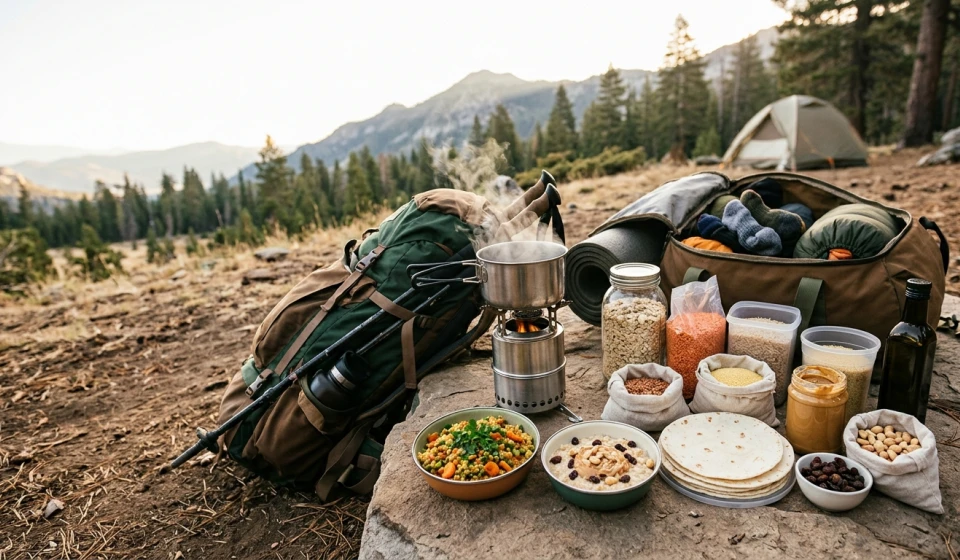
Vegetarian backpacking meals do not have to come in expensive freeze-dried pouches. With ordinary groceries such as oats, lentils, rice, couscous, peanut butter, tortillas, and peanuts, you can build filling trail meals without buying specialty camping food.
The secret is to plan around calories, protein, food weight, and cooking time. Grains provide affordable energy, legumes add protein and fiber, and nuts, seeds, and oil increase calories without requiring a large amount of extra food.
This three-day menu is designed for one vegetarian backpacker. It uses shelf-stable ingredients, simple seasonings, and meals that can be prepared with boiling water or a small backpacking stove.
🛒 The budget-friendly shopping list
Start with everyday foods available in most supermarkets.
- Grains: rolled oats, rice, couscous, and instant potato flakes
- Legumes: dried lentils
- Protein and fats: peanut butter, peanuts, and cashews
- Easy carbohydrates: flour tortillas, raisins, and instant ramen
- Flavor boosters: olive oil, bouillon, curry powder, garlic powder, soy sauce, or chili seasoning
Buying larger packages and portioning food at home can reduce the cost per meal. As one US price reference, a recent budget grocery comparison listed oats at $3.99 for 42 ounces, peanut butter at $1.49 for 16 ounces, and dried lentils at $1.92 per pound. Your local prices may differ.
🍽️ Three-day vegetarian backpacking menu
The figures below are estimates for one person, using dry ingredient weights before adding water. Costs use a budget-oriented US grocery model, including approximate prices for some ingredients where prices vary by brand.
Day 1: Peanut butter oats and lentil couscous
Breakfast: Peanut butter and raisin oatmeal
- 100 g rolled oats
- 25 g peanut butter
- 20 g raisins
- 10 g chia seeds
Add hot water and stir until creamy. Adjust the water to your preferred consistency.
Lunch: Lentil and peanut-butter tortilla wraps
- 2 small flour tortillas, about 90 g total
- 40 g dried lentils
- 30 g peanuts
- 25 g peanut butter
- 10 g olive oil
Cook the lentils thoroughly at home or on the trail. Mix the peanut butter with a little warm water and seasoning to make a simple sauce. Add the lentils and crushed peanuts to the tortillas.
Snack: 30 g peanuts and 25 g raisins.
Dinner: Savory lentil couscous
- 90 g dry couscous
- 40 g dried lentils
- 25 g olive oil
- 5 g bouillon or seasoning
Cook the lentils until tender. Prepare the couscous according to its package instructions, then combine everything with seasoning and oil.
Day 2: Oats, rice, and a warm potato side
Breakfast: Raisin peanut-butter oats
- 90 g rolled oats
- 25 g peanut butter
- 15 g raisins
Lunch: Lentil tortilla wraps
- 2 small flour tortillas, about 90 g total
- 50 g dried lentils
- 25 g peanut butter
- 10 g olive oil
Cook the lentils, then mix the peanut butter with warm water and seasoning to create a quick sauce.
Snack: 60 g peanuts and 15 g raisins.
Dinner: Rice, lentils, and instant potato mash
- 100 g dry rice
- 50 g dried lentils
- 50 g instant potato flakes
- 30 g olive oil
- 5 g bouillon or seasoning
Cook the rice and lentils until fully tender. Prepare the potato flakes separately with hot water, then add some of the oil and seasoning. This meal is more practical when you have enough fuel and water to cook the grains properly.
Day 3: Peanut-butter oats and savory ramen
Breakfast: High-energy oatmeal
- 100 g rolled oats
- 50 g peanut butter
- 25 g raisins
Lunch: Lentil ramen bowl
- 85 g instant ramen
- 45 g dried lentils
- 10 g olive oil
- 5 g bouillon or seasoning
Cook the lentils until tender and add the ramen according to its package directions. Use only as much seasoning as you prefer, since some ramen packets are high in sodium.
Snack: 20 g cashews.
Dinner: Couscous with lentils and tortilla
- 100 g dry couscous
- 45 g dried lentils
- 45 g flour tortilla
- 30 g olive oil
Prepare the couscous and lentils, combine with oil and seasonings, and eat with the tortilla.
📊 Daily nutrition, cost, and food weight
| Day | Calories | Protein | Fiber | Food weight | Estimated cost |
|---|---|---|---|---|---|
| Day 1 | 2,405 kcal | 83 g | 43 g | 565 g | $2.50 |
| Day 2 | 2,594 kcal | 84 g | 40 g | 615 g | $2.50 |
| Day 3 | 2,427 kcal | 77 g | 36 g | 560 g | $2.40 |
| 3-day total | 7,426 kcal | 244 g | 119 g | 1.74 kg | $7.40 |
Important: These are planning estimates, not laboratory-tested nutrition figures or guaranteed checkout prices. They are calculated from typical ingredient nutrition values and budget price assumptions. The grocery reference and nutrition data for oats and lentils provide useful starting points, but actual labels should be used for your specific products.
The daily calories may be too low for some long or strenuous hiking days. Individual needs depend on body size, terrain, weather, pace, and pack weight. Increase portions or add snacks if your planned energy needs are higher.
💡 How to make the menu cheaper and easier
1. Buy ingredients you will use at home, too. Oats, rice, lentils, peanut butter, and oil are useful beyond backpacking, so you do not have to invest in specialty products for a single trip.
2. Pre-portion meals. Measure ingredients into labeled bags at home. Include cooking instructions and the amount of water needed when known. This makes camp preparation easier and reduces the temptation to pack too much.
3. Use oil strategically. Olive oil is calorie-dense and adds energy without much carried weight. Pack it in a leakproof container and add it to meals after cooking.
4. Reduce cooking time. Couscous and instant potato flakes are convenient because they need less cooking than many whole grains. Lentils and rice require more fuel and water, so consider cooking them at home and dehydrating them only if you have a safe, reliable food-drying process.
5. Adapt the plan to your appetite. The menu is relatively high in fiber. If you do not usually eat many legumes, seeds, and whole grains, reduce the portions initially and test the menu before your trip. A sudden increase in fiber can cause gas or digestive discomfort.
🏕️ Food safety and packing tips
- Keep food sealed and protected from wildlife according to the rules of the area you are visiting.
- Carry enough water and fuel to cook dried lentils and rice thoroughly. Do not assume that soaking alone makes them ready to eat.
- Keep oils and nut butters in leakproof containers.
- Check labels for allergens and dietary suitability. Some ramen seasonings contain animal-derived ingredients, so choose a vegetarian product if needed.
- Pack out wrappers and food scraps, and follow local food-storage requirements.
Final thoughts
Affordable vegetarian backpacking is mostly a planning challenge, not a specialty-product challenge. Oats, lentils, rice, couscous, tortillas, peanut butter, and peanuts can form a flexible foundation for filling trail meals at a modest estimated cost.
Before committing to a multi-day trip, test your portions, cooking times, and seasonings at home. Most importantly, treat the numbers as a starting point: your food plan should meet your energy needs, suit your digestion, and work with the water and fuel you can safely carry