Couscous Vs Quinoa Vs Grits Vs Instant Rice: Which Makes The Best Trail Breakfast?
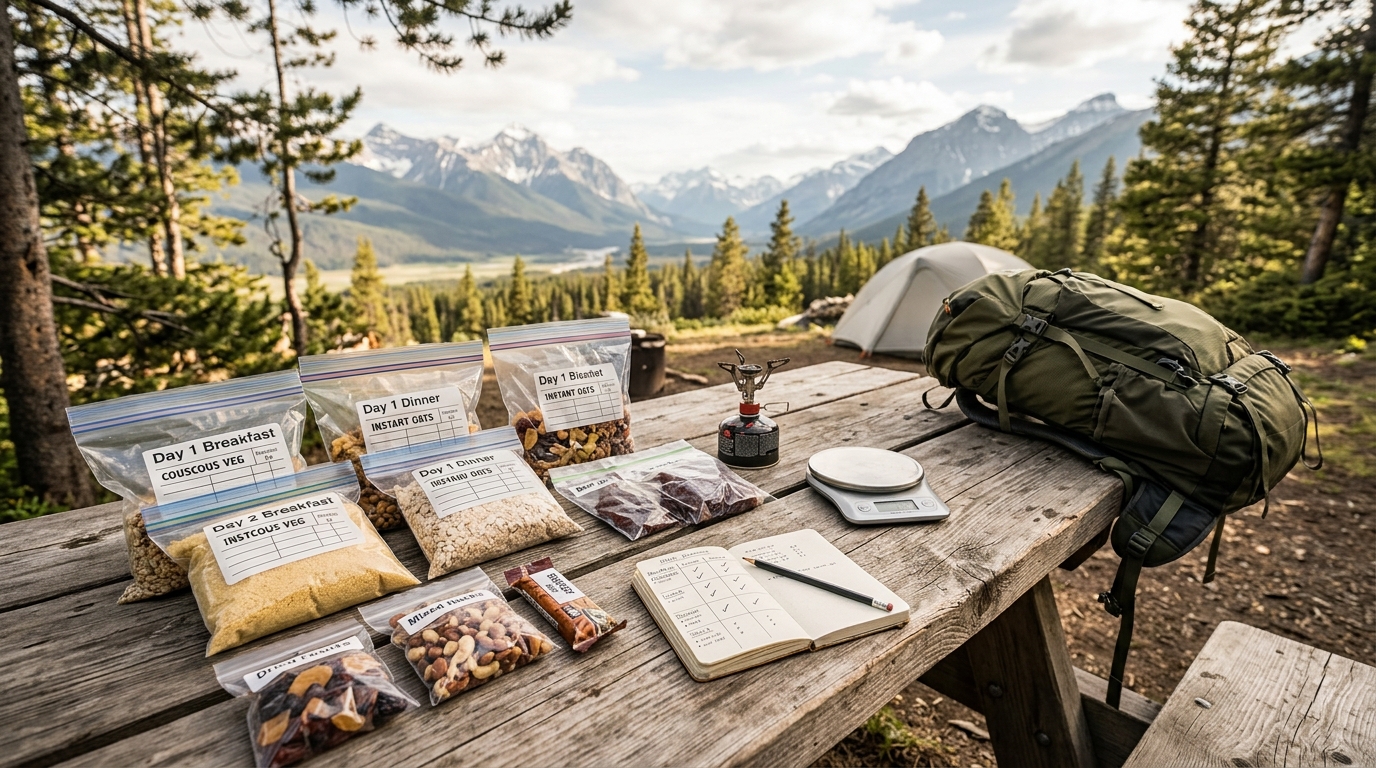
Oatmeal owns the backpacking-breakfast conversation, but it is far from the only lightweight carbohydrate base that can start a morning on the trail. 🥣 Couscous, quinoa, instant grits, and instant rice can all become sweet or savory breakfasts, yet they behave very differently once cooking time, water, stove fuel, texture, and packing convenience enter the calculation. Finding the best grain for backpacking breakfast therefore requires more than comparing nutrition labels.
The interesting part is that dry calorie density does not produce an obvious runaway winner because these foods are all relatively dry carbohydrate-rich staples before preparation. What separates them more dramatically is how much work is required to turn those dry calories into breakfast, especially when the hiker is cold, tired, rationing fuel, or trying to leave camp quickly. ⛺ A breakfast that saves several minutes of simmering can sometimes be more valuable than one with a slightly different nutrient profile.
Why Backpackers Default To Oatmeal
Oatmeal became a trail standard largely because it solves several logistical problems simultaneously: it is lightweight when dry, inexpensive, widely available, easy to portion, and compatible with quick preparation. Add hot water to quick or instant oats and breakfast can be ready with little cleanup, while dried fruit, cinnamon, powdered milk, nuts, seeds, or nut butter can completely change the meal. That combination makes oatmeal convenient, but convenience should not be confused with nutritional magic.
Breakfast fatigue is also real from a menu-planning perspective, even if it is not a medical problem or performance condition. Eating essentially the same sweet oatmeal every morning of a longer trip may make couscous, rice, quinoa, or grits suddenly look much more interesting. 🌄 A good backpacking menu therefore considers not only calories per ounce but also whether the hiker will still want to eat the food on day four.
The Four-Grain Test
Technically, couscous is tiny semolina pasta rather than a whole grain, but it belongs in this test because hikers use it exactly like a lightweight grain base. Quinoa is a seed commonly prepared like a grain, instant rice has already been cooked and dehydrated, and instant grits are finely processed corn designed for rapid preparation. Those differences in processing are important because they determine how readily each food absorbs water on the trail.
For a useful trail comparison, think about the four options like this:
- Couscous: roughly 105–110 dry calories per ounce, very fast hydration, excellent sweet-or-savory flexibility.
- Quinoa: roughly 100–105 dry calories per ounce, more protein and fat than the others, but normally requires considerably more cooking.
- Instant rice: roughly 105–110 dry calories per ounce, fast rehydration, mild flavor, simple packing.
- Instant grits: generally around 100 calories per dry ounce depending on the product, very quick preparation, creamy texture and strong savory potential.
Those calorie figures are intentionally approximate because brands, enrichment, processing, and serving measurements differ. 📊 The important finding is that dry calorie density alone does not separate these foods enough to settle the argument. Cooking efficiency becomes the much more interesting variable.
Calories And Weight Are Surprisingly Close
Imagine carrying three dry ounces of each breakfast base instead of comparing bowls after cooking. Most versions will land somewhere around 300 calories or slightly more, before nuts, oil, dried fruit, powdered milk, seeds, sugar, nutritional yeast, or other additions are included. That means none of these four suddenly delivers twice the calories for the same dry pack weight.
This matters because cooked nutrition tables can be misleading for backpackers when one grain happens to absorb more water than another. 💧 Water adds weight and volume to the prepared bowl but contributes no calories, so comparing 100 grams of cooked quinoa with 100 grams of dry couscous would be meaningless for packing decisions. Compare foods in the condition you actually carry them—dry against dry.
How Much Cooking Does Each Need?
Traditional couscous is the standout for simplicity because it usually needs only boiling water followed by a short covered rest rather than an extended simmer. Instant rice is similarly convenient because precooking and dehydration allow it to rehydrate rapidly, while instant grits are specifically processed to soften quickly with hot water or brief cooking. 🔥 All three therefore work well when reducing stove-on time is a priority.
Standard dry quinoa is the outlier because it normally requires a real simmer rather than a quick soak in freshly boiled water. Depending on the product and method, preparing it can require roughly 15 minutes or more, which means additional stove time, attention, and fuel compared with couscous or instant products. Pre-cooked dehydrated quinoa can change that equation, but ordinary raw quinoa should not be treated as though it were instant couscous.
Stove Fuel Can Change The Ranking
Saving five or ten minutes might sound trivial in a home kitchen, but trail cooking converts minutes into fuel use. A meal that requires prolonged boiling forces the stove to remain active, while a meal that only requires bringing water to a boil can continue hydrating after the flame is turned off. ⛽ Over several breakfasts, that difference can influence how much fuel a backpacker needs to carry.
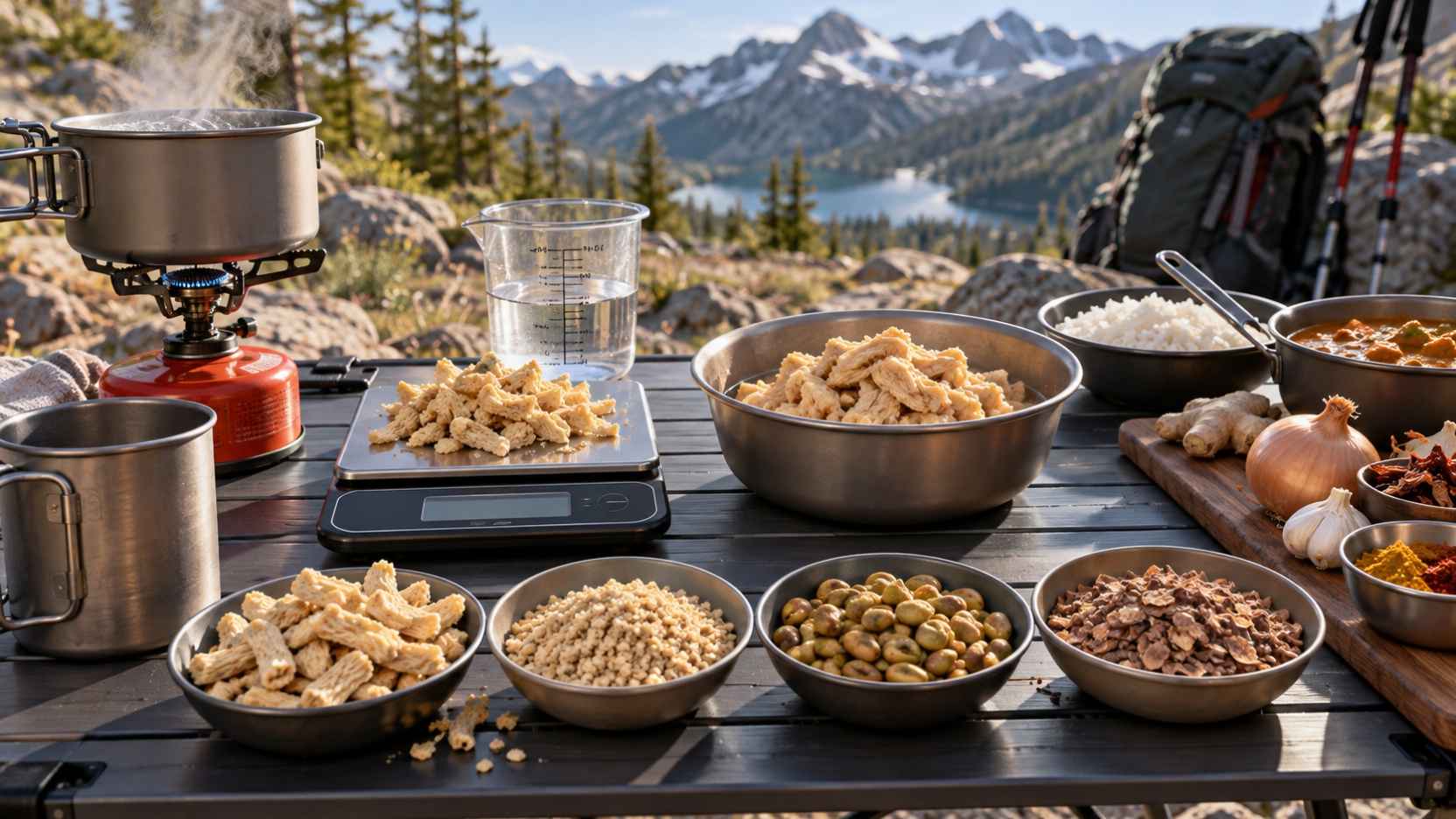
Actual fuel consumption cannot be assigned one universal number because stove design, pot size, wind, temperature, altitude, water temperature, and technique all influence efficiency. Using a lid, shielding a stove appropriately according to its design, and allowing food to finish hydrating off the flame can reduce unnecessary burn time. From a trail-cooking-efficiency perspective, couscous, instant rice, and instant grits therefore have an obvious advantage over conventional quinoa.
The Sweet Breakfast Test
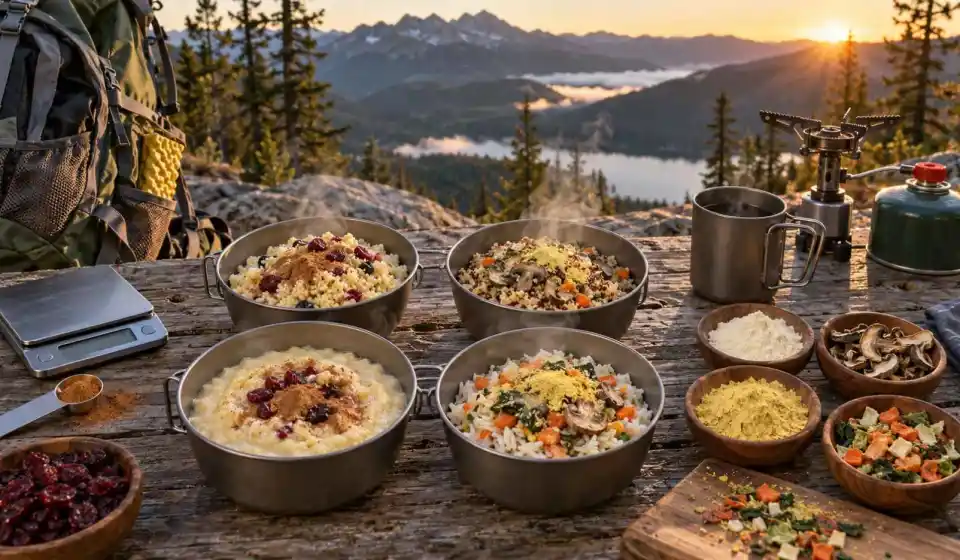
Couscous is unexpectedly good at moving into oatmeal territory because its mild flavor accepts cinnamon, raisins, dried berries, powdered plant milk, chopped nuts, seeds, sugar, or maple-flavored additions without becoming strongly savory. 🍓 Its small particles hydrate quickly, creating a soft breakfast that feels different from oats while using many of the same lightweight pantry ingredients. For hikers bored with oatmeal, sweet breakfast couscous may be the easiest direct substitution.
Instant rice also handles sweet combinations particularly well, especially with powdered coconut milk, cinnamon, dried fruit, nuts, or a little sugar for a trail version of rice pudding. Quinoa can work with similar ingredients but keeps a more distinctive flavor and texture, while grits are possible in sweet preparations even though many hikers will naturally associate them with savory combinations. The winner here depends heavily on preference, but couscous and instant rice offer the most neutral canvases.
The Savory Breakfast Test
Savory breakfast changes the competition because all four bases become vehicles for ingredients such as dried mushrooms, miso powder, nutritional yeast, dehydrated vegetables, garlic, chili, herbs, or seasoning blends. 🍄 Couscous absorbs those flavors especially well, while grits can create a comforting creamy breakfast with nutritional yeast, spices, or dehydrated vegetables. Instant rice works almost anywhere because its mild flavor rarely competes with the seasoning.
Quinoa arguably feels most like a substantial standalone grain bowl because its texture remains distinct rather than becoming creamy or pasta-like. Still, the goal is not to label one option “healthier” simply because it has a different nutrient profile; breakfast must fit the rest of the hiker’s complete food plan. For vegan trail grains and plant-based breakfasts, all four plain bases can work, although couscous contains wheat and therefore is not suitable for someone who needs to avoid gluten.
Texture After Rehydration Matters More Than Expected
A technically efficient breakfast is not very useful if its texture becomes unpleasant after trail preparation. Couscous tends to remain fluffy when the water ratio is controlled, whereas too much water can make it soft and clumpy; instant rice can become either firm or mushy depending on hydration time. Grits intentionally become creamy, which is either a major advantage or exactly what a hiker is trying to escape after eating oatmeal repeatedly.
Quinoa retains a more individual, slightly chewy structure after proper cooking, giving it the clearest textural difference from an oatmeal-style breakfast. 🌾 That can provide valuable menu variety, but you pay for that difference with more preparation time when starting with conventional raw quinoa. Texture is therefore part of trail efficiency because food you genuinely enjoy is easier to build into a repeatable menu.
What About Cold Soaking?
Couscous is the most interesting candidate for hikers experimenting with a stoveless breakfast because its tiny precooked-style semolina granules can soften in cool water given sufficient hydration time. Cold-soaking takes longer than using boiling water and the final texture varies, so it should be tested at home with the exact product and water ratio before relying on it during a trip. 🥄 Instant rice can also soften through soaking, although texture and required time vary substantially among products.
Instant grits may hydrate without prolonged cooking in some formulations, but cold versions will not necessarily reproduce the creamy result people expect from hot grits. Conventional raw quinoa is fundamentally different and should be cooked rather than assumed to become properly prepared through an ordinary cold soak. Hikers interested in quinoa without lengthy trail cooking are better served by commercially precooked/dehydrated quinoa or by cooking and dehydrating their own food using proper food-preservation practices.
Best Grain For A Fast Camp Departure
For a morning when the priority is packing quickly and moving, couscous takes the strongest overall position. ⚡ Bring water to a boil, remove it from the flame, add the couscous according to the product directions, cover, and use the short hydration period to finish packing gear. Instant grits and instant rice follow closely and may be equally fast depending on the particular product.
Quinoa falls behind in this specific category because ordinary quinoa requires more cooking attention and stove time. That does not make it a bad trail breakfast; it simply means its strengths do not match a “wake up and hike” strategy as neatly. A precooked dehydrated quinoa product could close much of the gap.
Best Grain For Calorie Density
There is effectively no dramatic calorie-density champion among these four when they are compared dry. Couscous and instant rice often land toward the upper end of this narrow group, but the difference is small enough that adding half an ounce of nuts or a spoonful of oil can change the meal’s calorie density far more than switching between the grain bases. 🥜 This is why obsessing over tiny calorie-per-ounce differences can distract from better menu decisions.
For example, grains themselves are predominantly carbohydrate foods and contain relatively little fat, while dietary fat provides about nine calories per gram compared with roughly four for carbohydrate and protein. Adding nut butter, nuts, seeds, coconut powder, or an appropriate oil can therefore move breakfast toward a higher overall calories-per-ounce target much faster than changing from quinoa to couscous. The base matters, but the complete breakfast configuration matters more.
Best Grain For Variety
Couscous earns the versatility award because it moves easily between cinnamon-and-fruit breakfast and mushroom-and-miso breakfast without requiring a completely different cooking system. Instant rice is almost as flexible, while grits are especially strong when you want something creamy and savory instead of another sweet breakfast. 🌶️ Quinoa provides the most textural contrast and can be valuable precisely when everything else in the food bag feels soft or heavily processed.
There is therefore no reason a multi-day menu needs one permanent winner. A hiker might carry sweet couscous for one morning, savory grits for another, and instant rice with coconut milk and dried fruit for the next while using quinoa only when fuel availability and cooking time make sense. Menu diversity can be designed intentionally without increasing pack complexity very much.
The Best Grain Depends On Your Hiking Style
For the fastest departure, start with couscous, instant grits, or instant rice and select whichever texture you prefer. For stoveless experimentation, couscous deserves the first home test; for maximum flavor flexibility, couscous and instant rice are especially easy to push in either a sweet or savory direction. For hikers who specifically want quinoa’s texture and nutrient profile, precooked or home-dehydrated versions make more logistical sense than carrying ordinary raw quinoa on a fuel-conscious trip.
The larger Camp Kitchen Lab lesson is that the best grain for backpacking breakfast cannot be decided by a nutrition label alone. 🏕️ Dry calories per ounce tell you what your shoulders must carry, but cooking time tells you what your stove must burn, hydration tells you how the meal behaves, and flavor tells you whether you will actually want to eat it. Once all four measurements are considered together, the “winner” changes according to the trip—and that is exactly how practical trail-food design should work.