Fresh vs Dehydrated vs Freeze-Dried Vegetables: Which Belongs In Your Backpack?
Vegetables can make backpacking meals more satisfying, but carrying fresh produce becomes complicated when every ounce matters. 🥕 The debate over fresh vs dehydrated vegetables for backpacking comes down to much more than choosing whichever package weighs the least. Water content, nutritional value, preparation time, cooking fuel, and storage requirements all influence which vegetables deserve space in your backpack.
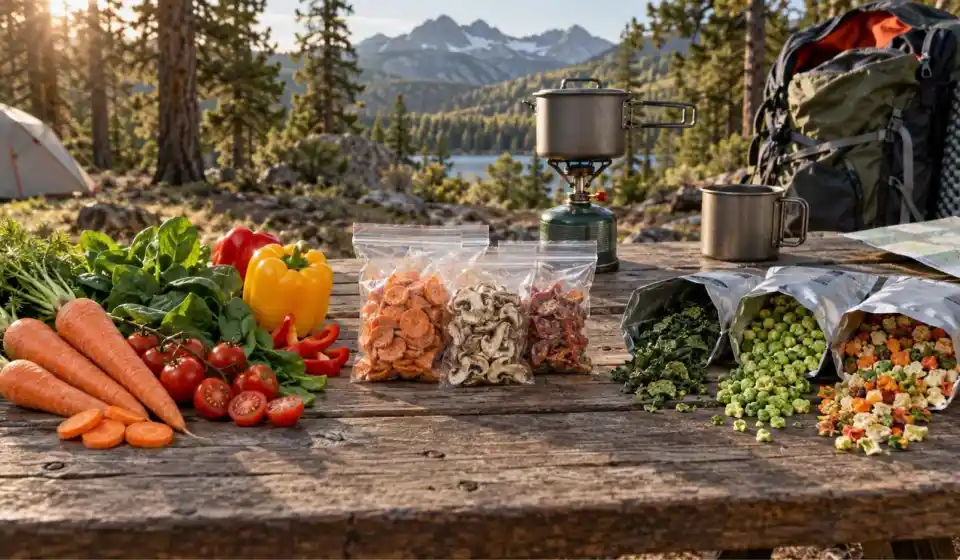
Fresh carrots might be perfect for your first trail lunch, while dehydrated vegetables can transform plain ramen into a more interesting dinner several days later. Freeze-dried vegetables offer another lightweight option, particularly when you want convenient ingredients without preparing everything at home. Understanding how these three formats compare helps you create lightweight backpacking food that provides variety without adding unnecessary carrying weight.
Why Backpackers Struggle to Bring Vegetables
Most fresh vegetables contain substantial amounts of water, which explains why a small collection of carrots, peppers, and tomatoes can become surprisingly heavy. Water contributes to their freshness and texture, but carrying that moisture offers limited advantages when you already have access to safe drinking water along your route. For backpackers managing several days of food, replacing fresh ingredients with properly dried alternatives can reduce the weight carried between resupply points.
However, removing water creates additional considerations because dried vegetables often need moisture, cooking time, or both before becoming enjoyable to eat. 💧 A lightweight packet of dehydrated carrots might require additional water and stove fuel, while fresh carrots are ready to eat after washing and appropriate preparation. The practical comparison should therefore consider total meal preparation requirements, rather than evaluating the weight of individual ingredients alone.
Fresh vs Dehydrated vs Freeze-Dried Vegetables
Fresh vegetables retain their natural moisture, dehydrated vegetables have moisture removed through controlled drying, and freeze-dried vegetables undergo freezing followed by moisture removal under reduced pressure. These different processing methods influence texture, storage stability, preparation requirements, and the amount of water needed before eating. Neither drying method automatically makes vegetables more nutritious, although both can significantly reduce the weight of equivalent edible portions.
For an accurate comparison, imagine starting with the same edible quantity of carrots and preparing separate fresh, dehydrated, and freeze-dried portions. The dried portions will weigh less because much of their original water has been removed, but their final weights will depend on the processing method and remaining moisture. Comparing equal package weights instead would give the dried vegetables an unfair advantage because one ounce of dried carrots represents substantially more original vegetable material than one ounce of fresh carrots.
| Comparison | Fresh Vegetables | Dehydrated Vegetables | Freeze-Dried Vegetables |
|---|---|---|---|
| Carrying weight | Heavier because of natural moisture | Lightweight | Very lightweight |
| Typical cost | Often economical | Varies; home preparation may reduce costs | Often more expensive |
| Preparation | Washing and cutting; some can be eaten raw | Usually soaking or cooking | Rehydration varies by product |
| Storage | Depends on vegetable and preparation | Store thoroughly dried in suitable packaging | Protect from moisture in suitable packaging |
| Trail applications | Snacks, wraps, and early-trip meals | Ramen, pasta, rice, and soups | Instant meals, couscous, and soups |
The table illustrates why different formats serve different purposes rather than establishing one universal backpacking choice. Fresh vegetables offer convenient texture and immediate consumption, while dehydrated ingredients can be economical when prepared in batches using a home dehydrator. Freeze-dried vegetables are particularly useful when convenience and low carrying weight justify their higher purchase price.
How Drying Changes Calories Per Ounce
One of the biggest misunderstandings about dried vegetables involves calories per ounce, because removing water increases calorie concentration without creating additional food energy. Consider a hypothetical 100-gram portion of fresh vegetables containing 40 calories that weighs just 12 grams after drying, assuming no meaningful energy-containing material is lost. Its original calorie content remains approximately 40 calories, but its calorie density increases from about 11 calories per ounce to approximately 94 calories per ounce.
This distinction matters because the dried portion is not providing more energy than the original vegetables; it simply weighs less. A backpacker eating 12 grams of those dried vegetables would consume approximately the same energy as someone eating the original 100-gram fresh portion, assuming equivalent edible material. Rehydrating the dried portion increases its weight again without adding calories, provided the added liquid is plain water.
For accurate trail nutrition calculations, divide the calories in your portion by its dry weight in ounces when evaluating carrying efficiency. If you are comparing different products, account for added oil, sugar, sauces, or other ingredients that can change the nutritional composition. 🥾 Vegetables can contribute fiber, micronutrients, and meal variety, but most nonstarchy vegetables should complement more substantial trail energy sources such as rice, tortillas, nuts, and oils.
What Happens to Vitamins and Minerals During Drying?
The nutritional differences between fresh, dehydrated, and freeze-dried vegetables for backpacking depend on the vegetable, processing conditions, storage duration, and preparation method. Heat-sensitive nutrients, particularly vitamin C, can decline during blanching and conventional drying, while freeze-drying may preserve certain sensitive nutrients more effectively under appropriate conditions. However, freeze-drying does not guarantee complete vitamin retention, and fresh vegetables can also lose nutrients during prolonged storage.
Minerals such as iron and potassium are not destroyed simply because water is removed, although processing and discarded cooking liquids can affect the amounts ultimately consumed. Dietary fiber generally remains present after drying, making dried vegetables useful additions to meals that otherwise contain little plant material. Using the soaking liquid in soups or rice dishes can also help retain water-soluble nutrients that have moved into the liquid.
Carrots, spinach, tomatoes, and mushrooms offer different nutritional characteristics, so comparing them solely by preservation method can be misleading. Carrots provide beta-carotene, spinach contributes folate and other micronutrients, and mushrooms can add flavor and nutritional variety to simple meals. The most useful backpacking vegetable nutrition comparison examines equivalent edible portions and actual product nutrition labels rather than assuming every dried vegetable has the same nutrient profile.
Which Vegetables Work in Different Backpacking Meals?
Ramen, Instant Rice, and Couscous
Ramen works well with dehydrated carrots, cabbage, mushrooms, and spinach because these ingredients can cook or soften in the same water used for the noodles. 🍜 Freeze-dried vegetables are another convenient option, especially when their rehydration instructions match the cooking time of your chosen meal. Adding dried vegetables increases meal variety, but the amount of added water and required cooking time should be tested before departure.
Instant rice provides a flexible base for dehydrated peppers, peas, tomatoes, and vegetable mixtures, particularly when combined with a suitable protein source and seasonings. Couscous can be paired with finely chopped freeze-dried vegetables that rehydrate during its covered resting period, although larger pieces may require additional soaking. For both meals, choose vegetables according to their actual preparation instructions rather than assuming everything will soften within five minutes.
Pasta, Trail Soups, and Fresh Lunches
Pasta dishes benefit from dehydrated tomatoes, mushrooms, onions, and spinach because these ingredients can contribute flavor without requiring multiple cooking pots. Trail soups are particularly convenient for dried vegetables because the rehydration liquid becomes part of the finished meal instead of being discarded. Fresh carrots, bell peppers, and suitable whole vegetables can provide satisfying first-day snacks or additions to wraps when washing, storage, and food safety are properly managed.
How to Choose Vegetables for Your Next Backpacking Trip
For a day hike, fresh vegetables are practical when you want food that requires little preparation and can be eaten directly. Whole carrots, small peppers, and other sturdy vegetables can add crunch to sandwiches or provide a convenient trail snack without requiring a stove. 🥗 Pack prepared or cut vegetables according to their storage requirements, and keep foods requiring refrigeration cold until consumption.
For a three-day backpacking trip, consider combining fresh vegetables for your earliest meals with dried ingredients for later dinners. A small bag of dehydrated carrots and mushrooms can complement rice or noodles, while freeze-dried spinach can add variety to couscous without occupying much backpack space. Choose your quantities according to the meals you have planned rather than carrying vegetables without knowing when or how you will use them.
For longer resupply-based hikes, prioritize ingredients that match your cooking equipment, available water, food budget, and expected storage conditions. Properly dried and packaged vegetables can simplify meal planning, but moisture exposure and inappropriate storage can still compromise their quality and safety. Consult reliable food-preservation instructions when preparing homemade vegetables, and use safe drinking water for rehydration.
Printable Fresh vs Dried Vegetable Comparison Table
A practical fresh vs dried vegetable comparison table should record actual product information rather than relying on generic nutritional estimates. Use the following worksheet to compare the vegetables available at your grocery store, outdoor retailer, or home kitchen. Calculate calories per ounce using the weight you will actually carry, and calculate cost per serving using equivalent edible portions wherever possible.
| Vegetable Format | Calories Per Ounce | Preparation Time | Cost Per Serving | Nutritional Characteristics |
|---|---|---|---|---|
| Fresh | _____ | _____ | $_____ | Natural moisture; nutrient content varies |
| Dehydrated | _____ | _____ | $_____ | Concentrated dry weight; possible heat-sensitive vitamin losses |
| Freeze-dried | _____ | _____ | $_____ | Concentrated dry weight; nutrient retention varies |
For additional accuracy, record the dry serving weight, required rehydration water, and final prepared weight beside each ingredient in your menu plan. This prevents confusion when comparing a lightweight packet of vegetables with a substantially heavier fresh portion that represents the same amount of food. It also makes it easier to connect your vegetable choices with your trail macronutrient calculations and complete backpacking meal templates.
The Bottom Line: Choose Vegetables Around Your Meals
The most practical vegetable format depends on how many days you are hiking, how much water is available, and what you plan to cook. Fresh vegetables can provide satisfying early-trip meals, dehydrated vegetables offer flexible ingredients for cooked dinners, and freeze-dried options can simplify lightweight meal preparation. 🥕 Combining formats lets you balance food quality, preparation convenience, and backpack weight without treating any single preservation method as universally superior.