How to Adjust Your Backpacking Menu When Your Trip Gets Longer or Shorter 🎒🥾
Backpacking plans rarely stay perfectly on schedule.
A trip planned for five days might become six because of bad weather. A route might be shortened because a trail is closed. You might hike faster than expected and finish a day early. A resupply point could be unavailable, or a slow hiking day could change your entire food schedule.
When that happens, your food plan needs to change too.
The good news is that you don’t need to rebuild your entire menu from scratch.
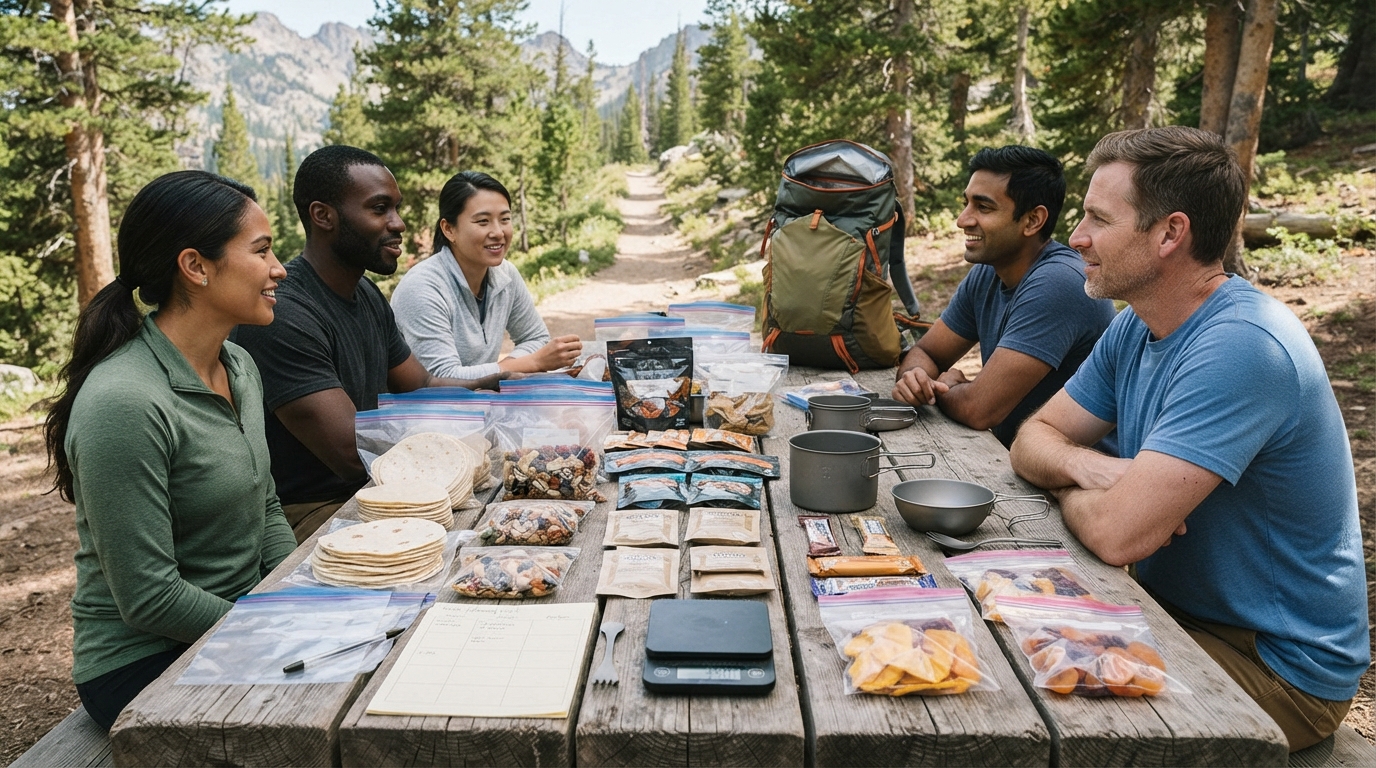
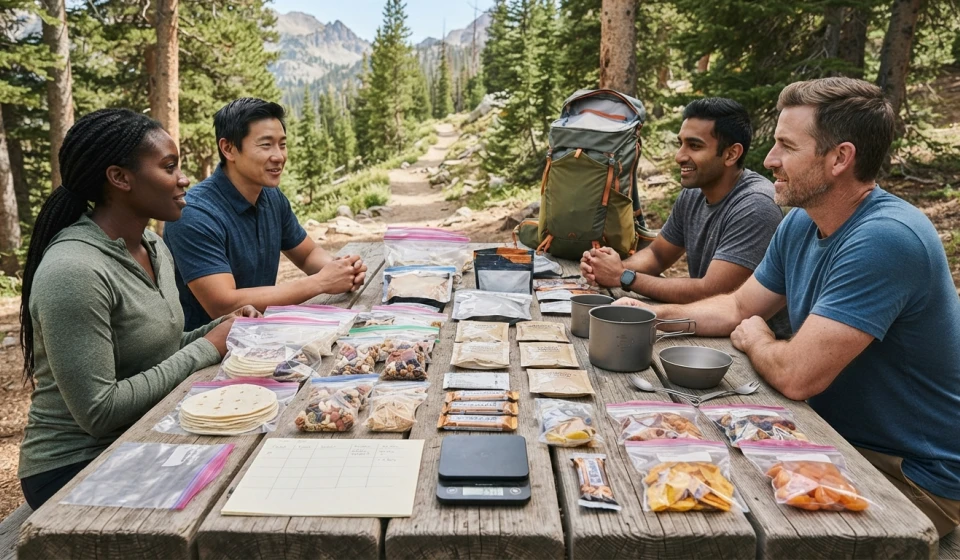
The easiest approach is to create a modular backpacking food system where meals can be added, removed, or rearranged without disrupting everything else.
Think of your menu as building blocks:
Breakfasts + lunches + dinners + snacks + backup food.
Once you organize it that way, changing a five-day trip into a six-day trip becomes much easier. 🏕️
🧭 Start by Recalculating the Trip
Before adding or removing food, confirm exactly what changed.
Write down:
Original trip length: ______ days
New trip length: ______ days
Change: + / − ______ days
Resupply available: Yes / No
Expected hiking intensity: ______
Food-storage requirements: ______
This prevents a common mistake: adjusting the food supply without adjusting the actual itinerary.
A one-day extension isn’t always just a matter of adding one dinner.
You may also need:
- Breakfast
- Lunch
- Snacks
- Drinks
- Cooking fuel
- Food-storage capacity
🔢 Calculate Your Daily Food Requirement
Start with your individual calorie target.
There is no single calorie requirement for every backpacker.
Energy needs depend on factors such as:
- Body size
- Hiking distance
- Elevation gain
- Terrain
- Pace
- Weather
- Individual metabolism
REI gives approximately 2,500–4,500 calories per person per day as a broad backpacking planning range, while emphasizing that actual needs vary.
Use your own established target whenever possible.
For example, if your planning target is 3,000 calories per day:
5 days = 15,000 calories
6 days = 18,000 calories
Adding one day therefore means approximately:
+3,000 planned calories
Again, this is an example of the calculation, not a universal recommendation.
🍳 Build Your Menu in Modules
Instead of thinking:
“I have five days of food.”
Think:
“I have five breakfast modules, five lunch modules, five dinner modules, and five snack modules.”
For example:
Breakfast modules
- Oatmeal + nuts
- Granola + powdered milk
- Breakfast bar + dried fruit
- Instant cereal
- Oatmeal + nut butter
Lunch modules
- Tortilla + nut butter
- Crackers + shelf-stable protein
- Trail mix + bar
- Tortilla + cheese where appropriate
- Ready-to-eat snacks
Dinner modules
- Dehydrated pasta
- Instant rice + beans
- Couscous + vegetables
- Instant potatoes + protein
- Dehydrated meal
Snack modules
- Nuts
- Trail mix
- Dried fruit
- Energy bars
- Chocolate
- Nut butter
This makes your menu much easier to modify.
➕ When Your Trip Gets Longer
The simplest situation is a one-day extension.
If your trip changes from five days to six, add:
1 breakfast
1 lunch
1 dinner
1 day’s snacks
1 day’s drinks
Then check whether you also need additional:
- Stove fuel
- Water-treatment supplies
- Food-storage capacity
- Packaging
- Other consumables
The additional food should fit your existing menu system.
You don’t necessarily need to invent new meals.
🥜 Add the Most Flexible Foods First
If you’re not sure how long the extension will last, flexible foods can be especially useful.
Examples include:
- Nuts
- Trail mix
- Energy bars
- Nut butter
- Dried fruit
- Crackers
- Shelf-stable meals
These can often be eaten without complicated preparation.
A compact snack can also serve several purposes.
It might become:
An afternoon snack
or
Part of lunch
or
Backup food for an unexpected delay
This flexibility is valuable when your itinerary is uncertain.
🍜 Add a “Flex Dinner”
One useful strategy is to keep one compact dinner separate from the main menu.
Call it your:
FLEX MEAL
It could be:
- Dehydrated pasta
- Instant rice meal
- Couscous
- Instant potatoes
- Freeze-dried meal
- Another familiar shelf-stable dinner
You don’t necessarily need to eat it on the scheduled day.
Keep it available until you know you need it.
If the trip stays on schedule, it can become part of your final dinner.
If the trip is extended, you’ve already got another meal.
🌦️ Use Weather Changes to Rebalance the Menu
A longer trip caused by weather is different from a longer trip caused by simply choosing to hike another day.
Bad weather can affect:
- Appetite
- Cooking convenience
- Fuel consumption
- Food storage
- Hiking speed
- Time spent in camp
If rain or severe weather slows your progress, don’t assume your original mileage-based food plan will still work.
You may need an additional full day of food.
This is why a small contingency is useful on longer or remote trips.
🥾 When Your Trip Gets Shorter
Shortening a trip creates a different problem.
You don’t want to carry unnecessary food all the way home.
If your planned trip changes from six days to four, remove:
2 breakfasts
2 lunches
2 dinners
2 days of snacks
Then reassess the remaining food.
Don’t simply remove two random bags.
Choose the modules that make the remaining menu balanced and practical.
🍫 Don’t Automatically Remove the Most Enjoyable Foods
When reducing food, you might be tempted to remove desserts or treats first.
But food enjoyment matters on a long hike.
Instead, look for genuine redundancy.
For example, you may have:
- Three different nut snacks
- Several similar energy bars
- Extra drink mixes
- More breakfast food than necessary
Remove the excess before eliminating foods that make the trip more enjoyable.
📦 Keep Foods in Day-Sized Modules
This is one of the most useful habits for flexible trip planning.
Instead of putting all your food into one giant bag, create daily portions.
For example:
DAY 1
Breakfast
Lunch
Snacks
Dinner
DAY 2
Breakfast
Lunch
Snacks
Dinner
And so on.
Now changing the itinerary is easy.
Need to add a day?
Add another module.
Need to remove a day?
Remove one.
Need to change the order?
Move the modules around.
It’s basically a backpacking version of a meal-prep system. 📦
⚖️ Recalculate Food Weight
Every time the trip length changes, check the weight.
If your food averages 1.5 pounds per day, adding two days could mean approximately:
+3 pounds
But don’t assume your actual food will weigh that much.
Calculate the real weight from your menu.
Record:
Food weight per day: ______
Additional days: ______
Additional food weight: ______
This is especially important for long-distance trips where food weight can have a major effect on your starting pack weight.
🧮 Track Calories and Weight Together
A menu can be light but insufficient.
It can also provide enough calories while being unnecessarily heavy.
That’s why it’s useful to track both.
For each meal, record:
| Meal | Calories | Weight |
|---|---|---|
| Breakfast | 600 | 6 oz |
| Lunch | 700 | 5 oz |
| Snacks | 900 | 7 oz |
| Dinner | 800 | 6 oz |
| Daily total | 3,000 | 24 oz |
The numbers above are only an example.
Use the actual nutrition information and measured weight of your foods.
🔄 Rearrange Meals Instead of Rebuilding Them
Suppose you originally planned:
Day 1: Pasta
Day 2: Rice
Day 3: Potatoes
Day 4: Couscous
Day 5: Noodles
If the trip changes, you don’t need to redesign everything.
You can simply move the meals around.
For example:
Day 1: Pasta
Day 2: Rice
Day 3: Couscous
Day 4: Noodles
Day 5: Potatoes
The goal is to maintain a practical variety of flavors and textures without creating extra work.
🥣 Watch for Food That Spoils
Trip extensions become more complicated when your menu contains foods that aren’t shelf-stable.
For a flexible backpacking menu, many hikers favor foods that tolerate:
- Warm temperatures
- Pack compression
- Several days without refrigeration
Shelf-stable ingredients are much easier to extend than foods that require refrigeration.
If your plan contains perishable ingredients, check their food-safety requirements carefully rather than assuming they are safe simply because you’re outdoors.
🔥 Recalculate Stove Fuel Too
Adding food can also mean adding cooking.
If the extra meals require boiling water or simmering, your fuel needs may change.
For example:
Extra dehydrated dinner = extra water heating
Extra oatmeal = extra water heating
Extra hot drink = extra water heating
REI recommends considering cooking time and the amount of water that needs to be heated when planning stove fuel.
So when you add a day of food, ask:
“Does this also require additional fuel?”
🐻 Recheck Food-Storage Capacity
This is especially important in areas with bear-resistant food-storage requirements.
An extra day of food means:
More calories
More packaging
More food volume
Potentially more trash
If you use a bear canister, don’t assume that the extra food will fit just because it fits in your backpack.
Check the specific land manager’s current food-storage rules and the capacity of the required container.
The same principle applies to any limited food-storage system.
📮 When a Resupply Is Possible
If your route has a reliable resupply option, a longer trip doesn’t necessarily mean carrying all the extra food from the beginning.
You may be able to divide the trip into sections.
For example:
Trailhead → 4 days of food → resupply → 3 more days
This can dramatically reduce the amount of food you carry at the start.
However, a resupply should be treated as a real logistical point.
Confirm:
- Location
- Opening hours
- Operating dates
- Food availability
- Delivery or pickup arrangements
- Storage rules
- Backup options
Don’t build your entire food plan around a resupply point you haven’t confirmed.
🚨 Keep a Small Contingency
A flexible menu should have some margin.
Your contingency doesn’t have to be huge.
It might be:
- One compact dinner
- A few energy bars
- Extra trail mix
- Nuts
- Nut butter
- Another familiar high-energy food
The exact amount depends on the trip, remoteness, and consequences of being delayed.
The important principle is:
Don’t plan so tightly that one unexpected night leaves you without food.
📋 The Backpacking Menu Adjustment Checklist
When the trip gets longer:
☐ Add breakfast
☐ Add lunch
☐ Add dinner
☐ Add snacks
☐ Add drinks
☐ Recalculate food weight
☐ Recalculate cooking fuel
☐ Check food-storage capacity
☐ Check food safety
☐ Review contingency food
When the trip gets shorter:
☐ Remove unused meals
☐ Remove excess snacks
☐ Recalculate total calories
☐ Recalculate food weight
☐ Keep the remaining menu balanced
☐ Repackage if necessary
☐ Check whether the shorter trip changes resupply plans
🖨️ Create a Modular Food Planner
A simple printable system can look like this:
DAILY FOOD MODULE
Day: ______
🌅 Breakfast
Food: __________
Calories: __________
Weight: __________
🥪 Lunch
Food: __________
Calories: __________
Weight: __________
🥜 Snacks
Food: __________
Calories: __________
Weight: __________
🍜 Dinner
Food: __________
Calories: __________
Weight: __________
📊 Daily Total
Calories: __________
Weight: __________
FLEX FOOD
Emergency/flex meal: __________
Calories: __________
Weight: __________
Cooking requirements: __________
This module can be added or removed without changing the rest of the plan.
🌲 Final Thoughts
A backpacking menu shouldn’t be a rigid schedule that collapses when your itinerary changes.
Build it like a modular system instead.
Create individual breakfast, lunch, dinner, and snack portions. Track calories and weight. Keep a compact flex meal available. Recalculate stove fuel and storage whenever you add food. And if the trip becomes shorter, remove complete meal modules rather than randomly cutting ingredients.
Most importantly, remember that a longer trip requires more than simply adding calories.
You may also need more cooking fuel, more storage capacity, more packaging space, and more contingency planning.
A flexible food system gives you something valuable on the trail:
the ability to change the plan without starting over. 🎒🥾🌲