Ultralight Backpacking in Dry Environments: Water Tips
Imagine this: you’re 15 miles into a sun-baked canyon in the Southwest, your 3-liter bladder is dry, and the next cache is still a ridge away. In dry environments, water isn’t just weight—it’s life support. This guide moves beyond basic “carry more water” advice and dives into the nuanced strategies that ultralight veterans use to thrive in arid landscapes: caching, timing, load optimization, and electrolyte intelligence.
Water Caching: Strategic Stockpiling
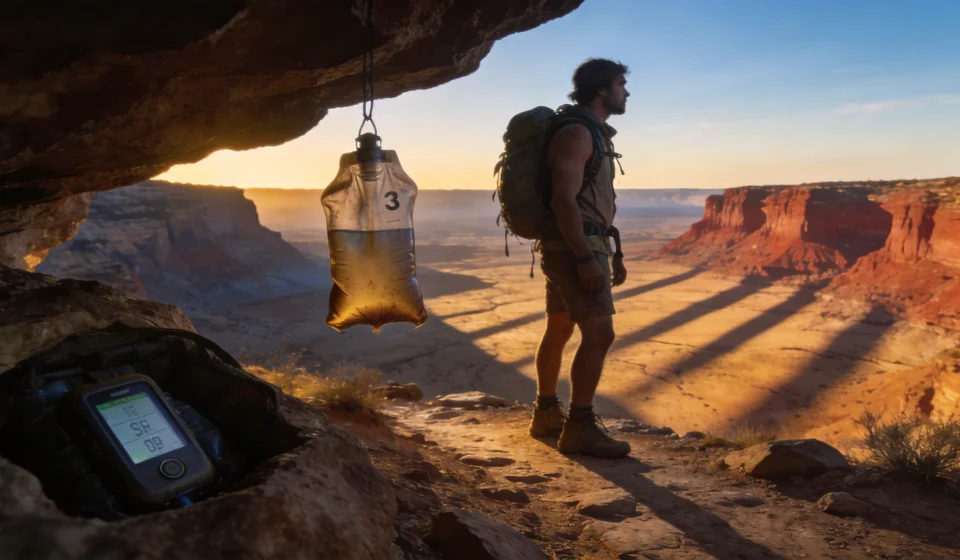
Caching water is the single most effective way to extend your range in bone-dry terrain without hauling a week’s supply from the start. The principle is simple: plant water along your route at predetermined points, then hike to it. But execution demands precision.
Site Selection and Container Choice
Choose locations that are both legal (check land management rules—many national parks prohibit caches) and discreet. Use opaque, food-grade plastic containers (1-gallon jugs or 2-liter soda bottles) to prevent UV degradation and algae growth. Bury them in dense shade under a rock overhang or thick brush, and GPS-mark the coordinates. Label each container with date, volume, and a warning—“Potable Water”—to avoid confusion for other hikers.
Calculating Cache Spacing: The 3/4 Rule
A typical hiker in moderate heat (85–95 °F) requires roughly 0.5–0.75 liter per hour moving. To avoid carrying more than 4–5 liters at once, space caches so you never go more than 10–12 miles without a refill. For example, on a 50-mile desert traverse, place caches at miles 12, 25, and 38. This keeps your pack weight below 10 pounds of water while ensuring you’re never more than 6 hours from the next stash.
“I learned the hard way on the Hayduke Trail. My first cache was a mile off-route, and I wasted an hour chasing it under 100°F sun. Now I always double-check GPS coordinates before leaving home.” — Amy R., 2023 Arizona Trail thru-hiker
Hiking During Cooler Hours: Timing is Everything
In dry environments, the difference between hiking at 6 a.m. and 2 p.m. can be 20°F and a 50% reduction in sweat loss. Night hiking isn’t just a comfort hack—it’s a water-saving criticality.
Plan a Split Schedule
Wake at 4:30 a.m., hike until 11 a.m., then siesta under a tarp or in a canyon shadow until 4 p.m. Resume hiking until dusk (8:30–9 p.m.). This schedule cuts your peak water consumption by nearly half compared to a continuous midday slog. Remember: in dry air, sweat evaporates so quickly you may not feel wet, but you’re still losing fluid. Monitor your urine color—pale lemon is okay; dark amber means you’re behind.
Carrying Large Capacities: Tools and Techniques
Ultralight philosophy often screams “smaller!,” but in dry environments, you need to carry up to 6–8 liters at times. The trick is making that weight tolerable.
Soft vs. Hard Containers
Ditch hard Nalgene bottles for a 3-liter bladder (e.g., CNOC Vecto) plus two 1.5-liter soft flasks (e.g., HydraPak Stash). Soft containers collapse as you drink, reducing slosh and allowing you to compress dead space.
| Container Type | Empty Weight | Max Volume | Packability |
|---|---|---|---|
| Hard Nalgene (1L) | 6.5 oz | 1 L | Rigid |
| Platypus Soft Bottle (1L) | 1.2 oz | 1 L | Folds flat |
| CNOC Vecto 3L | 3.2 oz | 3 L | Rolls up |
| HydraPak Seeker 2L | 2.3 oz | 2 L | Folds |
Load Distribution Hacks
Place the heaviest bladder horizontally inside your pack, just behind the shoulder blades, and distribute soft bottles on both side pockets. Never carry all water on one side—it torques your hips. If using a frameless pack, keep base weight under 7 lbs so the water weight doesn’t deform the pack.
Foods That Require Little to No Water
Every gram of food you eat requires metabolic water to digest, but you can choose foods that minimize that demand and don’t force you to cook (which uses precious H₂O for cleaning).
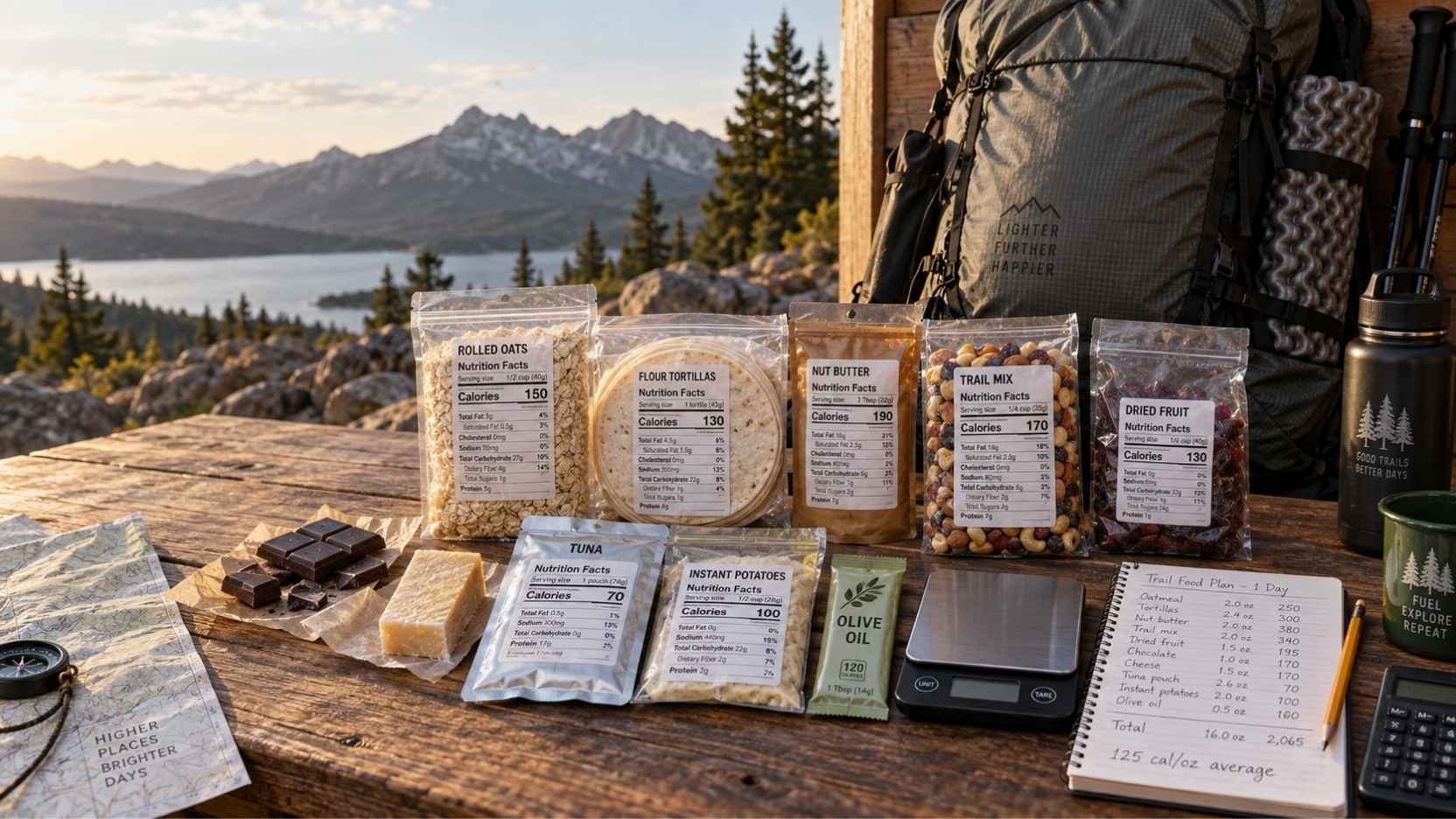
- Nuts and seeds – Almonds. walnuts, pepitas: dense in calories (170 kcal/oz) and naturally low in water content. No cooking, no cleanup.
- Dried fruit – Dates, apricots, mangoes. A sugary boost that replaces simple electrolytes. Avoid “juicy” dried fruit with added water weight.
- Hard cheese – Aged gouda, parmigiano-reggiano: low moisture, high fat, and salt. Wrap in wax paper to avoid sweating.
- Nut butters (in single-serve packets) – No refrigeration, no water needed. Add to tortillas for instant calories.
- Olive oil or coconut oil (shot-sized flask) – Pure fat: 120 kcal per tablespoon. Add to any meal for an extra 300 kcal without water.
- Freeze-dried meals (cold-soak style) – Skip cooking: rehydrate in your bowl with no heat, using water you’ll drink anyway. Rinse with a few drops—no full cleaning.
What to Avoid in Dry Terrain
Stay away from instant oatmeal, powdered soups, and ramen. They require boiling water and leave you with a sticky pot that demands precious liquid for cleaning. The same goes for sugary sports gels—they work, but they often leave you sticky and thirsty. If you carry gels, chase them with a sip of water, not a gulp.
Recognizing Dehydration and Hyponatremia
In dry environments, the two most dangerous fluid disorders are mirror images: dehydration (too little water, too much salt) and hyponatremia (too much water, too little salt). Know the difference—treating one like the other can kill you.
Dehydration: The Classic Scourge
Symptoms escalate quickly in arid air: headache, dark urine, dizziness, lack of sweat, and a dry mouth that feels like paper. If you stop sweating in 95°F heat, your core temperature is rising dangerously. Action: Stop. Get into shade. Sip 0.5 liter over 15 minutes with a pinch of salt. Rest for 30 minutes before moving again.
Hyponatremia: The Overhydration Trap
It happens when you drink too much plain water without electrolytes—especially common when it’s so hot you’re forcing fluids. Symptoms include nausea, bloated hands, confusion, and severe muscle cramps. In advanced stages, it causes seizures. Key distinction: hyponatremia often comes with clear urine, while dehydration has dark urine.
“I was 20 miles into the Gila Wilderness and felt foggy and nauseous. I thought I was dehydrated, so I chugged two liters of water. Bad move—I ended up with hyponatremia. Now I always add electrolyte tabs to every liter.” — Jake T., NOLS instructor
Advanced Electrolyte Management
You lose not just water but sodium, potassium, and magnesium. Replace them systematically.
- Sodium: Aim for 500–800 mg per liter of water in hot dry conditions. Use electrolyte tablets (e.g., Nuun, Liquid IV) or add ¼ teaspoon salt + ¼ teaspoon NoSalt (potassium) per liter.
- Potassium: Dropped in sweat. Dried apricots, coconut water powder, or supplements. Without potassium, muscle recovery slows.
- Magnesium: For cramp prevention. Eat a few pumpkin seeds or add a pinch of magnesium citrate to your drink at dinner.
Practical Electrolyte Routine
Start the day with an electrolyte tab in your morning liter. At lunch, eat salty nuts and dried fruit. In the afternoon, sip a second batch of electrolyte water. Skip the commercial sports drinks that have too much sugar—they actually slow water absorption in the gut.
The Salt-Shaker Test: An On-Trail Diagnostic
If you’re unsure whether you need water or electrolytes, do this: pinch a tiny amount of salt on your tongue. If it tastes pleasantly salty, your body likely needs salt. If it tastes repulsive or metallic, you’re probably low on water. It’s a rough gauge, but in the backcountry, rough gauges save lives.
In dry environments, every ounce of water and every gram of salt counts. Pre-plan your caches with GPS precision, shift your hiking hours to cooler windows, and pack foods that work with you—not against you. And never forget the electrolyte balance. The desert doesn’t forgive mistakes, but with these advanced strategies, you can traverse even the driest stretches with confidence.
Conclusion
Surviving and thriving in arid backcountry demands a shift from conventional ultralight thinking to a water-first mindset. Cache strategically, let darkness cool your progress, and choose foods that won’t steal your hydration. Master the signs of dehydration and hyponatremia, and you’ll walk farther, lighter, and safer through the world’s driest landscapes.