Is Sugar Always Bad on the Trail? Why Hiking Changes the Fast-Carb Question
Why “Never Eat Sugar” Does Not Answer a Hiker’s Question
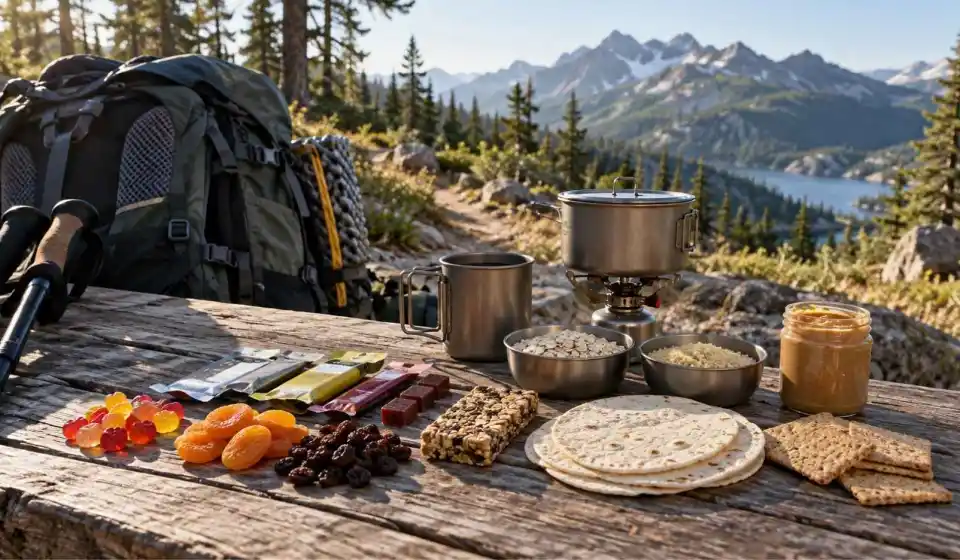
“Cut out sugar” sounds like straightforward nutrition advice, but it becomes less useful when you are deciding what food to carry through several hours of continuous hiking. 🥾 A backpacker choosing between dried fruit, candy, tortillas, oatmeal, crackers, energy chews, and a full meal is solving several problems simultaneously: carbohydrate availability, pack weight, convenience, appetite, and timing. Instead of asking whether sugar is automatically “good” or “bad,” trail planning works better when you ask what job a particular food needs to perform at that moment.
That distinction does not mean hiking turns candy into a nutritionally complete food or makes ordinary dietary considerations disappear. 🍬 It means physical activity changes the context because working muscles use carbohydrate along with fat to produce energy, while the relative contribution of each fuel changes with factors such as exercise intensity, duration, conditioning, and available fuel. A food that makes little sense as the foundation of every meal may therefore still have a practical role inside a longer hiking-day menu.
What Carbohydrate Contributes to Trail Energy
Carbohydrate provides approximately 4 calories per gram, compared with roughly 9 calories per gram from dietary fat, making fat more weight-efficient for backpackers focused primarily on calories per ounce. Carbohydrate has a different advantage, however, because glucose can be used readily during physical activity and carbohydrate stored as glycogen in muscles and the liver contributes to exercise fuel. ⚡ This is one reason hikers do not need to frame trail-food planning as a competition in which either carbohydrates or fats must win every meal.
The important distinction is also broader than “sugar versus no sugar,” because carbohydrate comes from simple sugars, starches, fiber-containing foods, and mixtures of all three. Oatmeal, tortillas, crackers, dried fruit, gummies, couscous, and energy gels may all provide substantial carbohydrate even though hikers experience them very differently in terms of chewing, digestion, preparation, packability, and fullness. A useful trail menu therefore considers carbohydrate source and food format, not simply whether the ingredient list contains sugar.
Fast-To-Eat Foods And Complete Meals Serve Different Jobs
Imagine approaching a steep climb when stopping for twenty minutes to cook oatmeal would be inconvenient, even though oatmeal may work perfectly at breakfast or camp. ⛰️ A handful of dried fruit, several chews, a small piece of candy, or another ready-to-eat carbohydrate can be consumed while resting briefly and requires little preparation, water, fuel, or cleanup. That convenience is one of the strongest arguments for carrying some quick carbohydrate foods, especially when the alternative is accidentally eating nothing because your larger meal is difficult to access.
A complete trail meal solves a different problem by combining more calories, food volume, flavors, and often carbohydrate with fat and protein. Tortillas with nut butter, couscous with olive oil, oatmeal with nuts, or crackers paired with another food may be more satisfying when you have time to stop and actually eat. 🍽️ Rather than expecting every snack to resemble a balanced dinner, it can be more practical to design a food bag containing quick foods for movement and substantial foods for longer stops.
Candy, Dried Fruit, Gels, Chews, And Bars Are Not Identical
Candy can provide a cheap, compact, ready-to-eat source of carbohydrate, which explains why some hikers include gummies, jelly candies, hard candy, or similar foods in their packs. 🍭 Its limitation is equally obvious: most candy contributes relatively little protein, fat, fiber, or micronutrient variety, so building an entire backpacking menu around candy would leave many nutritional and appetite needs poorly covered. The useful question is therefore not “Is candy healthy?” but “Does a small amount solve a specific fueling or convenience problem within the larger menu?”
Dried fruit occupies a somewhat different position because it supplies carbohydrate while also retaining components naturally present in fruit, including varying amounts of fiber and micronutrients. 🍑 Removing much of the fruit’s water makes dried fruit lighter and more energy-dense than fresh fruit, which can be useful when pack weight matters, although the concentrated texture also makes portions easy to eat quickly. Energy gels and chews push convenience even further by packaging concentrated carbohydrate into predictable, portable servings, while bars commonly combine carbohydrate with varying amounts of fat, protein, fiber, nuts, grains, or fruit.
Tortillas, Crackers, Oats, And Other Starches Still Matter
Fast carbohydrate does not have to taste sweet, because starches are also carbohydrates and ultimately contribute glucose after digestion. Tortillas, crackers, bagels, cereal, instant rice, couscous, and oats can therefore provide substantial carbohydrate while offering different textures, flavors, preparation needs, and levels of satiety. 🌯 This matters during multi-day trips because constantly eating sweet foods can become unappealing even when they remain easy to carry.
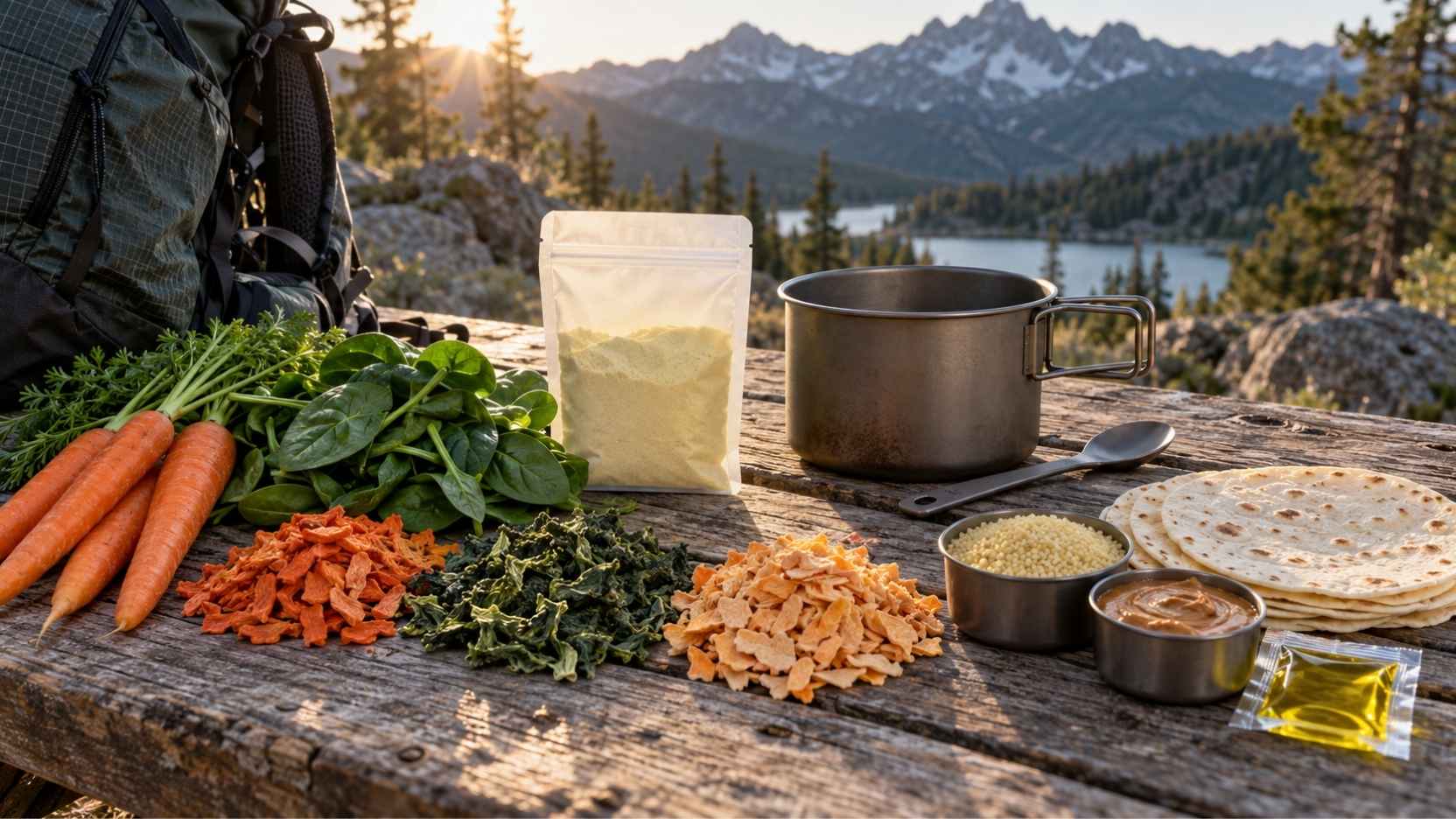
Starchy foods can also function as the structural backbone of larger trail meals, giving hikers something to combine with nut butter, cheese where appropriate, dried foods, olive oil, tuna packets, powdered ingredients, or other additions. Oatmeal might make more sense before leaving camp, tortillas may work well at lunch, crackers can be eaten during a short break, and couscous or instant rice may fit naturally into dinner. Instead of dividing the food bag into “healthy foods” and “sugary foods,” it is usually more useful to divide it by meal function, preparation effort, and eating opportunity.
Before The Climb, During Walking, And At Camp
Timing changes what makes a food convenient because the meal you want while sitting at camp can be completely different from the food you are willing to eat halfway up a sustained ascent. Before a demanding section, some hikers prefer an ordinary carbohydrate-containing meal or snack that they already know sits comfortably, rather than waiting until they are deep into the climb to search through their pack. 🎒 During walking, easily accessible foods such as dried fruit, chews, candy, crackers, or small portions of a bar can reduce the logistical friction of eating.
At camp, the priorities can shift toward larger portions, variety, hydration, and foods containing a broader combination of carbohydrate, fat, and protein. 🍲 That creates a simple planning principle: fast carbohydrate can occupy the high-convenience part of the menu without becoming the entire menu. Individual tolerance varies considerably, so hikers with medical conditions or specific nutrition concerns should discuss personalized fueling strategies with a qualified healthcare professional rather than copying someone else’s trail routine.
Compare Carbs And Calories Per Ounce Instead Of Guessing
Backpacking introduces a measurement that rarely matters at the kitchen table: what nutrition are you carrying for each ounce of pack weight? ⚖️ Instead of assuming that every bar, gel, dried fruit, tortilla, or candy performs similarly, read the nutrition label and divide the package calories by its net weight in ounces to calculate calories per ounce. You can perform the same calculation with carbohydrate grams, allowing two foods to be compared using actual package information rather than reputation.
For example, if a hypothetical two-ounce snack contains 200 calories and 50 grams of carbohydrate, it provides 100 calories per ounce and 25 grams of carbohydrate per ounce. That calculation does not tell you whether the food should be eaten, but it gives you useful planning information that can be combined with price, taste, texture, durability, preparation requirements, and appetite. 📊 Product formulas vary substantially, so checking the current label is more reliable than memorizing universal numbers for “a bar,” “dried fruit,” or “energy chews.”
A Mixed Food Bag Usually Solves More Problems
Consider a hypothetical 20-mile hiking day without turning it into a rigid grams-per-hour prescription: breakfast could contain oats or tortillas, an early snack might use dried fruit, and a difficult climb could be paired with an easily accessible carbohydrate food. 🥜 Lunch could combine tortillas with nut butter or another calorie-dense filling, while afternoon snacks might include crackers, a bar, chews, or fruit depending on appetite and convenience. Dinner could then provide a more substantial starch such as couscous or instant rice alongside other foods supplying fat, protein, flavor, and additional calories.
The point of that example is distribution by function rather than worshipping one particular food, because no single snack needs to handle breakfast, hard climbing, recovery, dinner, taste fatigue, and pack-weight efficiency simultaneously. A mixed food bag also gives you options when weather, elevation gain, appetite, pace, or the hiking schedule changes unexpectedly, which is often more useful than designing a theoretically perfect menu you stop wanting to eat. 🏕️ Sugar is therefore not automatically the villain or the hero of trail nutrition; for hikers, the more useful question is what form of carbohydrate fits the activity, timing, food weight, and rest of the day’s menu.