Protein Bars vs Trail Snacks: Are You Carrying Protein—or Useful Calories?
Protein bars are easy to pack, easy to count, and marketed with numbers that look impressive, especially 18 g or 20 g of protein per bar. 🥾 That makes protein bars for hiking seem automatically better than pretzels, dried fruit, nuts, candy, or a conventional hiking energy bar. But backpacking food has another job that gym-oriented snacks do not always prioritize: delivering enough usable energy without adding unnecessary pack weight.
Protein still matters because hikers need it for tissue maintenance and recovery across long days. The smarter question is whether a snack is solving your protein, calorie, carbohydrate, or weight target. A high-protein bar can therefore be a smart tool in one menu and an inefficient choice in another.
Why Hikers Automatically Reach for Protein Bars
Protein is one of the easiest nutrition numbers to market because the front of a wrapper can turn it into a simple score: more grams looks more substantial. A hiker scanning a store shelf may see a 20 g protein bar beside raisins or pretzels and assume the bar must be more useful. 💪 Yet endurance nutrition is not a contest to maximize a single macronutrient at every snack.
Sports-nutrition guidance emphasizes adequate energy and carbohydrate availability for endurance work while recognizing protein as important for recovery. Hours of walking and climbing can make total energy intake just as important as the protein number on the wrapper. A protein-heavy snack should therefore fill a real gap in the day’s menu.
What “20 G Protein” Does Not Tell You
A 20 g protein claim does not tell you the bar’s calories, weight, carbohydrate, fat, price, or calories per ounce. Two bars can carry the same protein claim while delivering very different amounts of energy and very different value for the weight you carry. 🔍 For backpackers, those differences matter because every serving must be carried before it can be eaten.
Some protein bars deliver a large protein dose without maximizing total calories, which can be useful in fitness settings. Backpackers may want the opposite: more calories in less weight. Reading only the protein line can therefore hide a metric that matters greatly in the food bag.
Calories Per Ounce vs Protein Per Ounce
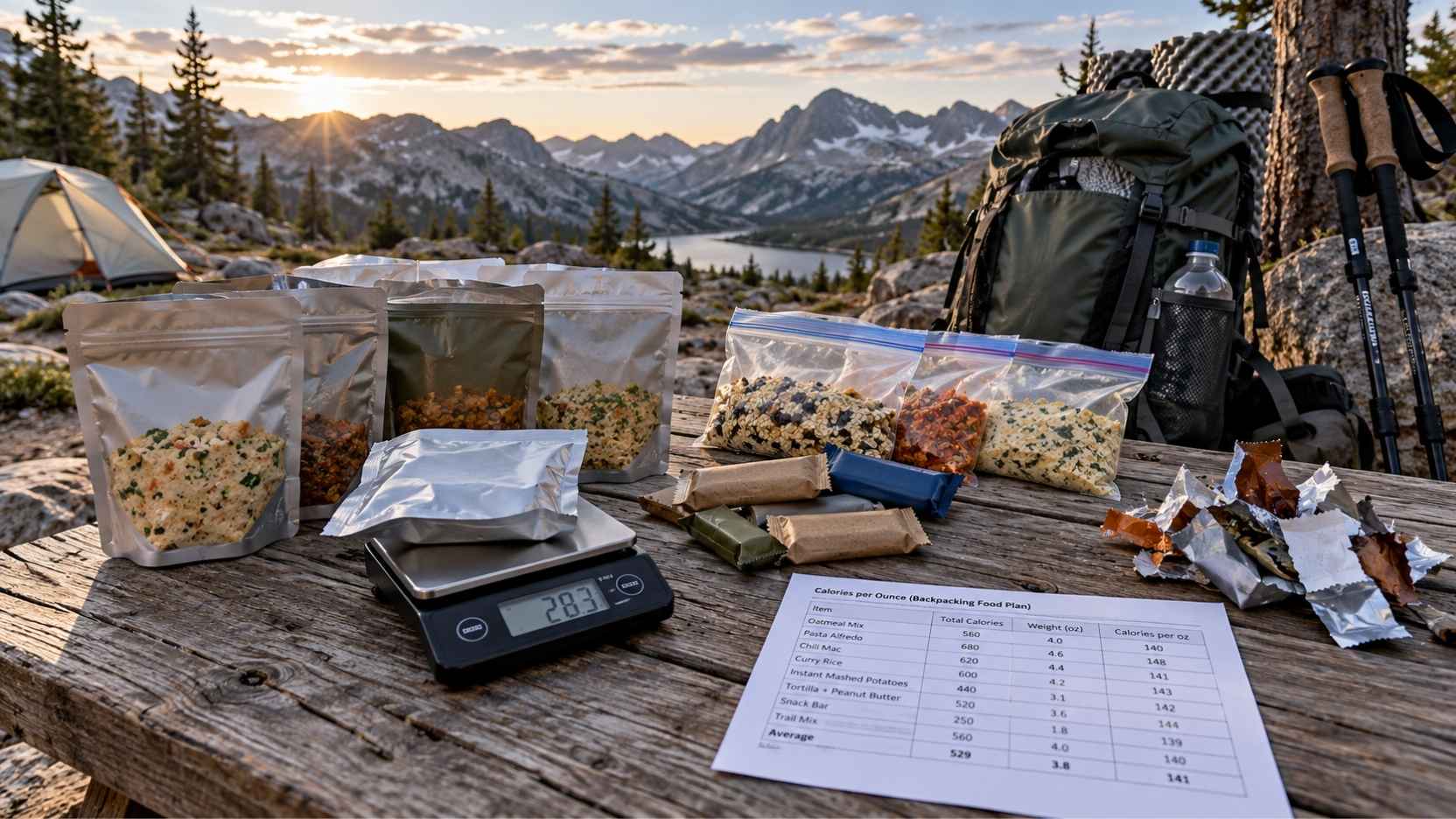
The core calculation is simple: divide calories by food weight in ounces to get calories per ounce, then repeat the process with protein or carbohydrate if those nutrients matter to your plan. Carbohydrate and protein provide about 4 calories per gram, while fat provides about 9, so foods with more fat often reach higher caloric densities. 🧮 That basic math explains why nuts can outperform many bars on calories carried per ounce.
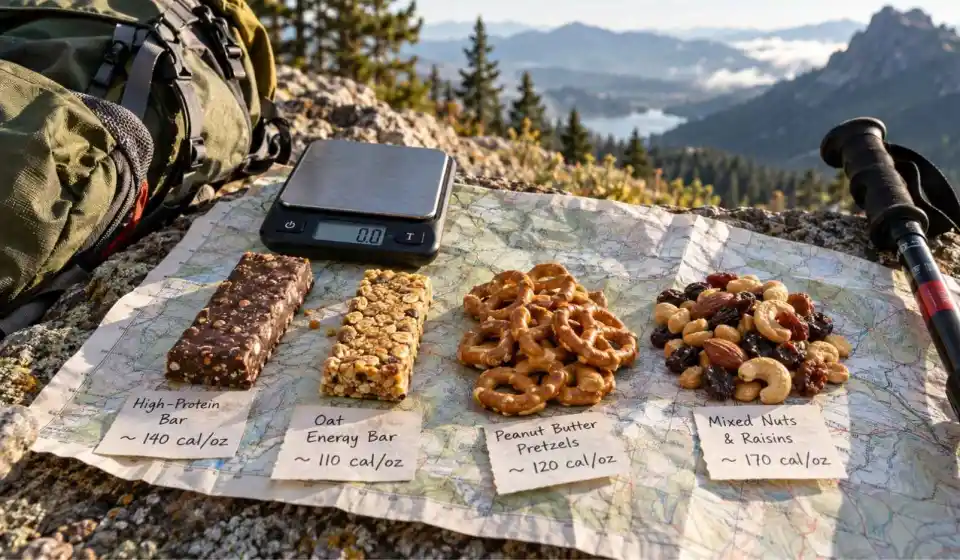
The table below uses representative current labels for five common snack types. Prices are example U.S. regular or list-price references, so cost per 500 calories should be recalculated with your own grocery receipt. Flavor, retailer, package size, sales, and reformulation can change the results.
| Food | Calories | Weight | Cal/oz | Carbs | Protein | Fat | Cost/500 kcal |
|---|---|---|---|---|---|---|---|
| CLIF BUILDERS Chocolate protein bar | 280 | 68 g / 2.40 oz | 117 | 31 g | 20 g | 9 g | ≈ $3.41 |
| CLIF BAR Chocolate Chip energy bar | 250 | 68 g / 2.40 oz | 104 | 43 g | 10 g | 6 g | ≈ $2.92 |
| Snyder’s peanut-butter pretzels | 130 | 28 g / 0.99 oz | 132 | 15 g | 5 g | 6 g | ≈ $1.73* |
| Planters mixed nuts | 170 | 28 g / 0.99 oz | 172 | 6 g | 6 g | 15 g | ≈ $2.41 |
| Sun-Maid raisins | 120 | 40 g / 1.41 oz | 85 | 31 g | 1 g | 0 g | ≈ $1.47 |
*Snyder’s calculation uses the referenced $4.49 regular price, not the temporary promotional price shown by the retailer.
What The Numbers Actually Reveal
For carbohydrate relative to weight, raisins and the standard energy bar are strong because much of their mass comes from carbohydrate rather than protein or fat. That can make them useful when a hiker wants compact carbohydrate during a long climb, although personal tolerance and the rest of the day’s food still matter. A protein bar may also contain substantial carbohydrate, but its higher protein number does not automatically make it the most carbohydrate-efficient choice.
For protein relative to weight, the protein bar does exactly what its label promises and can help a menu built around low-protein foods. Mixed nuts and peanut-butter pretzels also contribute protein while supplying more calories per ounce in this comparison, so they may solve more than one menu problem at once. 🥜 The useful question is not which snack wins overall, but which nutrient your food plan is currently short on.
For cost and caloric density, grocery foods can look very different from individually wrapped bars. 💵 Raisins and peanut-butter pretzels may provide cheaper calories, while mixed nuts provide far more calories per ounce and the protein bar concentrates protein. Convenience, taste, digestion, and packaging still matter, but they should sit beside the math.
When Protein Changes Your Daily Macro Split
One protein bar rarely creates a problem, but several protein-focused snacks can quietly reshape the entire day. If breakfast, jerky, tuna, dinner, and recovery food already cover your protein needs, adding multiple high-protein bars may displace carbohydrate or fat that would help you reach a demanding calorie target. 🏕️ On a high-mileage day, that trade matters because adequate total energy and carbohydrate remain important parts of endurance fueling.
The reverse can happen with a menu dominated by candy, dried fruit, crackers, tortillas, and drink mix. That menu may reach its calorie target while leaving protein relatively low, making one or two protein-dense foods genuinely useful. The correct comparison is therefore not “protein bar versus trail snack” in isolation, but this food versus what my full 24-hour menu is missing.
How To Read A Bar Label For Backpacking
Start with serving weight and calories because those numbers show whether a bar supports your caloric-density target. Next, check carbohydrate, protein, and fat, then fiber, sodium, ingredients, and sweeteners that may affect digestion. A bar that works after a gym session may feel overly dense or sweet after hours of hiking.
Then calculate instead of guessing: cal/oz = calories ÷ ounces, protein/oz = protein grams ÷ ounces, and cost per 500 kcal = price ÷ total package calories × 500. 📊 If you are comparing multi-packs with bulk snacks, use the full package price and full package calories so the comparison stays consistent. Those three equations turn a front-of-package marketing claim into useful backpacking information.
Build a simple worksheet with food, serving weight, calories, carbohydrate, protein, fat, and package price, then calculate the three metrics above. Sort it once by caloric density and again by protein density, because the rankings will change and show which foods are doing different jobs. Use How Much Protein Do Backpackers Really Need? The Math, Calories Per Ounce: The Complete Backpacking Food Table, and your Category 4 menu templates to connect each snack to a full-day plan.
The Bottom Line
The best hiking snacks with protein are not automatically the snacks with the largest protein number on the wrapper. A useful trail snack earns its place by supplying the nutrient you need at a weight, price, texture, and flavor you can realistically carry and eat. 🌲 Sometimes that will be a 20 g protein bar, and sometimes the more useful calories will come from nuts, peanut-butter pretzels, dried fruit, or a carbohydrate-focused hiking energy bar.
Think of your food bag as a small logistics system rather than a collection of products labeled “healthy” or “high protein.” Protein is one input, but so are calories, carbohydrate, fat, cost, pack weight, convenience, and appetite, and optimizing only one can weaken the rest of the plan. The better question is simple: are you carrying protein because your menu needs protein, or because the wrapper convinced you that protein is always the most valuable thing to carry?