Hiking Snacks That Don’t Melt: What to Pack When the Trail Gets Hot
Why Temperature Changes Your Snack Choices
Hot-weather hiking changes snack selection because the trail is not a climate-controlled pantry. A food that is tidy at home can soften, leak oil, fuse to its wrapper, or turn into crumbs after hours in a warm hip-belt pocket, so the useful question becomes: will this still be easy to eat after heat, pressure, and several hours in a pack? ☀️ That is why choosing hiking snacks for hot weather is as much about physical durability as taste.
Temperature also changes how practical foods are over time. A chilled tuna lunch may work for a short day hike, but cold packs add weight and stop being dependable once they warm. For longer trips, non-melting hiking snacks are usually shelf-stable foods that do not require refrigeration.
What Makes a Snack Heat-Friendly
A heat-friendly snack should survive more than high temperature. It should resist melting, tolerate some crushing, avoid excessive grease, remain easy to open with dusty hands, and deliver enough calories for the weight you are willing to carry. Packaging matters too, because a shelf-stable food can still become unpleasant if a wrapper tears or leaks.
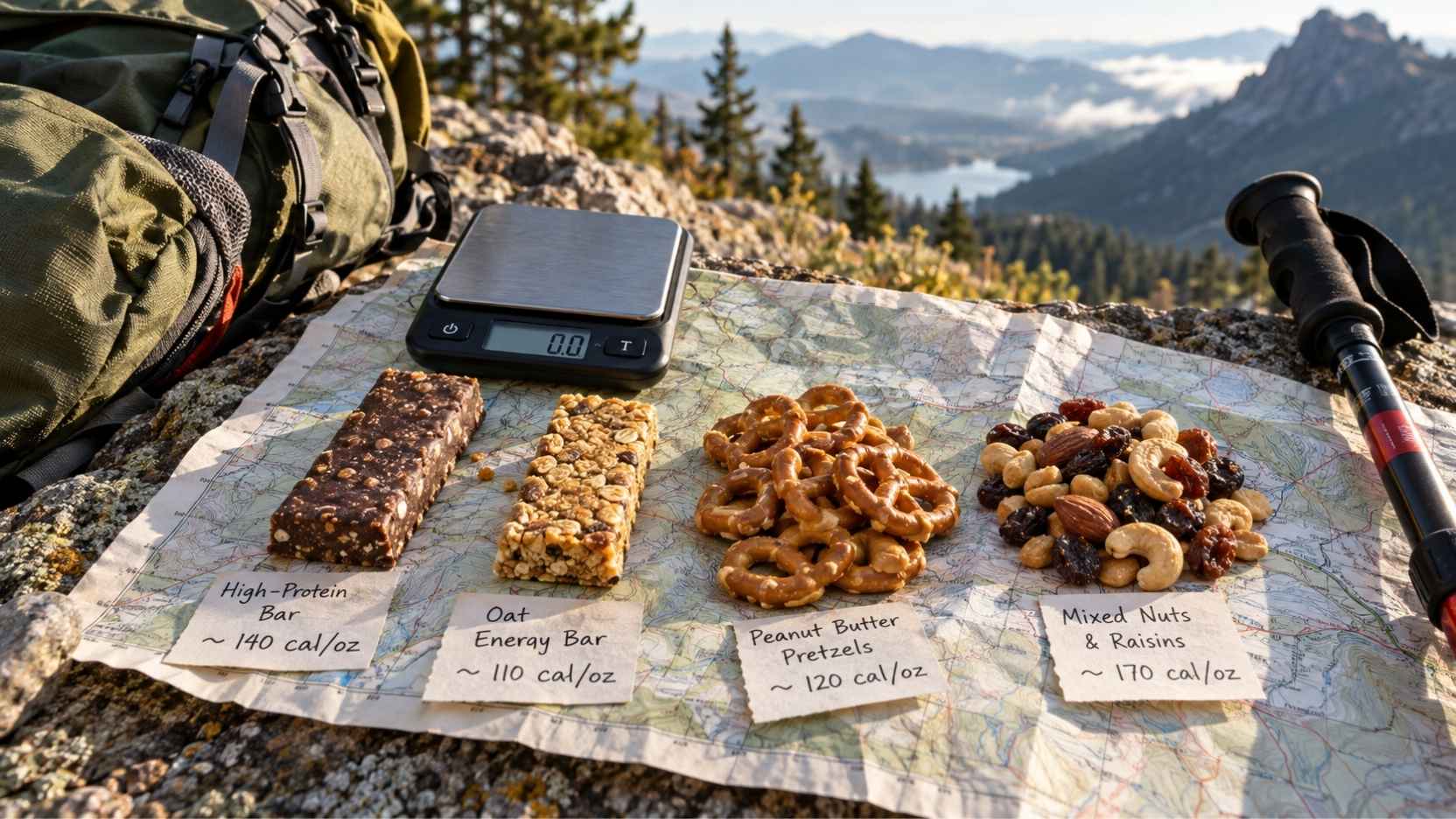
Calories per ounce are especially useful for backpackers comparing food weight rather than package size. Nuts and nut butters often rank high because fat provides about 9 calories per gram, while carbohydrate and protein provide about 4 calories per gram. That does not automatically make high-fat foods “better,” but it explains why compact summer snacks often rely on nuts, seeds, and nut butters for weight-efficient energy.
Chocolate and Coated Snacks
Chocolate is compact and calorie-dense, but it is one of the least dependable snacks in strong summer heat. As chocolate warms, its fat phase softens, so pieces can smear across wrappers, coat trail mix, or turn into one sticky block inside a pocket. 🍫 Dark and milk chocolate behave differently depending on their formulas, but ordinary chocolate should not be treated as melt-proof.
Coated nuts create a similar tradeoff. Cacao-dusted or dry-seasoned almonds are generally less messy than nuts covered in a thick chocolate or confectionery coating, while yogurt-style coatings can also soften or become tacky. If you want chocolate-like flavor with less melt risk, dry cocoa- or cacao-dusted nuts are often more practical than full chocolate pieces, though the exact coating still matters.
Nuts, Nut Mixes, and Dried Fruit
Plain nuts are among the most reliable summer hiking snacks because they handle heat well, pack densely, and often provide roughly 160 to 200 calories per ounce, depending on the nut. Almonds, peanuts, cashews, pistachios, and mixed nuts also resist crushing better than many crackers. A sturdy zip pouch or small screw-top container helps prevent leaks and crushed packaging.
Dried fruit adds sweetness without the melting problem of chocolate. Raisins, apricots, mango, dates, cranberries, and banana chips vary widely in moisture and added sugar, and softer fruit can become sticky when heated even though it does not melt like chocolate. Pairing dried fruit with nuts creates a simple trail mix that combines easy-to-eat carbohydrate with the higher calorie density and durability of nuts.
Jerky, Savory Foods, and Crackers
Jerky is useful when you want a savory break from sweet bars or fruit. Commercial beef, turkey, and plant-based jerkies are commonly shelf-stable before opening, but storage instructions differ, so follow the package label after opening. Jerky also resists crushing well, though it is usually less calorie-dense than nuts because many varieties contain less fat.
Crackers, pretzels, pita chips, and similar crunchy foods handle heat but often fail the durability test. Many fall around 110 to 160 calories per ounce, depending on the product, yet they can become crumbs if they sit under heavier gear. 🥨 A rigid container adds protection but also adds weight, so hikers often pack durable crackers near the top of the food bag or choose sturdier options such as pretzel nuggets.
Nut-Butter Packets
Single-serve nut-butter packets are a compact way to add calories without worrying about chocolate-style melting. Peanut, almond, and mixed-nut butters often provide roughly 160 to 200 calories per ounce, and flexible packets fit into small gaps in a food bag. Heat may cause some oil separation, but kneading the packet before opening usually remixes it.
The main weakness is packaging. A punctured packet can coat nearby foods with oil, so keep nut butter away from sharp objects and consider placing packets inside a secondary zip bag. Nut butter also pairs well with crackers, tortillas, or dried fruit, letting you change texture without carrying a snack that needs refrigeration.
Foods That May Require Temperature Control
Some foods work for a short hike but become poor choices when the route is long, the weather is hot, or the trip lasts several days. Tuna salad, cheese-based snacks, cut fruit, cooked meats, dairy foods, and other perishables can become unsafe when not kept adequately cold, so suitability depends on time, storage, and package instructions, not on whether the food still looks normal. 🧊 An ice pack can be useful for a short outing, but it should not be assumed to provide reliable multi-day refrigeration.
Unopened shelf-stable tuna pouches are different from tuna mixed with mayonnaise or other perishables. A chilled lunch may work for a day hike, while multi-day backpacking generally favors shelf-stable foods that are simpler to manage. “Doesn’t melt” does not automatically mean “safe in heat.”
Summer Snack Table: Calories, Weight, Melt Risk, and Mess
The numbers below are broad estimates, because brands, recipes, moisture levels, coatings, and serving sizes can change calorie density and heat behavior. Use them as a planning shortcut rather than an exact ranking, and check the nutrition panel and storage instructions on the food you actually buy. 📊 For hot-weather packing, melt risk and mess can matter almost as much as calories.
| Snack | Approx. calories/oz | Melt risk | Crush risk | Mess risk |
|---|---|---|---|---|
| Plain nuts | 160–200 | Low | Low | Low–Medium |
| Nut-butter packets | 160–200 | Low | Low | Medium if punctured |
| Chocolate | 140–170 | High | Low | High in heat |
| Dried fruit | 80–120 | Low | Low | Medium if sticky |
| Jerky | 70–110 | Low | Low | Low |
| Crackers/pretzels | 110–160 | Low | High | Low |
| Cacao-dusted nuts | 150–190 | Low–Medium | Low | Low–Medium |
| Shelf-stable tuna pouch | 30–60 | Low | Low | Medium after opening |
A useful comparison is weight efficiency versus trail durability. Chocolate may offer plenty of calories for its weight but lose points in heat, while nuts stay compact and resilient, and crackers survive temperature but not pressure. The best summer snack is therefore not always the one with the highest calorie number—it is the one that still works after hours inside your actual pack.
Building a Hot-Weather Snack Bag
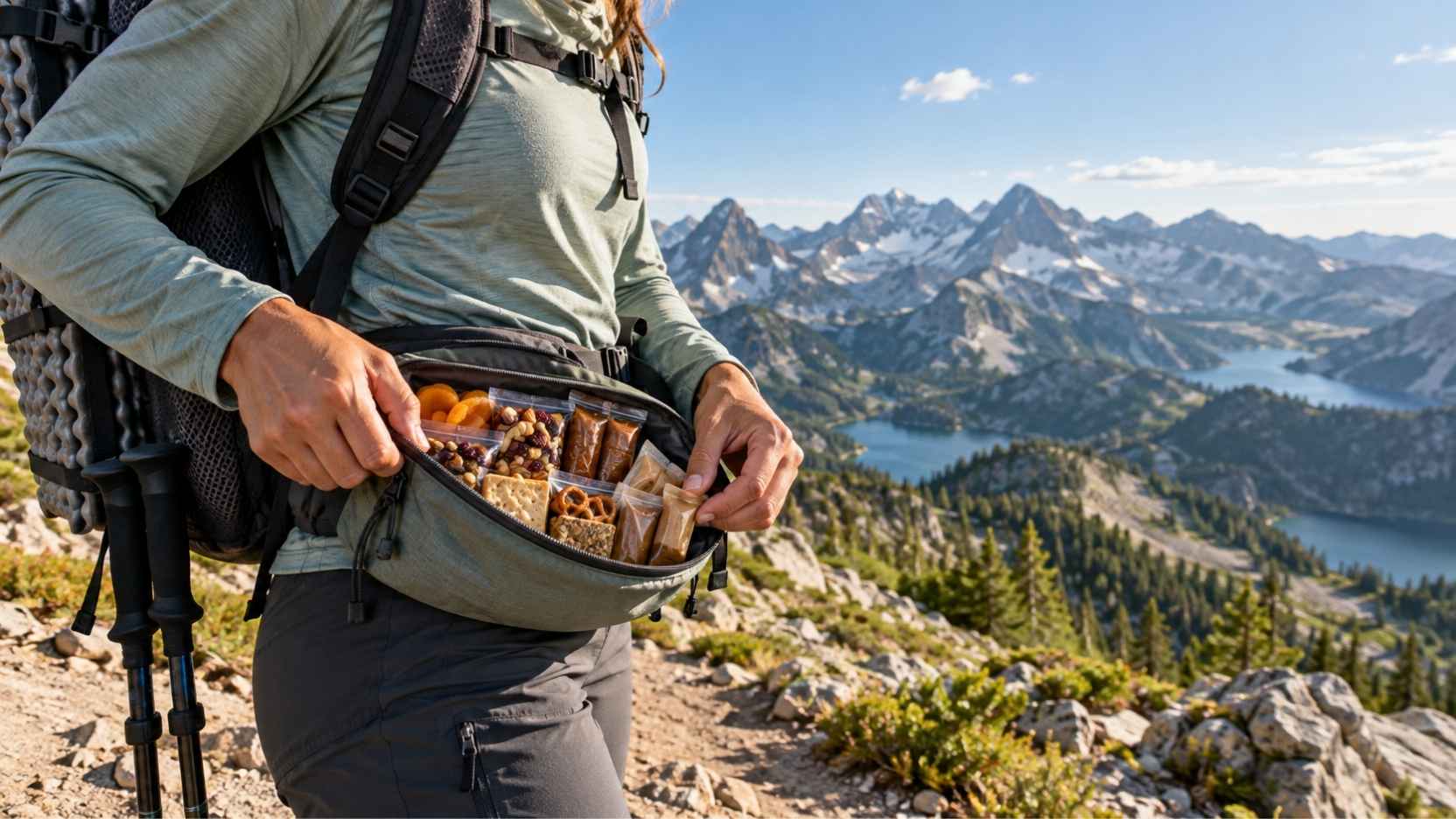
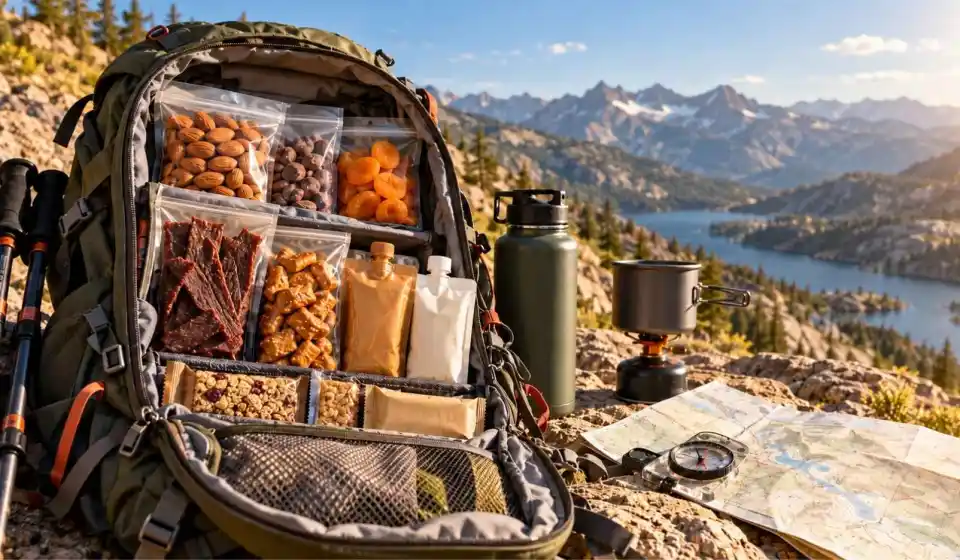
A good hot-weather snack bag mixes textures and energy densities instead of relying on one food. One practical combination is plain nuts or cacao-dusted almonds for calorie density, dried fruit for a sweeter option, jerky for something savory, and one or two nut-butter packets as compact backup food. Add crackers or pretzels only if you have space to protect them, and keep oily or puncture-prone packets inside a secondary bag.
You can then connect snack choices to the rest of your summer food plan. Use your Calories Per Ounce Table to compare weight efficiency, your Electrolyte Science guide to think separately about hydration and sodium, and your Summer Menu content to scale these foods into a full-day or multi-day pack. 🎒 The key is simple: the best hiking snacks for hot weather are foods that remain edible, shelf-stable, packable, and low-mess after the trail has been hot for hours.