Should You Save Caffeine for Later in a Long Hike—or Use It From the Start?
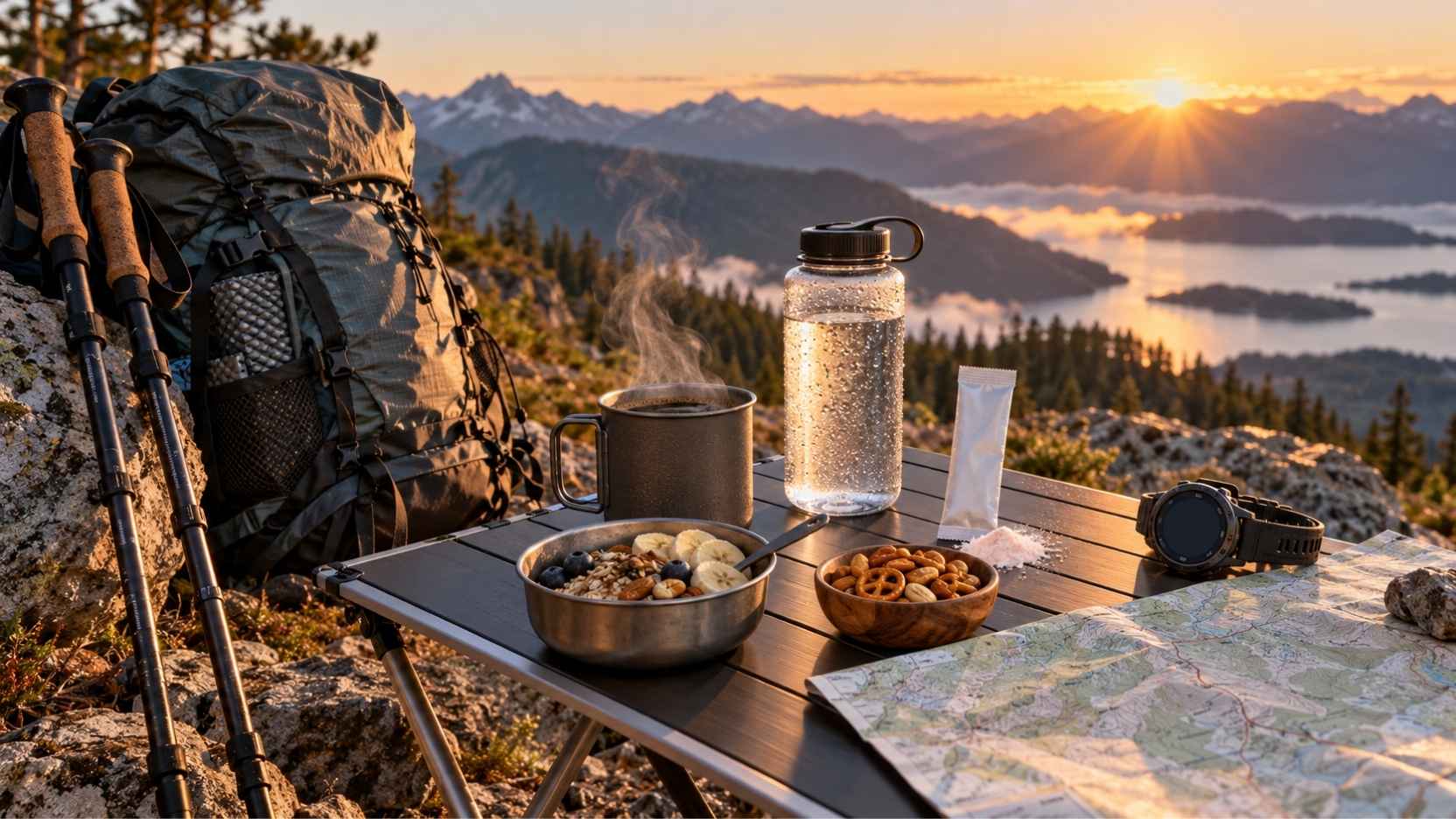
Caffeine creates a planning problem on a long hike because the question is not simply whether you drink coffee, use a caffeinated gel, or skip it. ☕ The harder question is where caffeine fits into a day that may begin before sunrise, last many hours, and end near bedtime. It is more useful to schedule caffeine beside food, water, breaks, route timing, and sleep than to treat it as an automatic “boost.”
That is why two hikers can make different choices and both be reasonable: one may keep a normal morning coffee routine, while another may reserve caffeine for later. Mileage alone cannot settle the issue because usual caffeine habits, total intake, start time, finish time, sensitivity, and planned sleep all matter. 🥾 The goal is not to find a universal caffeine hour, but to build a schedule that fits the actual trip.
Why “When?” Can Matter As Much As “How Much?”
People often focus on milligrams, but timing determines what else caffeine overlaps with during the day. A coffee before a 5:30 a.m. start creates a different schedule from the same drink late in the afternoon, even though the dose is identical. ⏱️ Once caffeine moves later, bedtime becomes part of the calculation.
Caffeine can remain in the body for hours, and clearance varies between people. Research has found that a substantial dose taken six hours before bedtime can still disrupt sleep, although that does not create a universal six-hour cutoff for every person or dose. The practical lesson is simple: late-day caffeine should be planned with sleep in mind, not only with the remaining miles.
Early Start, Afternoon Start, Or Overnight Route?
For an early-start hike, a regular coffee drinker may choose to keep the same morning habit used on an ordinary day. 🌅 That coffee still counts toward the day’s total, so later gels, drink mixes, sodas, or coffee should not be treated as if the counter resets at the trailhead. Someone who rarely consumes caffeine may reasonably make a different choice because individual responses vary.
An afternoon-start hike moves the same serving closer to bedtime, while an overnight route creates a very different sleep-and-fatigue problem. 🌙 This is why “always use caffeine before hiking” and “always save it for later” are both too rigid. If unusual overnight effort, extreme fatigue, medical issues, or safety-critical alertness are involved, individualized professional guidance is more appropriate than copying a forum routine.
Morning Coffee Counts—And So Does Everything Else
A common tracking mistake is counting only sports products while forgetting the coffee consumed at breakfast. The U.S. FDA notes that 400 milligrams per day is an amount not generally associated with negative effects for most healthy adults, but individual sensitivity and circumstances vary. ☕ That figure is a general reference, not a target to reach or a personal recommendation for every hiker.
Caffeine may also appear in tea, soda, energy drinks, gels, chews, drink powders, chocolate, and other products. 🔎 Amounts vary widely, so reading the specific label is more reliable than assuming one gel equals one coffee or that every cup contains the same amount. A simple note listing each source, caffeine per serving, and planned time can reveal accidental stacking.
Why Mileage Cannot Set Your Caffeine Clock
A 20-mile day does not tell you whether caffeine belongs at mile zero, mile ten, or nowhere at all because twenty miles can unfold in very different ways. One hiker may finish early on smooth terrain, while another spends most of the day climbing, navigating, stopping for water, or carrying a heavier pack. 🗺️ Start time, elapsed time, meal timing, expected finish, and bedtime are more useful scheduling variables than distance alone.
This is why rules such as “save caffeine until halfway” can be misleading without a clock attached. Halfway might be 10:30 a.m. on one hike and 6:30 p.m. on another, creating very different sleep considerations. A stronger plan places caffeine on the same timeline as breakfast, snacks, water stops, major climbs, camp arrival, dinner, and sleep.
Example Timeline For A Six-Hour Hike
Imagine a six-hour hike starting at 7:00 a.m. and ending around 1:00 p.m. 🥾 A regular coffee drinker might keep a normal breakfast coffee, record it, and carry a caffeinated snack only as an option rather than assuming it must be used. Someone who normally avoids caffeine could build the same six-hour food plan without adding it at all.
Around the middle of the hike, ask practical questions: How much caffeine has already been consumed, how do you normally tolerate it, what time will you finish, and when will you sleep? A six-hour outing does not automatically require another serving simply because several hours have passed. ✅ Food, fluids, pacing, rest, and weather still need their own solutions rather than treating caffeine as a substitute for basic trail management.
Example Timeline For A Twelve-Hour Backpacking Day
Now imagine a backpacking day beginning at 6:00 a.m. and ending around 6:00 p.m. A regular coffee drinker might include the morning serving at breakfast, then clearly mark every caffeinated gel, drink mix, soda, or coffee carried for later. 🎒 As the afternoon progresses, the question becomes not only “Do I want caffeine now?” but also “What could this mean for tonight?”
For someone hoping to sleep around 9:00 or 10:00 p.m., a large late-afternoon serving deserves more scrutiny than an early-morning one. There is no single cutoff that works for everyone because dose, metabolism, habitual use, and sensitivity differ, but late intake deserves more attention on multi-day trips. Carrying both caffeinated and non-caffeinated snack options gives you flexibility when the hiking day runs later than expected.
Sleep Is Part Of The Fueling Schedule
A backpacker can become so focused on reaching camp that the next night’s sleep disappears from the plan. 😴 If late caffeine makes it harder for that person to sleep, tomorrow begins under different conditions than expected. On a multi-day route, the final hours of today’s caffeine schedule can therefore affect how manageable the next day feels.
This is why “save all caffeine until the end” is not a universally better strategy. Delaying every serving can concentrate caffeine near bedtime, while earlier use may fit another hiker’s routine more naturally. The better question is which timing pattern creates the fewest conflicts with the whole trip schedule, not which rule sounds more athletic.
Build Caffeine Into Your Food-And-Water Plan
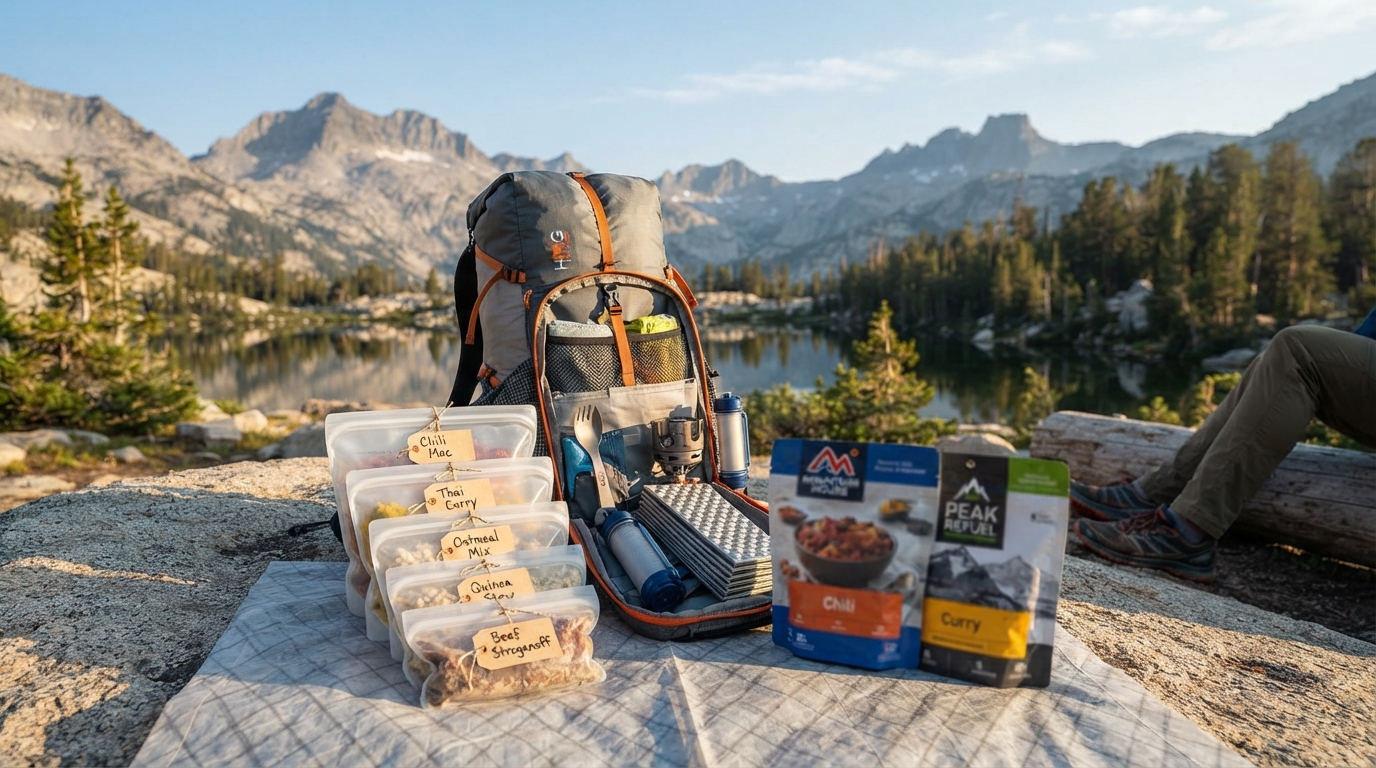
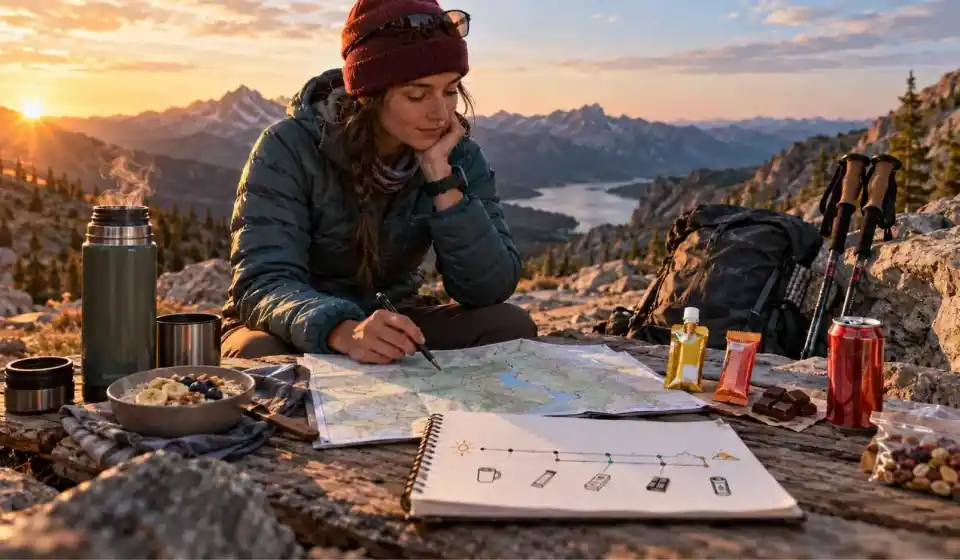
Treat caffeine as a labeled menu component rather than an emergency item hidden in a hip belt. Write breakfast, snacks, meals, drink mixes, caffeinated items, water opportunities, approximate times, finish time, and bedtime on the same planning sheet. 📝 This makes it easier to notice when several modest sources cluster together.
Caffeine also cannot replace food or hydration planning because coffee, gels, soda, and chocolate provide very different amounts of carbohydrate, sodium, fluid, and calories. Think of caffeine as one column in the trail-food spreadsheet beside calories, weight, carbohydrate, sodium, water needs, and preparation. That approach turns caffeine into a measurable scheduling variable instead of a performance promise.
When Individualized Advice Needs A Professional
General planning becomes individualized health advice when someone is pregnant, takes medications that may interact with caffeine, has a condition affected by stimulants, experiences concerning symptoms, or has been told to restrict caffeine. ⚕️ In those cases, advice from a qualified healthcare professional is more appropriate than copying another hiker’s dose or timing. Pure or highly concentrated caffeine products also require particular caution because small measuring errors can create dangerously large doses.
For most recreational hikers, the takeaway is simple: you do not have to save caffeine for later, and you do not have to start the hike with it. Track your normal habits, count every source, consider start and finish times, keep sleep visible in the plan, and avoid turning mileage into a dosing clock. 🏕️ Good fueling strategy is less about finding one perfect caffeine hour and more about building a schedule that still works when the day changes.