Simple Trail Food vs A Perfect Meal Plan: Why Flexible Food Systems Are Easier To Pack
A perfectly calculated backpacking menu can look impressive on a spreadsheet, yet become surprisingly fragile once weather, appetite, resupply options, cooking time, or food preferences change on the trail. 🎒 If every meal depends on one specific ingredient, losing interest in that food or discovering that a store does not carry it can throw the entire plan off. Simple backpacking food works better when the system tells you what each food needs to accomplish instead of demanding an exact list of ingredients.
That means thinking in functions: Base + Protein + Dense Calories + Snack Fuel + Flavor, then filling those jobs with whatever foods suit the trip. One hiker might build dinner around couscous and tuna, while another uses instant rice and dehydrated beans without changing the basic structure at all. 🥣 A flexible backpacking nutrition plan therefore behaves more like a template than a diet.
Why Rigid Meal Plans Break Down Outdoors
Home meal plans operate in an environment where refrigerators, supermarkets, measuring cups, sinks, microwaves, and replacement ingredients are usually nearby. Backpacking removes most of those conveniences while adding pack weight, limited fuel, food durability, water availability, cleanup, and appetite changes to the calculation. 🏕️ A meal that works beautifully in a kitchen can become inconvenient when every ingredient must travel several miles on your back.
Rigid plans also assume that you will want exactly what you planned days earlier, yet food preferences can change during a trip. Sweet bars may sound appealing at home but feel repetitive after several snacks, while a savory tortilla or hot bowl of couscous may suddenly become much more attractive. The useful backpacking system leaves enough room to change foods without destroying the calorie structure of the entire menu.
The Useful Lesson Hidden Inside Performance Diets
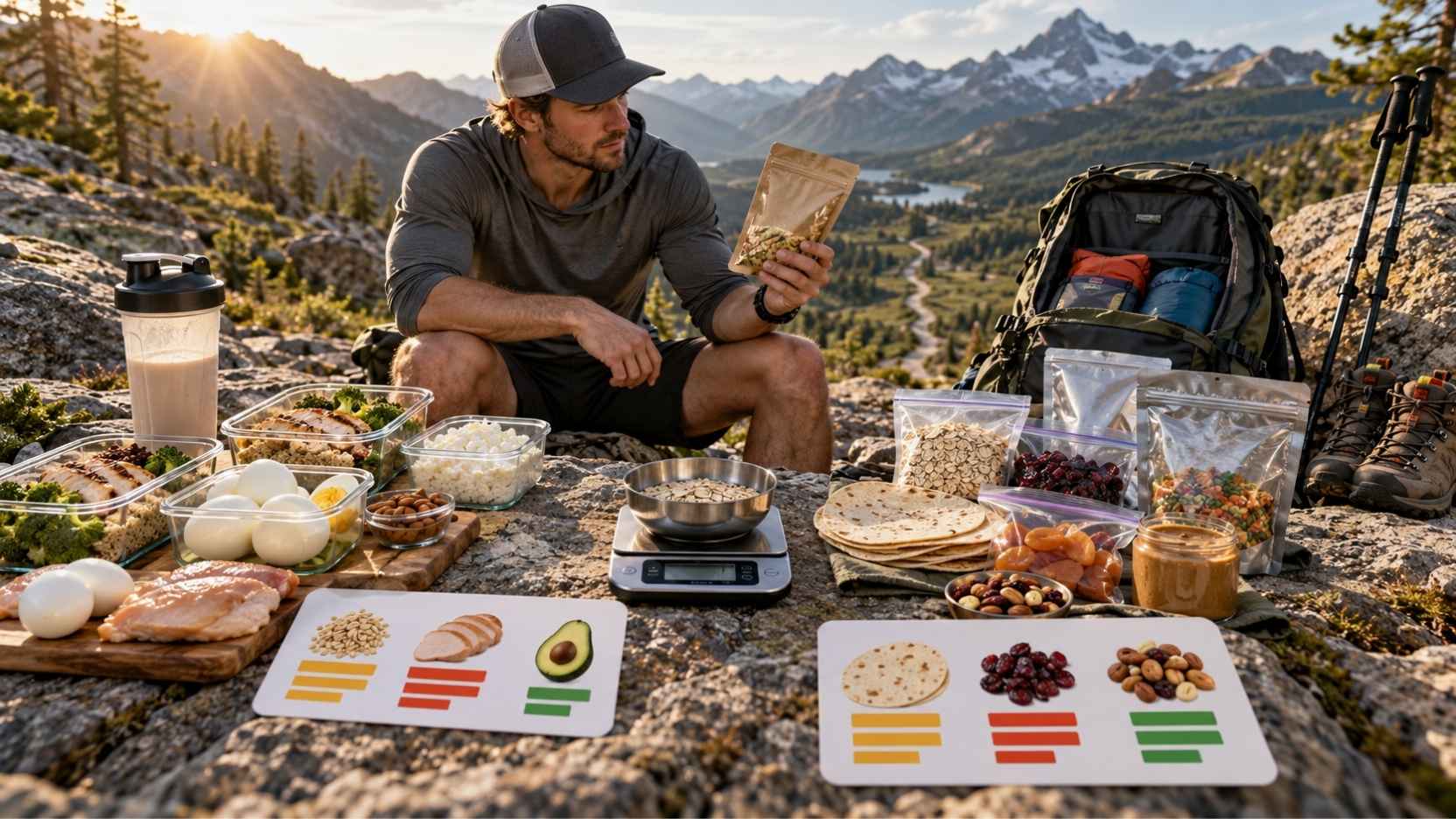
Structured sports diets can still teach hikers something valuable even when the exact foods or macronutrient targets are not appropriate for backpacking. Their useful lesson is that different ingredients perform different nutritional jobs: carbohydrates provide energy, protein contributes amino acids, and dietary fat provides concentrated calories. ⚙️ What hikers do not need to copy is the idea that those jobs can only be performed by one specific chicken-and-rice-style menu.
Trail food becomes much easier to design when the function stays fixed while the ingredient remains flexible. Rice can become couscous, tortillas, oats, noodles, or potatoes depending on the meal, while tuna might become dried meat, beans, powdered ingredients, or another practical protein source. Instead of memorizing fifteen “correct” foods, you learn how to replace one component with another.
Start With Food Functions Instead Of Specific Foods
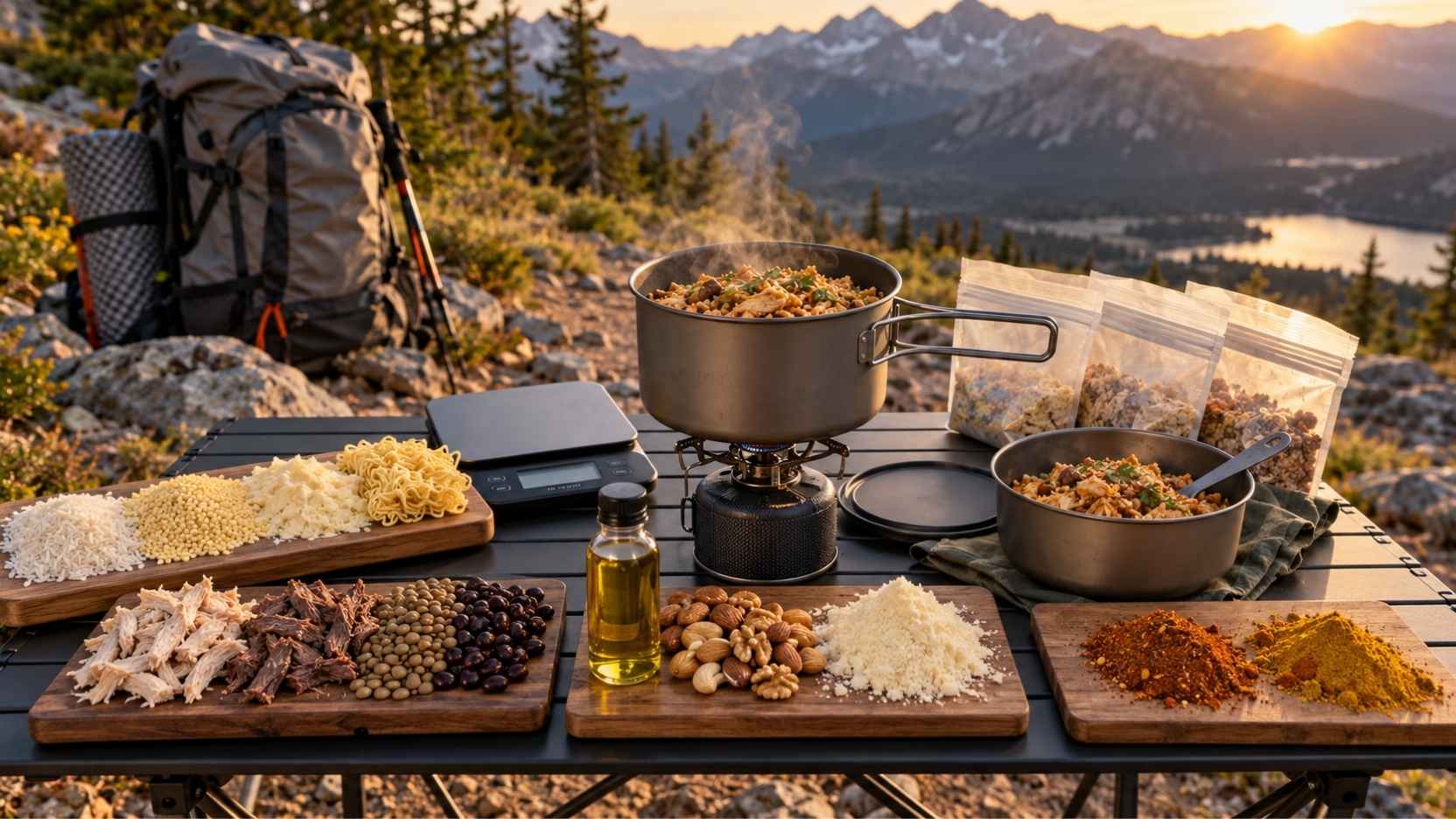
A simple trail-food architecture can be organized into five jobs that cover most everyday pack-out decisions. 🔧 The carbohydrate base supplies the foundation of a meal, a protein component adds protein-rich food, dense calories help raise energy without dramatically increasing food weight, moving snacks provide easy access during hiking, and flavor prevents everything from tasting identical. Once those jobs are filled, the exact ingredients become much easier to customize.
| Food job | Practical trail options |
|---|---|
| Carb base | Rice, couscous, oats, tortillas, instant potatoes |
| Protein component | Tuna packet, dried meat, powdered ingredients, beans |
| Dense calorie addition | Nut butter, nuts, olive oil, seeds |
| Moving snack | Dried fruit, bars, trail mix, crackers |
| Flavor | Seasoning packets, broth powder, spices, sauces |
This approach also makes grocery shopping simpler because you can shop by category rather than recipe. If couscous is unavailable, buy instant rice; if tuna packets are expensive, choose another shelf-stable protein that fits your trip. 🛒 Your menu survives because the architecture remains intact even when one ingredient changes.
Choose Your Carbohydrate Base
Carbohydrate-rich foods often form the largest portion of lightweight trail meals because options such as oats, couscous, tortillas, instant rice, and dehydrated potatoes are easy to portion and combine. The best base depends on whether the meal must be eaten while walking, cold-soaked, cooked quickly, or prepared at camp. 🍚 Tortillas are convenient for lunch, while oats and couscous fit naturally into breakfast and dinner systems.
Calorie density matters, but convenience matters too, which is why there is no single carbohydrate that wins every scenario. A slightly heavier food may still deserve a place on an overnight hike if you genuinely enjoy it, while a multi-day trip makes weight savings increasingly important. Choose the base according to the trip rather than forcing every trip to follow the same menu.
Add A Practical Protein Source
Protein planning becomes easier when hikers stop assuming it requires carrying conventional refrigerated meals. Shelf-stable options can include tuna or chicken packets, dried meat, dehydrated beans, powdered ingredients, nuts, seeds, or combinations of foods depending on personal preferences and dietary needs. 💪 The goal is not to declare one ingredient superior but to choose something that packs, stores, and prepares realistically.
Protein sources also differ dramatically in water content and calorie density, so the lightest option is not always the one with the highest protein number on the label. A food containing considerable water may be heavier than a dry alternative, while nuts provide both protein and substantial fat calories. Reading the actual serving weight, calories, protein, and storage instructions gives you more useful information than simply categorizing foods as “high protein.”
Use Fat To Increase Calorie Density
Fat contains about 9 calories per gram, compared with roughly 4 calories per gram for carbohydrate and protein, which explains why fatty foods can increase the energy density of a backpacking menu quickly. 🥜 Nut butter, nuts, seeds, olive oil, cheese where storage conditions permit, and similar ingredients can contribute substantial calories without requiring huge food portions. This does not mean every backpacking meal should be dominated by fat, but it makes fat a useful packing tool.
Imagine increasing a dinner by several hundred calories using extra cooked rice versus adding a smaller amount of oil, nuts, or nut butter. The first approach can require substantially more dry food weight, while concentrated fats accomplish the calorie increase with less mass. Calorie density becomes especially valuable as trip length increases, because every day’s food must initially be carried somewhere in the pack.
Separate Walking Food From Camp Food
Trying to make every food serve every situation creates unnecessary compromises. 🚶 Walking food should generally be easy to reach, simple to eat, and require little or no preparation, which makes bars, trail mix, dried fruit, tortillas, crackers, and similar foods practical choices. Camp food can prioritize warmth, texture, variety, and foods that require water or cooking.
Separating these two categories prevents a common planning mistake where hikers build impressive dinners but underestimate what they will actually eat between camps. A backpack might contain enough total calories mathematically while still providing inconvenient access to them during the walking portion of the day. Designing a specific moving-food allowance makes the entire menu easier to use in reality.
Build Substitutions Before Leaving Home
A flexible menu works best when substitutions are decided before they are needed. Instead of writing “Tuesday dinner: exactly 100 grams couscous, tuna, and olive oil,” write “carbohydrate base + protein + calorie-dense addition + seasoning.” 🔄 You now know what kind of replacement to look for if an ingredient disappears from the grocery shelf or becomes unappealing.
This becomes especially helpful on trips involving resupply stores with unpredictable inventories. Tortillas might replace bread, peanuts could replace mixed nuts, instant potatoes might replace rice, or another shelf-stable protein could replace the original choice while preserving the food’s basic job. Flexibility is not poor planning—it is planning for multiple acceptable outcomes.
One Framework, Three Different 3,500-Calorie Menus
Consider three hypothetical days built around approximately 3,500 calories, purely as demonstrations of how one architecture can produce completely different menus. 🔢 This number is not a recommendation for every hiker because actual energy needs vary with body size, hiking duration, terrain, pace, conditions, and many individual factors. The important lesson is how interchangeable categories can produce roughly similar total food energy.
| Meal | Menu A: Mixed | Menu B: Vegetarian-style | Menu C: Convenience-focused |
|---|---|---|---|
| Breakfast | Oats, peanut butter, raisins | Oats, powdered milk, chia, nut butter | Granola, powdered milk, protein powder |
| Morning snack | Trail mix | Trail mix | Mixed nuts |
| Lunch | Tortillas, tuna, oil, cheese | Tortillas, peanut butter, jam | Tortillas, chicken packet, mayonnaise |
| Afternoon snack | Bar, nuts, dried fruit | Bar, dried fruit | Two bars, dried fruit |
| Dinner | Couscous, beans, oil, seasoning | Instant rice, beans, oil, seasoning | Instant potatoes, dried meat, oil, gravy |
| Extra | Small sweet | Small sweet | — |
| Approximate total | ~3,500 calories | ~3,500 calories | ~3,500 calories |
The exact totals would depend on brand, portion size, recipe, and nutrition label, so a real pack-out should be calculated from the food actually purchased rather than these rounded examples. What matters is that all three menus use the same underlying architecture even though their individual foods look very different. 🎯 That means a hiker can change taste, budget, dietary preference, or store availability without rebuilding the planning method from zero.
Turn The Framework Into A Grocery Template
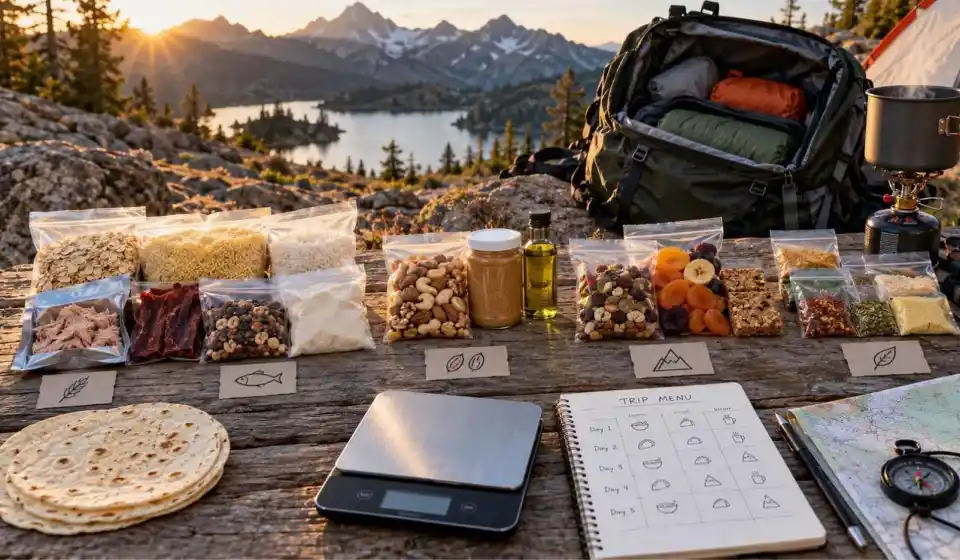
The easiest way to use the system is to create five columns before shopping: carbohydrate bases, protein components, calorie-dense additions, moving snacks, and flavor options. Decide approximately how many meals and snacks the trip requires, then select enough items from each category to fill those positions. 📝 This is faster than inventing every meal independently because repeated components can be purchased and portioned together.
After shopping, calculate the calories and food weight from the actual labels, then adjust portions rather than assuming your first draft is perfect. If the food bag is heavier than expected, investigate high-water or low-calorie-density items; if total food energy is lower than intended, consider whether a more calorie-dense addition solves the gap efficiently. The spreadsheet should refine the system, not become the system.
A Good Trail Menu Is A System You Can Actually Repeat
The strongest backpacking meal plan is not necessarily the one containing the most precise macro ratios, complicated recipes, or perfectly optimized ingredients. 🏔️ It is the one that fits inside the backpack, survives the expected conditions, provides foods you are willing to eat, works with available water and cooking equipment, and can be recreated without turning every grocery trip into a research project. Simplicity matters because a system becomes more useful when you can repeat it.
Think of trail-food planning like packing clothing layers: you do not need one exact shirt, jacket, and hat forever—you need to understand what job each layer performs. Food works similarly when you build around a carbohydrate base, practical protein, dense calories, accessible snacks, and enough flavor to keep meals appealing. Once you understand those jobs, backpacking meal planning becomes less about finding a perfect menu and more about building a flexible food system that survives the real world. 🥾