Snack Every Hour or Wait Until You’re Hungry? How to Time Food on a Long Hike
Introduction: There Are Three Ways Hikers Usually Manage Trail Food
Ask a group of hikers how often you should eat while hiking, and you will probably hear completely different answers from people who all finish long days successfully. 🥾 Some hikers wait until genuine hunger appears, others deliberately open a snack at planned points throughout the day, and another group keeps food in a hip-belt pocket so they can nibble without stopping. The important lesson is that trail fueling is not necessarily about discovering one perfect eating interval, but about choosing a system that keeps food accessible when your hiking day gets long.
A useful hiking fueling strategy should account for hiking time, terrain, pack weight, appetite, food preferences, weather, and how frequently you actually want to stop. Someone walking a gentle trail for eight hours may experience a very different day from someone spending those same hours climbing steep terrain, even if their mileage totals eventually look similar. 🌲 Instead of copying another hiker’s exact schedule, it is more practical to understand three common systems and build a trail eating timeline around your own trip.
Strategy 1: Eat When You’re Hungry
The simplest approach is exactly what it sounds like: carry enough food, hike normally, and eat when your appetite tells you that food sounds appealing. This system requires almost no planning beyond packing the food itself, making it attractive for hikers who dislike timers, rigid routines, or turning a recreational hike into a spreadsheet. 🍎 It can also work naturally with scenic stops because lunch or snacks can happen when you reach a viewpoint, lake, shelter, or comfortable resting area.
The limitation is that hunger cues differ substantially between people and situations, so hunger is not a perfectly predictable trail clock. Some hikers become hungry early, while others become absorbed in maintaining pace, navigating, climbing, photographing scenery, or reaching the next landmark and may postpone eating longer than intended. For someone who regularly realizes late in the day that most of the packed food is still untouched, relying exclusively on spontaneous hunger may be less convenient than adding a few planned eating opportunities.
Strategy 2: Planned Periodic Snacks
A second system is to divide the hiking day into several sections and assign food to those sections rather than waiting for hunger to make every decision. ⏱️ For example, a hiker might eat before starting, carry an early-trail snack, plan another eating opportunity later in the morning, stop for lunch around the middle of the hiking time, and keep another snack for the afternoon. The exact intervals do not need to be treated as nutritional rules; their purpose is simply to prevent an entire bag of food from remaining forgotten at the bottom of the pack.
This method is particularly useful for hikers who enjoy organization because meals can be packed according to when they are likely to be eaten. A small front-pocket bag might contain early snacks, lunch can remain deeper inside the pack until the longer stop, and late-trail food can be kept separately so it is not accidentally eaten immediately. 🎒 For longer trips, this style connects naturally with a Calorie Needs Calculator and menu templates because hikers can first estimate the food they want to carry and then distribute it across the day.
Strategy 3: Continuous Pocket Snacking
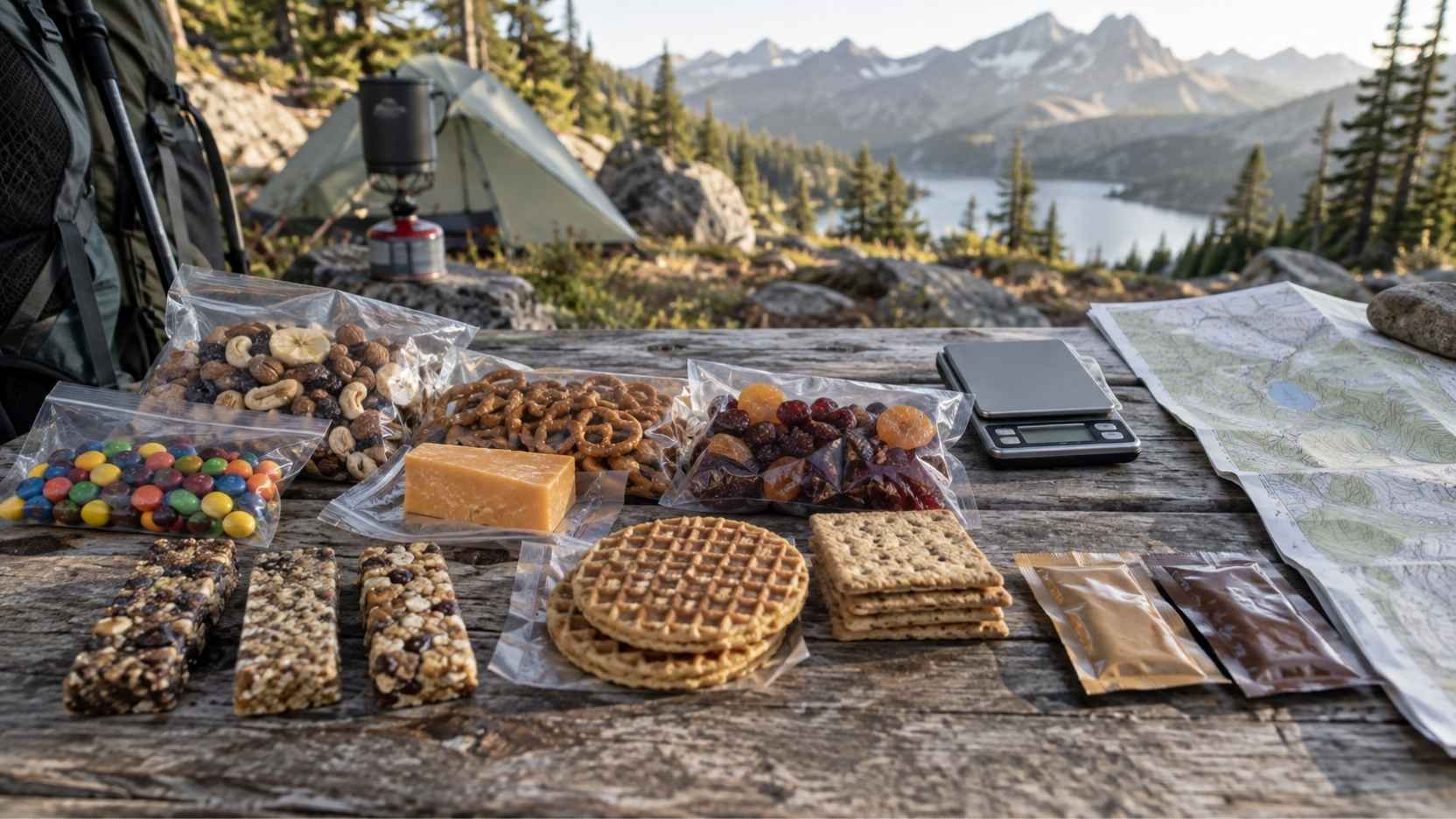
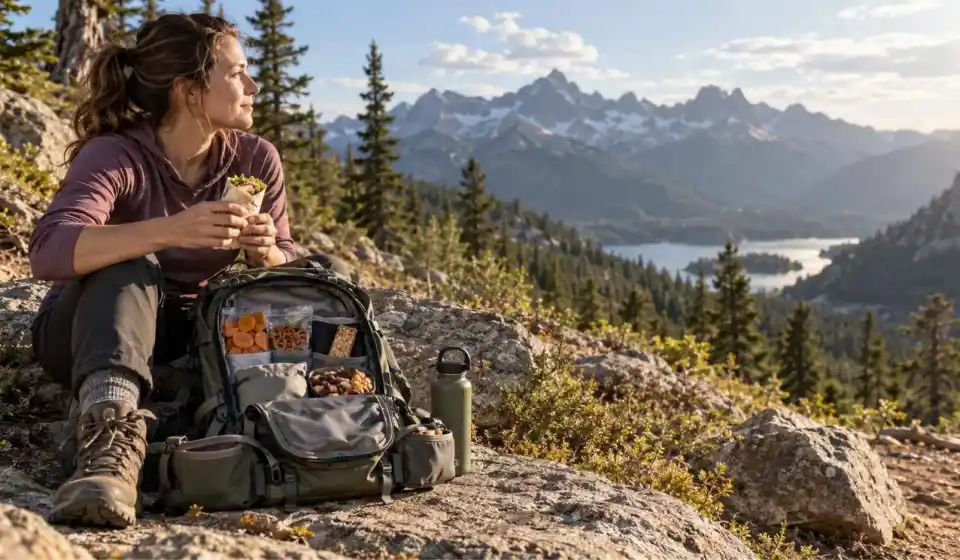
The third approach is sometimes called grazing: instead of repeatedly stopping for formal snacks, the hiker keeps small foods within easy reach and eats portions while moving. Hip-belt pockets, shoulder-strap pockets, and accessible pack compartments can hold foods such as dried fruit, pretzels, crackers, gummies, small bars, or other portable snacks that do not require preparation. 🚶 This approach reduces the friction between thinking about food and actually eating it because grabbing a few bites does not require removing the backpack.
Continuous snacking can be especially convenient during long stretches where stopping repeatedly feels unnecessary, but it creates its own logistical challenges. Foods must be easy to handle, packaging needs to remain manageable, and hikers still need to keep track of how much food is available for the rest of the day rather than accidentally finishing the easiest snacks early. It also does not eliminate the value of proper rest breaks, because sometimes sitting down, drinking, checking your feet, adjusting clothing, and eating a larger meal serves several purposes at once.
Why Mileage Isn’t Always the Best Clock
Planning food around mileage sounds logical until terrain changes the amount of time and effort represented by each mile. Five relatively flat miles might pass quickly, while five miles involving sustained climbing, difficult footing, stream crossings, route finding, or frequent elevation changes could occupy a much larger portion of the hiking day. ⛰️ That is why “eat at mile five” can be less useful than thinking in terms of morning, midday, afternoon, or approximate hiking time.
Time-based planning also adapts more easily when your pace changes unexpectedly. If a steep section slows the group dramatically, lunch does not have to remain trapped behind an arbitrary mileage target even though several hours have already passed. A useful principle is to treat distance as one planning variable rather than the only clock, especially when estimating food for routes with major elevation changes.
When a Real Meal Fits Better Than Another Snack
Trail snacks are convenient, but convenience does not mean every eating opportunity needs to consist of a bar, gel, or handful of trail mix. Many hikers pack sandwiches, wraps, tortillas, bagels, or other substantial foods because a longer midday break can provide variety and make an extended hiking day feel less like an endless sequence of snack packages. 🥪 A meal can also create a deliberate stopping point where you reorganize the pack, assess remaining food and water, and prepare mentally for the second half of the route.
This distinction becomes useful when designing a menu because snacks and meals solve different logistical problems. Snacks excel when portability and quick access matter, while lunch can prioritize satisfaction, texture, variety, and foods that are slightly less convenient to eat while walking. Your related Carbs vs Fat on the Trail guide can explore the macronutrient side of food selection, while the schedule itself should remain focused on when different foods fit most conveniently.
Build Your Own Trail Eating Timeline
Start with the structure of the day rather than searching for a universal rule about how often to snack while hiking. A practical sequence might look like pre-start food → early-trail snack → middle-of-morning food → lunch → afternoon snack → late-trail food → backup food, with individual stages removed or expanded depending on the length of the outing. 🗺️ This gives every packed item a rough job without requiring you to eat something simply because a timer has sounded.
Accessibility matters just as much as timing, because a perfectly planned snack is useless if reaching it requires unpacking half your backpack in the rain. Place foods intended for the next part of the hike somewhere reachable, while lunch and later food can remain farther inside the pack until needed. Keep an additional backup option separate when appropriate so unexpected delays do not force you to choose between finishing your planned food early and hiking considerably longer without anything remaining.
Sample 8-Hour Hiking Food Schedule
Consider an eight-hour hiking day beginning after breakfast: the hiker starts with breakfast before departure, carries an accessible snack for the early portion of the trail, and has another portable food option available during the late morning. Around the middle of the day, the hiker takes a longer break for a sandwich or wrap, then returns to smaller portable foods during the afternoon and keeps one final snack available for the later trail. 🕗 This is an example planning template, not an individualized nutritional prescription, and the actual amount, type, and timing of food should vary with the person and trip.
For example, the timeline could be thought of as 7:00 pre-start meal, 9:00 accessible snack, 11:00 portable food, 1:00 lunch, 3:00 afternoon snack, and 5:00 late-trail or backup food, assuming those approximate times suit the hike. The point is not that hikers medically need food at those exact hours; the value is seeing how a long day can be divided into manageable food opportunities before packing begins. For individualized nutrition concerns, medical conditions, or unusually demanding endurance goals, guidance from a qualified healthcare or sports-nutrition professional is more appropriate than copying a generic schedule.
The Best Hiking Snack Schedule Is the One You Can Actually Follow
The debate between snacking every hour and waiting until you’re hungry does not require a universal winner. Some hikers prefer intuitive eating, some perform better logistically with planned snack opportunities, and others simply keep convenient food in a pocket and graze as the trail passes beneath them. 🌄 The useful question is whether your chosen system makes it easy to carry enough food, remember that the food exists, access it without unnecessary hassle, and still have something available late in the hike.
For a longer mileage day, continue the planning process with Fueling a 20-Mile Day, then compare food composition in Carbs vs Fat on the Trail, estimate overall requirements with the Calorie Needs Calculator, and convert those numbers into actual foods using the Category 4 menu templates. Those resources handle quantities and menu construction, while this strategy handles the clock—the overlooked part of trail-food planning. 🎒 Once both pieces work together, your hiking food stops being a random collection of snacks and becomes a simple system designed around the way your day will actually unfold.