The Calories-to-Deliciousness Test: Which Trail Snacks Are Actually Worth Their Pack Weight?
Introduction: The lightest menu isn’t automatically the best menu
A backpacking menu can look brilliant in a spreadsheet and disappoint at mile twelve if every snack is repetitive, fragile, messy, or simply unappealing. 🎒 Calories per ounce matters, but a snack that remains uneaten becomes exactly the pack weight you were trying to avoid. The better question is not only “How many calories does this ounce contain?” but “Is this ounce worth carrying?”
That is the Camp Kitchen Lab Trail Snack Triangle: caloric density + packability + willingness to eat. It is not a medical score or a claim that one snack is universally healthier; it is a pack-design tool for balancing weight with real trail behavior. A lower-calorie snack can beat a denser one when it packs better, survives longer, creates less mess, or keeps the whole menu enjoyable.
Metric #1: Start with calories per ounce
Use total calories ÷ total ounces = calories per ounce, so a 190-calorie snack weighing 1.5 ounces provides about 127 cal/oz. Nutrition Facts calories refer to the stated serving size, and fat supplies 9 calories per gram compared with 4 for carbohydrate and protein, helping explain why nuts and nut butters often rank highly. For the most realistic pack figure, use the food you are actually carrying and include packaging weight when it is significant.
Metric #2: Count package volume too
Two snacks can have similar calories per ounce while occupying very different amounts of space. 📦 Dense bars, nuts, and nut-butter packets fit into small gaps, while croissants, puffed foods, or loosely packed snacks may consume much more room in a food bag or bear canister. Rebagging can reduce empty air, but protecting delicate foods may be worth the extra volume if crushing them ruins the texture you wanted.
Metric #3: Test trail durability
Trail durability asks what happens after hours beneath clothing, cookware, and other gear. 🥾 Crackers can crumble, pastries can flatten, chocolate can soften, cheese can become oily, and a leaking spread can affect several other foods. Rate handling risk as low, medium, or high, especially for anything destined for a hip-belt pocket or the top of the pack.
Metric #4: Measure ease of eating while moving
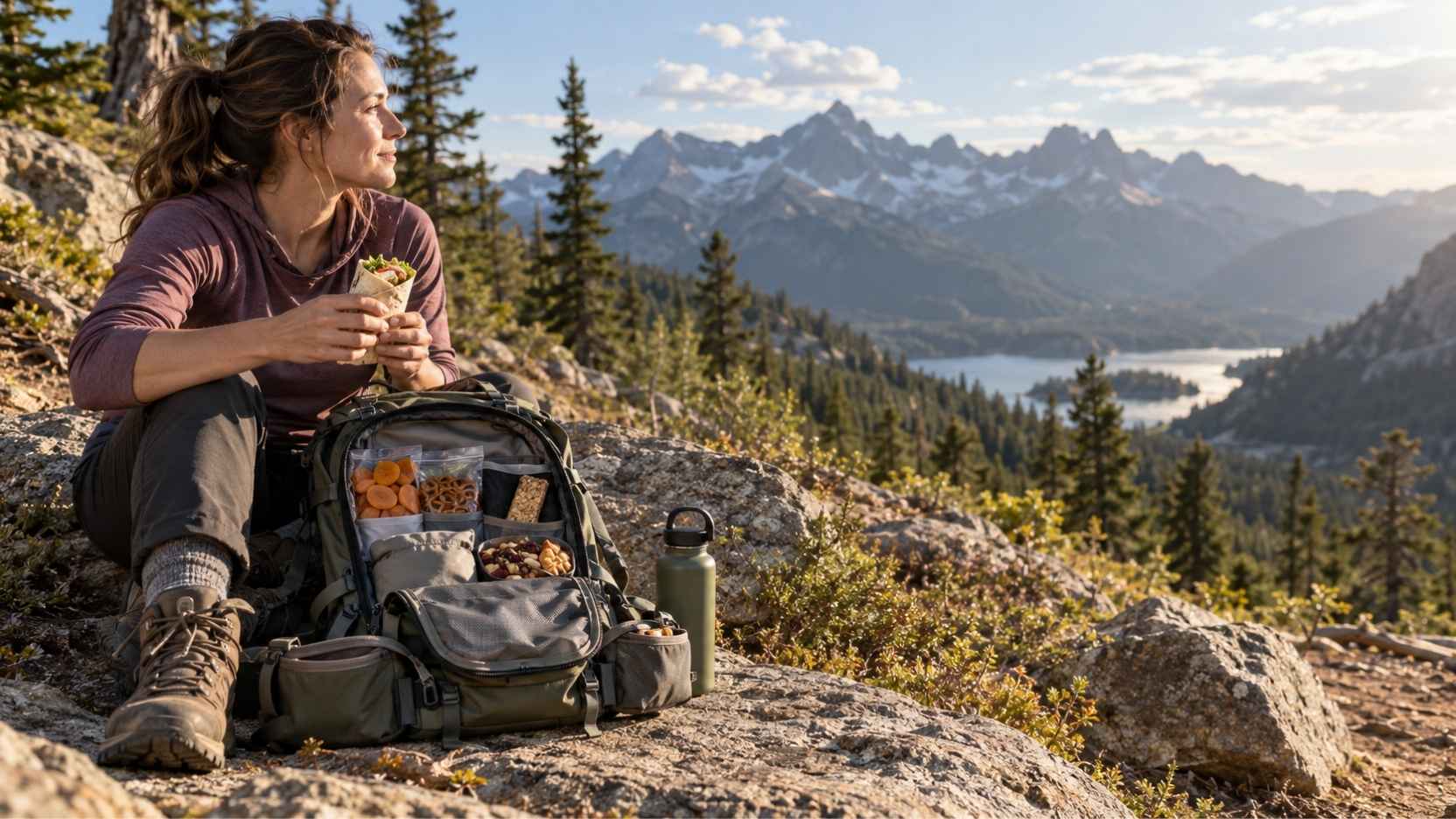
A good moving snack opens quickly, works in small portions, and needs no cooking or assembly. 🚶 Nuts, trail mix, pretzels, dried fruit, gummies, jerky, and many bars fit that role, while pizza, pancakes, or foods requiring preparation may be better during a proper stop. Convenience matters because planned calories only help when they become eaten calories.
Metric #5: Do you actually want to eat it?
Spreadsheets rarely measure appetite fatigue, yet repeated sweet, soft, or nut-heavy foods can make a carefully calculated menu feel monotonous. 😋 Mixing sweet, salty, chewy, crunchy, creamy, and savory options gives each snack a different job and can make the food bag more appealing over several days. The practical test is not whether you like a food at home, but whether you expect to still want it after repeatedly eating similar foods on trail.
Compare 20 trail snacks
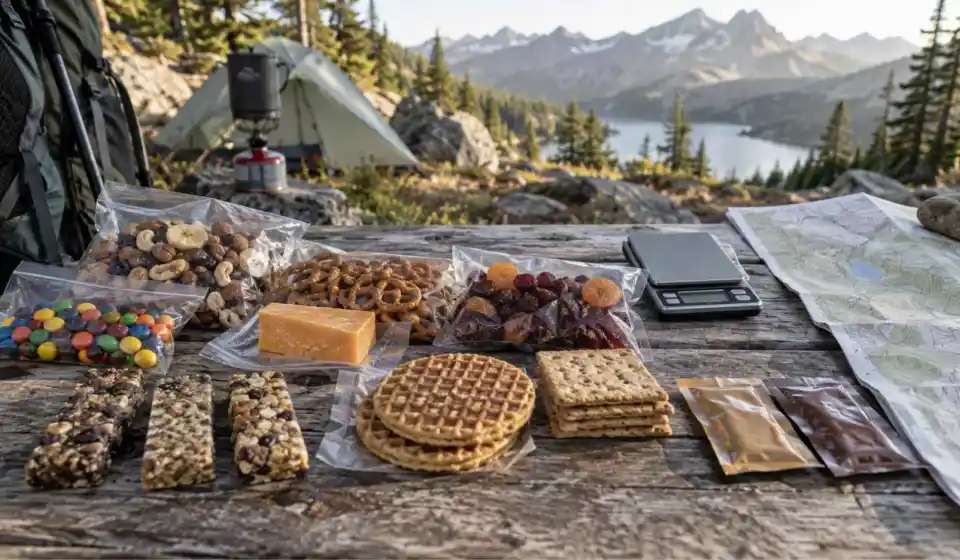
These are approximate working ranges, not universal nutrition facts, because brands, recipes, moisture, and serving sizes differ. Use the label on the food you actually buy for final calculations, especially if you are aiming for a tight average. The point is to expose tradeoffs between density, packability, mess, and flavor.
| Trail snack | Approx. cal/oz | Main macro | Packability | Mess | Flavor |
|---|---|---|---|---|---|
| Peanut butter | 165–170 | Fat/mixed | Excellent | Medium | Mixed |
| Peanuts | 160–170 | Fat/mixed | Excellent | Low | Savory |
| Almonds | 160–165 | Fat/mixed | Excellent | Low | Savory |
| Peanut M&M’s | 140–150 | Mixed | Excellent | Low-med | Sweet |
| Trail mix | 130–160 | Mixed | Excellent | Low | Mixed |
| Tortilla chips | 135–150 | Fat/carbs | Fair | Medium | Savory |
| PB pretzels | 130–140 | Mixed | Good | Low | Savory |
| Granola | 120–140 | Carbs/fat | Good | Low | Sweet |
| Dense waffle | 120–135 | Carbs/fat | Good | Low-med | Sweet |
| Summer sausage | 120–130 | Fat/protein | Good | Medium | Savory |
| Crackers | 115–130 | Carbs/fat | Fair | Medium | Savory |
| Cheddar | 110–120 | Fat/protein | Good | Medium | Savory |
| Croissant | 110–120 | Carbs/fat | Poor | High | Mixed |
| Energy bar | 100–130 | Mixed | Excellent | Low | Sweet |
| Toaster pastry | 105–115 | Carbs/fat | Good | Medium | Sweet |
| Gummies | 90–100 | Carbs | Excellent | Low | Sweet |
| Dried mango | 85–100 | Carbs | Good | Low | Sweet |
| Raisins | 80–90 | Carbs | Excellent | Low | Sweet |
| Beef jerky | 70–100 | Protein | Excellent | Low | Savory |
| Dried apricots | 65–75 | Carbs | Good | Low | Sweet-tart |
When lower caloric density is still worth carrying
A lower-density food can earn its ounces by adding a flavor, texture, or eating pattern missing from the rest of the menu. 🍑 Dried fruit is far less calorie-dense than nuts but is compact, chewy, easy to portion, and different from another handful of peanuts; jerky can similarly provide a strongly savory change. Every item should have a job, even when that job is simply making the denser parts of the menu easier to keep eating.
Build a 125-cal/oz average instead of demanding 125+ from every food
A flexible strategy is to target an average across the complete food bag instead of forcing every item above the same threshold. ⚖️ 3,000 calories ÷ 24 ounces = 125 cal/oz, so a lower-density snack can stay if denser foods elsewhere pull the total back toward the goal. This preserves taste and variety without abandoning pack-weight discipline.
For example, six ounces of nuts at about 165 cal/oz, six ounces of trail mix at 145, six ounces of granola or crackers at 120, and six ounces of dried fruit around 70 total roughly 3,000 calories across 24 ounces. The exact foods can change, but the principle stays useful: optimize the menu, not every bite. A mathematically perfect snack list is not automatically a better trail menu if you dislike eating it.
Conclusion: Use the Trail Snack Triangle
The calories-to-deliciousness test asks three questions: how much energy does the snack provide, how well does it pack, and how likely are you to eat it? 🔺 Some foods are density champions, some are excellent pocket foods, and others earn their place by bringing the flavor or texture the menu lacks. Start with calories per ounce, then check volume, durability, convenience, mess, and appetite before making the final cut.