Stop Chasing the Highest-Calorie Food: Build a 125-Cal/Oz Backpacking Menu Instead
Backpacking food planning often becomes a contest to find the most calories for the least weight. 🎒 Calories per ounce matter because food can become one of the heaviest consumables in a multi-day pack, but one aggressive cutoff for every item can make a menu repetitive or unpleasant. A better strategy is to choose a practical average for the entire food bag and let different foods work together.
For weight-conscious hikers, 125 calories per ounce is a useful planning benchmark because it equals 2,000 calories per pound of food. REI describes roughly 100 to 125 calories per ounce as a useful starting range while noting that food needs vary with trip intensity, mileage, body size, and other factors. This makes 125 cal/oz a packing tool, not a universal nutrition rule.
Why Calories Per Ounce Matter More Than Calories Per Serving
A Nutrition Facts label tells you calories per serving, but serving size does not tell you how efficiently that food rides in your backpack. The FDA notes that serving size reflects a standardized amount people typically consume and is not a recommendation for how much anyone should eat. 🥜 For pack planning, the more useful question is how much energy you get for the weight you carry.
Use the simple formula calories ÷ ounces = calories per ounce. A 300-calorie food weighing 2 ounces provides 150 cal/oz, while the same 300 calories in 4 ounces provide only 75 cal/oz. This number measures energy relative to weight, but it does not tell you whether the food is tasty, nutritious, digestible, or practical.
Convert Calories Per Gram Into Calories Per Ounce
Some packages make the math easier in grams, especially when the listed serving weight is metric. One avoirdupois ounce equals about 28.35 grams, so multiply calories per gram by 28.35 to estimate calories per ounce. ⚖️ A food supplying 4.5 calories per gram works out to roughly 128 calories per ounce.
You can also divide the calories in the portion you are carrying by that portion’s weight in ounces. If your packed portion contains 720 calories and weighs 5.5 ounces, its density is about 131 cal/oz. Calculate from the amount actually going into your food bag instead of relying only on a nominal serving.
What 100, 125, 140, And 150 Cal/Oz Really Mean
Multiply any calories-per-ounce target by 16 to see how many calories one pound of that menu provides. At 100 cal/oz, one pound supplies 1,600 calories; at 125, it supplies 2,000; at 140, it supplies 2,240; and at 150, it supplies 2,400. 📊 Small changes in average density become meaningful once several days of food are packed.
Imagine a mathematical example in which a hiker wants to carry 3,000 calories for one day. Those calories weigh 30 ounces at 100 cal/oz, 24 ounces at 125, about 21.4 ounces at 140, and 20 ounces at 150. Over four days, moving from 100 to 125 cal/oz saves 24 ounces, or 1.5 pounds, without changing the calorie total.
Stop Requiring Every Food To Hit 125
The common mistake is treating 125 cal/oz like a pass-or-fail test for every tortilla, meal, snack, or protein source. That can push hikers toward the same dense foods repeatedly while removing items that add flavor, convenience, or variety. 🍫 REI’s backpacking guidance recommends bringing foods you like, including variety, and balancing carbohydrates, protein, and fats rather than focusing on weight alone.
A 105- or 115-cal/oz food does not automatically deserve removal if higher-density foods elsewhere keep the full bag near your target. The better question is, “Does the complete menu average around my target while still containing food I will actually eat?” That shift turns calorie density from an elimination rule into a menu-building system.
Use The Weighted-Average Caloric-Density Formula
The whole-menu formula is total calories ÷ total food weight in ounces = average calories per ounce. Do not average the individual cal/oz numbers directly because you may carry very different amounts of each item. 🧮 The total-bag calculation automatically gives heavier foods more influence, which is what you want when measuring pack efficiency.
Suppose your complete day of food contains 3,200 calories and weighs 25.6 ounces. Divide 3,200 by 25.6 and the menu lands exactly at 125 cal/oz, even if some items are below 125 and others are far above it. This is the central principle: calorie-dense foods can create room for lower-density foods without breaking the overall target.
Build A Mixed One-Day Backpacking Menu
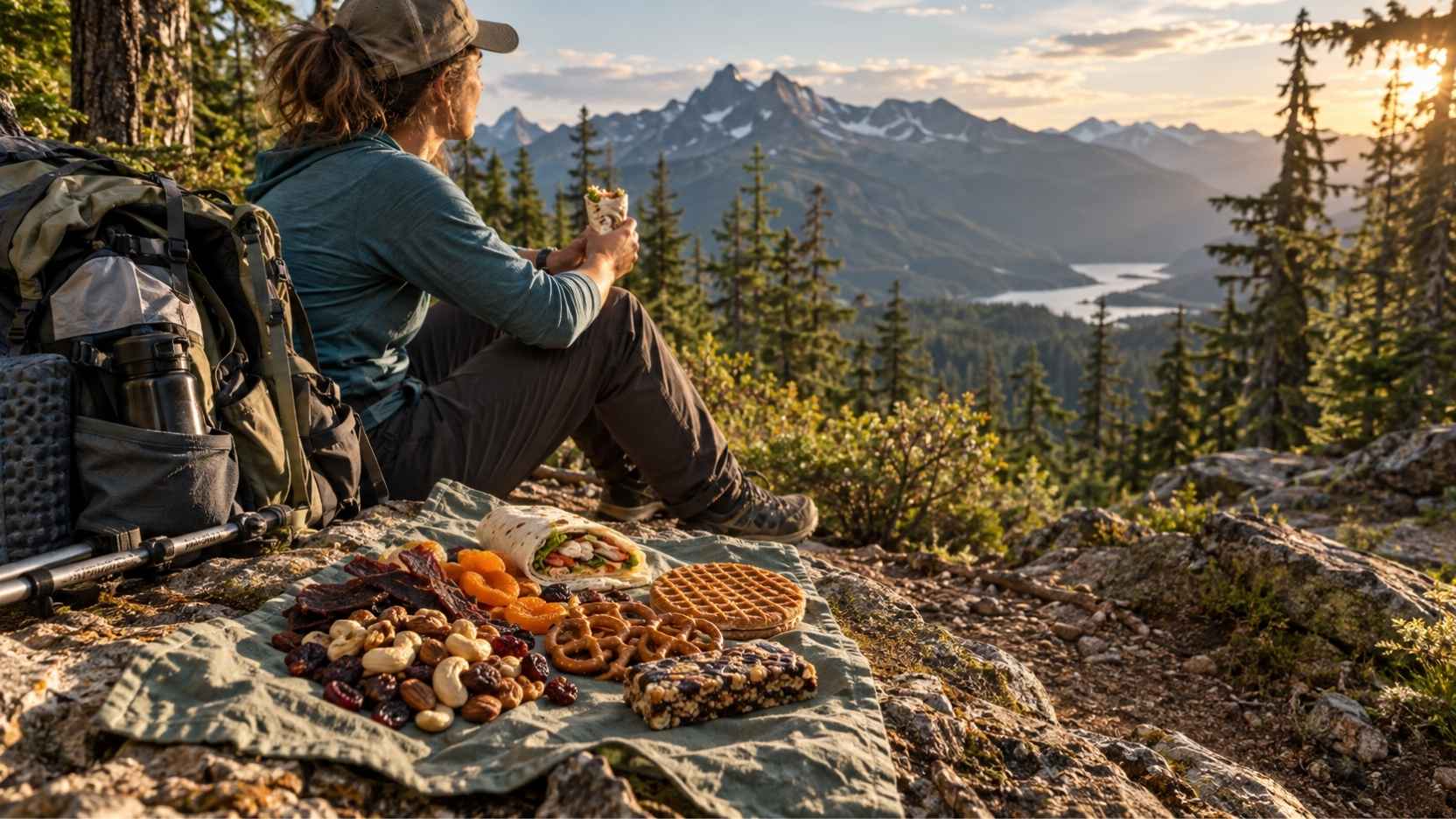
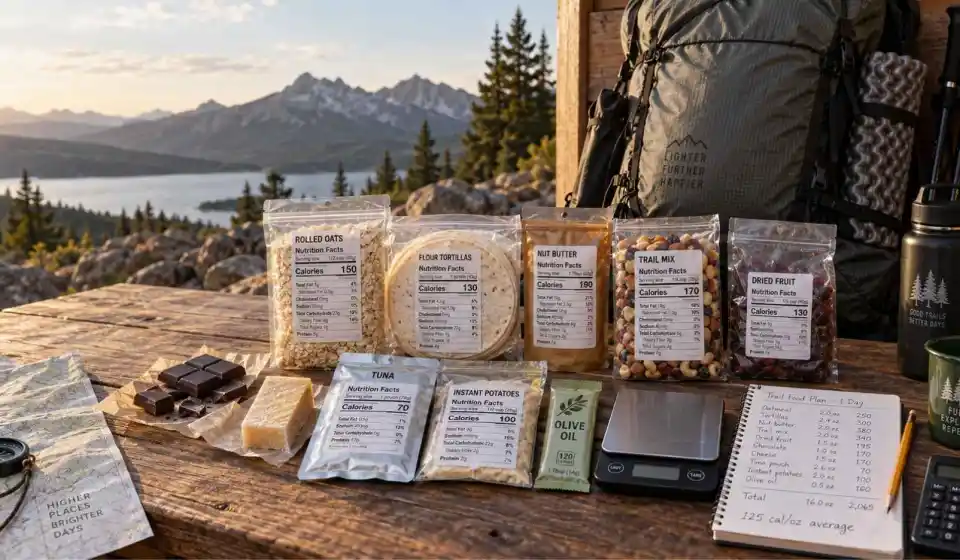
A fictional day could include oatmeal, powdered milk, peanut butter, tortillas, a tuna pouch, hard cheese, nuts, dried fruit, chocolate, instant potatoes, and a small amount of oil. Some components may sit below 125 cal/oz, while nuts, nut butter, chocolate, or oil can pull the average upward. 🥾 Exact values vary by brand and portion, so use the nutrition label and actual packed weight.
Imagine that this sample bag totals 3,496 calories at 27 ounces, producing an average of about 129.5 cal/oz. A tuna pouch or potato portion could sit below 125 while the nuts, nut butter, chocolate, and oil compensate across the day. The point is not that this fictional menu is ideal for everyone, but that menu-level averaging preserves flexibility.
Use High-Density Foods As Caloric Anchors
Fat-rich foods often raise calorie density efficiently, which is why oils, nuts, nut butters, seeds, chocolate, and some cheeses appear frequently in backpacking menus. REI lists many of these among practical calorie-dense options, including nuts, seeds, nut butters, hard cheeses, dried fruit, olive oil, powdered milk, and energy bars. 🥜 Think of them as caloric anchors that lift the whole menu instead of foods you must maximize at every meal.
Higher density does not automatically make a food better because appetite, digestion, preparation, and taste fatigue still matter. A slightly heavier tortilla lunch you enjoy may be more useful than a denser snack you stop wanting after two days. Trail food only works when it gets eaten, so palatability deserves a place beside the spreadsheet.
Compare Food Weight Before The Trip
Before packing, choose a daily calorie amount based on your own experience, route, expected exertion, and personal needs, then compare several menu densities. 🎯 For 3,000 calories, that means 30 ounces at 100 cal/oz, 24 ounces at 125, about 21.4 ounces at 140, and 20 ounces at 150. Seeing the difference helps you decide whether pushing density higher is worth giving up foods you prefer.
REI notes that many backpackers carry roughly 1.5 to 2.5 pounds of food per day, while also emphasizing that needs vary considerably. Shorter test trips can show what comes home uneaten, which snacks disappear first, and whether your planned amount felt too low or unnecessarily heavy. The goal is not to copy another hiker’s number; it is to find a repeatable system that works for you.
Make A Printable 125-Cal/Oz Worksheet
Create five columns labeled Food, Calories, Weight (oz), Cal/Oz, and Notes, then enter every item you intend to carry. 📝 At the bottom, add all calories, add all ounces, and divide total calories by total ounces to calculate your menu average. If the result is below your target, inspect the heaviest low-density foods first instead of automatically deleting every item below 125.
Then ask whether each food is enjoyable, easy to prepare, useful for your menu, and worth its weight. If yes, keep it and adjust somewhere else; if not, replace it with a lighter or denser alternative serving the same role. 125 cal/oz is a benchmark, not a commandment, and a strong backpacking menu balances energy, weight, convenience, variety, and food you genuinely want to eat.