No Appetite on a Long Hike? Build a Micro-Snacking Plan Instead of One Big Lunch
A long hiking day can make normal eating feel strangely inconvenient: the trail is moving, your pack is on, the next climb is waiting, and a full lunch may sound less appealing than it did at home. Instead of assuming you must stop for one large midday meal, you can build a micro-snacking plan that spreads the same planned daytime calories across many smaller eating opportunities. 🥾 The idea is not to “fix” low appetite, but to make your pack-out easier to use when big portions are not attractive.
Think of micro snacks for hiking as a scheduling tool rather than a medical solution. If you planned 1,200 calories for daytime food, for example, you could carry eight 150-calorie portions, ten 120-calorie portions, or another combination that fits your pace, food preferences, and total trip menu. Your actual energy needs can vary widely with body size, hiking duration, terrain, elevation gain, pack weight, temperature, pace, and individual metabolism, so the distribution strategy should come after you estimate the calories you intend to carry.
Why a Big Trail Lunch Is Not the Only Way to Pack Your Calories
A 600-calorie lunch and six 100-calorie mini portions contain the same total energy, but they create very different trail routines. A traditional lunch asks you to stop, unpack food, eat a relatively large amount, and then start moving again, while six smaller portions can be eaten at short breaks or while standing at a viewpoint. For hikers who find that eating during long hikes becomes less appealing when they sit down to a heavy meal, the smaller format can simply be easier to execute.
The important distinction is between calorie planning and appetite diagnosis. If your daytime food target is 1,200 calories, dividing it into ten 120-calorie portions does not increase or decrease that target; it only changes how the food is distributed. 📏 A useful planning formula is daytime food calories ÷ planned eating opportunities = target calories per snack, and you can adjust the number of opportunities without pretending that every hiker should eat on the same schedule.
What Micro-Snacking Looks Like on the Trail
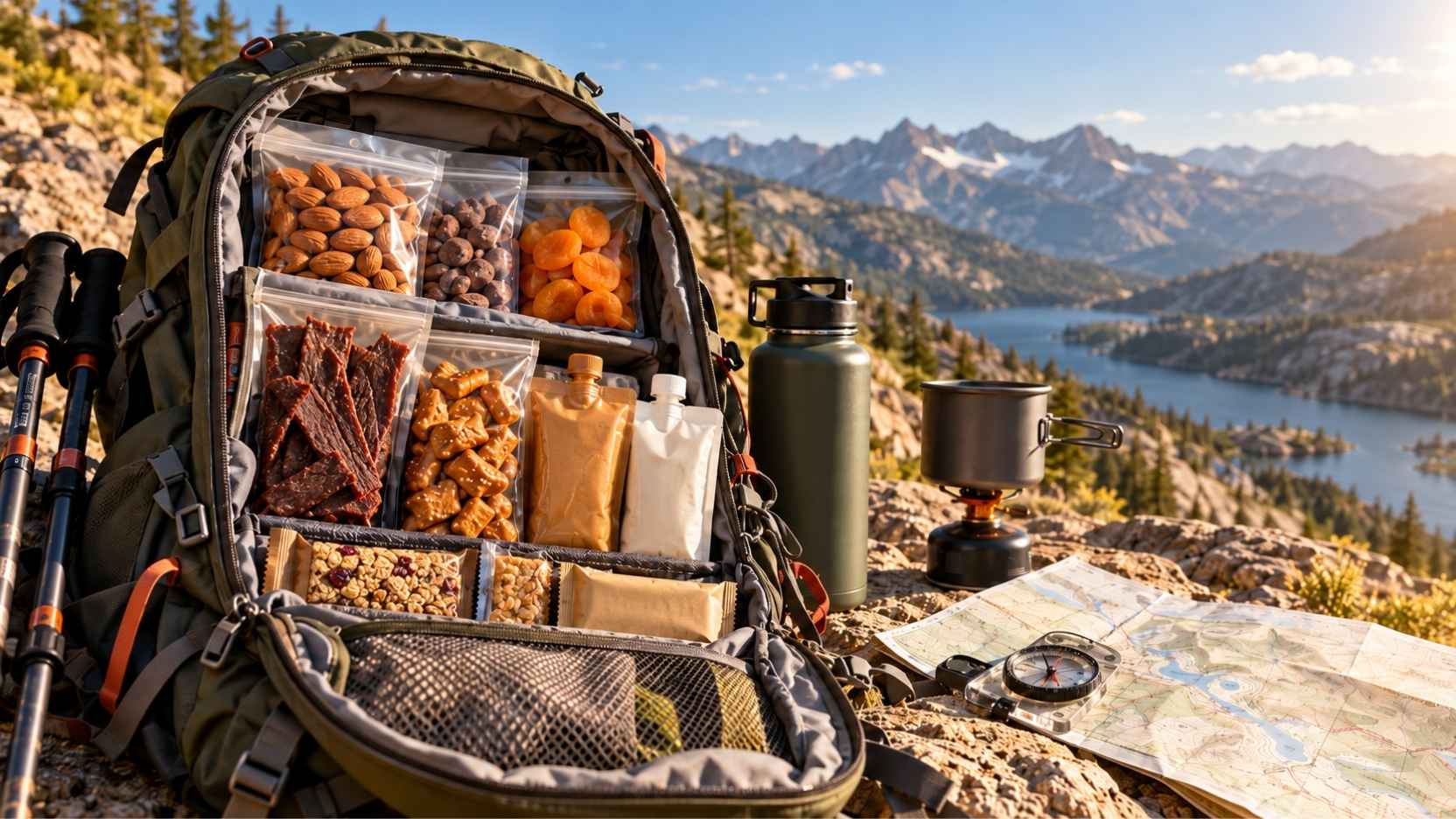
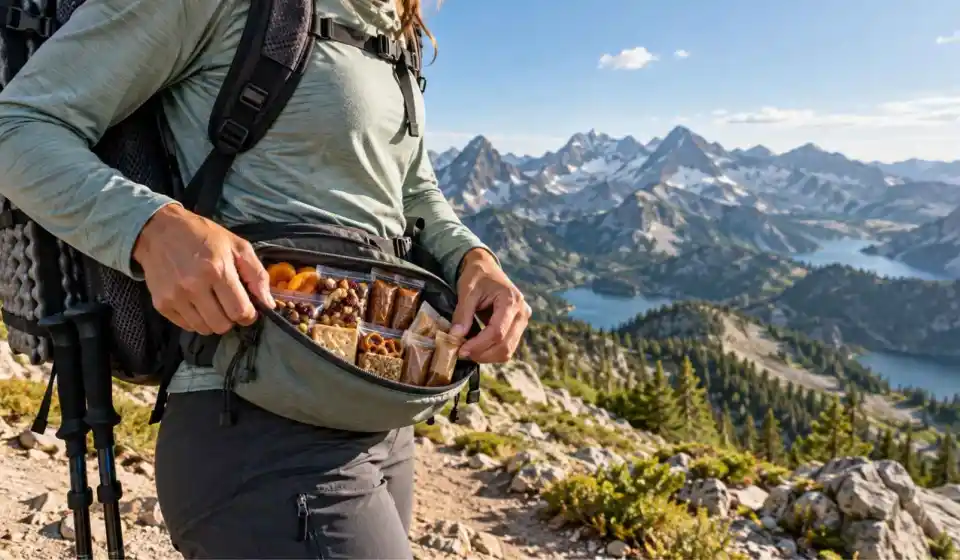
A practical micro-snacking system starts with food that is easy to reach, easy to portion, and easy to eat without turning every snack into a full pack stop. Put one or two small foods in a hip-belt pocket, shoulder-strap pouch, waist pack, or other accessible location, then replenish that pocket when you take a longer break. This reduces the friction between “I should eat something” and actually getting calories into your day, especially when the alternative is digging through a tightly packed backpack.
You can also tie eating opportunities to repeatable trail events rather than waiting until you feel strong hunger. For example, you might eat a small portion every time you refill water, reach a major junction, finish a climb, or take a scheduled five-minute break, while still using comfort and common sense to decide whether to continue. 🍇 The goal is not rigid clock-watching; it is to make snacks while hiking predictable enough that a low-interest-in-food day does not accidentally turn into carrying plenty of calories but eating very few of them.
100-Calorie Trail Snack Portions Compared
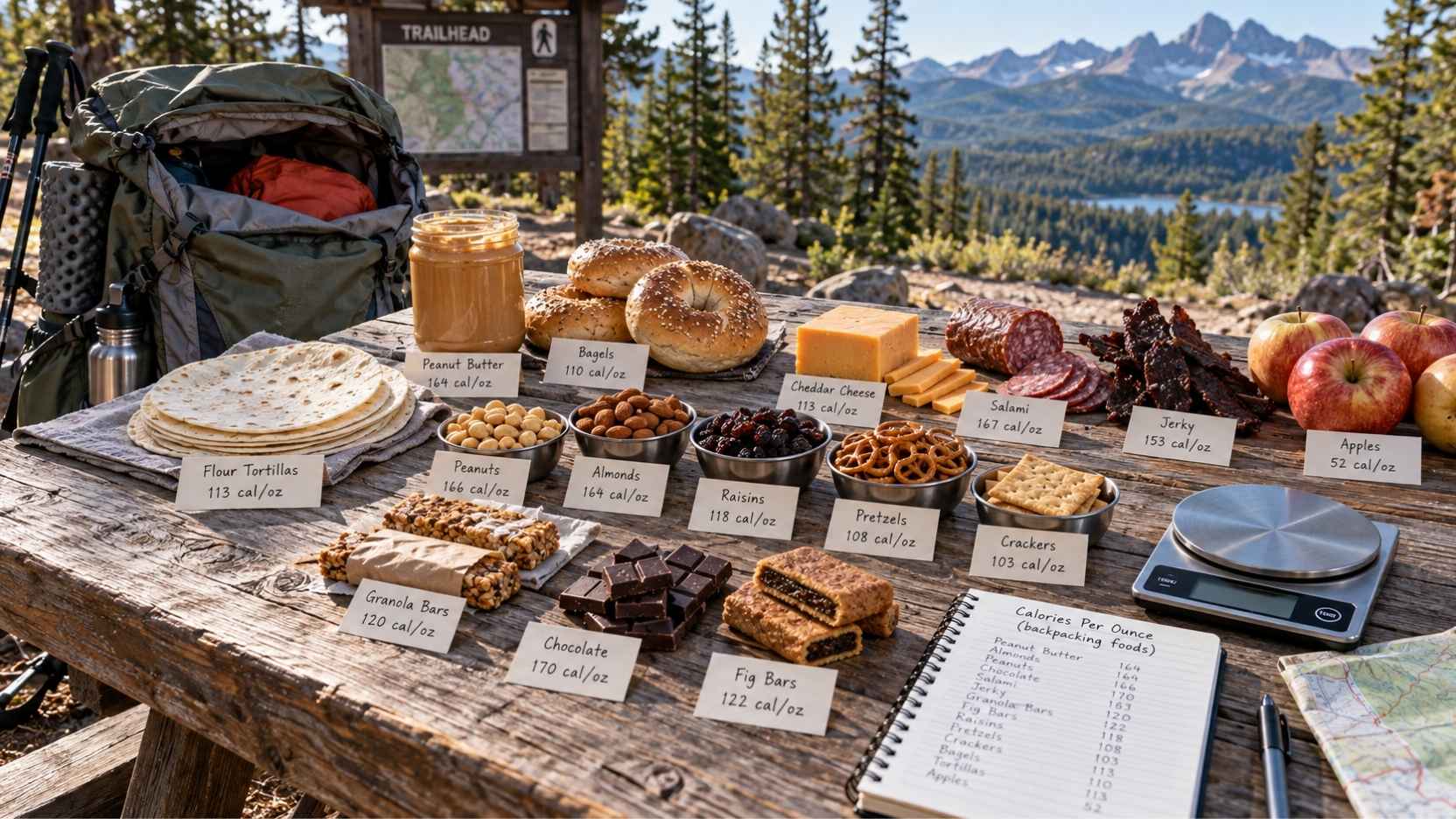
Different foods require very different weights to provide roughly 100 calories, which is why calorie density matters when building micro snacks for hiking. Approximate planning ranges are often around 80–100 calories per ounce for dried fruit, 100–115 for pretzels, 90–110 for gummies, 160–180 for nut butter, 130–160 for many trail mixes, 100–140 for bars, and 120–150 for crackers, but product labels should always be checked because recipes and serving sizes vary. In practical terms, a 100-calorie portion may be a little over an ounce of raisins, roughly an ounce of pretzels or gummies, around 0.6 ounce of nut butter, or noticeably less than an ounce of a dense nut-heavy trail mix.
That difference matters because you can build the same calorie total with very different combinations of weight, texture, sweetness, saltiness, and eating effort. A hiker who gets tired of sweet foods might alternate crackers, pretzels, dried fruit, a nut-butter packet, and part of a bar instead of carrying ten identical energy chews, while another person may prefer mostly compact calorie-dense foods. 🥜 Variety can also make a micro-snacking plan easier to follow, because “eat 120 calories” is more realistic when you have several textures and flavors instead of forcing one food repeatedly.
How Much Weight Does a Day of Micro-Snacks Add?
Calorie density gives you a fast way to estimate food weight before packaging. If your daytime plan contains 1,200 calories, food averaging 100 calories per ounce would weigh about 12 ounces, food averaging 150 calories per ounce would weigh about 8 ounces, and food averaging 170 calories per ounce would weigh a little over 7 ounces. That does not mean the highest-calorie food is automatically best, because taste, digestibility, sodium needs, texture, temperature, and how willing you are to eat the food all matter on the trail.
Packaging can quietly change the pack-out as well, particularly when every small portion comes in its own wrapper or rigid container. Ten individually packaged snacks may be wonderfully convenient, but consolidating some dry foods into lightweight bags or reusable containers can reduce bulk and make portions easier to customize, while packets may still make sense for sticky foods such as nut butter. 🎒 A useful compromise is to keep one day’s accessible micro-snacks together, then compare the total calories, total food weight, and packaging weight rather than judging a snack only by its advertised serving size.
Example 10-Hour Hiking Snack Schedule
Here is an example planning template, not a universal requirement: assume breakfast was eaten before starting, dinner will be eaten after finishing, and 1,200 calories have been assigned to daytime food. Ten eating opportunities of about 120 calories each could be scheduled around 8:30 a.m., 9:30, 10:30, 11:30, 12:30 p.m., 1:30, 2:30, 3:30, 4:30, and 5:30, with foods rotated among dried fruit, pretzels, crackers, trail mix, nut butter, bars, and chews. ⏱️ The times are simply reminders that help spread planned calories across the hiking window, and they can shift around climbs, water stops, weather, group pace, or how your stomach feels.
You could also use fewer, slightly larger portions if ten eating moments feels distracting. Eight 150-calorie snacks still provide 1,200 calories, while six 200-calorie portions create a middle ground between continuous grazing and one large lunch, so the best hiking snack schedule is the one you can realistically follow. If you track what actually comes back uneaten after several trips, you can refine both the amount and the food mix instead of automatically increasing your pack weight “just in case.”
When a Food Problem Is More Than a Pack-Out Problem
Micro-snacking is useful when the practical problem is that a large meal feels inconvenient or unappealing, but it should not be treated as a cure for persistent inability to eat during activity. If you repeatedly struggle to take in food, experience unusual nausea, vomiting, dizziness, faintness, severe weakness, confusion, or other concerning symptoms during hikes, stop treating the issue as merely a packing problem and speak with a qualified healthcare professional. 🚨 Heat illness, dehydration, gastrointestinal problems, medications, altitude, illness, and other factors can affect how someone feels during exertion, and a trail-food article cannot determine the cause.
For ordinary planning, however, the micro-snacking approach gives you a clean way to separate how much food you intend to carry from how you intend to eat it. Start with your trip’s calorie plan, divide the daytime portion into six, eight, or ten manageable units, choose foods with a calorie-per-ounce range that fits your weight goals, and place the next portion where you can reach it. That turns “I never feel like eating lunch on hikes” into a measurable pack-out experiment you can review after the trip and connect with your How Often Should You Eat While Hiking?, Calories Per Ounce Table, and full menu templates.