My AT Thru-Hike: Switching from Canister to Alcohol Stove
Eight months, 2,190 miles, and one stubborn decision: I ditched my whisper-quiet MSR Pocket Rocket for a sooty, finicky alcohol stove halfway through my Appalachian Trail thru-hike. Here’s why that backward‐looking swap ended up being the smartest gear choice I made.
The Allure of Canister Stoves: Convenience at a Cost
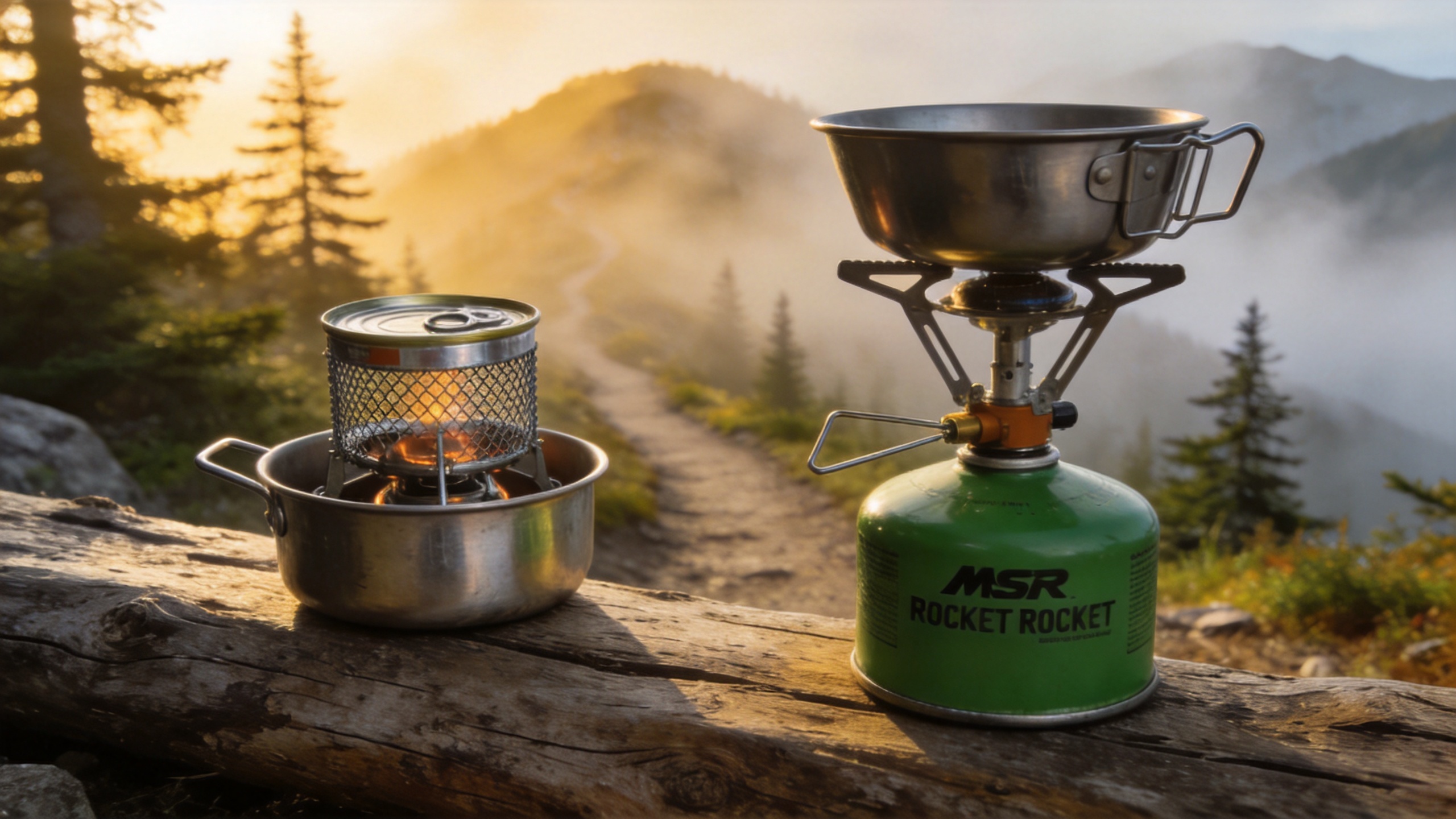
When I started the AT in March, the MSR Pocket Rocket was the obvious choice. It’s compact, lights instantly, and boils water in under three minutes. Every gear list I’d studied swore by it. For the first 500 miles, I loved it. Then the honeymoon ended.
What the Pocket Rocket Did Right
- Simplicity: Twist on a canister, twist to ignite, done. No priming, no spills.
- Speed: 2:45 to boil two cups, even in moderate wind.
- Control: Precise simmering for actual cooking (which I rarely did).
Why I Started Hating It
The catalyst came in the Smokies. A cold front dropped temps to 20°F, and my partially full canister gave weak, sputtering flames. I waited 15 minutes for lukewarm water. Then I discovered the real problem: canister efficiency plummets below freezing, and partially used canisters are fuel‑wasting dead weight. Every resupply I’d buy a new one, tossing half‑full canisters into town trash bins. The guilt piled up like spent fuel cans.
“I carried 2 oz of aluminum for a stove, but hauled 8+ oz of non‑recyclable steel and butane per canister. Something felt profoundly wrong.”
Other Deal‑Breakers
- Bulky waste: Canisters can’t be refilled on trail; every town stop meant throwing away a chunk of metal.
- Noise: The roaring jet sound annoyed me in quiet camps. I wanted to hear the owls, not a mini turbine.
- Cost: $5–7 per canister. Over 2,000 miles, that adds up to $50+ for little more than hot water.
The Kojin and Caldera Cone: A Leap of Faith
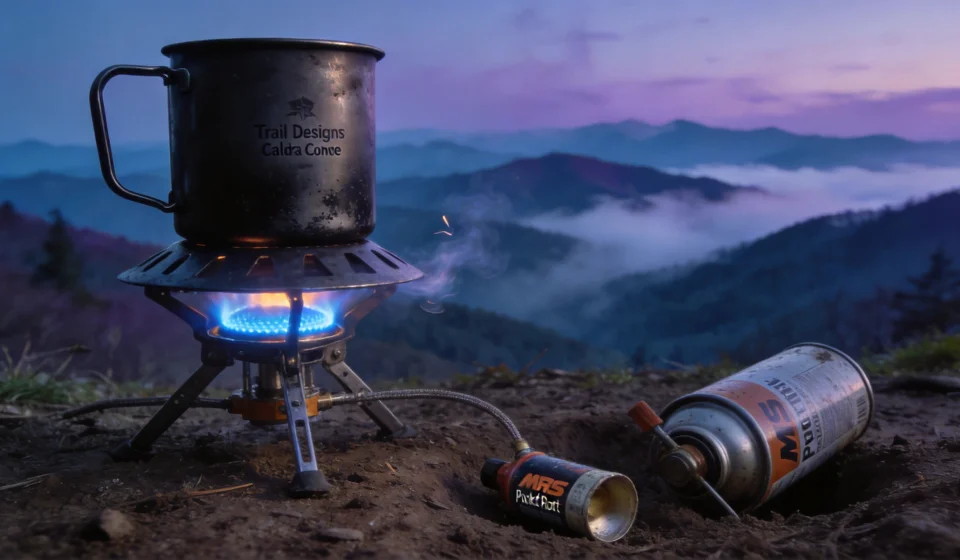
In Hot Springs, NC, I met a veteran thrunista who bragged about carrying 3 oz of fuel for 10 days. She ran a Kojin alcohol stove nested inside a Trail Designs Caldera Cone. I was skeptical. Then I watched her boil two cups with exactly 1 oz of denatured alcohol—zero waste, zero leftover fuel. I ordered the system and switched at the NOC.
First Impressions: Terrifying and Thrilling
The Kojin is a pressurized alcohol burner. Fill it, prime the small pool around the base, light it, and wait. Blue flames roar for two minutes, then settle into a steady jet. The Caldera Cone is a titanium windscreen/pot stand that directs heat upward with surgical precision. My first boil took 7 minutes—three times longer than the Pocket Rocket. But I used 0.9 oz of fuel for a full boil. The canister equivalent would have burned 1.5 oz of fuel plus the non‑recyclable can itself.
Why the Kojin Won Me Over
- Fuel efficiency: 1 oz of alcohol boils 2 cups. A 4 oz fuel bottle lasts 4 days.
- Zero waste: Fuel bottles refill from any hardware store. No more dead canisters.
- Weight savings: Total system weight (stove, cone, 8 oz fuel bottle) = 7.5 oz. Empty canister system weighed 11 oz + canisters.
- Stealth & silence: A soft hum, not a jet engine. Ideal for camps near shelters.
The Kojin’s Dirty Secrets
Alcohol stoves aren’t perfect. The Kojin will blacken your pot, and in high winds even the Caldera Cone struggles. I learned to cook in my tent vestibule or behind a rock. Also, alcohol spills can be dangerous—I once tipped a full stove (learning experience: always fill on level ground).
Real‑World Lessons: The Good, The Bad, and The Sooty
Over the next 1,500 miles, I logged over 400 boils. Here’s what I wish I’d known from day one.
Comparative Performance Table
| Metric | MSR Pocket Rocket | Kojin + Caldera Cone |
|---|---|---|
| Boil time (2 cups, 70°F) | 2:45 | 6:30–7:30 |
| Boil time (20°F, windy) | 6:00–10:00 (canister sputters) | 8:00–12:00 (alcohol works) |
| Fuel weight per boil | 1.5 oz (including canister weight waste) | 1.0 oz (refillable) |
| Total system weight (7 days fuel) | 15 oz (stove + 2 canisters) | 10 oz (stove + cone + 12 oz fuel bottle) |
| Cost per week | $10–14 | $3–5 (denatured alcohol) |
| Environmental impact | Non‑recyclable steel/canisters | No disposable components |
“The biggest surprise? Alcohol stoves are more reliable in cold weather than canisters—provided you store the fuel bottle inside your sleeping bag overnight to prevent condensation.”
Lessons Hard‑Won
- Wind is your enemy: Even with the Cone, I cooked behind natural barriers. In open ridgelines, I’d wait or use a small foil windscreen.
- Priming patience: The Kojin needs a 15‑second preheat pool. Rushing causes incomplete combustion and soot.
- Soot management: My pot bottom became jet black. I scrubbed it with sand and water once a week, but soot doesn’t affect performance—it’s cosmetic.
- Fuel estimation: Carry 1.5 oz per dinner boil, 1 oz per breakfast. In cold temps, add 0.5 oz. I never ran out.
- Spill protocol: Keep a small cloth for wiping spilled fuel. Never light near spilled alcohol—it flash‑burns.
Practical Tips for the Aspiring Alcohol Stove Convert
Thinking of making the switch? Do it before your next trip, but test at home first. Here’s a step‑by‑step transition plan.
1. Build Your System
Get the Trail Designs Kojin with the Caldera Cone sized for your pot (I used a 900 ml titanium mug). Skip generic Chinese alcohol stoves—they’re less efficient and lack the wind‑proofing of a cone system.
2. Practice at Home
- Fill the Kojin with denatured alcohol (Heet in the yellow bottle works).
- Prime the small pool in the burner rim. Light it.
- After 15 seconds, the main burner will ignite with a blue flame. Place the Cone and pot.
- Time your boil. Note how much fuel remains in the burner—pour leftover back into the bottle.
3. Manage Your Fuel
Use a 4 oz or 8 oz plastic bottle (HDPE). Mark fill lines with a permanent marker: 1 oz = one boil. Carry a 3‑day supply plus one emergency cup. I used a tiny funnel cut from a soda bottle—no spills.
4. Safety First
- Never cook inside a tent
- Alcohol flames can be invisible in daylight. A spilled stove inside a tent is a fire disaster.
- Extinguish correctly
- Place the simmer ring (included with the Kojin) over the burner to snuff the flame. Never blow it out—you’ll spread hot alcohol vapor.
- Stove storage
- Keep alcohol away from food bags. Fuel bottle must be leak‑proof; I stored it in a separate dry bag.
5. Embrace the Ritual
Alcohol stove cooking is slower, quieter, and more meditative. I started reading while waiting for boils. I became acutely aware of fuel usage—every milligram counted. That mindfulness made me a better, lighter hiker.
Conclusion: Was It Worth It?
Yes, a thousand times yes. The switch saved weight, money, and my conscience. I no longer tossed half‑dead canisters into the trash. I carried less, felt more self‑reliant, and enjoyed a quieter trail. If you’re willing to trade two extra minutes per boil for a lighter, greener, and more intentional cooking system, the Kojin and Caldera Cone will reward you. Just bring a rag for the soot.