The Future of Backpacking Fuel: Trends and Innovations
The New Frontier of Backpacking Fuel
For decades, the humble isobutane canister has been the default fuel for American backpackers. But as environmental regulations tighten, recycling infrastructure lags, and a new generation of ultralight adventurers demand cleaner alternatives, the fuel landscape is shifting fast. From alcohol stoves that weigh nothing to solar cookers that eliminate fuel entirely, the next five years will redefine how we cook in the backcountry. This article explores the key trends—emerging fuels, recycling mandates, and digital stove intelligence—and offers actionable advice for anyone who wants to stay ahead of the curve.
Emerging Fuel Types: Alcohol, Solid Fuel, and Solar
Three alternative fuels are gaining serious traction among American backpackers, each with distinct trade-offs in weight, cost, and environmental impact.
Alcohol Stoves: Lightweight and Renewable
Denatured alcohol has long been a favorite of gram-counting thru-hikers. It burns cleanly (no soot), can be sourced in small quantities at any hardware store, and the stoves themselves are often DIY-friendly—a simple penny stove can be made from a soda can. Newer models like the Trail Designs G4 and the Evernew Titanium Alcohol Stove offer improved wind resistance and fuel efficiency. The downside? Alcohol produces less energy per gram than canister fuel, and in cold weather below freezing, vaporization becomes unreliable. Still, for summer trips in the lower 48, it remains a viable zero-waste alternative.
Solid Fuel Tablets: Ultra-Compact but Controversial
Hexamine tablets (brands like Esbit and FireDragon) are the ultimate space-saver: one tablet boils a cup of water and weighs only 7 grams. They’re ideal for emergency kits or micro-adventures where weight trumps everything. However, solid fuel leaves a sticky residue on pot bottoms, produces an unpleasant chemical odor, and cannot be extinguished mid-use—you must let it burn out. Newer biodegradable solid fuel blocks (made from compressed biomass) are entering the market, but their burn time and energy density still trail traditional hexamine. For the eco-conscious, solid fuel is a niche option best reserved for short trips with minimal cooking needs.
Solar Cooking: The Ultimate Renewable?
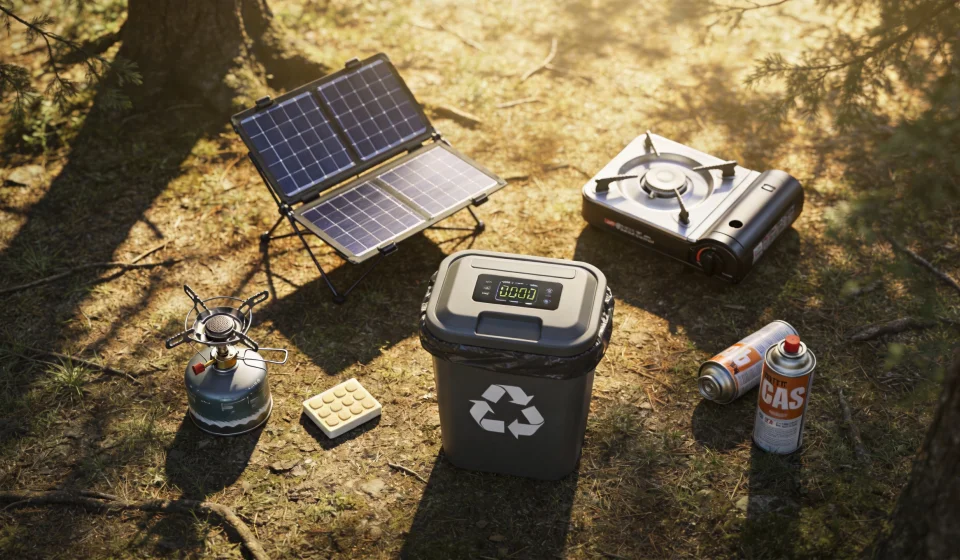
Portable solar cookers like the GoSun Grill and the Hiluckey Solar Kettle have evolved from clumsy backpacks to foldable, lightweight panels. On a sunny afternoon, a 60W solar cooker can bring water to a boil in 10-15 minutes—longer than a stove, but with zero fuel cost and no emissions. The catch: solar is weather-dependent and essentially useless after dusk or under heavy tree canopy. Most backpackers treat it as a supplement rather than a primary system. BioLite’s CampStove 2 even combines solar charging with a wood-burning generator, giving you both cooking and power for devices—a hybrid model that may define the next decade.
| Fuel Type | Weight per 1000 kcal | Boil Time (1 cup) | Environmental Impact | Best For |
|---|---|---|---|---|
| Isobutane canister | ~130 g (including container) | 3-4 min | Non-recyclable (most areas) | Cold weather, group trips |
| Denatured alcohol | ~90 g (no container waste) | 5-8 min | Renewable plant sources available | Ultralight solo trips |
| Solid fuel tablets | ~60 g (tablet only) | 8-12 min | Residue, but some biodegradable | Emergency kits, short overnights |
| Solar (panel + battery) | ~400 g (gear itself) | 10-15 min (sunny) | Zero emissions | Desert, alpine above treeline |
Each option suits a different use case. The smartest approach? Match your fuel to your trip profile: alcohol or solid fuel for quick overnights, solar for basecamp excursions, and isobutane only when conditions demand reliable high heat.
Environmental Regulations and Canister Recycling
In the United States, the issue of spent isobutane canisters is reaching a tipping point. The U.S. Forest Service and National Park Service now prohibit disposing of canisters in backcountry trash receptacles, and several states—including California and Colorado—are considering mandatory take-back programs for retailers. The core problem: most municipal recycling facilities cannot process mixed-metal aerosol cans because of residual pressure and explosive risk.
“A discarded fuel canister is not just litter; it’s a pressurized bomb. Proper recycling requires specialized equipment that 90% of U.S. recycling centers don’t have. We’re calling on the outdoor industry to fund a national collection network before regulators step in with bans.” — Natalie Gates, Sustainable Gear Initiative
Several brands have responded. MSR partners with GPI (Global Product Innovation) to run a Canister Recycling Program at REI Co-op stores and select outfitters. You simply drop off any brand’s empty canister—no need to puncture—and GPI processes them into scrap metal and residual gas recovery. Jetboil offers a mail-back program for its own tanks, and Soto recently launched a refillable canister (the ST-3400R) designed for reuse up to 10 times before recycling.
Actionable steps for the American backpacker:
- Always check local regulations before your trip—some wilderness areas now ban single-use canisters entirely during fire season.
- Use collection drop points at REI, EMS, or local gear co-ops. Many accept all brands, not just the ones they sell.
- Consider a refillable canister like the Soto ST-3400R or the Trangia 25-8 alcohol system to eliminate waste entirely.
- Spread the word: share recycling locations on trail forums and social media. The more demand, the faster the infrastructure grows.
The trend is clear: regulators are pushing, and the industry must innovate. Expect to see universal recycling kiosks at every major trailhead within five years, similar to how battery recycling bins are now common in grocery stores.
Smart Stoves and Fuel Monitoring Technology
Perhaps the most exciting frontier is the integration of digital intelligence into cooking systems. Smart stoves use sensors and connectivity to optimize fuel usage, prevent waste, and even alert you when a canister is running low.
Real-World Examples
- Camp Chef’s Triton 3X Smart Stove features a built-in fuel flow meter that sends battery and fuel data to your phone via Bluetooth. It can estimate remaining cook time to within 2 minutes, helping you avoid running out mid-meal.
- BioLite’s FirePit+ uses a thermoelectric generator to power a fan that regulates airflow, achieving up to 30% greater fuel efficiency than a standard wood fire. While not a backpacking stove per se, its logic is being adapted into future camp stoves.
- Primus’s “Efficiency Burner” (prototype shown at Outdoor Retailer 2024) uses a ceramic mesh that circulates exhaust gases back into the flame, reportedly achieving 98% combustion efficiency—meaning almost every molecule of fuel becomes heat.
These innovations are not just gimmicks. In a controlled test by Backpacker magazine, using a smart stove reduced total fuel weight for a 5-day trip by 18% compared to a standard stove with manual control. For thru-hikers carrying 8 canisters, that’s roughly one whole canister saved—equal to about 80 grams of carry weight.
The Future of “Fuel Intelligence”
Within three years, expect to see stoves that integrate with your GPS and weather app: if the forecast predicts strong wind, the stove automatically increases flame pressure to compensate. Fuel monitoring dashboards will sync with cloud services, allowing you to pre-plan meal portions based on remaining fuel. And as lithium-ion battery packs become lighter, some stoves may even generate their own electricity to power the sensors, creating a closed-loop system.
Pro tip for early adopters: Look for stoves that offer open-source data export so you can log your own usage patterns. The more data you collect, the smarter your future purchases become.
The Road Ahead: Balancing Innovation and Sustainability
The future of backpacking fuel is not a single “silver bullet” but a mosaic of solutions. Alcohol and solid fuel will remain niche for purists, while solar continues to carve out a role in sun-baked landscapes. Smart stoves will make every gram of fuel more efficient, reducing the total waste footprint. Meanwhile, regulators and recyclers must collaborate to solve the canister problem before it becomes a PR crisis for the outdoor industry.
For the American backpacker, the message is simple: experiment. Try a small alcohol stove on a weekend trip. Drop your empties at an REI recycling bin. Research a smart stove before your next major purchase. The choices you make today will shape the market of tomorrow—and the health of the trails we all love.
Conclusion
From alcohol and solar to smart sensors, the backpacking fuel ecosystem is undergoing its most significant transformation in decades. The greatest gains will not come from any single fuel, but from a combination of alternative options, robust recycling, and intelligent efficiency. Stay curious, reduce your waste, and let innovation guide your next camp meal. The trail is waiting.