Vacuum-Sealed or Oxygen-Free? Choosing the Right Storage Method for Homemade Trail Food
Making your own backpacking food can be cheaper, more customizable, and more satisfying than buying every meal from a specialty outdoor store.
You can dehydrate vegetables, portion trail mix, prepare homemade snacks, and package ingredients according to your exact calorie needs.
But once the food is prepared, another question appears:
How should you package it?
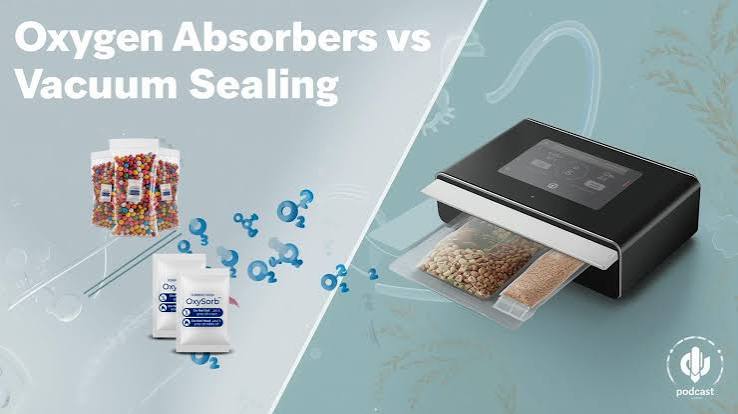
Two common answers are vacuum sealing and oxygen absorbers.
Both approaches reduce exposure to oxygen, but they are not interchangeable. They also have different strengths depending on whether you’re preparing food for next weekend’s hike or building a pantry intended to last for months.
Understanding the difference can help you avoid a common mistake: assuming that better packaging can compensate for poor food preparation.
The Basic Purpose of Both Methods
At a high level, both techniques are designed to control the atmosphere surrounding food.
Oxygen can contribute to oxidation, which can affect fats, flavors, colors, and some nutrients.
Moisture can cause another set of problems.
Therefore, long-term food storage is really about managing several variables simultaneously:
oxygen + moisture + temperature + light + time.
Vacuum sealing primarily addresses air removal and packaging convenience.
Oxygen absorbers specifically target residual oxygen.
Neither method controls every variable.
Vacuum Sealing: The Practical Backpacker’s Tool
Vacuum sealing is popular because it is easy to understand.
Put food into a compatible bag.
Place the open end into the vacuum sealer.
The machine removes much of the air.
The bag is then heat sealed.
For backpacking, the result can be extremely convenient.
A large batch of dehydrated vegetables can be divided into meal-sized portions.
Trail mix can be divided into individual servings.
Dry ingredients can be packaged together with instructions for rehydration.
The resulting packages can be labeled and organized before the trip.
Why Vacuum Sealing Saves Pack Space
Space is one of the biggest advantages.
A bulky package of food can occupy unnecessary room inside a backpack.
Vacuum sealing can reduce the volume of certain foods and create flatter packages.
However, not every food compresses well.
Fragile crackers or delicate freeze-dried pieces can be crushed.
Soft foods may deform.
Sharp edges can puncture the plastic.
Therefore, packaging should always be chosen according to the food.
Oxygen Absorbers: A Different Approach
An oxygen absorber doesn’t require a vacuum machine.
Instead, it is placed inside a suitable sealed package.
The absorber reacts with oxygen remaining in the package, reducing the oxygen concentration.
This can be particularly useful for long-term storage of appropriately dry foods.
Unlike vacuum sealing, an oxygen absorber doesn’t necessarily shrink the package dramatically.
Its purpose is atmospheric control rather than compression.
Why Residual Oxygen Matters
A vacuum sealer can remove a large amount of air, but food pieces may trap air between them.
A bag of irregularly shaped dehydrated vegetables, for example, can contain small spaces between pieces.
That means some oxygen remains.
An oxygen absorber can address residual oxygen in a properly sealed package.
This is one reason oxygen absorbers can be attractive for long-term storage.
The Most Important Question: Is the Food Dry Enough?
Before thinking about oxygen absorbers, think about moisture.
This is particularly important with homemade dehydrated foods.
Dehydration reduces water content, but the finished product must be appropriately dried for the intended storage method.
If food contains too much residual moisture, sealing it in a low-oxygen environment does not magically make it suitable for long-term storage.
For homemade trail food, proper preparation comes first.
Packaging is the second step.
The Problem With Moisture Inside a Sealed Bag
Suppose you dehydrate apple slices but they remain softer and moister than intended.
You vacuum seal them.
The bag looks perfect.
But the food still contains moisture.
The vacuum seal hasn’t removed that moisture from the food.
It has simply trapped the product inside a sealed environment.
This is why drying quality matters so much.
A good packaging system cannot compensate for inadequate dehydration.
Vacuum Sealing and Jerky
Jerky is one of the most common foods people vacuum seal for hiking.
The method is useful for creating individual portions and limiting exposure to outside air.
However, homemade jerky requires careful preparation.
USDA recommends heating meat to 160°F and poultry to 165°F before dehydrating, followed by controlled drying.
The purpose is to address pathogens before the drying stage.
Vacuum sealing afterward is packaging—not a replacement for that safety step.
USDA also distinguishes commercially produced jerky from home-dried jerky when discussing storage.
This is a good reminder that homemade and commercial products should not automatically be treated as equivalent.
Trail Mix and Oxygen Control
Trail mix is another excellent example of where packaging can affect quality.
Nuts and seeds contain oils.
Over time, those oils can oxidize.
Heat can accelerate the process.
Oxygen reduction may help slow oxidation, making airtight packaging useful for appropriate storage periods.
For a backpacking trip next month, vacuum-sealed individual servings can be convenient.
For longer storage, oxygen absorbers may be useful when the food and packaging are appropriate.
What About Chocolate?
Chocolate introduces a different problem.
Removing oxygen doesn’t stop chocolate from melting.
If a vacuum-sealed bag sits inside a hot car, the chocolate may still soften.
Therefore, oxygen control does not solve temperature problems.
This illustrates a broader rule:
Use the packaging method to solve the problem it is designed to solve.
Vacuum sealing helps with air and packaging.
Oxygen absorbers help with residual oxygen.
Neither is a substitute for temperature control.
Freeze-Dried Foods
Commercial freeze-dried meals are often already packaged in high-barrier containers.
If you’re buying a commercial product intended for long-term storage, there is usually little reason to repackage it simply because you own a vacuum sealer.
The manufacturer’s original packaging was selected as part of the preservation system.
For homemade dehydrated ingredients, however, you control the packaging yourself.
That’s where your choice becomes more significant.
When Vacuum Sealing Makes the Most Sense
Choose vacuum sealing when your priorities are:
- Compact packaging
- Individual portions
- Convenient meal preparation
- Short- or medium-term storage
- Reduced exposure to outside air
- Easy organization inside a backpack
It is particularly useful when preparing food a few weeks or months before a planned hiking season.
When Oxygen Absorbers Are Worth Considering
Oxygen absorbers make more sense when you’re storing appropriate dry foods for longer periods.
They can be useful when:
- The food is sufficiently dry.
- The package is appropriately airtight.
- Oxidation is a concern.
- You want to minimize residual oxygen.
- The food is intended for extended storage.
But choosing an absorber requires attention to the package size and the amount of oxygen that needs to be removed.
Simply throwing a random absorber into a bag does not guarantee the desired result.
Can You Combine the Two?
Yes, for certain appropriate dry-food applications, vacuum sealing and oxygen absorbers can be complementary.
Vacuum sealing reduces the amount of air.
The absorber can then reduce remaining oxygen.
But more preservation technology is not automatically better.
For ordinary backpacking preparation, this combination may add cost and complexity without providing a meaningful benefit.
For carefully planned long-term dry-food storage, however, combining approaches may be worth considering depending on the food and packaging system.
Storage Temperature Is Still Critical
Even perfectly packaged food benefits from appropriate storage.
Keep long-term trail food somewhere cool and dry.
Avoid extreme temperature fluctuations.
Keep packaging away from sunlight.
Protect bags from punctures and crushing.
A high-quality storage method cannot fully protect food from every environmental factor.
Heat remains particularly important for foods containing fats.
Vacuum Sealing Does Not Make Perishable Food Safe
This deserves repetition.
Vacuum sealing is not a substitute for refrigeration.
USDA states that vacuum packaging does not eliminate the need for refrigeration of perishable meat and poultry.
This matters because reduced oxygen environments can change the types of microorganisms that may grow.
If you’re dealing with fresh meat, cooked leftovers, cheese, or another perishable product, follow appropriate refrigeration and food-safety guidance.
For backpacking, it is often simpler to choose foods that are genuinely shelf stable.
Build a Packaging System Around Your Trip
For a weekend trip, simplicity usually wins.
You might vacuum seal individual portions of properly prepared dry food and pack them according to each day’s meals.
For a month-long pantry project, a more structured system may make sense.
You can organize dry ingredients by food type, date, and intended use.
For long-term storage, you can consider packaging systems designed to minimize oxygen and moisture exposure.
The storage method should match the time horizon.
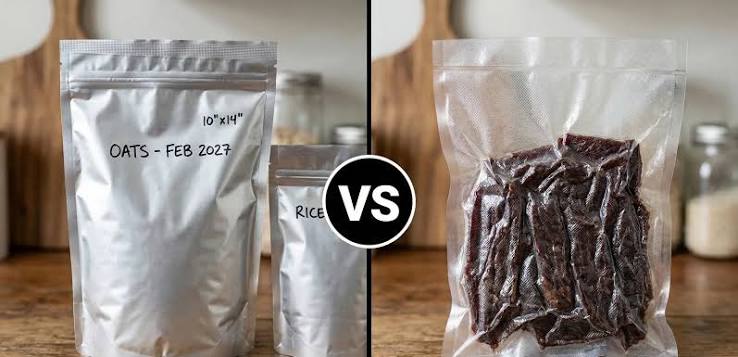
Label Everything
Regardless of the packaging method, labeling is one of the easiest improvements you can make.
Write down:
Food name
Preparation date
Packaging date
Ingredients
Intended use
Storage instructions
This is especially useful for homemade food.
Months later, a plain vacuum-sealed bag can be difficult to identify.
A label turns it into an organized food supply.
Inspect Before You Pack
Before taking food on a remote backpacking trip, inspect the package.
Look for:
- Punctures
- Broken seals
- Moisture
- Mold
- Unusual odors
- Leaking
- Swelling
- Signs of insect damage
If a package has failed, don’t assume the original shelf-life calculation still applies.
The integrity of the package is part of the preservation system.
A Simple Decision Guide
If you are preparing food for next weekend, vacuum sealing is often a practical choice.
If you are preparing properly dried food for several months, vacuum sealing may still be useful, especially for compact portions.
If you are preparing appropriate dry foods for longer-term storage, oxygen absorbers may become more relevant.
If you are dealing with fresh or perishable food, neither method should be treated as a substitute for refrigeration.
This simple decision framework prevents many common storage mistakes.
Final Thoughts
The debate between oxygen absorbers and vacuum sealing doesn’t really have a universal winner.
They perform different functions.
Vacuum sealing removes much of the air and creates compact, convenient packages. Oxygen absorbers reduce residual oxygen inside properly sealed packages and can be valuable for suitable dry foods stored for longer periods.
For backpackers, the right choice depends on the food, storage duration, packaging, and environmental conditions.
Most importantly, start with properly prepared food.
Dry food appropriately.
Use suitable packaging.
Control temperature and humidity.
Label your packages.
And never assume that removing oxygen makes a perishable food safe at room temperature.
Good trail-food storage isn’t about using the most advanced packaging technology available. It’s about using the right preservation method for the specific food and the amount of time you intend to store it.